!-- Start Alexa Certify Javascript -->
|
|||||||||||||||||||||||||||
|
|||||||||||||||||||||||||||
|
|
|||||||||||||||||||||||||||
|
|||||||||||||||||||||||||||
|
|
|
|
|
|
|
|
||||||||

MAY 2000 |
IN THIS ISSUE
MAIN FEATURE Battling Arsenic : Bengal’s Water Crisis An Interview with Steve Clarke ALTERNATIVE MEDICINE Ayurvedic Herb Gugul : The Anti-obesity Resin By Dr. Kumar Pati START-UP Hotbiz.com : On Ramp to the World Wide Web By Punam Nair Publisher’s Note • Finance: Succession Health: Yoga Breathing Techniques • Self Help: Successful Relationships Culture: Raga Bilaskhani Todi • Bollywood Telugu Film Review I: Oke Okkadu • Telugu Film Review II: Yuvaraju Recipe: Vegetarian Kabab • Horoscope |
|||||||
|
Publisher's Note:
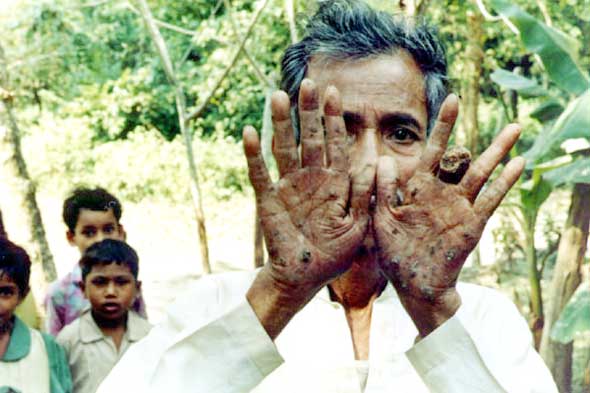
There is more to science and technology than computers and software, and this month’s main story especially focuses on this fact. Siliconeer continues to salute and celebrate the success of South Asians in information technology. South Asians who serve this industry will always be a key theme of this magazine. But Siliconeer is nothing if not eclectic, and we have always believed in looking beyond conventional wisdom. Since coverage of science has always been part of our mission, we decided to look beyond IT and ask: Where does technology cross paths with real-life needs in the old country? There can be many answers to this question, but few are more poignant than the potable water crisis in the Bengal basin affecting large tracts in West Bengal and Bangladesh. Millions of Bengalis face a desperate predicament as their only accessible source of drinking water is poisoned by arsenic. Yet the exciting news is that in the Bay Area, a hi-tech company has come up with a device that promised to solve this crisis, and it’s not just on the drawing board, either. The prototype is out, field testing has begun and the company is beginning to get ready for mass production. In this issue we invited one of the founders of the company to explain not only how the device works, but also asked him to outline the tortuous path between technological conception and eventual acceptance. His detailed interview is not only a heartwarming story of the triumph of science in solving real-life challenges, but it also raises sobering questions about how science and its application remains vulnerable to extraneous social and political forces. Main Feature
Q: Tell us a little bit about the device. Physically what does it look like, and how does it work? A: Physically it just looks like a black box, a container with a media in it. The units that we are building for India are about 12 inches in diameter, like a cylinder, and about 2 feet tall. The water from the tube well goes into the top of that. And the clean water comes out, also at the top. It’s real time, it goes straight out again. One of the distinguishing features about the technology is that it uses a ligand to recover the Arsenic3 and Arsenic5 from solutions. A ligand is something that selects ions from solutions because of their shape, not because of their electrical charge. It works a little bit like the way somebody’s sense of taste or smell works. In the back of our tongue we have receptors that are a certain shape and only molecules with that shape will fit to them. A ligand, because it is shape-selective, rejects everything that isn’t arsenic and only selects the arsenic. In the Bengal basin we are going down from 200 parts per billion of arsenic down to 5 or 10 parts per billion. We are doing that in water that contains other things like chloride and carbonate at much, much higher concentrations, in some cases 10 or 100,000 times more concentrated, and the ability to select something from a solution based on its shape is an invaluable tool. Now why that’s important is that it means that the device can be a lot smaller because it only has to be sized to the arsenic that we are trying to get out and not sized for the other things that would normally interfere with a medium. It also means that a device can be made with a very low pressure head. So you don’t lose a lot of pressure when water flows through it. If you have to push your water through a large packed pad, there just isn’t enough pressure head at the pump to do that. Q: What is Arsenic3 and Arsenic5? Now there are some techniques for recovering Arsenic3 directly but they cause the arsenic to be precipitated in a form and then filtered. The media that is used to do that then cannot be regenerated. And that’s important because if you can reuse a media over and over and over again, it allows us to get the cost down to the end user. The regulators seem to be extremely enthusiastic about the device for a number of reasons. The first one is that we have a very small device that can next sit to a well head. Secondly, we’ve got a device that can be regenerated, and when we regenerate it we don’t create large volumes of secondary waste, because we are only taking the arsenic out of the water, and none of the other ions. One of the problems that some of the competing technologies have had is that the processes themselves generate very large amounts of secondary waste. What we are working to establish is a number of regional regeneration centers with a distribution network so that as the device gets spent that will be taken off and a new one fitted and the used up device will be sent back to a regional reprocessing center where the arsenic is recovered and turned into an insoluble stable form. That means we can provide control and custody over the arsenic in its final form and that’s a much better thing to do than to allow generation of arsenic-laden sludge at the well head. What we are telling people is that we think that we are going to be substantially lower cost. Not just lower cost, but lower cost on a life-cycle basis. What we have been focusing on is putting in a credible infrastructure of regional centers that can manage the full life cycle of the arsenic that’s been recovered. We think we are substantially lower than any other competing system. What became apparent was that the U.S. market was going to mature very slowly. So we moth-balled the technology and went on to deal with other things. Then in late 1998, we became aware of the size of the problem in Bangladesh, first through the New Scientist magazine, and then contact with Professor Allan Smith of U.C. Berkeley. We realized it was a huge problem. We took a decision in December 1988 to send one of our guys over to India who was from the region – Samaresh Mohanta — to give us a reality check. He went in early 1999 and he came back and said yes, the issue is very serious and it’s reaching crisis proportions out there. At the same time we met up with Cal EPA expert Rashbehari Ghosh and he was telling us the situation was appalling in Bangladesh. Sam came back and said, “Oh my God, it’s terrible. But here is the deal. We are gonna have to build and install 2 million devices.” He also told us what the competing devices would do. We realized that what we developed for the U.S. market were systems that would work at 2 or 3 million gallons a day, whereas what we needed for the Indian market was 2 million one-gallon-a-minute units. At the same time I realized we needed to have an engineering and or financial backing to really make sense of it. I tried real hard to generate some enthusiasm from the Bengali community that resides in the Silicon Valley. The other angle was to go to water engineering companies in the U.S. To be absolutely frank, I found that the Bengali community in Silicon Valley couldn’t care less. I got the same from the venture capital banks. As far as everybody was concerned, if you didn’t have Java in it, and the company wasn’t called something dot-com, they didn’t care. That really got me angry, the fact that technology had been rendered down to something that was a small subset of a small subset of a particular branch of technology. For trade partners, we started talking to Luxfer Group. They had the capability to engineer the ligand at mass production, and we needed somebody who could make it by the ton. We talked to a number of water engineering companies, one of which was Bechtel. Bechtel showed some interest in the technology, but what we were told later was they were scared that it would actually compete with their own versions of the technology. EDA has got 18 or 19 different technologies that it is working on, all of which are in our minds as valuable as this one. But we were looking at photographs and video that Samaresh brought back and we saw the CBS 60 Minutes program, saying, “Christ this is so bad that we cannot afford to sit around, coming up with the ultimate strategy organizing the best financing package and making the most money for EDA.” Because people are dying here. And to a certain extent we put EDA’s commercial interest in this in the back burner and said, “Look, Luxfer have got the legs to do this, they might not have the financial muscle as a Bechtel, but they’ve got more heart and they have got more imagination.” So we went with them and we structured a deal in November last year. We have been operating a joint team of Luxfer and EDA engineers since November. We took the view to actually be quite low-key in the field, until we got a lot of operating hours under our belt and then go forward rapidly with the certification testing and immediately go to a hundred devices and a thousand devices and a hundred thousand devices. The group of EDA and Luxfer has been joined by Warwick University in the U.K. Warwick University specializes in high volume production and production automation. They are headed by Professor Kumar Bhattacharya out of Bangladesh. They are working flat out on the challenges of how we are going to make a million of these a year. There are plenty of opportunities for EDA to make a killing on technology. This isn’t one. This is something that has to be done because it’s the right thing to do. The West Bengal and Bangladesh Arsenic Crisis Information Center at http://bicn.com/acic Harvard University’s Arsenic Project run by Prof. Richard Wilson at – Steve Clarke has a BS in mechanical engineering, |TOP| FINANCE: In the long term, that’s a mistake. Applying estate planning and succession planning disciplines to your business can help assure a good return for all the blood, sweat and dollars you’ve invested in it. To begin, you need only ask yourself some basic questions:
The complexity of the answers is up to you, and your family, associates and advisors. Succession for Success If you put it on the back burner until you’re ready to step down, you’re gambling. Gambling that you won’t die or be incapacitated prematurely. Gambling that successors will be as capable and willing to run your business as you are. Gambling that you or your heirs will be able to sell your share of the business at a favorable price, even though you’ve tipped your hand that you want out. In a sense, any procrastination about succession planning is making a decision – the decision that, if something suddenly happens to you, your business will still be viable after your estate has gone through probate. Is that a decision you’d be totally comfortable with today? For a family business owner, a well-developed succession plan can act like a “business will,” ensuring an orderly transfer of ownership and management responsibility and reducing the chances of family conflict. Time can be an ally, if you get started early enough. You might have the luxury of considering a number of candidates who can learn the business and demonstrate the skills to make you comfortable with your choice. Don’t take for granted that your children are as committed to the business as you are. Be certain that they or other designated successors have the true inclination to continue the business successfully. Think about hiring a professional consultant to help you evaluate potential candidates in the succession pipeline. An objective opinion may help balance the emotions that often can factor into the decision. In addition, a consultant can help develop financial models that project cash flow, tax savings, ownership values and the impact on all parties to the succession plan. Your business may qualify for favorable estate tax treatment. Under the Taxpayer Relief Act of 1997 and the Internal Revenue Service Restructuring and Reform Bill of 1998, there is an exclusion allowance of up to $675,000 for qualified family-owned businesses. The exclusion plus the exemption equivalent unified credit amount for the year of death can’t exceed $1.3 million. There are a number of requirements to use this election, one of which is that the decedent or a member of the decedent’s family must have been active in the business for a sufficient time. The buy-sell agreement should spell out:
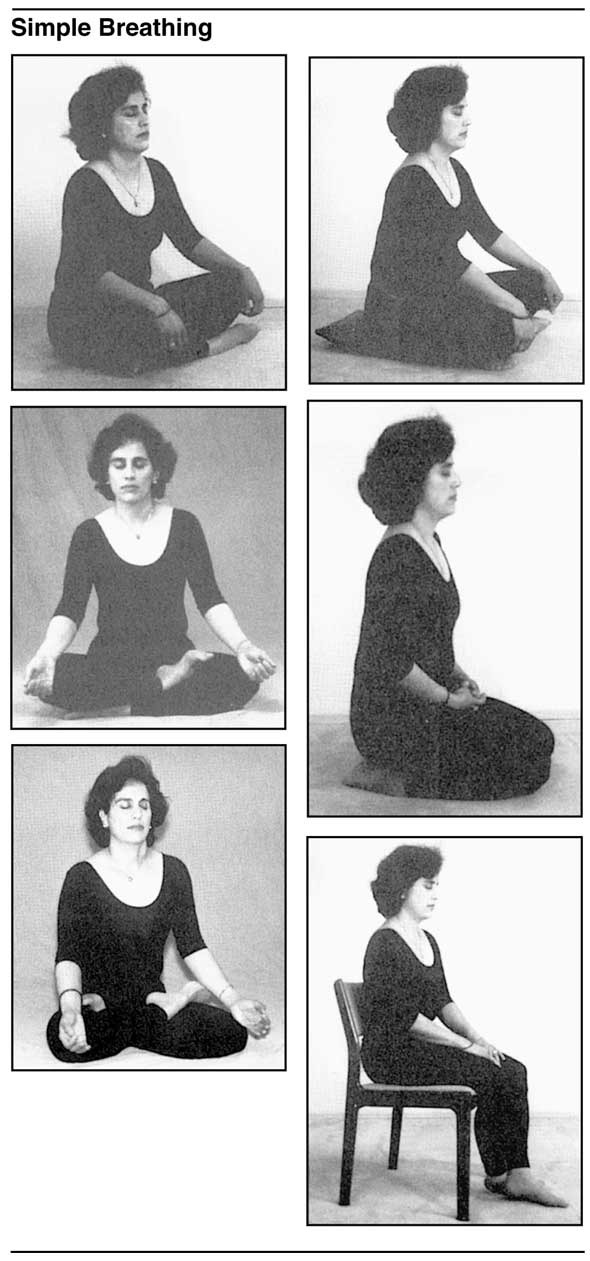
Generally, there are many tax and estate conservation advantages to funding the buyout through life and disability income insurance policies on the owners. The implications of assigning the ownership and benefits of such policies can be quite complex, particularly for businesses with multiple owners, and should be discussed with qualified professionals. Don’t confuse the purpose of “buyout” coverage with the “key-person” insurance demanded by lenders; the latter most likely will not be enough to buy out the deceased owner’s share. Review the buy-sell, life insurance and succession plan periodically to make sure that conditions and values are on track with what has been anticipated. Even if you have no interest in succession planning and simply want to “cash in” for the best price before heading off to a blissful retirement, it still makes sense to use a certain amount of foresight and circumspection in arranging a sale. Openly advertising your business for sale might alienate your existing clientele and ultimately reduce its value. Instead, you might hire a broker who has had experience selling businesses similar to yours. If you want to try it on your own, speak to other business owners – both buyers and sellers – to gain the benefits of what they’ve learned in the sales process. - Ashok Gupta is a financial planner. |TOP| ALTERNATIVE MEDICINE: After 2,500 years of successful use, this herb from north-central India is making its way into the arsenal of alternative practitioners. Modern medicine now recognizes that Ayurvedic physicians of the past had accurately characterized many health abnormalities in ancient texts such as the Charak Samhita. At that time, the gugul tree (Commiphora mukul) was scraped to yield gummy resins called “gugul.” These resins were then traditionally used for a variety of imbalances such as intestinal inflammation, diarrhea, urinary disorders and more specifically rheumatism and obesity. Indians and Europeans are still using gugul for many of the same conditions for which it was prescribed in the past, as a 1987 issue of Science Age noted. The high-quality standardized gugul extracts of today make it a viable alternative in the treatment of cholesterol abnormalities and obesity. Before you make any changes to your diet, however, you must confer with your physician, to avoid any unforeseen unpleasant side effects. Another nutrient used by many individuals seeking relief from inflamed joints is glucosamine sulfate, which is extremely popular with people coping with joint disorders and is one of the treatments of choice for many naturopathic doctors treating arthritic patients. Glucosamine sulfate is recognized in Europe as a chondroprotective agent, which is a substance that increases chondrocyte anabolic activity. Although people report excellent results in the long run from glucosamines, they exert no anti-inflammatory activity. Consequently, those individuals needing a little bit more than glucosamines to ward off joint problems, would do well to complement their regimen with gugul. Based on the observations of many herbologists, gugul may prove to be an excellent anti-inflammatory complement to glucosamine. And for you skeptics out there, this test was done on humans during a six-week period; these results are not a “mice-to-men” extrapolation. As you may have heard about other Ayurvedic herbs used in alternative medicine, gugul also has a varying array of potential effects. The Indian Journal of Medicine reported some amazing results in a 16-week trial analyzing the effects of gugul and HDL. Let me summarize the results so you don’t have to run down to UCSF to pull the article: HDL levels (“good” cholesterol) increased by 35 percent. So it can be seen that gugul has interesting potential and it is time that we re-examined this wonder of the past. It is one of the greater ironies of the contemporary world that Indians are reluctant to respect the ancient wisdom that informed its bygone era, while the West is beginning to show an increasing interest in older, Eastern schools of health care. The most important need today is not an uncritical admiration of all things past, but to keep an open mind and critically examine ancient methods to see if there is any knowledge that can be of contemporary use. Chances are, there is. - Dr. Kumar Pati, trained both in Western medicine as well as |TOP| HEALTH: That, of course, is breathing. Breathing is something all people do, but breathing consciously is quite another matter. Though we normally breathe without paying attention to our breaths as involuntary systems do the job, it is important to know that when we are under stress the breathing channels and other parts of the body associated with breathing get stiff with tension as mind and body work together. This physical fatigue further affects our thinking as the system is starved of oxygen. Practicing Pranayama is a very valuable technique that leads to a better and healthier lifestyle. Prana means life-force, yama means control. The technique teaches how to breathe consciously. When we breathe consciously we are able to absorb more oxygen. Along with the oxygen, we are able to preserve a great amount of life-force (prana) in the system. We are also able to release tension and free radicals. Inability to release built-up tension and free radicals causes mental fatigue, nervousness, anxiety, anger and imbalance in the nervous system. There are several breathing techniques that can be utilized to relax one’s body and mind. These include simple breathing, alternate nostril breathing and complete breathing. In order to practice simple breathing you should close your eyes (open your eyes if you are involved in any activities) and observe your natural breathing. By taking time out to observe your breathing, you become more aware of its pattern and changes. This is the first stage of conscious breathing (pranayama). If your breath flows heavily and rapidly, understand that you are going through some mental tension. Continue to breathe slowly through your nostrils while slightly expanding and compressing your stomach and chest muscles as you breathe in and out. When your mind is on the breath, notice you tend to breathe slowly and peacefully as you are able to recharge your mind and entire system very quickly. Practicing just one to two minutes of this simple breathing will help you relax and will alleviate the accumulated stress. While practicing natural breathing try to pull your stomach in while breathing out. When you are breathing in, raise your stomach slightly and breathe upward while expanding your chest. When you are exhaling, remember to pull your stomach in because exhalation is the most important part of complete breathing. Observe how smoothly the breathing flows because this increased awareness purifies all the breathing channels and, allows you to breathe correctly. While sitting down and closing your eyes, put your first two fingers in between your eyebrows and close your right nostril with your thumb, inhale with your left nostril and close it with the ring finger. Opening your right nostril, breathe out gently, then breathe in through the same nostril and close it. Open your left nostril, breathing out, and continue to follow this alternating pattern. After practicing a couple of rounds of this, your breathing will naturally get deeper and smoother.
- Vasanthi Bhat is a Bay Area-based yoga instructor |TOP| START-UP: But he realized the information superhighway was too important to ignore. “I did not want to miss out on the wave of excitement of the Internet,” he said. So he decided to take his business online, and hit his first speed bump. Setting up a web page, was not a skill that one is born with, he ruefully discovered. “First I tried a couple of different software, like I tried Microsoft Frontpage,” he recalled. “But I ended up spending so much time trying to learn the software that I didn’t want to get into it.” Then he found Hotbiz.com, a Silicon Valley start-up company that provides precisely the service that web novice entrepreneurs like Bates needs. “It was online and it was easy,” he said. “I got up my store up and running.” What started almost in jest last year now accounts for a third of his business. He still remembered his disbelief after getting his first online order after setting up his web site with the help of Hotbiz.com. “At first I was skeptical,” he said. “I thought it can’t be this easy. After I got my first order I was, like, this is too easy.” Bates is not the only happy customer for Hotbiz.com. Krissa Fernandez is another one. “I had no idea having a web site could increase my business so much,” says Fernandez, owner of EatAlmonds.com, a site that sells farm grown almonds. Bates and Fernandez are two of nearly 10,000 customers set up by Hotbiz.com, a San Jose, Calif.-based company that helps small businesses set up their own web sites. Fernandez says she got the web site after a friend told her about the Internet tools Hotbiz.com had to offer. “With the help of Hotbiz.com, I was able to set up a free web site and secure online ordering, “says Fernandez. “The response was great and I was able to save time and money.” Hotbiz.com is one-stop shop for small businesses trying to get into e-business. The company provides the key tools for people who want to set up shop over the Internet. These tools include E-Commerce, which allows customers to purchase goods using credit cards; Intranet, which allows businesses to communicate with their own employees using an in-house calendar system and Internet which allows clients and customers to do business on the world wide web. “Many small businesses want to get online but find it too expensive to set up shop on the net,” says Parul Chheda, co-founder and CEO of Hotbiz.com. “That’s where we come in, we help these businesses by offering them tools to set up a free web site, enabling them to do business online,” says Chheda. For example, Chheda says a layman can set up a web site through Hotbiz.com, in a day, using premade Hotbiz.com templates. Templates are prototypes of a design made to fit a certain pattern. With the help of these templates, clients can set up their web sites by fitting their business model into these templates. On the other hand, for custom-made sites, clients would have to pay Hotbiz.com to develop a site they require. “Hotbiz.com is different because we give applications to small businesses giving them the opportunity to be creative with their business web sites,” says Chheda. In a nutshell Hotbiz.com is like a service station providing online services, for small businesses that are just beginning to develop their own online services. They also offer website development, email, online management services, virtual bulletin boards, chat rooms and more. “We provide everything for a company going online. That way businesses don’t have to go to other sites to get all the different services like e-commerce or intranet,” says Dennis Empey, VP of marketing and sales at Hotbiz.com. “Everything they need is offered on our web site,” “The best part is our clients don’t have to be Internet savvy to get a site of their own using Hotbiz.com tools,” Empey adds. Hotbiz.com’s easy-to-use applications also include web hosting plus e-commerce, intranet and Internet tools with 24-hour customer-service support. Right now Hotbiz.com boasts of increasing revenues of about 15 percent to 20 percent per month, according to Empey. So they are unfazed by the rollercoaster ride in the stockmarket of dot-com forms that have many hi-tech executives reeling. The future goal of Hotbiz.com is to build the company into the largest Internet tool provider. “We don’t own the customer,” says Empey. “We want the customer to be the end-user,” says Empey. “Our goal is to build a self sustaining amount of opportunities and there are several right now,” says Chheda. “There’s always a chance of going IPO too,” concludes Chheda. Hotbiz.com was founded in March 1998 by Parul Chheda, her husband Mahendra Chheda, a former Intel engineer and R. Paul Gupta, founder and former CEO of Quality Semiconductor, which was acquired by Integrated Device Technology for $35 million. The company has 45 employees, 20 people at their San Jose facility and 25 people in their web development and hosting facility in India. The company has already raised $2.5 million in capital to begin aggressive marketing as well as develop new services. |TOP| SELF HELP: So how can we develop a healthy relationship with our inner self? The first step is to recognize and dismantle the foundations created by the wounds that are causing anger, frustration, insecurity, stress, anxiety, loneliness & failure. These foundations, deeply embedded in our emotions, cloud our vision to reality. When we feel emotionally hurt by someone’s action, reflect on why you feel the pain and see beyond the clouded vision. When you experience the emotional pain, how you feel has a lot to do with how you see yourself. Reflect on what hidden wounds come up for you when you hear something you don’t like. Your emotional pain is communicating with you. Are you listening and learning from it or are you feeling sorry for yourself? The second step is to learn from how you see others. When you see flaws in others, you are projecting your own flaws onto them. When you see virtues in others, you are projecting your own virtues onto them. The way to recognize and dismantle your foundations is to learn from how you see others. When you recognize a flaw in another, reflect upon your own flaws. You will not be able to recognize a flaw in another without having that flaw in you. The third step is to feel good from the inside out, and to stop looking for approval outside of oneself. Remember it is your fear turned into insecurity that is looking for approval. Feel fulfilled by seeing yourself beyond the skin-deep person. You are comprised of your thoughts, words, deeds and action. When your thoughts are beautiful, your words will be beautiful; when your words are beautiful, your deeds will be beautiful; when your deeds are beautiful, your actions will be beautiful; and when your actions are beautiful, your inner beauty will shine. You will mesmerize people in and around you. The fourth step is to know and understand that no individual is superior to or inferior to you. When you feel superior to someone, you have ego issues and when you feel inferior to someone, you have insecurity issues. Neither feeling superior or inferior to anyone is healthy. Remember the existence of duality in everything – when you are feeling superior to someone, it is more than likely you are feeling inferior to someone else. One cannot exist without the other. The fifth step is to embrace your entire being. Love your entire self unconditionally, the good, the bad and the ugly. Just as one would not be able to experience light without experiencing the dark, how can one experience the good without experiencing the bad? We are all made equal and have tendencies to do good and bad. When we make conscious choices, we tap into our goodness and when we make unconscious choices, we tap into our dark side. Remember that we are all born equal, it is our circumstances, environment and personality that mold us into our present state – but we still have a choice to break away from unconsciousness and live consciously. The sixth step is to live consciously. Living consciously is living in the present moment. Most of us live in the past or the future: a past that does not exist in reality and the future that is not here as of yet. The biggest asset we have at any given time is the very present moment and it is sad that we are absent from our present moment 90 percent of the time. A majority of accidents occur when a person is absent minded. Start being in the present moment. Letting your mind wander to your vision is an excellent thing, but you need to book time for this aside when you are relaxed and not engaged in mind-intensive activities. The seventh step is to forgive yourself and others who have caused pain unconsciously to your being. Remember no one person can cause pain consciously as we are all loving beings. We all have wounds we are healing and when we act from those wounds, we are acting unconsciously. No one deliberately causes harm to anyone. Forgiveness opens doors to your healing process and allows grace to flow into your life. Exercise your birth right by being aware of your feelings, learning from others, being in control of how you feel, feeling the equality in all, loving yourself, living consciously and forgiving yourself and others. These are a few steps to soulful and rich relationships. Are you going to make a choice of living richly or poorly? - Neerja Bhatia is the founder of |TOP| CULTURE: Bilaskhan himself crafted a beautiful raga, which in his honor is named Bilaskhani Todi. Although it is less widely known, Bilaskhani Todi has regained recent popularity, thanks to the many presentations of this raga by Ustad Vilayat Khan. Raag Bilaskhani Todi is a magnificent afternoon raga. The beauty of this raga is that it is carved out of Bhairavi’s surs, and while maintaining its own unique personality, this raga offers reflections of both Raag Bhairavi and Raag Asavari. This is a sampoorna raga, using all seven swaras in both aroha and avroha (ascending and descending scales), and it belongs to the Bhairavi Thaat. Pancham is Bhairavi’s Samvadi sur, and it is also important in Raag Asavari. Therefore, to preserve the distinct character of Bilaskhani, this raga uses Pancham very sparingly. In the Bilaskhani aroha, for example, we cannot go to Pancham or Dhaivat from Madhyam. Instead, we must go back to Gandhar or Rishab, and then proceed to the next swara from there. Similarly, in Bilaskhani’s Avroha, we cannot move from Pancham directly to Madhyam or Gandhar, instead, we must either leave out Pancham or go back to Dhaivat. By eliminating the focus on Pancham in this way, we avoid the tendency to play either Bhairavi or Asavari. In Raag Bilaskhani, Rishab and Nishad are paired in the Avroha, and to preserve this raga’s character, which is distinctly different from Bhairavi, Nishad is used very sparingly in the aroha. This feature also offers a glimpse of Asavari while still maintaining the tonal integrity of Bilaskhani. Another distinctive feature of Raag Bilaskhani is its use of Todi’s ati komal gandhar. It takes practice to recognize the difference in this note. This Gandhar is a little softer or lower than the komal gandhar of Raag Bhairavi, and its use is a defining characteristic of the personality of Bilaskhani Todi. These unique features of Raag Bilaskhani Todi create complete tonal texture that make this raga especially interesting and engaging to the listener. - Habib Khan is a well-known sitarist |TOP| Bollywood: | Guftugu | Hindi Film Review I | Hindi Film Review II | And giving him company was another star child, Kareena Kapoor, paired with Abhishek in Refugee. While the press was miffed for the Young B acting pricey and refusing to spare a moment for a quote, Abhishek only proved that he’s a chip off the old block. After all, look where the “private person” attitude got his father. But witnessing the way this six-feet tall son lovingly hugged his mother, no one can begrudge him the private moment he wanted to share with his family. If not here, people in the U.K. supposedly are excited about it. Guess, the show would be something to watch out for. So what are an obviously slim Tabu and svelte Aishwarya Rai doing in the Telugu version of the Tamil film Kandukondain Kandukondain? Slated for release April 28, 2000, let’s see whether our actresses can spin the same magic that they weave around the Hindi audience. The best among the current brood of actors, this young actor-poet has currently signed on a role of a villain in director Hansal Mehta’s new venture Dil Pe Mat Le Yaar. Here’s an actor to watch out for. And before we could mull over this bit of information, Akki was spotted doing the rounds of Goa and Hyderabad in hot pursuit of the voluptuous Twinkle Khanna. Now we hear that they are supposed to be getting married and settling down in Canada. Knowing Akshay, let’s see which new actress he co-stars with before we decide on who gets to spend the rest of her life keeping him away from women. Hindi Film Review I: Our obsession for the rich girl-poor boy script suffuses a generally light-hearted movie that Dil Hi Dil Mein could have been. But the point being that it isn’t — and it doesn’t turn out quite that way. The movie begins on a sorry note of how this poor (I-have-oiled-my-hair) guy Raja (debutant Kunal with an abominable hair cut) wants to study MBA in a reputed institute, Ramchandra Institute of Management Studies, in Mumbai. And how coincidentally (the kind which happens nowhere but in Bollywood) his resume flutters in the Nariman Point breeze to land on the car of this big hearted samaritan, who also happens to be the founder of the Ramchandra Institute. Obviously, Raja gets admission despite the fact that he doesn’t have the money to support himself or afford studies. Here, miraculously the oily-haired poor guy turns internet savvy, is able to afford good clothes and looks extremely well-fed. The angelic hand of his benefactor, one surmises. But sadly, he is unable to afford a better hairstyle. Raja and Roja (Sonali Bendre) sit in the same cyber cafe‚ but are unaware of the fact, as they chat through the net, exchange e-mails and fall in love. Within months they decide it’s serious, exchange pictures, only to discover that they are just a stone’s throw away from each other. But now, they are uncertain or shy (both seem to have missed the briefing from the director) and decide to just stand on Bandra station waiting for trains, sneaking glances at each other and speaking through telepathy. After an eternity of staring and exchanging glances, when if nothing, you believe its time they at least learned sign language, they start writing letters which never get delivered. As a result, there’s a misunderstanding and both believe that the other is not interested. Between misunderstandings, attempts at making up his mind and flunking tests, Raja bonds with his benefactor, Mr. Ramchandra, forming a father-son relationship. Just when you expect the internet to set things right for them, Raja realizes that his mentor is the father of Roja. And when he fixes her marriage elsewhere, Raja is dutybound to let her go. Of course everything sets itself right, for all that ends well is a Bollywood movie. The film makes absolutely no sense, except for some beautiful cinematography by P.C. Shreeram, and A.R. Rehman’s music. While Kunal needs an immediate haircut, Sonali Bendre walks breezily through the movie as though doing her Nirma soap ad. Someone has to put a stop to Johnny Lever who is not in the least bit funny, except for doing a travesty on Kunal’s hairstyle. It’s a pity that such beautiful cinematography and the obviously high budget is wasted on a very badly handled movie. Chatting on the net would pay off better than taking time off to watch this movie. Rating: ** (Mediocre) |Return to Bollywood Index| |TOP| Hindi Film Review II: To achieve this, Ritu pretends to go on an European tour (after the success of Dilwale Dulhaniya Le Jayenge, that is the only tour that Indians seem to prefer) instead sending Rani in her place. Beginning from the airport, all Raj does is irritate Anjali, till almost through with the tour. But still she falls in love with him, with a bus-full of pervert married men (who are all eyeing each other’s wives) and their wives trying to play Cupid. Meanwhile Raj goofs up and assumes on the trip that Helen Brodie (wonder what induced this talented model to take up this role?) is Anjali, and tails her. But between sleuthing and singing songs (with the Raju...number directly lifted scene-by-scene from Dilwale Dulhaniya...) he falls in love with Anjali. Strangely, all through the trip, despite traipsing together for days on the trip, he never once finds out their true names or hears anyone else calling her by her name, Raj obviously realizes a bit late in the day that he is in love with Anjali, and assuming that she is his friend Nirmal’s wife, he is heartbroken. While Rani assumes Govinda is Ritu’s husband, and both break up by the end of the tour, coming back to their respective towns. Horrified that she fell in love with a married man, Rani agrees to an arranged marriage. So the lovelorn hero comes back (true to traditional Bollywood style) to woo her back after dollops of buffoonery. Paresh Rawal and Satish Kaushik are wasted here, while the digressions of Tanaaz Currim and the rest of the group is not digestible at all. A visibly thinner Rani Mukherji wears clothes in coordination with the color schemes of Govinda’s outfits. While Govinda is as usual good with his brand of comedy, he seems to have gone overboard with the essaying of different getups. Especially the portrayal of his entire filmi family himself as the grandfather, grandmother, father, mother and sister, is a bit too much, as is his Sardarji and feminine getups in the airplane. The film misses out on the lip sync in the initial few reels, making the scenes seem a little off kilter. And for reasons known only to the director, British Airways seems to have become our national carrier. While embarking on the tour, the group boards an Air India flight but while getting off, they are on British Airways. Again while flying from Delhi to Mumbai, Govinda is seen taking off in British Airways. At the end of it all, it’s the turn of the audience to say to the director: Hadh Kar Di Aapne. Rating: ** (Mediocre) Telugu Film Review I: Meanwhile Chowdary (Raghyvaran), the state chief minister, is an indecisive leader whose vacillation in balancing the demands of the interest groups leads to riots and discontent. Purushottam photographs these riots and his work helps create awareness of the suffering of the people. He is promoted in his job and gets the opportunity to interview the chief minister. In that spirited interview Purushottam questions the CM’s lack of accountability. The CM retorts that Purushottam is misusing the media to malign him, When Purushottam shows evidence, a piqued CM challenges Purushottam to act as CM for a day. Purushottam accepts and starts his day as CM with a meeting with civil servants. He instructs all the officers to dig out all the files on corrupt officials and he suspends all of them on the spot. He makes surprise inspections in slums, ration shops, and solves problems instantly. He organizes a live tele-conference with the people and offers concrete solutions. By the end of the he sends 12 ministers to jail, at the end of the day even arresting Chowdary. As the media covers Purushottam and broadcasts live, he Purushottam becomes the icon of good governance. After Chowdary resumes power, he is dumped in a no-confidence motion. Fresh elections are announced. Muddu Krishna (Manivannan) is a secretary to CM. He plays a vital role in bringing Purushottam, who is reluctant, into active politics by making him realize the importance of being a constructive politician. Purushottam’s party wins in a landslide. After getting elected Purushottam implements innovative ideas. Chowdary and other leaders start plotting to assassinate Purushottam. The remainder of the film deals with how the rivalry of the two is resolved. Arjun lives up to his reputation as Action King, but also shows his mettle in a role that needs more brain than brawn. Manisha looks different from her earlier films. She epitomizes the innocence of a village belle. While some may not like her raw sensuality in the first half, she is a treat to watch in songs. Manivannan, essaying a powerful role with a touch of comedy, continues to establish himself into the hearts of Telugu viewers. Laila has an insignificant role, and Sushmita Sen looks very sensual in a special song. With a slick, deft screenplay, Shankar emerges also as a film maker of social responsibility. He skillfully weaves the love story of Chandramukhi and Purushottam and shows it as a backdrop to the political rise of Purushottam and fall of Chowdary. Anand, a relatively new name in cinematography, reaches new heights. The film is a treat for the eyes. A.R. Rehman did justice to his job as well, and songs and backdrop score is excellent. Director Shankar deserves special credit for adapting relevant social and political issues to cinema and directing it with such skill, without losing the commercial touch and glamour of the film. His character of CM closely resembles the working style of Andhra Pradesh Chief Minister N. Chandrababu Naidu. Film makers ought to take a leaf out of Shankar’s page. The film not only entertains, but also gives viewers food for thought. Telugu Film Review II: Now Srivalli has a friend who lives abroad, Vamsi (Venkat), whom she regards as her best friend. The two were sole survivors when a plane crashed 20 years back. Srinivas discovers that Srivally keeps a fact secret from her college friends as she does not want pity: She has no parents herself and she runs an orphanage. Srinivas and Srivalli fall in love and have a lavish engagement party. Just in time Srilata (Simran) attends the engagement. Srivalli comes to know that Srinivas and Srilata knew each other abroad. Srinivas admits that Srilata was his tour guide when he visited Europe, but adds that they are just good friends. Srilata, who has a kid, Teja (Harsha Vardhan), tells Srinivas that her husband has left her. Teja, the deprived son, becomes attached to Srinivas. As the wedding day approaches, the plots thickens. Srinivas suspects there is something fishy about Srilata. When he confronts her, Srilata confesses that when Srinivas visited Europe, he and Srilata were inebriated with an intoxicant given by tribals. They had made love, and Srilata only realized that later when she got to know that she was pregnant. In fact, Srilata loved Srinivas with all her heart. So she decided to have the child and see Srinivas in him/her. Teja overhears this. As a happy Srivalli gets ready for the wedding, Srinivas agonizes over why this accident happened to him. Srilata does not want to break the engagement and spoil the happiness of Srinivas. Teja knows that Srinivas is his father, but cannot tell him that as he has promised his mother that he won’t let Srinivas know about it. Amidst all of this Vamsi is flying down to India and propose his love to Srivalli. The rest of the film untangles this complex web of difficult circumstances. Mahesh Babu plays a sentimental role with great skill, and has a five-minute mime sequence that is hilarious. He fits less well in the role of a father, but his charm sees him through in the end. Saakshi Sivanand excels in the role of a glamour queen. Simran enters the film in midstream, and dominates the second half with her under-played acting. The less said about Venkat, the better. He needs to work on his dialogue delivery. Harsha Vardhan, however, is amazing. He brings the film to life with his presence. The whole complexion of the film changes when he enters in the second half. Inspired by Jab Pyar Kisi Se Hota Hain, the story is thin. Y.V.S. Chowdary tries to pack in too many things into too little time. While his directing skills in the second half are good and he proves that he can etch relationships between characters competently, he must realize that a well-shot scene goes only so far. He must make sure the scenes are put together into a coherent, seamless whole, and here he has a lot to learn. Ramana Gogula’s music is good, though some tunes are lifted from a Hindi film and a few English numbers. The first half , with a thin story line, focuses on Mahesh Babu in different outfits, and is boring. The storytelling improves in the second half. Overall, the length of the film is too long, and some shots are lifted straight out of the aforementioned Hindi film. Inspiration is fine, but there is a difference between mindless copying and improvising and polishing on something, and there is little sign in this film of that. Recipe:
Method – Seema Gupta is a homemaker |TOP| May-June Horoscope Bay Area-based astrologer Pandit Parashar can |TOP| |
||||||||
|
|
|
|
|
|
Advertise in Siliconeer | Home | Subscribe PRINT Issue | About Us (FAQs) | Contact | Locations | Staff Login | Site Map
© Copyright 2000-2013 Siliconeer • All Rights Reserved • For Comments and Questions: info (AT) siliconeer.com |
|