!-- Start Alexa Certify Javascript -->
|
|||||||||||||||||||||||||||
|
|||||||||||||||||||||||||||
|
|
|||||||||||||||||||||||||||
|
|||||||||||||||||||||||||||
|
|
|
|
|
|

DECEMBER 2003 |
IN THIS ISSUE
MAIN FEATURE SMS, Cell Phones & Internet : Elections Go High Tech By Siddharth Srivastava TRADITIONAL KNOWLEDGE Traditional Healthcare : Bangalore's FRLHT By Deepak Goyal INDIAN DIASPORA NRI Homecoming : Pravasi Bharatiya Diwas By Veena Srinivasa Publisher’s Note • Infotech India The Aish that Wasn't: Cyber Crook Feigns Love • The Hydrogen Economy Healthcare: Multiple Sclerosis • Finance: Family and Financial Health Yoni for Dummies • Legal Issues: Planning Ahead • Queue Sera Sera Ethnic Media Bazar: NCM Expo 2003 Instant Money Transfer: Western Union & Indian Postal Service Tie-up Community News: Kiran Bedi... Cupertino Chamber's Diwali... Video Award Auto Review: 2003 Cadillac Escalade • Bollywood • Tamil Cinema Recipe: Idli Pasta • Horoscope |
|||||||
|
Publisher's Note
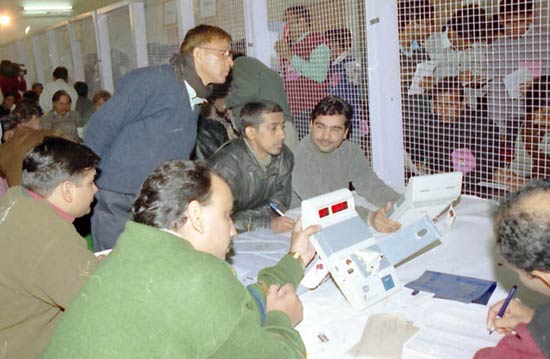
The momentous information technology revolution that has shaken India is beginning to make its influence felt in the rough and tumble world of politics as well. In this issue’s cover story, we look at how the Bharatiya Janata Party has jumped on the high tech bandwagon with gusto and is using phone messaging, cell phones and other high tech gizmos to put its message across. Congress remains the staid party of yesteryear, and appears to be proud of it. It is less clear what the broader implications of this development are. India has been, and remains, a nation of rocket scientists and the bullock cart. The fact remains that all the IT revolution still remains limited to small oases in a vast expanse of teeming millions who live in conditions of preindustrial backwardness, and unless technological benefits spill into the hinterland, India’s technological prowess will continue to be at best a socio-economic anomaly. MAIN FEATURE  SMS, Cell Phones & Internet: Elections Go High Tech - By Siddharth Srivastava After a winning, tech savvy campaign in Gujarat, the BJP is keen to see if it can repeat its triumph with hi-tech campaign gadgets in assembly polls. While it remains to be seen whether the BJP or the Congress will emerge winners, many are saying technology has already won, but Siddharth Srivastava remains skeptical. It is election time in India with many descriptions used to define the approaches of the two main political parties, the Congress and the Bharatiya Janata Party — terms like “soft Hindutva” and “hard Hindutva” are being bandied and pundits are pondering the use of the communal card and the caste card. A new debate, however, has also emerged about technology versus the personal approach. Some have labeled it tradition versus modernity. Elections to crucial states of Chhattisgarh, Rajasthan, Delhi and Madhya Pradesh took place Dec. 1 this year, and general elections are not too far off. And as things seem to be headed it is the BJP that is making every effort to reach the electorate using the latest in gadgetry. Perhaps the first time technology was used on a large scale to influence voters here was during the Gujarat elections in December 2002, when its principal proponent, the current chief minister of Gujarat, Narendra Modi, who belongs to the BJP triumphantly swept the elections. It was a blitzkrieg of know-how — from widespread use of the Internet, to mass SMS (short messaging service) and effective co-ordination using state-of-the art cell phones. While BJP workers carted hundreds of mobile phones from New Delhi to Gujarat for use, crisp chain messages extolling Modi’s virtues as well as his vision were SMSed to voters across Gujarat as part of the campaign program. Over 25,000 BJP workers in Gujarat were trained at using the SMS while Modi personally tested out their skills when he fought the by-election from Rajkot-II. Modi used every tool to promote his carefully constructed superhero image: from machine-produced billboards, to the Internet and specially designed SMS messages. The Web site www.narendramodi.org was regularly updated and recorded massive traffic with over 20,000 hits every day while the top banner of the site flashed Modi as “Milestone of Dynamic India.” The Web site database was also prepared in Gujarati, using multi-lingual software with the facility of live chats with BJP leaders every night. The Congress message, on the other hand, was as loud as loudspeakers could carry and as staid as hand painted posters with party workers sticking to old-fashioned door-to-door canvassing. The chief ministerial candidate Shankersinh Vaghela, who lost the elections, was painted as a grassroots leader whose only mantra was development and prosperity. While one cannot estimate how much of a difference SMS messages actually made to the voter psyche, the fact of the matter was that the side that won was tech-savvy. It was said that technology did emerge victorious, as it is the small percentages that can make the big difference in Indian elections. In the current round of elections, the technology brigade was back in action once more. Within the BJP, apart from Modi, other younger leaders such as Arun Jaitley, Venkaiah Naidu and Rajnath Singh subscribe to the same approach. Kurta-clad BJP leaders are doing the rounds with corporate, tech-savvy style presentations replete with the use of databases, statistics and scientific inputs. The BJP’s tech strategy was summed up by union minister Arun Jaitley recently who said that the BJP’s main target group in the elections was the youth between the age group of 18-25, the most likely to be in tune with the latest technologies. It is apparent that, after the success of Gujarat, the BJP is going the whole hog in replicating the Gujarat technology model, using SMS and campaigns run over mobile phones and the Internet. The Congress party, though, seems to be still caught in a bit of a time warp. Reports emanating from Rajasthan suggest that it is again going to be tradition versus modernity in the forthcoming assembly elections, with the BJP going hi-tech while the Congress relying on the usual methods. Mahesh Joshi, the deputy chief whip of the Congress party in Gujarat has been quoted in a national daily as saying: “Our campaign will be low profile and conventional because the Congress is a traditional party. Information Technology does not have much role in elections. While the Congress remains the party of the poor, the BJP represents the rich. The poor have no mobile or Internet access.” On the other hand, BJP’s campaign in-charge Sunil Bhargava was quoted as saying: “The role of technology has increased over the last couple of years. About 60 out of the 200 assembly seats in Rajasthan are urban. SMS and e-mail messages would be quite effective.” In Delhi, the strategy of the two parties looks to be similar as the current Congress chief minister Shiela Dikshit is known for her fondness for technology. So is the case with Chattisgarh. To an independent observer like this correspondent, it seems it matters whether Congress or the BJP wins. Technology has already won. Advertising and hype may have become more state of the art, but the actual voting exercise and its follow up remain generally antiquated. Electronic Voting Machines may be finding greater use, but maverick former Chief Election Commissioner T.N. Seshan’s attempt to issue universal high tech voter identification cards remains a distant dream, and a distant one at that. Of course, before getting too wrapped up in technology, one must concede that state of the art or not, India has done a wonderful job when it comes to conducting elections. From remote high places to the inner city slum, voter registration is nearly universal. Compare that to the U.S. where barely half of eligible voters even register. And after the Florida circus of “hanging chads” and “pregnant chads,” and serious concern expressed here about touch tone screen voting machines here, it appears that it is not technology that really matters, but the rigor and discipline with which the commitment to make the loftiest ideal of democracy—exercise of the franchise—is put into practice. Here, with its bullock carts and wizened bureaucrats and not in spite of them—India continues to shine. It is not its democratic practices that really cause concern, but the increasing lawlessness and criminalization of its political class that is disquieting, and how relevant technology is resolving that crisis is not clear at all. - Siddharth Srivastava is a freelance |TOP| INFOTECH INDIA The software exports from Tamil Nadu, worth Rs. 31.16 billion during 2001, contributing 11 percent of the Indian market share, has crossed Rs. 70 billion during 2003, an increase of 128 percent, contributing 17 percent of national exports, Vivek Harinarain, secretary, information technology, Tamil Nadu, told reporters in Coimbatore. Considering the increasing trend in the growth rate, it was expected that the state could contribute at least 20 percent to the Indian market share by 2008, he said. However, in view of Karnataka and Andhra Pradesh and other northern states picking up IT business, Tamil Nadu had to gear up to sustain the growth rate, he cautioned. On starting an IT park in the city, he said land has already been identified near Coimbatore Medical College and in the first phase, infrastructure would be provided at 2,50,000 sq ft at a cost of about Rs. 350 million. NIE is an engineering institute affiliated to the Visweswaraiah Technology University. “As part of our training mission, we plan to collaborate with educational institutions like VTU and its affiliated colleges to add current, in-depth, application-oriented drive and control courses to the engineering curriculum,” Bosch Rexroth India managing director Wolfgang Wagner told reporters here. He said the firm would train teachers, provide interactive computer-based teachware, supply training rigs and set up complete drive and control training laboratories. “The objective is to give engineering students an opportunity to gain hands-on experience in the labs as well as in our factories,” Wagner said. The acquisition allows Cognizant to serve customers in the Benelux region of Europe in a better way by adding local clients, industry expertise and local language capability, a Cognizant press release said. The acquisition further strengthens Cognizant’s industry-leading 4th generation offshore delivery model, the release said. The acquisition process would be conducted in accordance with the newly introduced delisting procedure under the SEBI (Delisting of Securities) Guidelines, which would provide for an acquisition of Digital GlobalSoft’s shares through a shareholder-led reverse book-build process, an HP press release said. Shareholders of Digital GlobalSoft may tender their shares to the acquirer at a price at or above the “floor price,” determined by the guidelines (being the average of 26 weeks traded price as quoted on the NSE preceding the date of the public announcement of the delisting), it said. HP was of the view that a price in the region of Rs. 750 per share provides an attractive exit for the public shareholders of Digital GlobalSoft, it said. The price, the statement said, represents a premium of approximately 50 percent to the average weekly high and low of the closing prices of the company’s shares as quoted on the NSE in the 26 weeks preceding the date of this statement. There are some pluses, a few minuses — but all things added up, Kolkata ranks high on destinations of choice for IT-enabled services companies, reports the Kolkata Telegraph.. “This is not from a Buddhadeb ‘turnaround’ Bhattacharjee speech, but the findings of a study of ITES locations in India, conducted by Hewitt Associates,” the newspaper says. According to the confidential report the city ranks second only to Delhi — and way ahead of Mumbai (reaching a state of saturation, as per the report), Chennai, Chandigarh, Pondicherry and Goa — when it comes to “quality of talent.” Out of a maximum score of 15 — with five points each for overall communication skills, linguistic skills and IT and problem-solving skills — Kolkata scores 12.40, close behind Delhi at 12.50 and comfortably clear of Mumbai with 12. The final figure is a sum total of average scores given by placement consultants, training institutes and students quizzed by Hewitt Associates. “As many as 50 per cent of technology suppliers will be eliminated from the competitive landscape,” said Partha Iyengar, research vice-president at Gartner India. Gartner expects the backlash towards shipping of software work to India, which is becoming a major hurdle for the country’s booming software industry, to subside by 2004-end or early 2005. “The backlash is heating up but will cease to be a major issue. There is a realization that it is good for the U.S. firms. Also, the U.S. economy is firming up,” said Iyengar. Software exports, which are expected to touch $11 billion this year, is displacing technology experts in high-cost countries like the U.S. and replacing them with low-cost specialists mainly from India and few other countries. In a series of regional forecasts focusing on issues for 2004, Gartner stated that the days of the “customer is king” will shortly end as market forces crush the weaker vendors. This will result in most IT sectors being dominated by a few large vendors that will not be governed by cut-throat pricing. British-based Aviva said the new jobs in India — 2,000 in administration and information technology and 500 at call centers to support the group’s general and life insurance businesses — will back up its operations in Britain and Canada. The company said 80 percent of the jobs created in India will be accommodated by a combination of expansion, vacancies, staff turnover and voluntary departures in Britain and Canada. But it said it could not rule out layoffs in Britain and Canada. Aviva employs 59,000 staffers worldwide, including 33,000 in Britain. Richard Harvey, group chief executive of Aviva, said the company was operating in an increasingly competitive environment. “Our customers want value for money products and high levels of service so it is vital that we continually explore opportunities to improve our efficiency while maintaining service levels,” he said. “Our staff in India are an important part of this process and our experiences to date have been positive.” Dave Fleming, national secretary of the Amicus union, called upon Aviva to reverse its decision. “These job cuts will have a serious effect on many local communities where Aviva has sites for the sake of a 40 percent saving that will not be passed onto their customers,” Fleming said in a statement. Asked about British companies transferring work to India, Prime Minister Tony Blair said at his monthly news conference that such changes can’t be prevented. “We live in an economy today which is global, in which there is going to be a lot of churning of jobs, in which the old concept of 9-5 jobs, that people kept the same job for many many years, is changing, has already changed,” Blair said. “The mission to the moon, Chandrayaan-1, would enable us to study many features of the moon, evolution of the planetary systems and to map the lunar surface,” he said, delivering the 24th convocation address at Anna University here. Nair said similarly, ASTROSAT, a dedicated satellite to observe the universe, and Megha-Tropiques, to study the tropical climate, were on the anvil. “These missions will go a long way in kindling the scientific temper besides obtaining data for fundamental research,” he said, adding that India can take pride that “we rank within the top four or five space-faring countries in the world thanks to our self-reliant strides.” “If there is a more liberal regime of free movement of businessmen and professionals between India and Europe, this demand can be met within your countries. In the absence of such a liberal regime, outsourcing is inevitable,” Prime Minister Atal Behari Vajpayee said at the India-EU Business Summit in New Delhi. “If people cannot go where business is, business will eventually come to where people are,” Vajpayee said. He said outsourcing increased the competitiveness of European and American companies with increased profits being ploughed back into their economies and barriers to movement of persons. Vajpayee said the demographic profile of Europe and America necessarily meant that these countries would need induction of a younger force from outside in the coming decades. Pointing out that while 200 of the Fortune 500 companies extensively used India and have their research and development base, he said very few were from Europe. Juster, in Delhi for the second meeting of the India-U.S. High Technology Cooperation Group, said both countries had agreed to work together to prevent the proliferation of sensitive technologies. “India wants to see strong progress in the area of expanding trade with the U.S. in strategic goods and technologies, as well as in the civil space and civilian (nuclear energy) sphere,” Juster told a press conference. “The U.S. remains committed to enhancing our cooperation in each of these important areas in keeping with our laws and national security concerns. We continue to grant India the widest possible access to dual-use technologies and goods.” The U.S. recently eased its rules on the export to India of dual-use technology or hi-tech products that could also have military applications. Washington slapped military sanctions on India and Pakistan when the rivals conducted nuclear tests in 1998. The sanctions were lifted after both countries promised support for the US-led “war on terrorism” launched following the September 11, 2001 attacks. US defense firms including Lockheed Martin are hoping to sell equipment to India, whose military had long avoided US supplies. India still relies on its Cold War ally Russia for more than 70 percent of its military equipment. The name is rather a mouthful, but the work it does is stellar. The Bangalore-based Foundation for the Revitalization of Local Health Tradition has taken up the Herculean—and vital—task of reviving India’s rich traditional reservoir of healthcare knowledge and translating that knowledge into accessible healthcare for its many millions of disadvantaged citizens. “FRLHT was founded in 1993 in the conviction that the revitalization of the Indian Medical Heritage holds two promises for India- self reliance in primary health care, for millions of households and the possibility for original contributions to the world of medicine,” is Web site announces. “It believes that in this era of globalization, India should make fuller use of her rich and diverse medicinal plant knowledge for her own needs as well as confidently share with the rest of the world products and services based on her heritage on fair terms.” It happily wears the moniker of “unconventional” educational institution as it focuses on two key areas: conservation of medicinal plants and revitalization of local health traditions. It’s already beginning to draw international attention. FRLHT has just won the prestigious alternative medicine award of New York’s Columbia University for its “outstanding” role in promoting traditional medicine systems and conservation of Indian medicinal plants. FRLHT director Darshan Shankar Nov. 20 received the International Cultural Stewardship award instituted by the university’s Richard and Linda Rosenthal Center of Complementary and Alternative Medicines. The citation appreciated FRLHT’s development of extensive database on traditional medicine plants and complimented it for establishing a quality control and product development laboratory which is attempting to interpret traditional knowledge with aid of modern tools and for developing a national herbarium of Indian medicinal plants. In all, five awards were presented including one to Britain’s Prince Charles for facilitating the implementation of integrated healthcare, combining the best of modern and ancient approaches. Darshan Shankar said the foundation is engaged in research in both the ancient systems of medicines like Ayurveda and folk medicine. Shankar said the government spending on Indian systems of medicines is very little compared to the allopathic system. “There is need to increase the spending on the traditional systems which could provide cheaper but equally effective alternatives,” he said. “FRLHT’s educational vision is not limited to the stereotyped forms of education. Its educational activities encompass what in educational circles would be called ‘action research,” where the attempt is to learn from actually undertaking pilot scale experiments,” its Web site says. “The FRLHT educational agenda includes designing and promoting upscaled projects based on the pilot experiments programs based on the pilot experiments. The real life experiences also provide inputs to FRLHTs training programs and extension services.” FRLHT hopes to revitalize India’s medical heritage in five practical forms:
According to the FRLHT Web site, there are two main traditions of health in India. One is the written traditions of the great classical systems of Ayurveda, Siddha, Unani and the Tibetan branch. The other refers to the poorly documented health practices spread across aboriginal and rural India, as well as many parts of the urban and even metropolitan India. The Web site adds: “It must also be said, in the same breath, that these two main traditions were never closed off from each other. One is startled to find that many aboriginal practices concretely echo procedures recommended in the codified tradition. Equally, many writers of the past have drawn on the wide knowledge of the forest communities to further armor their pharmacopoeia with newer plants of rare medicinal value. It is one of the challenges of the modern renewal of tradition to ensure that the dialogue of the classical and the folk continues in the manner of the earlier centuries.” FRLHT is building databases and conducting field research to revitalize knowledge of traditional medicine. The organization’s other focus is collection of information on and conservation of medicinal plant resources. “One needs to understand what, where and how much of the medicinal plant resources exist, their conservation values and threat scenario,” the Web site says. “Information on these aspects is poor and scattered. “For instance, there exists no exhaustive and referenced checklist of medicinal plants of India used by various systems of medicine or a referral herbarium and raw drug reference library, data on trade volumes and agro-technology of medicinal plants is piecemeal and sketchy. FRLHT has begun to compile available information on medicinal plants into databases and develop scientific repositories. It is engaged in undertaking threat assessment and botanical surveys of medicinal plants in different forest types.” Its in situ conservation of medicinal plants program helps in the conservation of medicinal plant populations in their natural habitats. Unlike ex situ conservation, the conservation of plants in their natural habitats is cost-effective and their full natural evolutionary potential is retained. FRLHT’s ex situ group has been coordinating the establishment of a chain of 19 Medicinal Plant Conservation Parks and nurseries by NGOs and research institutes in Tamil Nadu, Kerala and Karnataka. - Deepak Goyal is a freelance writer. He lives in Kolkata. |TOP| CYBER CRIME  The Aish that Wasn't: Cyber Crook Feigns Love – By Siddharth Srivastava A Vizag fraudster’s scam trapped a hapless U.S. citizen into believing he was courting Aishwarya Rai. Siddharth Srivastava writes about the brave new world of cyber crime. Such is the nature of cyber crime and its myriad permutations that sometimes it borders on the bizarre. Take the case of a recent scam where the perpetrator of the crime is from a port city in India while the victim resides in the U.S. Kenneth Corley, who lives in New Mexico, met a girl from Delhi on the Internet and fell in love with her, and wanted to marry her. The girl, known to him as Anita, sent him her photograph and promised to fly down to the U.S. He wired her $1,400 towards traveling expenses. But she never came. Neither was there any message from her. Desperate, Corley sought help from the Delhi Police to track her down. The police realized the American had been cheated when the photo he turned over was that of top Bollywood actress Aishwarya Rai. Corley, however, refused to believe he had been conned by the woman — or “woman,” since his email friend could well have been a man — and has, incredibly, wired another $700 to her. “I still see the eyes in the photo she sent me and relate them to the situation. There is little enough love in this world to be abused, and hearts harden against open caring for each other,” Corley said. In the latest twist to the tale, the Delhi police’s search for ‘‘Aishwarya Rai’’ has led them to a cyber café in the port city of Vishakhapatnam. The police say there is a distinct possibility that the person is a man posing as a woman. The Delhi Police has identified the cyber cafe used by the person, but are yet to zero in on the person as the victim has asked them to refrain from doing so. “Corley provided us a few details initially which helped us track down the person. He has now told us no action should be taken against the person and that there was no need to identify her either. He is obviously sentimental about the whole thing,” says deputy commissioner of police Dependra Pathak, adding that the police would pursue the matter further only if Corley insists on it. A cyber crime cell officer said the police were in a position to nail the culprit. “We are refraining, as we are yet to receive a formal complaint from Corley. This is clearly a case of cheating,” he said. While one does wish that Corley finds his lady-love, if she exists, cyber crimes are turning innovative by the day. Over the last couple of years, officials from the U.S. Federal Bureau of Investigation have been training senior Indian police officials from different parts of the country in cyber crime and crisis management. The five-member FBI team has so far trained 30 officers at the Central Bureau of Investigation Academy on investigation techniques, search and seizure procedures, computer forensics and presentation of digital evidence during trial. That cyber crime is on the rise in India is proved by the findings of a recent study, Project India Cracked, which reveals that, between February 2000 and December 2002, government and corporate Web sites in the country were hacked 780 times. Still, many cases go unreported. The grey areas, posing maximum difficulty, as proved by the Corley case are when a cyber crime is committed outside the geographical jurisdiction of the country. Recently a case was reported of a woman in the capital receiving obscene calls on her cell phone, which were traced to South Africa, with the police now facing difficulty in handling the case. In another instance a person was caught in Mumbai trying to extort money via e-mail from a businessman at Abu Dhabi. One of the most talked about frauds are mass mails by impostors who entice unsuspecting people into Nigeria with promises of easy money, only to hold leave them holding the bag once they walk into the trap. Each time India-Pakistan tensions rise hackers from both countries make it a point to deface or hack into important government Web sites. Hacktivists known as the G-force, Anti-India crew have organised themselves. Indeed, analysts say that the biggest problem in dealing with cyber crime is that there are no uniform laws across the world. Some countries, such as the U.K., have cyber crime laws like the Computer Misuse Act that are well implemented. Other territories have laws that have yet to be fully implemented, while some countries are yet to recognize cyber crimes within their judicial system. If there are no relevant laws in the country where the crime originated, no one can be found guilty of breaking them. Take the example of virus writers, the perception of whom differs from country to country. The writer of the infamous Love Bug, Onel de Guzman, wrote and distributed the virus in the Philippines. When polled, citizens of the country declared that they were proud of the fact that the virus originated there. Unsurprisingly, de Guzman has never been charged for his crime. In 2001, Jan de Wit wrote the Anna Kournikova computer worm and was initially offered a job by the mayor of Sneek, The Netherlands (his hometown), in recognition of his talents. He subsequently turned himself over to the police and was sentenced to 150 hours of community service. Other hackers and virus creators have not been so lucky. In 1995, Christopher Pile was sentenced to 18 months imprisonment in the U.K. for the creation of the SMEG viruses. In addition, American virus author David L Smith was sentenced to 20 months in custody in 2002 for writing and distributing the Melissa virus. Most recently, a man from Surrey was arrested for writing and distributing the T0rn rootkit, a tool used to aid the hacking of Linux servers. He is currently on bail pending further police enquiries. Tougher measures like these undeniably send out a strong message to would-be cyber-criminals, but there still needs to be more global consistency in the way these crimes are dealt with. There are no national boundaries on the Internet, enabling any malfeasance to spread across the globe in a matter of hours. Governments and law enforcement agency policies need to reflect this and present a unified approach to dealing with this type of crime and decide how they can best work together to tackle it. In the case of the T0rn arrest, Scotland Yard’s Computer Crime unit and the FBI worked together on the case. This is a good beginning, and such cooperation is essential to address the problem of worldwide cyber crime. - Siddharth Srivastava is a freelance |TOP| INDIAN DIASPORA 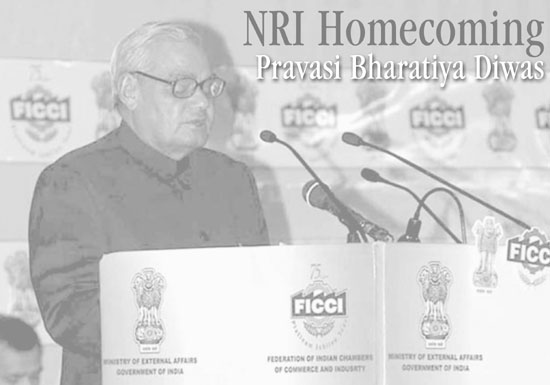 Background: Prime Minister Atal Behari Vajpayee delivering his inaugural speech at the Pravasi Bhartiya Diwas celebrations in New Delhi, Jan 9. NRI Homecoming: Pravasi Bharatiya Diwas – By Veena Srinivasa The 2nd Pravasi Bharatiya Diwas Jan. 9-11 is the place to be if fun, and networking with India excites you, writes Veena Srinivasa. It sounds like the beginning of a bad joke. What do a Trinidadian Nobel laureate in literature and a former Fijian Prime Minister have in common? The answer: both are diasporic Indians who met at the first gathering of the global Indian family- Pravasi Bharatiya Diwas. In our modern world the term “Indian” unites diverse nationalities from all over the world: from American to Australian to British to Kenyan. Non-Resident Indians have vast and varied lifestyles, but have little opportunity to interact with one another. PBD provides a unique opportunity to build unity and strength across the Indian Diaspora. Based on the success of the first conference, the organizers are planning the second PBD to be held in New Delhi from January 9-11, 2004. Despite disparate lives, jobs, and nationalities, NRId share a rich heritage rooted in India. But the task of bringing together the global Indian family is daunting; over 20 million NRIs inhabit over 110 nations and six continents. Last year, the government of India collaborated with the national trade organization, Federation of Indian Chambers of Commerce and Industry to create the first PBD to forge a “constructive relationship between Mother India and her children.” Over 2,000 delegates from 62 countries gathered in New Delhi last January to celebrate the successes and help shape the future of the global Indian family. Aside from lectures and speeches from key figures, PBD creates a space for smaller, more intimate discussion about serious issues. All PBD delegates are invited to the inaugural session with Prime Minister Atal Behari Vajpayee and several keynote lectures. Smaller sessions and round table discussions are moderated by an expert in the field; the previous PBD attracted such names as the Deputy Prime Minister L. K. Advani, Finance Minister. Jaswant Singh, Prof. Amartya Sen, Rajat Gupta of McKinsey and author V. S. Naipaul. India is constantly touted as “the next big thing” in information technology and communications. Global investors are paying heed; Goldman Sachs recently pegged India as the next up-and-coming world economic powerhouse. It’s not just all work Last year’s program featured Ravi Shankar and Bismillah Khan, two of the world’s most prolific musicians, sharing a stage together for the first time. The second evening, PBD participants were treated to an evening with Bollywood stars such as Shah Rukh Khan and Aishwarya Rai. PBD 2 promises not to disappoint. The first evening will showcase cultural performances by diasporic Indians, once again displaying the breath of artistic talent that NRIs possess. With the fashion extravaganza, PBD delegates will be dazzled by a colorful presentation of Indian fashion and sensuality through textiles and apparel, embroidery, accessories, and jewelry. The show will track the rich history of Indian fashion from ancient India to contemporary times, featuring tribal, royal, and everyday fashions. This year’s PBD is focused on the second generation – the future of the Diaspora. Besides the same networking opportunities available to all PBD attendees, the younger generation will benefit from specific plenary sessions and discussions dedicated to their issues, such as creating a social identity and the role of ethnic media in society. Dr. Simone Ahuja, a second-generation dentist and host of an ethnic TV program in the US, is looking forward to PBD “as a way to reconnect with my heritage.” - Veena Srinivasa is a senior at Brown University in Providence, R.I. |TOP| REPORT:  The Hydrogen Economy: India Joins Global Body – A Siliconeer Report India is a key player in a U.S.-led worldwide effort to develop hydrogen and fuel cell technologies. A Siliconeer report. Is hydrogen the next big thing? “A growing number of countries have committed to accelerate the development of hydrogen and fuel cell technologies to improve their energy, environmental and economic security,” says an U.S. Department of Energy announcement. “The energy needed to produce hydrogen can be obtained from many sources, including fossil fuels. When combined with carbon capture and storage, hydrogen production holds the promise of a plentiful fuel that will help safeguard the world’s climate system. The United States, the European Union, Japan, Australia, Canada, Iceland, Italy, and the UK have recently made substantial commitments to hydrogen and fuel cell technology research, development and deployment activities. China has organized a program to build and operate fuel cell vehicles. India has initiated work on a hydrogen energy technology roadmap.” India has joined 14 other nations and the European Commission in signing a crucial pact to coordinate hydrogen research and technology development. Representatives from the U.S., U.K., Australia, Russia, China, European Commission, France, Germany, Brazil, Canada, Iceland, Italy, Korea and Norway besides India inked the accord formally establishing the International Partnership for the Hydrogen Economy Nov. 20 at its inaugural meeting in Washington, a U.S. Embassy release said. Under the terms of the agreement, the ministers established two committees — a steering committee and an implementation-liaison committee — that are expected to identify issues which will be the focus of their work during the next year. The IPHE will allow the participating nations to leverage limited resources, bring together world’s best intellectual skills and talents to solve difficult problems and develop interoperable technology standards. India, which has been elected vice chairman, has offered its impressive research facilities to help the world move towards a “Hydrogen Economy,” which aims to replace petroleum products with water in many key applications. India’s Ministry of Non-Conventional Energy Sources, Department of Science and Technology and CSIR are currently running several research projects, Deputy Chairman of the Planning Commission and Chairman of the Prime Minister’s Task Force on Infrastructure K C Pant, said in Washington. India’s representative in the Partnership, Deputy Chairman of the Planning Commission K C Pant told reporters in Washington that “India’s inclusion in the Partnership is a recognition of the changed perception of India in terms of its capacity for research in the areas of advanced science and technology.” |TOP| HEALTHCARE:  Multiple Sclerosis: Profile of a Disease Monu Mukherjee, M.D., who retired after 13 years of medical practice due to a severe relapse of multiple sclerosis, offers a primer on the disease to educate readers. Multiple sclerosis is rare in India. Indians in the U.S., though, have a higher risk of getting MS than they would in India. Many people have heard about the MS Walk but don’t know much about the disease. What is MS? Multiple sclerosis is a disease of the brain and spinal cord. It affects the outer covering (the myelin sheath) of the nerves that is important for normal electrical conduction. The result is abnormal function of different parts of the body at different points in time. There are myriad symptoms of MS as it can affect any part of the central nervous system (brain and spinal cord). Who gets MS? There are about 2.5 million people worldwide and about 350,000 Americans with MS. It is more common in Caucasians than in other racial groups in the U.S., but there are no numbers on the incidence in Indian Americans. An estimated 50,000 people in India have the disease but no studies have been done there recently. It is more common in countries with a colder climate and less common in countries closer to the equator. The incidence in Scandinavia and throughout Northern Europe is much higher than in Japan and black Africa. In the U.S., many immigrants have a higher risk for MS than in their country of origin. The disease is twice as common in women as in men. It is unusual before adolescence. The incidence rises from the teens to age 35 and declines thereafter. What causes MS? As with many diseases, the exact cause of multiple sclerosis is unknown. It appears to be hereditary but children of people with MS do not invariably get the disease. Environmental factors are important, hence the difference in incidence between countries. MS relapses often occur after a viral infection but no specific virus has been identified in MS. The immune system plays a role and high levels of antibodies in the brain and spinal fluid are characteristic of MS. The relapses are due to the body’s own antibodies attacking the myelin sheaths of the nerves. What are the symptoms of MS? The onset of MS can be dramatic, or so mild that the person affected barely notices. The commonest initial symptoms are, in order of frequency: loss of sensation (37 percent); vision problems (36 percent); muscle weakness (35 percent); paresthesias (abnormal sensations such as tingling) (24 percent); double vision (15 percent); ataxia (coordination problems) (11 percent); vertigo (a sensation of one’s surroundings moving or spinning) (6 percent); urinary problems (4 percent); pain (3 percent) and dementia with memory loss (2 percent). Other symptoms of MS include sexual problems, seizures, falling, worsening of symptoms on a hot day or after a hot shower, and spasms along with an unpleasant tingling sensation. Fatigue is present in up to 88 percent of MS patients, with increased weakness, mental fatigue or sleepiness, especially in mid-afternoon. Walking may become difficult for several reasons, including weakness or stiffness in the legs, coordination problems and spasms. There may be swallowing problems due to weakness of the throat muscles. Depression is common in people with MS and is often brought on by a new diagnosis or increased disability. What is the course of the disease? MS tends to follow one of three patterns:
Can MS cause disability? Treatment designed to stop the destruction of myelin sheaths: Interferon â-1a and interferon â-1b are injectable medications which reduce the frequency of relapses in MS as well as the evidence of disease activity on the MRI scan. Glatiramer acetate has the same effect and is also injectable. These drugs modulate the immune system to “quiet it down.” These new medications have made a significant difference to many patients’ lives. Cortisone-type drugs (steroids) are used temporarily for acute attacks. Treating symptoms: Baclofen and diazepam are used to treat spasms. Pain can be treated with over-the-counter medications or may require prescription medications such as carbamazepine or amitriptyline. Laxatives may be needed for constipation. Modafinil can be used for fatigue and meclizine or similar medicines for dizziness and vertigo. Sexual problems may need specific treatment such as penile implants or sildenafil (Viagra). Physical therapy can be helpful for muscle pain, stiffness and ataxia. Some patients have found alternative therapies such as ayurveda and acupuncture to be helpful. In conclusion, MS is a disease which varies from one individual to another. Its exact cause is unknown but there are medications to help symptoms and to help prevent relapses. - Monu Mukherjee got her medical degree in England |TOP|
FINANCE Citing this recent trend, you’ve probably taken steps to help protect both of your incomes with some type of life or disability insurance coverage. However, situations change and the coverage you had a few years ago may not meet your current needs. To determine if you have the “right” amount of life insurance for both wage earners, keep this example on homemaking services in mind: Both individuals earn approximately the same income, but one provides more help around the house. If that individual died or became disabled, would the other be able to handle all of the homemaking alone? If not, the person who had more “household responsibilities” should probably be insured for more, since it would take more to replace both a salary and the homemaking services. The added coverage would help maintain these services. Whether you have a single- or dual-income family, you’ll be more likely to maintain your current standard of living and realize long-term financial goals if adequately insured. Your financial partnership. Given the choice, none of us would choose to learn about financial issues during a crisis like divorce, job loss or death of a spouse. However, that’s what many of us do. Sometimes, we think we’re helping our partner when we handle the finances alone. But nothing could be further from the truth. Like any business partnership, your partner in home finances needs to know how to carry on in case you die or become disabled.
You and your spouse should discuss the financial issues that you normally do yourself. Cover what you do month-to-month, why you do it, and where you keep the records. And don’t forget any stocks, bonds, mutual funds or CDs you may have. Many of us are reluctant to even think about a disability or death — let alone actually doing something about it. Procrastination can literally leave you without the nest egg and safety net you need. Take advantage of finance classes, investment clubs and public seminars. Your library can also be an excellent resource. Don’t leave your spouse in the dark when he or she is least able to cope. By sharing and preparing now, your partner can avoid the struggle with an unfamiliar financial jungle later.
BUILDING YEARS (40-50): A rising income is helping you achieve your goals during this stage in your life. However, expenses such as your children’s college education may reduce your current spendable income. The need for growth is still essential since retirement is nearing, yet impending goals may warrant a shift toward more conservative products.
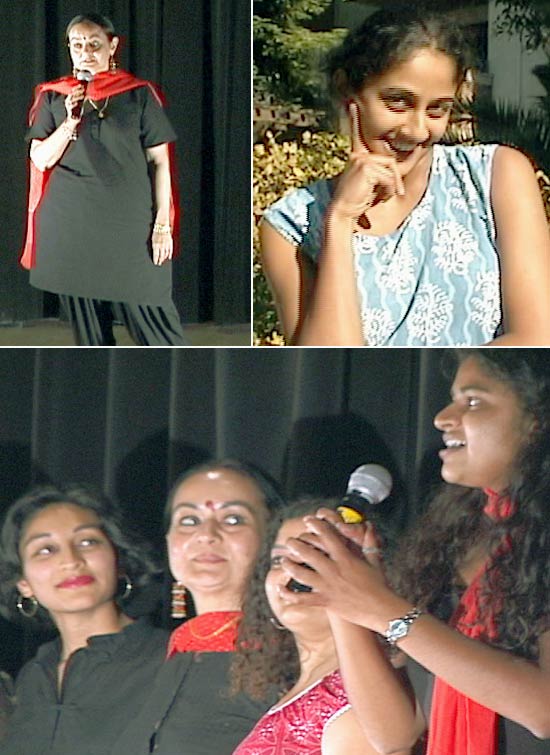
REFINING YEARS (50-60): Your peak earnings combined with reduced financial responsibility for your children can make this stage financially rewarding. Accumulating assets for retirement is more important than ever. Consider a shift toward more conservative growth opportunities including inflation protection. Take a look at your estate plan. Your estate may have grown to the point that you can benefit from advanced estate planning techniques, such as marital status and life insurance trusts. Determine your desired retirement lifestyle and plan accordingly. The first step to determine your future financial needs is to participate in a needs analysis session. Consider consulting a financial advisor to help you devise a strategy to achieve your goal. - Ashok Gupta is a financial advisor |TOP| EVENT Think again. When the feminist collective South Asian Sisters hosted two performances of “Yoni Ki Baat,” an annual fundraiser with monologues, poetry, dance and film, the shows were not only sold out, what was more remarkable was the ambiance created. A cheering mixed audience, with an unexpectedly high number of desi men, shrieked their approval, showering performers with catcalls, hoots and yells that a rock star would crave for. It isn’t all that surprising when you realize that the performances filled a very real need. Where else could you learn everything you always wanted to know about the desi woman but are afraid to ask? Certainly not at the staid Indian events that the community is so enamored of, where the myth of the happy model minority is cultivated with energetic hypocrisy and the reality of sexual repression and denial is swept under the carpet. The first-ever performance in North America at the University of California at Berkeley in late July, which received a standing ovation was inspired by Eve Ensler’s The Vagina Monologues. Organizers collected original works that used creative story-telling and candid opinions to relate the female South Asian American experience. “All the performances were pushing buttons in the most positive, poignant, and passionate ways,” one audience member wrote to the organizers. “This desi, 53-year-old woman is tearing up with pride....pride for the younger generation that set the stage on fire last night.” Women in the collective aim to break the silence on a variety issues that are only just burgeoning because they don’t fit the myth of wholesome South Asian success: abuse, self-pleasure, cultural disapproval of unconventional women, and sexual orientation. They also used the event to raise money for Narika, which fights domestic abuse in the Bay Area and had been struggling through harsh economic times. An email call for submissions around the country drew a flurry of responses. Contributors were asked questions like What Bollywood film would your yoni star in? What’s your yoni’s secret weapon? And what’s your yoni’s immigration status? The novel responses were recorded in a humorous film. The tales told during the performances were diverse, gripping, often poignant and sincere. Organizers decided to do this show after Kamaaya Productions, a theatre group in Bangalore, India, presented a similar show, that drew howls of protests from conservatives, who called the show obscene and even threatened to slap a lawsuit. As a follow-up to requests for more discussion about issues addressed at the first show, there will be a “Yoni Ki Baat Day of Dialogue” Feb. 7. Another work in progress is “You Can’t Do That in Bollywood,” a critical look at gender representations in Bollywood through performance art. Since 2000, Maulie Dass, Vandana Makker, Anjli Gupta and many others in the organization have participated in events like the South Asian Progressive Conference, coordinating a panel discussion on feminism in South Asia in 2002. In August, a vigil was organized for a Milpitas woman to affirm that there is no cultural excuse for domestic violence. The mission of South Asian Sisters is to empower, support, and educate South Asian women around the world. Through their website and email list serve, www.sasisters.org, they seek to create an online community with event postings, classifieds, articles, art and other resources. Members are geographically dispersed in the Bay Area, Los Angeles, and Colorado, and come from a variety of backgrounds, languages, and careers, including education, health, journalism, and engineering. - Sapna Shahani is facilities manager for the |TOP| LEGAL ISSUES: Death Transfer Objectives
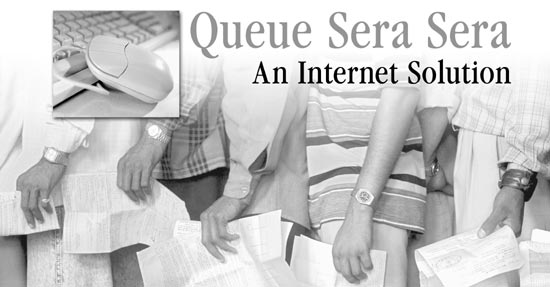
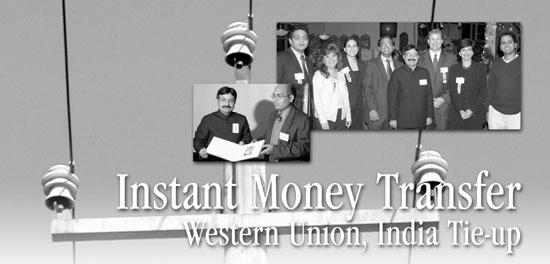
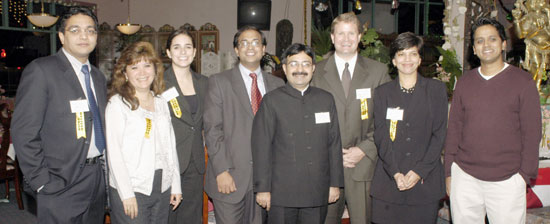
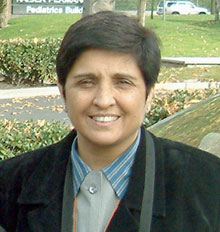
Your Next Step You should sit down, with your spouse if you are married, and establish your own lifetime and death transfer objectives. Have a heart-to-heart talk with your spouse or do some personal soul searching. You will be amazed at what you will discover about yourself, your spouse and about you as couple. Then gather all the facts (family facts, financial facts, needs and priorities, etc.) because these facts will serve as foundation of a sound plan. The more clearly you understand your goals and needs, the better your plan will be. Next, identify your estate planning team and discuss these objectives and facts with them. Then develop and plan best suited to meet your current needs, and implement it! Most people will develop a plan but not fully implement it. For example, people will not buy enough coverage for different contingencies thus leaving themselves open to adverse consequences. Don’t be guilty of this. Be prepared to meet the contingencies of life. Periodic review is absolutely essential to assure plan’s continued effectiveness and success. - Raja Ahluwalia is an attorney based in San Mateo, Calif. .|TOP| INTERNET Although no statistical evidence exists on the time spent standing in queues, it must amount to quite a bit of the lifetime of several of our ancestors, grandparents, fathers, mothers and us. Consider the payment of electricity bills — there used to be a queue to get in the queue. That is, the actual queue to pay the bill was so long that there were private agencies and individuals who took it upon themselves to pay the bills. But there were so many people who patronized the agencies that the queues here were bigger than the real queue. This is no joke. Until recently (in most places less than a year), some member of the family took a day off from work to pay the electricity bill. The lucky ones who had aging, retired and often ill grandparents delegated. But it was a sorry sight. Similar was the case with paying telephone bills. The problem was the monopoly status of the government in dispensing these services. Further, any reneging or delay in payment led to the same slothful public sector employees take on unmatched speed and skill to disconnect the services. Harassment to make money was their motto. Then Internet savvy private banks got into the act. Both telephone and electricity bills can now be paid online. A click on the Bill Payment section from the comfort of home or office computer takes care of a host of services — credit cards, electricity, loan premiums, cell phone bills to name some. The queues have disappeared and the process takes a few minutes. Private foreign and Indian banks have further contributed their mite to reducing queues — ATMs, online requests for drafts and fixed deposits have made the process of waiting and waiting for the cashier or manager at an unfriendly public bank a matter of the past. Online share trading, with several bank acting brokers, is catching on. The Internet has also resulted in the elimination of several other queues. Train reservation, another long drawn out affair, is an online process. So is the payment of taxes, booking of cinema tickets, each at some time or the other contributing to the ever increasing statistic of more and more Indians waiting unendingly for their turn. The filing of tax returns too had engendered an army of touts and agents who took turns to stand in line for a commission. Now the form can be downloaded and submitted online. Another queue has been nipped at the bud. Not too long ago a telephone connection was the exclusive domain of the bureaucrat and the politician who doled out the favors like feudal lords. The waiting period was years and the list more than a million. There were even reports of women sleeping with politicians to gain access to personal telephone facilities. The advent of private players has meant that the public sector employees have finally been jolted by fears of Voluntary Retirement Schemes and redundancy. The customer service has never been better; as a matter of fact often better than even the private players who are driven only by money. Privatization has also meant cellular phones can be afforded by anybody above poverty. The customer is the real king. One more example in this sector is the phone directory service — earlier one waited and waited for the operator only to be rudely told off. Now, the ladies are sweeter than honey. Analysis has shown that the government people are reacting positively to the challenge of competition and in several cases doing quite well; they even call to inquire whether a complaint has been attended to. Similar has been the case for cars, LPG and airline tickets that are available over the counter or the telephone or online. A few years ago there were special government quotas to book cars and many a senior government official prided on having cars released for relatives. The only planes one could use belonged to Indian Airlines, who took their own sweet time to fly and sometimes did not. LPG was delivered on whim, food for the family be damned. However, problems still fester. Driving licenses and passports are still a hassle. Due to availability of so many cars through easy loan schemes, traffic has become a nightmare and Indians now find themselves facing the brunt of traffic queues as roads, a key infrastructure area, still leave a lot to be desired. The airports too are in a state of decline with immigration and custom clearance still a long drawn out process. Power is the monopoly of the government in most of India making irregular and often non-existent supply of electricity a bane for citizens. But, nobody can deny that technology and the unleashing of the private entrepreneurial spirit has made things a lot easier for people living in India as well as others who are part of the reverse brain drain process. In most cases, the queues are dwindling. - Siddharth Srivastava is a freelance |TOP| CONFERENCE “Such a rich collection of ethnic media I have never seen in my life, and everyone was enjoying it. The oneness of the Expo was something to see,” said Vivek Sharma, senior manager of the New York-based publication India Abroad. For this year’s heavy turnout from the business and advertising sectors, “the exuberance and diversity of the EXPO was eye-opening,” said Pacific Gas and Electric ethnic media outreach coordinator Claudia Mendoza. As the country’s largest event showcasing ethnic media, the NCM EXPO & Awards offer one-stop access to the publications, broadcast stations and Web sites serving a dizzying range of audiences from Afghan to Vietnamese, and constituting the fastest-growing sector of the media landscape today. The NCM Awards, dubbed “the Ethnic Pulitzers” by the News Hour with Jim Lehrer, were presented at a gala banquet at the Westin St. Francis hotel Nov. 18. The NCM EXPO itself was an all-day event Nov. 19 that combined general sessions and workshops with over 150 ethnic and youth media exhibitors. Guest speakers included Federal Communications Commission commissioner Jonathan Adelstein, Schwarzenegger aide and spokesperson Sean Walsh, San Francisco Mayor Willie Brown, California State Senator Jackie Speier, Radio Unica vice president and Miami-Dade County mayoral candidate José Cancela, national multilingual pollster Sergio Bendixen and civil rights veteran Dr. Benjamin Chavis. Many of them addressed the vital role that ethnic media play in stimulating civic participation and diversifying communications in the U.S. |TOP| CORPORATE NEWS The Indian Postal System, owned by the Government of India, comprises a vast network of more than 150,000 post offices, providing basic postal services, postal banking services and a variety of socially significant programs that support the socioeconomic development of India. The joint Western Union and India Post road shows serve as an opportunity for India Post to exchange thoughts and experiences with Western Union employees as well as their agent counterparts abroad, the release added. They also allow India Post representatives to meet with customers, community leaders, and cultural groups in order to gain insight and a better understanding of what Indian consumers are looking for when sending money back home. COMMUNITY NEWS IN BRIEF 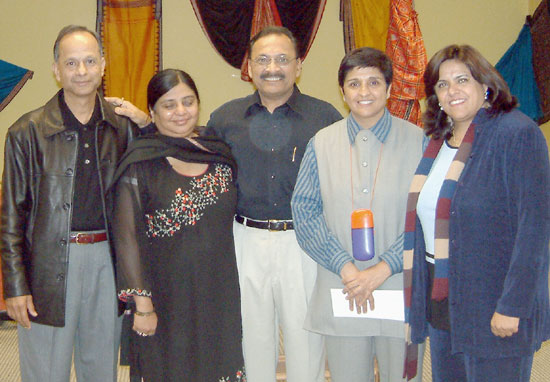 Top: Kiran Bedi outside the India Community Center in Milpitas, Calif. Nov 29. Bottom: (From l): Rakesh Sharma, Sudha Gupta, Ashok Gupta, Kiran Bedi and Anu Peshawaria at the launch of SevA Legal Aid at the India Community Center in Milpitas, Calif. Nov 29. “My intention is to help those Indian Americans, especially women facing difficult domestic situations here, through SevA extensive legal presence in New Delhi,” Peshawaria told an audience of over 150 at the launch. Bedi who is currently civilian police adviser to the U.N. Department of Peacekeeping Operations lauded the effort. “It is important that an organization like SevA is coming to the Bay Area given its strong South Asian demographics,” she said. “We are all shy of any brush with the law but often times in life there are situations that we do not have any other option.” Peshawaria, who is Bedi’s sister, said, “More often than not Indian women here are caught into domestic situations in which the only way out is legal redress. Given our family structure women still find it difficult to make independent decisions on legal matters. SevA has the means to help such women.” The attorney, who is also India’s former number 1 tennis player, has her own law offices in Fremont, Calif., which handles cases in the U.S. as well as in India. “SevA is my way of giving back to society,” Peshawaria said.
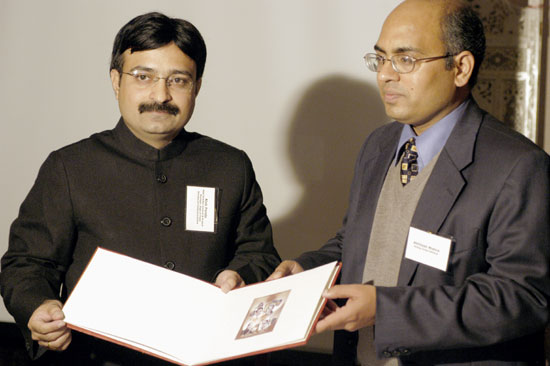
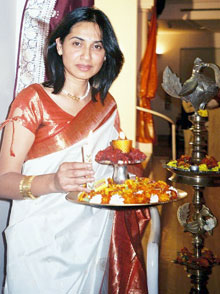
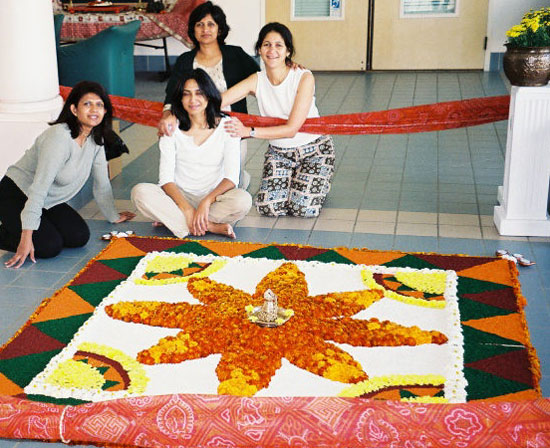 The purpose of this event was to get together and celebrate intercultural understanding that promotes economic prosperity. Attendees included Cupertino Mayor Michael Chang and the Acting Consul General of India Akhilesh Mishra. The function started by the lighting of a lamp signifying a gesture of unity. Chang expressed his enthusiasm of celebrating Diwali and expressed this event as a significant step of bringing the community closer together. Akhilesh Mishra described the significance of Diwali as a mark of acquiring and spreading knowledge with a purity and kindness. He complimented the City of Cupertino and the Chamber of Commerce for having the insight to promote economic prosperity through intercultural understanding. Marking the occasion, Mayor Chang presented four proclamations from the City of Cupertino. The cultural part of the program was moderated by Hema Kundargi, a Cupertino Fine Arts Commissioner. The entertainment opened with a captivating classical Kuchipudi Diya dance performance by Sonia Sangha, a senior from Monta Vista High School. The regional costume show was highlighted by an array of colorful attire from various regions of India modeled by several City Council members. The costume show was followed by two numbers of folk dances from the popular dance troupe Zingaris. Sunnyvale, Calif.-based InMedya has won an award from the League of American Communications Professionals for an event video it has produced. LACP announced the Gold award for InMedya Productions in its Spotlight Awards, recognizing the video for outstanding production, design and content, according to an InMedya press release. “Edging out companies, such as Delta.com, ESPN, IBM, Kaiser Permanente, Washington Mutual, one of the top ranks went to inMedya Productions for excellent work in the direction of an event video,” the release added. “The awards committee honored inMedya for capturing the quality and content that achieved the highest standards of excellence in a video.” “Awards are another way of acknowledging our hard work and dedication to quality and creativity,” InMedya president Jaya Padmanabhan said. InMedya Productions is a full service media and production company. AUTO REVIEW
Better take a closer look at the 2003 Cadillacs. General Motors has been working very hard to revitalize this product line, and people of all generations are starting to pay attention. No less than five new models have been or will be launched over an 18-month period, some of which are taking both Baby Boomers and Gen-Xers by surprise. Who would have thought you could find a five-speed sedan in the Cadillac product line, or a sport utility truck, or even a sporty luxury roadster? Well, the design gloves are off and, while much has changed, these cars still cater to executive-level expectations, but with a rejuvenated twist. We recently test drove the 2003 Escalade, which was loaded with many family-friendly features and creature comforts. You know these features would not matter to someone nearing retirement, but that’s not who Cadillac is targeting this car to: instead, they want to capture the attention of upscale, younger buyers. Those are the buyers with children who will appreciate such things as an on-board DVD entertainment system, maximized seating for eight, tri-zone heating and air conditioning, and a removable third row of seats. Also on board the 2003 Cadillac Escalade was one of the hottest new car options – XM Satellite Radio. Now available as an option on many GM products, this system offers 100 coast-to-coast digital radio channels, many of which are commercial-free. If you spend a lot of time in the car, you will love the variety. There are 11 different rock-themed channels, another seven for just jazz and blues, five devoted to Latin-themed music, two comedy channels (one a bit more racy than the other), a Christian channel, the Disney channel and two devoted just to techno music. Get news from CNN, Fox or the Bloomberg Report, or listen to books. This feature is a $325 option, with an additional subscription price. Needless to say, we were pretty fascinated with the radio system, but once we took our eyes off the dial and looked around in the car, we were very impressed. Of course, all seats are covered in leather – this is a Cadillac, still – and there were generous amounts of head, leg, hip and elbow room. Even those seated in the third row of seats enjoyed generous spacing. The second row of bucket seats were heated, as were the seats for driver and front passenger. Heated seats are certainly a luxury for those of us with aching backs, and it was a standard feature, so you don’t have to pay extra for that convenience. Standard safety equipment includes front-seat, dual-level air bags for the driver and front passenger, side air bags, and a passenger sensing system that will determine if a crash has occurred and at what level of inflation the bags should deploy. Four-wheel anti-lock brakes, traction control, a heavy-duty Stabilitrak stability system and road-sensing suspension all provide a state-of-the-art braking system. On the road, we found the ride was quiet and smooth, although I found the steering to be a bit loose. A powerful and responsive Vortec 6.0-liter V8 engine deftly managed steep inclines and short freeway on-ramps. If you’re a short-statured driver, do you think you might be overwhelmed in a full-size luxury car such as this? The Escalade addresses these concerns, as both the brake and accelerator pedals are adjustable, the side view mirrors tilt down when the car is in reverse for improved visibility, and there are sensors in the rear bumper to alert you to potential hazards. While its true the Escalade’s gas mileage leaves a lot to be desired, the gas tank holds 26 gallons, which should stretch out trips to the pump. Maybe – with all these entertainment systems and comfortable seating on board – you’ll never leave the driveway, though, and just turn the car into a second family room. 2003 CADILLAC ESCALADE
- Sally Miller Wyatt is a freelance writer Guftugu Take Khwahish, hyped for its 17 kissing scenes, or Boom with its bevy of beautiful women who, as Time magazine once memorably put it describing Parveen Babi in a bikini, were eager to show their talents (read skin). The films have sunk without trace while films like Chalte Chalte, and Kal Ho Naa Ho are drawing packed audiences. The biggest slap comes from Baghbaan, where the aging, but fetchingly gracious duo of Amitabh and Hema light up the screen and the masala movie fan simply can’t get enough of them. A good screenplay and wholesome emotions still trump titillation, so filmmakers, get real. The tolerance of Bollywood fans is legendary, but they are no pushover. What Urmila is doing now is shaking up the critics. And she has just got started. Insiders are already blown over by her performance in the upcoming Ek Hasina Thi. Urmila plays with uncommon subtlety and strength a simple girl who gets toughened and hardened after doing time in prison. “Ek Haseena Thi is a realistic, modern-day thriller,” Urmila says. “It is about this middle-class girl from Pune who comes to Mumbai. Life is good until something out of the blue happens without her knowledge.” “I have given it my best,” says the confident Urmila, and from her recent record, that’s quite something. Which doesn’t mean she has become a nun. She still oozes oomph, it’s just that now she has brought to the fore her considerable talent to it. We are talking of course, of the glitzy, brash Janasheen by Feroz Khan and Kal Ho Naa Ho by Shah Rukh and Saif Ali Khan (reviewed in this issue), On the one hand we have Karan Johar of the Bollywood blockbusters Kabhi Khushi Kabhie Gham and Kuch Kuch Hota Hai fame. Oh, the credits may list Nikhil Advani as the director, but this film is Karan Johar’s baby, and he is scared witless. “I’m nervous,” Karan Johar tells me, “But that’s the way I am, I get nervy as the release date draws closer.” On the other hand Fardeen is exuding confidence, particularly after advance booking of the film in a Hyderabad theatre led to a scramble for tickets. The films could not be more different. Kal Ho Naa Ho is set in Manhattan, no less, and is a sensitive, realistic story about a woman (Preity Zinta) caught is a harsh life where her family business is teetering on the brink and her family itself is dysfunctional. Janasheen, on the other hand, is a feel good racy thriller. “Well made, fast-paced and very stylized,” Fardeen tells us. “It’s a typical Feroz Khan film. A thriller in the true sense. I’m confident, it’ll be well received.” Funny how these things work out, because while the jury still seems to be out on Janasheen, Kal Ho Naa Ho, though not perfect, seems well set to become a hit of sorts, further consolidating whiz kid director Karan’s already formidable reputation. Well things have started to go seriously amiss, with Aishwarya Rai walking out of the film (snide observers say she has been thrown out, but we will refrain from the mudslinging). The circumstances are murky, and varies according to whom you talk to. The Ash camp would have you believe that the producer of the film, Bobby Bedi, is in financial straits and was trying to shortchange Ash. Not so, howl supporters of Bobby, who say Ash went back on her contract and let her firangi handlers squeeze out some more moolah even after she was promised a pretty packet. Now Sahara has walked out of the film, miffed because its director Aishwarya Rai has been mistreated. Where, oh where, does all this leave our poor Aamir, we wonder. The poor man has devoted himself to the role, as is his wont, and now even sports long hair which fashionistas say could start a new trend. Is all that effort going to be in vain? What tongues are wagging bout is her bikini scene in the film. What’s the big deal, fumes the former beauty queen? “The role demanded such an appearance,” a very angry Celina said in a press conference. “I wore a swimsuit in the Miss Universe contest as well and back then I brought laurels to the country by achieving the fourth position. So why is everyone creating a hype about it in this film? I believe in my director and I know he won’t portray vulgarity on screen.” This hasn’t convinced everyone in Bollywood. Her faith is touching, sneer some Bollywood cynics, but where has she been? When it comes to Feroz Khan—or his films—neither is not exactly known for being particularly prudish. As for the role “demanding” such an appearance, a cynic has this tart reply: What on earth did she get this idea? Bollywood roles for women are as undemanding as a traditional bahu. Things got to a point where she was attending the International Children’s Film Festival in Hyderabad during the day, flying in the evening to Mumbai for shooting and then flying back to Hyderabad for the festival work the next day. She is working in Firoz Nadiadwala’s Aan—Men at Work. And then of course there’s her courtship with Anil Thadani. She is tightlipped about when wedding bells will ring, except divulging that it will be next year. Of course, even Raveena can’t be everywhere, and something has to give. So she couldn’t attend the music release parties of her three films LOC Kargil, Hum Do Hamaara Ek and Police Force—An Inside Story, held on three consecutive days. But the what the heck? Success must be all the more sweet after the hard times she has been through, and we wish her all the luck in the world. Not that this is unheard of. Art film buffs will remember a demure Sharmila Tagore in Satyajit Ray’s Nayak, who played a journalist who asks probing questions to the main character, matinee idol Uttam Kumar. In mainstream Hindi cinema, Sridevi played a journalist in Mr. India. Except that her reporting skills were the film’s best kept secret—what she did was what she did everywhere, she sang and she danced. One wonders what periodical she really worked for. However Rani Mukherjee has played a more serious version of a journalist in Sudhir Mishra’s recently released Calcutta Mail. “What I liked about the role was its complexity,” she said in an interview. Run, Lips, Team, Fight-Club, Lucky, Julie, Lakeer, Raincoat , Plan and Hawas. Brevity is the soul of wit, an old proverb goes, could it be that it could be the soul of Bollywood. Not so fast. Tag lines are making a comeback. This happens when the original title has been registered by someone else. So we have Deewar — Let’s Bring Our Heroes Home, Tum — A Dangerous Obsession and Fun2shh — Dudes in the 10th century . Sigh. Which means we are back to square one. Hindi Film Review Less Than Karan's Best  Kal Ho Naa Ho Produced by: Yash and Karan Johar Directed by: Nikhil Advani Music: Shanker-Ehsaan-Loy Starring: Jaya Bachchan, Shah Rukh Khan, Saif Ali Khan, Preity Zinta, Reema Lagoo, Sushma Seth, Satish Shah, Dara Singh and Lilette Dubey Give a man his due. Karan Johar has had the gumption to step outside his never-never land of the idyllic joint family and the great Bharatiya parampara, and for this alone he ought to be forgiven a hundred sins. Trouble is, he does commit a handful of them, a point to which I shall return. The Shah Rukh Khan-Karan Johar combo has swept Bollywood film buffs previously with Kuch Kuch Hota Hain and the more recent blockbuster Kabhi Khushi Kabhie Gham. The formula has been simple enough – a rose-tinted take on old style family values, an effervescent, hyperkinetic Shah Rukh Khan with a heart of gold, softened with dollops of pathos. It has clicked, too, helping Karan make a box office killing. Karan gets a bit more real this time (no offense to debut director Nikhil Advani, who does a fair job, but the film bears the unmistakable stamp of Karan) as he sets his eye on a struggling family in Manhattan. Naina (Preity Zinta) is a pretty woman in a funk. And who can blame her? Her Punjabi grandmother (Sushma Seth) blames her mother (Jaya Bachchan) for her son’s (Naina’s father) suicide. Between trying to keep these two women apart, looking after her handicapped brother, coming to terms with his father’s suicide and trying to salvage their teetering restaurant business, Naina has her hands full. Not quite the candy floss world of Karan Johar, is it? Bravo, Karan. It’s not all gloom and doom for Naina. There is Rohit (Saif Ali Khan) the amiable romantic who goes to school with her where they are both enrolled in an MBA program. Suddenly, Aman (Shah Rukh Khan) sweeps into their world. Aman comes into the neighborhood with his mother and quickly wins the hearts of the neighborhood. Bubbling with life (so what’s new? That’s standard SRK fare), he helps out everyone and even unites Naina’s family. Can anyone not like a person like this? Well Naina, for one, him. But not for long. This is a Bollywood film, and we don’t have all the time in the world. So after the initial fireworks, Naina mellows and realizes she loves Aman. This is when Rohit realizes he loves Naina. Talk about bad timing. Naina is heartbroken when she realizes that Aman is married and is trying to patch up with his wife. That’s not all. It turns out that Aman is dying of a heart ailment. Now that the filmmaker has cooked up quite a complicated stew of complications, how does he extricate himself? This is where Karan falters, and what could have been a great film – by liberal Bollywood standards, of course – ends with a whimper because Karan uses all the filmi clichés and melodramatic twists he can think of to create a maudlin, dragged out climax, in a word, the usual implausible Bollywood fare. I mean, did Aman have to run out of his hospital bed to sort out things between Naina and Rohit. And did Naina and Rohit have to discover Aman’s ailment is so hackneyed a fashion? An otherwise interesting, and for Bollywood, unusually realistic attempt is also pulled down by the pedestrian quality of cinematography, editing and music—rather surprising, considering that Karan’s previous blockbusters had scored so well on these two counts. The acting is competent with exceptional flashes of excellence. Preity Zinta shines as the harried, depressed woman, but reverts to stock mannerisms when things look up. Shah Rukh plays the sort of roles he has played umpteen times, and does it with his customary gusto. Even with its usual share of over-the-top histrionics, it works fairly well. Saif is just about okay, but it is Jaya Bachchan, Sushma Seth and Lilette Dubey as a libidinous business partner who shine. So, after weighing in the shortcomings, what is the verdict? Karan had the courage to push the envelope a bit when it came to Bollywood convention, and for this he ought to be given a lot of slack. His basic filmmaking skills are solid, and it’s a precious asset in these troubled times of execrable fare that Bollywood has been churning out. Too bad the film wasn’t as perfect as Karan could have made it. The loss is both Karan’s and ours. Rating: *** (Good) |Return to Bollywood Index| |TOP| Tamil Film Review: Old Story, Sexier Version KURUMBU Director: Vishnuvardhan Cast: Naresh, Nikita, Diya, Vamsi, Nasser, Nirosha, Pyramid Natarajan, Meera Krishnan. A faithful remake of the Telugu hit Allari, Kurumbu, directed by debutant Vishnuvardhan (who apprenticed with Santosh Sivan) and produced by Indira Innovations, is clearly targeted at the youth. Playmates since childhood, Ravi and Appu (Naresh and Nikita) share a close bond. After the glamorous, carefree Ruchi (Diya) enters the neighborhood, however, Ravi has eyes only for his new neighbor. Though irked initially by Ravi’s embarrassing ways and manners, Ruchi thaws towards him later. Watching from the sidelines is Appu, with an ache in her heart, who nevertheless helps Ravi get closer to Ruchi. But Ruchi becomes more than a handful for simpleton Ravi, and he realizes where his heart really lies. The plotline is a warmed up version of so many previous films that there is a sense of déjà vu throughout. Similar subjects were addressed in earlier films like Bhadri, Piriyadha Varam Vendum and Parthein Rasithein, which were again all a rehash of My Best Friend’s Wedding. Only they were mellower feel-good romances with the friendship factor highlighted. But here it’s the glamour element that is emphasized, with some risqué scenes and lines creeping in. A couple of songs have added to the titillating ambiance. (The film carries an “A” certificate). The dalliance and flirting between Ravi’s mother and Ruchi’s father, supposed to generate humor, instead ends up being an unsavory distraction. Naresh, a fast-rising hero of Telugu films (son of director E.V.V. Satyanarayana) re-enacts the role he played in the film’s original version, Allari. The role fits him like a glove, as Naresh projects the innocence, vulnerability and playful waywardness of the 18-year-old Ravi, though he occasionally goes a bit overboard portraying the innocence, and the character seems a bit moronic and not all there. Nikita, who has acted in Telugu and Malayalam films, is the softer character with an engaging smile. Quite in contrast is model-turned-actress Diya, with her dimpled smile, radiating a lot of oomph. As Ruchi the extrovert, Diya carries herself with élan, comfortable in her spaghetti tops and minis, uninhibited and confident in her debut performance. — Malini Mannath |TOP| RECIPE: 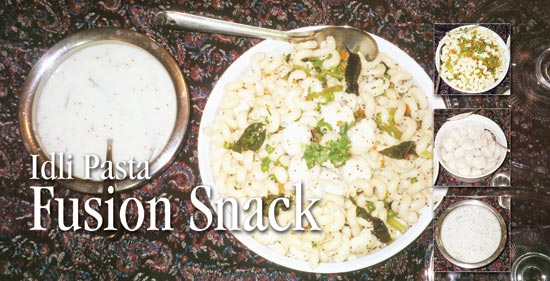 Background: Idli Pasta and Coconut chutney. (Inset, from top): Pasta with boiled vegetables, Idlis and coconut chutney. Fusion Snack: Idli Pasta – By Seema Gupta Seema Gupta gets adventurous as she brings Italy and Tamil Nadu together to make a delicious snack. IDLI PASTA Ingredients
Method:
Method – Seema Gupta is a homemaker |TOP| December Horoscope Bay Area-based astrologer Pandit Parashar can |TOP| |
||||||||
|
|
|
|
|
|
Advertise in Siliconeer | Home | Subscribe PRINT Issue | About Us (FAQs) | Contact | Locations | Staff Login | Site Map
© Copyright 2000-2013 Siliconeer • All Rights Reserved • For Comments and Questions: info (AT) siliconeer.com |
|