!-- Start Alexa Certify Javascript -->
|
|||||||||||||||||||||||||||
|
|||||||||||||||||||||||||||
|
|
|||||||||||||||||||||||||||
|
|||||||||||||||||||||||||||
|
|
|
|
|
|

JULY 2004 |
IN THIS ISSUE
MAIN FEATURE $9 Billion Bonanza : Biotechnology in India By Deepak Goyal GLOBALIZATION Outsourcing God : Mass in Kerala By Siddharth Srivastava SOCIAL CHANGE Power to the People : Lok Satta Movement By Nirupama Guntapalli Publisher’s Note • Infotech India • eBay Buys Bazee.com S. Asian VC Sweeps • Freedom of State Media • A Responsible Summer The Prime Minister’s BMW • BBC Connects Kashmiris Finance: Wise Today, Happy Tomorrow • SF Dance Festival New Theatre in NY • Community News • Auto Review: 2004 Toyota Prius Hybrid Bollywood • Tamil Cinema • Recipe: Bengali Aloo Dum • Horoscope |
||
|
Publisher's Note
India’s technological prowess has made it a global player in information technology, but the next big thing may well be biotechnology. This is not exactly news, because India’s plucky pharmaceutical firms like Ranbaxy and Dr Reddy’s were already beginning to give generic drugs manufacturers in the West a run for their money. To be sure, India is still a small player in the $40 billion biotech market. What is remarkable is the concerted public-private partnership that appears to be focused on making sure India is well positioned to use its intellectual and scientific talent pool to be a significant player in the global biotechnology bazaar. India had an impressive road show at BIO 2004, the recent biotechnology convention in San Francisco. A delegation led by Maharaj Kishan Bhan, secretary of India’s Department of Biotechnology was on hand. Our cover story takes a look at the future prospects and challenges in biotechnology for India. MAIN FEATURE 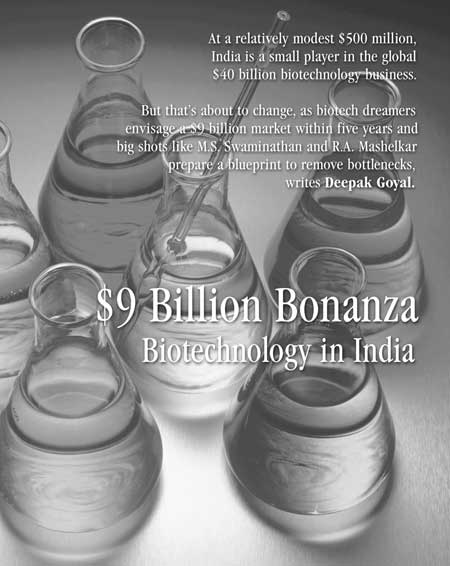 $9 Billion Bonanza: $9 Billion Bonanza:Biotechnology in India By Deepak Goyal At a relatively modest $500 million, India is a small player in the global $40 billion biotechnology business. But that's about to change, as biotech dreamers envisage a $9 billion market within five years and big shots like M.S. Swaminathan and R.A. Mashelkar prepare a blueprint to remove bottlenecks, writes Deepak Goyal. While India is made enormous strides in marketing its skills in the information technology sector, there are increasing signs that biotechnology may be the next big thing for India. Although it’s still a relatively small player, that could change fairly soon, given the aggressive and focused approach taken by both the Indian government and business. Today, the $500-million Indian biotech industry is a bit player in the global $40 billion biotechnology industry. But the industry as well as the government envisions the India’s biotech sector to grow into a $9 billion business in five years. In April-May, the government set up a national task force headed by Dr. R.A. Mashelkar, chief of Center for Scientific and Industrial Research, to streamline the regulatory process involved in the approval of all recombinant DNA products. Similarly a task force on the application of biotechnology in agriculture headed by Prof. M.S. Swaminathan, chief architect of India’s Green Revolution, submitted its report. The report focused on how to use new tools of genetics in an environmentally safe way to contribute to the sustainability of agricultural productivity in future. The Association of Biotechnology-led Enterprises has set up a $40 million incubator biotech fund. India is emerging as the new destination for the vaccines market, the bioinformatics industry, Genetically Modified products, clinical trials and clinical research organizations. While most of the large companies today are from the pharma background, About 150 small and medium-sized companies are working in biotech product and services. Of course, there are daunting challenges. Foreign investors shy away from what they perceive to be a regulatory nightmare and poor patent protection. Biotech research itself is a risky, extremely expensive endeavor, and in the West, draws superior research skills. The growth of biotech in U.S. and U.K. can be directly associated with the ability of the research in academia to transform into technology to commercial purposes and the ability to churn out spin offs. Take Isis Innovation, a subsidiary of the University of Oxford. “Since 1997, Isis Innovation has been responsible for creating spin-off companies based on academic research generated within and owned by the University of Oxford, and has spun out a new company every two months on average,” says Isis CEO Tim Cook. “The combined value of Oxford’s companies has reached two billion pounds, using quoted market capitalization and investor valuations for unquoted companies.” The biotech sector has attracted virtually no venture capital in India, though a seed fund is now being set up. However, entrepreneurs and government technocrats are saying that a focused change in both regulatory hurdles and business environment will poise biotech for growth in India. Meet Kiran Mazumdar-Shaw, managing director of Biocon, India’s most successful biotech company. Mazumdar-Shaw, who has been called “India’s mother of invention,” by The New York Times and “India’s biotech queen” by The Economist magazine, is bullish on India. She should know. In addition to chairing the Confederation of Indian Industry’s National Task Force on Biotechnology, she is also president of the India’s biotech industry group Association of Biotechnology-led Enterprises. According to Mazumdar-Shaw, India has promising prospects in a host of fields in biotechnology, like clinical research, vaccines and biologicals, research process outsourcing and transgenic crops. “India can be a good destination for clinical research,” says Mazumdar-Shaw. “We have diverse and dense native patient populations. The speed of patient enrollment is very high, besides there is abundant availability of qualified medical and paramedical professionals. Besides, there is abundant availability of qualified medical and paramedical professionals. “Vaccines and biologicals is another area. The Indian pharma has proved that success in tapping the biogeneric opportunity. We have good bio-processing skills and increasingly Indian companies are showing their ability to meet international standards. And not just that, we are demonstrating cost-competitive technologies.” Shantha Biotechnics managing director Varaprasad Reddy agrees. “India can position itself as an affordable base for producing vaccines for the developing countries and UNICEF demand,” he says. “The Indian market could witness the entry of new vaccines in areas like malaria, AIDS and diarrhea.” Mazumdar-Shaw points out to other areas of biotech which are promising. “Research process outsourcing and clinical trials is another area of advantage. India has a large scientific skill base. And with R&D costs being a big issue globally, India can offer a globally competitive R&D cost benefit,” she says. “India can become a global hub for transgenic crops. A global opportunity for innovation also exists in clinical validation of diagnostic products. Besides, Indian IT skills can be used very well in the informatics space. “The biotech sector is committed to WTO and TRIPS. In May 2003, the Indian Patents Act recognized the patenting of microorganisms. You will see that four out of 10 top PCT patent filers n India are biotech companies like Biocon, Avesthagen, Panacea Biotech and Sahajanad Biotech.” Mazumdar-Shaw says partnership will be the key to India’s future success. “The whole biopartnering process should shift to the more basic level of academia-industry interaction,” she says. “The partnering model is going to win the day for India.” India’s way to biotech success, she says, is to build a high-quality education platform that will provide world-class intellectual capital, and to build on an internationally recognized regulatory framework that will incorporate high standards of bioethics and biosafety. The future she sees is bright. It is her hope and belief, she says, that in five years India will “build a $5 billion biotechnology business segment in India which can provide employment to 1 million scientists and engineers; build a $1 billion business segment for Research Process Outsourcing. Besides world-class clinical capabilities and generate $1.5 billion through clinical trials; attract $2 billion investment in the biotechnology sector and to be amongst the top three countries and agri biotech; and to be amongst the top fie countries in health science biotech.” R.A. Mashelkar, one of India’s top technocrats and CSIR chief, says biotechnology opens new vistas in improving people’s lives. “Biotechnology has the potential to transform the lives of the people by impacting hugely on agriculture, animal husbandry, health, environmental protection, material transformation,” he says. “Take one example of health sector, specifically. Thanks to our increasingly deeper understanding of the intricate biochemical interactions at the cellular and molecular levels, there are new paradigms in health care. We have moved from preventive medicines (vaccines) and curative medicines (antibiotics) to predictive and corrective medicine, thanks to the unraveling mystery of the human genome.” India has tremendous potential to play an important role in this exciting field if the government plays its cards right, he said. “We need to understand that the only raw materials that were needed for software were ‘gray matter’ and the ‘bandwidth.’ In biotechnology sector, the government will have to play a crucial role. We have seen that the chain of ‘mind’ to ‘marketplace’ in biotechnology involves the government. Animal experimentation, customs clearances, regulatory approval delays and so on have been the major bottlenecks so far. If the government doesn’t create a hassle-free environment, biotechnology in India will not succeed, let even grow. “But if we do so, then we have a huge chance. India’s rich, human, plant and animal genetic diversity, its rich resource of human capital in life sciences, its tremendous cost advantage and availability of large local markets in all diverse sectors, can be leveraged to make India a rightful leader. What is important is to see that hundreds of ‘bio-entrepreneurs’ emerge in this sector. Then India can really fly.” - Deepak Goyal is a freelance writer. He lives in Kolkata. |TOP|
INFOTECH INDIA  Hutch Acquires Aircel...TCS, IBM Ties Grow...GAIL Gas Pipeline... Boeing, ISRO Mull Satellite...Astron BPOs hennai Staff Doubled...Moon Mission... Technology Delivery Stressed...Ramco Systems Profits Up...Reliance Cuts Tariffs... IBM Linux Center...Airbee Development Center...Property Tax Online... Access to Research Journals — Here is the latest on information technology from India Hutch Acquires Aircel Hutchison Essar announced the acquisition of 100 percent of Aircel Limited and Aircel Cellular Limited from Sterling Infotech Limited. Aircel operates GSM 900 cellular licenses in Chennai and Tamil Nadu. It has over 1.1 million subscribers as of May 31, 2004. The acquisition is subject to approval from the relevant authorities. Hutchison Essar already operates a GSM 1800 license in Chennai and the parties are in the process of making the necessary application to seek approval from the Department of Telecom. This will be the first intra-circle merger transaction since the announcement of the intra-circle merger guidelines. Announcing the acquisition of Aircel, Ravi Ruia, vice-chairman, Essar Group said, “Our joint venture with Hutchison goes back over four years. We have found it a highly professional relationship and are delighted to extend it to a larger footprint.” Dennis Lui, group managing director, Hutchison Telecom, said, “We have been in Indian telecom since 1994 and this step marks a continuation of our commitment to the Indian telecom market. We welcome the subscribers and employees of Aircel into the Hutchison Essar fold. We have grown from a single circle operation in Mumbai to now 14 license areas and look forward to playing a significant role in India’s telecom growth.” Commenting on this acquisition, C Sivasankaran of Sterling Infotech Group said, “The acquisition of the mobility market leader in Tamil Nadu will provide significant impetus to Hutchison Essar to strive for leadership position in the Indian mobility space. Post-acquisition, the Sterling Infotech Group will continue with its focus on various wireless business initiatives including GSM businesses in north and east India with specific thrust on penetrating rural markets.” Under this agreement, TCS will train its employees and create focused solutions using IBM hardware and middleware platforms. The two companies will market each other’s products and services in key vertical markets such as banking, financial services, insurance, telecommunications, retail and manufacturing. This relationship, TCS said, will enhance its delivery capabilities in several areas, including portals, security and on-demand computing. IBM will gain opportunities to reach new markets and grow market share for its hardware and middleware technologies. TCS is part of IBM’s ISV Advantage initiative, which enables TCS to migrate its products and solutions to IBM platforms. “This expanded global agreement builds on two decades of collaboration with the world’s largest information technology company and will reinforce our business transformation strategy that helps companies determine how they can perform most efficiently and effectively,” said N. Chandrasekaran, executive vice-president of TCS. “When two global leaders such as TCS and IBM combine forces, customers receive a powerful new base of human and technology resources that produces high quality results at lower cost and enables faster deployment,” he added. The 50-km pipeline will help meet the requirements of consumers in the Kuthalam area and result in an additional flow of natural gas into the Kuthalam gas pipeline, a GAIL statement in Chennai said June 23. Union Minister for Petroleum and Natural Gas Mani Shankar Aiyar laid the foundation stone of the pipeline June 20, it said. GAIL supplies gas to around 50 consumers in all the five zones of the Cauvery basin with a pipeline network of 190 km. The public sector company also has a network of more than 5,300 km of natural gas pipeline across the country. Addressing an Indo-U.S. Space meet, U.S. Under Secretary of Commerce Kenneth I. Juster said the U.S. government had recently approved a license authorizing Boeing satellite systems to engage in discussions and share data with ISRO on the division of responsibilities for possible joint cooperation in the development and marketing of communication satellites. Asked by reporters about the proposal, ISRO chairman G. Madhavan Nair said the satellite would be similar to the two tonne class INSAT satellite. “We are discussing with Boeing on whether we can incorporate some of their payloads and have joint marketing of the communication satellite,” he said. The satellite would be for the global market, he said, adding that if the agreement comes through, it would hit the market in two years. Astron BPO, which opened a 50,000 sq ft office here that could house over 2,000 persons, has a total of 350 employees in Chennai. “We will increase the employees to 700 in two to three months,” said David Mitchell, CEO, Astron Group. Addressing a news conference here, he said the company also plans to invest another $2 million in the Chennai facility in the next six months. Already, Astron BPO, a wholly-owned subsidiary of Astron Group, has invested $5-6 million in the state-of-the-art Chennai facility, said Mark Underwood, managing director, Astron BPO. In addition to its Chennai facility, Astron BPO has a BPO facility in Technopark, Thiruvananthapuram. “The Technopark facility also employs 350 staff,” said Underwood, adding that all major expansion in India would be made at the Chennai center. “The initial designs are complete. We have selected the payload and the earth station design is also complete,” ISRO chairman G. Madhavan Nair said June 18. He said the “metal cutting” process will put the country in the select club of space-faring nations that have mapped the moon surface and given more scientific insights about the earth’s satellite. “The project is on schedule,” Nair said of the mission in which ISRO’s workhorse, the Polar Satellite Launch Vehicle, will fire a lunar polar orbiter into space that will map the moon’s surface at an altitude of 100 km. ISRO will also have a slot for a 10 kg scientific payload from an external agency in the lunar orbiter, for which about 25 proposals have been received, including from the U.S., Israel, Canada and France, besides from several Indian academic institutions. Nair said ISRO has finalized a contract to launch a satellite into the low-earth orbit from a European country next year using the PSLV rocket. He said INSAT-4A communications satellite will be launched later this year and INSAT-4B next year. He told reporters on the sidelines of an in-house methodology workshop on Development Technology Achievement Index at the M.S. Swaminathan Research Foundation here that there was a gap between research and delivery, which had to be closed. The intermediate link, the development part, has been a weakness in the Indian science and technology, with some exceptions, and some of the initiatives taken by the office of the principal scientific adviser related to strengthening these linkages, he said. “The PSA’s office is, therefore, taking up what it calls synergy projects,” which were essentially studies and pilot projects, which could “nucleate or catalyze” large multidisciplinary projects or help in networking “institutions whose work has a common objective but the efforts are fragmented,” he said. Referring to the workshop, Chidambaram said hopefully the meeting would suggest some methods of measuring the impact of science and technology in Indian agriculture and rural areas. Asked whether lopsidedness of application of technology would be discussed, Chidambaram said everything was demand driven, which was also true for technology. Dr. M.S. Swaminathan, noted agricultural scientist, was also present. However, in the 12-month period ended March 2004, the company’s losses stood at Rs. 332.6 million, compared to Rs. 273.2 million in the fiscal 2002-03. Announcing this here, P.R. Venketrama Raja, vice-president and managing director of Ramco Systems, said the company’s unique solution assembly and delivery platform Ramco VirtualWorks has been successfully delivered and this will drive the company’s growth to new heights this fiscal year. The company’s revenues from Ramco VirtualWorks have accounted for over 45 percent of its global software revenues, he informed. Raja said the global operations of Ramco Systems, which included revenues from subsidiaries in the U.S., Switzerland, Singapore, Malaysia and South Africa, have achieved a break-even in the last quarter of 2004 fiscal. The global revenues grew by 15 percent at $37.22 million, as against $32.32 million in the previous year, he added. Under the new tariffs, local and intra-circle calls from Reliance India Mobile to other Reliance India phones have been reduced to 99 paise from Rs. 2.49 and to other GSM operators and landlines, the rates have come down to Rs. 1.79 from the existing Rs. 2.49-Rs. 2.99. Announcing the new tariff plan Advantage 99, V.G. Somasekhar, business head, Tamil Nadu and Chennai, Reliance Infocomm, said the reduction in rates were across the board and it came without any conditions. He said the national and inter-circle calls from RIM pre-paid phones to any other Reliance phones have also been reduced to Rs 1.79 from Rs. 2.99 and to other GSM operators and landline to Rs. 2.49 from Rs. 2.99-Rs. 3.99. Reliance, which was the first CDMA technology-run telecom company, to introduce a pre-paid scheme in February this year, has a total subscriber base of 7.5 million across the country. The pre-paid subscriber base is 1.5 million. In Tamil Nadu and Chennai circles, the pre-paid subscribers are about 100,000, Somasekhar said. Compared to other telecom operators, the new rates on Reliance pre-paid were cheaper by 40 percent on STD calls and on calls to other operators, he added. “The center provides facilities and support and consulting services to test, develop and drive Linux application and solution development. It will also provide Linux product and solution certification. “It will help clients take full advantage of the reliability, flexibility and total cost of ownership value that Linux provides,” IBM said in a statement. The center will showcase integrated solutions using Linux and provide deep, specialized skills to IBM clients and business partners to help them leverage Linux-enabled solutions to solve real business challenges, it said. The center will also be used for in-depth technology briefings and workshops, as well as product and solution demonstrations and Linux education and training. “IBM has been committed to Linux for years and supports the `opening up’ of software and services,” said R. Dhamodaran, vice-president and country executive, IBM Software Group. Other IBM Linux Centers of Competency are located in Austin (Texas-USA), Beijing (China), Boeblingen (Germany), Moscow (Russia) Sao Paolo (Brazil) and Tokyo (Japan), the statement said. The company would initially invest one million dollars in the new center, which would utilize the talents of the knowledge industry here, the company’s CEO, Raj Sundaresan told a press conference in Chennai June 15. Airbee provides innovating intelligent connectivity software for wireless communications, he said, and claimed that the company was the pioneer in the invention of intelligent software for wireless voice, data and video communication. The company was the one which developed software licensed to manufacture microprocessors used in an increasing number of wireless communications applications, he added. Apart from property tax and water charges, people would also be able to receive birth and death certificates. The corporation has tied up with 16 banks, where its database was available, for collecting charges, Mayor C. Ramachandran told reporters in Madurai after launching the online connection. He said the government would bear 80 percent of the total computerization and development cost of Rs. 12 million. Consumers could pay their dues with credit cards at http://www.maduraicorporation.com. There is also a proposal for online collection of professional tax, vacant land tax, D and O trade license and PFA trade tax, he said. Details of defaulters would also be available, he said. Vice-chancellor C. Thangamuthu, addressing a function at Jamal Mohammad College in Tiruchirapalli June 14, said it was allocated Rs. 2.5 million under a UGC scheme, out of which Rs. 1.2 million has already been spent for the installation of computer hardware and software. With ER NET IN, faculty members and others can have easy access to prominent research journals and download the contents. The system will be commissioned within a week. Sheikh Mohmmmad, principal of the college, released a research journal of the college and laid the foundation stone for a building block costing Rs. 10 million contributed by the former students of the college.
GLOBALIZATION
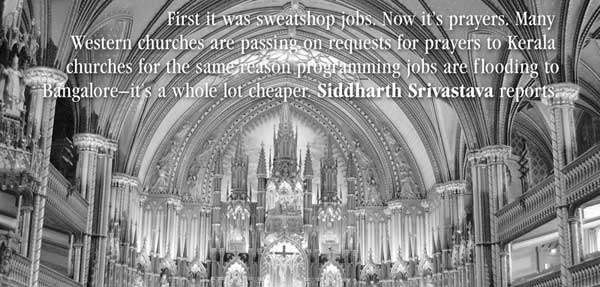 Outsourcing God: Mass in Kerala - By Siddharth Srivastava First it was sweatshop jobs. Now it's prayers. Many Western churches are passing on requests for prayers to Kerala churches for the same reason programming jobs are flooding to Bangalore - it's a whole lot cheaper. Siddharth Srivastava reports. How about David Beckham and outsourcing? It’s happening. With Euro 2004 mania gripping the continent, prayers and missed penalties are coming thick and fast. For the die-hard fans who want to leave nothing to chance, often nothing works better than a request for a prayer, which in the existing environment of cost conscious outsourcing, is being carried out in — get this — the south Indian state of Kerala. To be sure, outsourcing of prayers is not taking away jobs in the West, but it is certainly making quite a few say “O Jesus.” A mix of economics and a shortage of priests in Western Europe and the U.S. have fuelled the outsourcing of the “Holy Mass” to parishes in Kerala. Here is how it works: Mass intentions — requests for services, such as thanksgiving and memorial masses for the dead — made at U.S. dioceses are passed to churches in Kerala, to priests and congregations with time on their hands. The communication is usually via e-mail. As there is no official channel many intentions are through personal relations of the priests, who may have friends abroad. If a devotee offers a Mass in, say, New York, it may be performed in Thrissur. In the current context, nervous fans who have been putting in mass requests for Beckham-Rooney to help England sail through, are being carried out in Kerala. Each mass is said in front of a public congregation in Malayalam, the local language. Reports from Kerala say bishops have had to limit priests to just one mass a day to prevent them from denying others the opportunity to earn a higher income. There is a dominant Christian population in Kerala with churches dotting the urban and rural landscape. Referred to as “dollar or pound masses,” several reports on prayer outsourcing have been appearing in the local press in Kerala due to the incomes being generated. “Most of these requests are made from the US and European countries. These Mass intentions are usually routed through dioceses and handed over to relatively less busy parishes,” says Jose Porunnedam, chancellor of Syro-Malabar Church, in a local daily. “Pilgrim centers also direct Mass intentions to the diocese. We also get Mass intentions made at Lourdes in France and Santiago De Compestele in Spain,” says Father Dr Philip Nelpuraparambil, director of ecumenism and dialogue at Archdiocese of Changanassery. The main reason for the outsourcing of prayers is the lack of manpower and hectic schedules in churches in the West. Add the financial benefits. As in the case of corporate outsourcing the money saved can be substantial. While fees for a Holy Mass intention made in Germany can be 50 euro ($60), it is just Rs. 50 ($1) at a Thrissur diocese. Rates vary from country to country: a request from North America or Europe can net an Indian priest three pounds or four pounds, which is good money here. “Mostly these intentions are given out for meeting expenses of parishes with membership of fewer than 250 families and less sources of income. The money is also used for paying remuneration for the priests,” says Father Paul Alappat, chancellor of Thrissur Archdiocese, which gets an average of 50 Mass intentions from abroad every month. One Indian news agency has quoted the case of Father Benson Kundulam, who lived in Paris for several years, recently held a requiem mass in Cochin for a man in France mourning the death of his father. “It doesn’t matter where the person is from, we treat the request the same,” he says. The money, he says, is the last thing on the priest’s mind. “It is a religious duty to say the mass. We do it the same, whether it is an Indian paying a few rupees or an American paying dollars.” His colleague, Father Tony Paul, who has not traveled abroad, gets far fewer foreign requests and more Indian ones, which earn only a third of the money. “If you don’t get personal requests, it is up to the bishops to hand them out,” he said. Virtual worship is not unusual in India as several prominent temples such as Tirupati, Vaishnodevi have set up Web sites that allow online darshan as well as offering of prasad (sweets, incense etc) by paying via credit card. However, as in the case of corporate outsourcing, there have been voices of protest from the West. Britain’s biggest industrial union expressed alarm earlier this week at the latest trend in outsourcing to South Asia: religion. “Religious services and prayers for the dead are being offshored from the United Kingdom to India because of a lack of priests,” Amicus, whose one-million-plus membership includes several thousand clergymen, said in a statement. Amicus cited press reports that revealed how more and more prayers were being said in Kerala because they had become too expensive in the West. “This shows that no aspect of life in the West is sacred,” said Amicus’ national secretary, David Fleming. Church representatives, however, say outsourcing religious services has been going for many years which has nothing to do with the current fad over business process or the services sector jobs. Paul Thelakat, spokesman for the Cochin archdiocese and editor of the largest-selling Catholic weekly in Malayalam has been quoted as saying that prayers for the dead have been outsourced for decades and that the tradition has been thrust into the spotlight only because of the controversy over corporate outsourcing in the West. “Priests and bishops abroad have no choice but to send them here or else the mass intentions would never be said,” Thelakat said. Other critics say that though religion outsourcing does not take jobs away from other parts of the world, unlike its corporate equivalent, the process may attract unscrupulous priests scrambling to make a profit, with no way to verify whether the clerics performed the ceremonies. It could indeed be morally right to outsource God as it results in money being re-distributed to the poor and needy. On the other hand, should matters concerning the human spirit be shopped around to the lowest material bidder? - Siddharth Srivastava is a journalist based in New Delhi. |TOP| REPORT  Auction Mania: Auction Mania:eBay Buys Bazee.com – A Siliconeer Report Although Internet penetration in India pales in comparison to other countries, industry watchers see the country as a potential hot spot for growth as eBay jumps in for a piece of the action. A Siliconeer report. Online auction giant eBay has agreed to acquire Indian rival Baazee.com for roughly $50 million, the online auctioneer said June 23. The online behemoth said the acquisition will give eBay an opportunity to significantly increase its global presence by giving it a foothold in India, the second most populous country in the world, behind only China. eBay CEO Meg Whitman said the proposed buyout was an important step in expanding her company’s international operations and said the auctioneer is entering India just as the online retail market in that country is poised for growth. “Although it’s early days for e-commerce in India, we believe there is great opportunity over the long term,” Whitman said in a statement. While Internet penetration in India pales in comparison to other countries, including eBay’s own backyard in the United States, industry watchers have tabbed the country as a potential hot spot for growth. According to market researcher IDC, there are about 17 million people currently using the Internet in India, and that figure is expected to reach 30 million by 2006. Baazee, which claims more than 1 million registered customers, mirrors eBay’s business model of letting individuals buy and sell items via online auctions. Offering a seemingly endless range of items much as eBay does, Mumbai-based Baazee identifies itself as the largest online marketplace in India. Executives at the auction house pointed to the proposed acquisition as a validation of their strategies. Under the terms of the deal, San Jose, Calif.-based eBay will acquire all outstanding shares of Baazee for about $50 million, in addition to other transaction-related expenses. The companies said they expect the deal to close sometime during the third quarter. VC WORLD  $1 Billion Bonanza: South Asian VC Sweeps - A Siliconeer Report Despite the dour mood in the investment market South Asian-run U,S companies collected a whopping $1.08 billion in venture capital in 2003. A Siliconeer report. South Asian-run companies in the U.S. collected $1.08 billion in venture capital last year, an increase of 5.3 percent over 2002, according to the third annual survey released June 11 by Waltham, Mass.-based IndUS Business Journal, a newspaper which covers South Asian businesses in the U.S. “This number, which is almost certainly a conservative one, comprises about 6.1 percent of all the venture capital raised by U.S. companies in 2003,” said Upendra Mishra, managing partner of the Mishra Group, Inc., publisher of IndUS Business Journal. “Considering the continued struggles of the venture-capital market, Indian and other South Asian entrepreneurs fared extremely well.” U.S. companies raised $17.8 billion in venture capital in 2003, down from $19.9 billion in 2002, according to Ernst & Young LLP and VentureOne. “What’s most amazing is that the increase occurred during a year when venture investment dropped, continuing its sag from the tech collapse,” says Martin Desmarais, editor of the IndUS Business Journal. “It’s a strong testament to the determination of South Asian and Indian entrepreneurs, and it also shows the faith investors have in the group.” Rohit Padgaonkar, research manager at IndUS Business Journal, added: “The dollar amounts and number of deals is conservative because some companies didn’t respond to our surveys or traditionally don’t release their investment numbers.” Leading South Asian venture capital recipients in 2003 include: Infinera Corp. of Sunnyvale, Calif., with $53 million; Axiowave Networks Inc. of Marlborough, Mass., with $45 million; Sanera Systems Inc. of Sunnyvale, Calif., with $35 million; Ikanos Communications Inc. of Fremont, Calif., with $33 million; and Molecular Imprints Inc. of Austin, Texas, with $30 million. The top-five states in regards to venture capital money raised by South Asian companies in 2003 are California, with 36 companies raising $538.1 million; Massachusetts, with 16 companies raising $223.4 million; Texas, with four companies raising $74 million; New Jersey, with seven companies raising $62.1 million; and Georgia, with four companies raising $40.6 million. Waltham, Mass.-based Mishra Group (www.mishragroup.com) publishes IndUS Business Journal (www.IndusBusinessJournal.com) and INDIA New England News (www.IndiaNewEnglandNews.com). |TOP| SOCIAL CHANGE 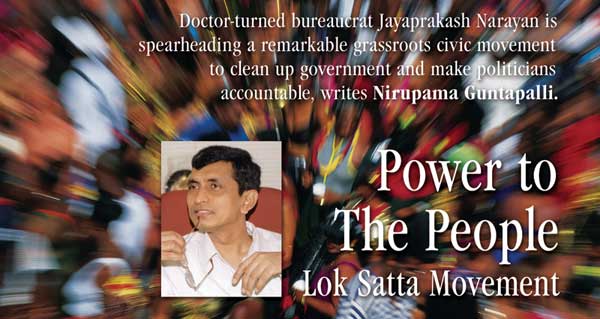 Power to the People: Lok Satta Movement By Nirupama Guntapalli Doctor-turned bureaucrat Jayaprakash Narayan is spearheading a remarkable grassroots civic movement to clean up government and make politicians accountable, writes Nirupama Guntapalli. Just when you were ready to sit back and bask in the reflected glow of heartwarming headlines about India—a common enough NRI affliction—a doctor-turned-bureaucrat-turned activist is ready to shake you out of your complacence. India, desis are wont to think indulgently, is no longer the nation of mass poverty and the rope trick. It’s nimble IT knowledge workers are beginning to give the world’s only superpower headaches. Every white collar employee in the West is anxiously looking behind his or her back to see if his job is going to be the next one to be carted off to Bangalore or Noida. Not bad, huh? Hold your applause. Jayaprakash Narayan, the articulate and passionate leader of the Hyderabad-based grassroots political reform organization Lok Satta (www.Loksatta.org), wants you to take a moment to ponder the darker side of India. And do something about it. India still faces a host of problems. Take a look at his organization’s Web site, and you will learn that:
That doesn’t mean Narayan is simply in the business of telling everybody how terrible things are in India. “The statistics are daunting,” the Lok Satta Web site says. “But should they make us, the citizens of India, helpless? “Not if we are ready to fight together.” Narayan’s Lok Satta is doing just that, and he was here at the Santa Clara Westin June 19, spreading his twin message of democratic reform and transparency. Narayan brought a bullish optimism as he reflected on India’s recent progress in political reform, but he also provides daunting statistics on corruption and economic injustice and inequality to point out how much remains to be done. Lok Satta’s goal is simple: decentralization of power, reform of the judiciary, making government accessible to people, and instituting “accountability instruments” in governance. Civic engagement works, he said, presenting two examples of success.
According to Narayan, 98.09 percent of 854,554 voters demanded the right to know the background of the candidates. The ballot was the largest ever independent opinion gathering exercise undertaken in the country, he said . A law to address the issue has been ruled valid by India’s Supreme Court, which now requires all candidates for elected office to disclose their criminal histories and personal wealth. In an article in The Hindu, Narayan has written about how he ended up being an activist. “I am asked why I have embarked on this unusual journey—medical education, civil service and now governance reform. Born about a decade after independence, I grew up in a village in coastal Andhra. My father was employed in a small town in Maharashtra, and an old aunt, a child widow who never remarried, raised me. These somewhat unusual circumstances gave me the different perspective of a participant/observer of public defecation, caste, hierarchies, superstitions, poverty and underdevelopment. “By any standard, mine was one of the most successful careers in civil services in free India. My work in various capacities made me realize how much our people are capable of, if only the fetters imposed on them are removed and they are given freedom. There are plenty of wonderful people in politics, bureaucracy and judiciary. But the successes of even the finest among them are at best only limited. It dawned on me that what is required is not a mere change of players, but a fundamental change in the rules of the game. “It did not take long for me to realize that specific governance reforms — in particular electoral reforms, separation of powers, decentralization, speedy and accessible justice and instruments to promote accountability and transparency — are needed to curb corruption and help us fulfill our potential.” “It is this vision that made me leave a comfortable job at the peak of my career. Once you understand what is wrong and know how to set it right, you have an obligation to work for change, and be a part of the solution. In a sane democracy, the electoral process and party politics should provide a solution to our predicament. But the nature of our elections and politics ensured status quo, and the political process has become the problem itself. The ball therefore is in people’s court, and a popular movement for specific democratic reforms has become necessary. That is what Lok Satta is about.” The event was co-hosted by the Foundation for Democratic Reforms in India and Promise of India. A panel discussion of Indian American entrepreneurs in Silicon Valley followed his lecture. Interested readers can find more information about the following organizations in their respective Web sites: Lok Satta (www.Loksatta.org); Foundation for Democratic Reforms in India (www.fdri.org) and Promise of India (www.PromiseOfIndia.org) - Nirupama Guntapalli is a freelance writer. She lives in San Jose, Calif. |TOP| REPORT: 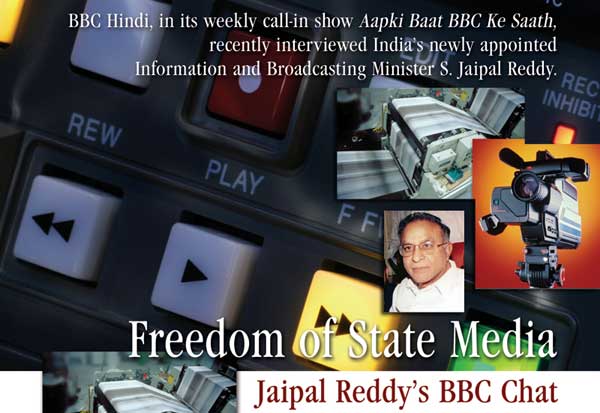 Freedom of State Media: Jaipal Reddy's BBC Chat BBC Hindi, in its weekly call-in show Aapki Baat BBC ke Saath, recently interviewed India's newly appointed Information and Broadcasting Minister S. Jaipal Reddy. (The BBC Hindi weekly phone-in program, Aapki Baat BBC Ke Saath, is broadcast every Sunday. Hindi listeners can access the archived show on the Internet at www.bbchindi.com. Here are excerpts of an interview with S. Jaipal Reddy with the BBC Hindi service in June.) Q: (BBC Hindi) Mr. Reddy, the obvious first question is why the governments in India are afraid of providing independence to state-run media? A: I do not want to comment on the working style of my four immediate predecessors, but so far as I am concerned, my views on the autonomy of Prasar Bharti remain unchanged, I am committed to see that the public service broadcasters in India are autonomous, my views remain as they were seven years ago. Q: (BBC listener from Muscat) Sir, there are 24 private TV news channels, and similarly there is access to anything in the world on the internet. Why, then, is radio under strict governmental control, is it justified? What should we expect from the new government? A: I agree there should be no control of the government on Akashvani and Doordarshan. Legally, Prasar Bharti is autonomous, all of you would recall that I implemented the Prasar Bharti Act granting autonomy to this institution. At the moment, the major weakness being faced by Prasar Bharti is about the financial resources. At the moment, any institution which is dependant on the government for finances cannot be expected to work independently. Q: (BBC Hindi) Mr. Reddy, but if we look at the past five-six years, the entire idea of autonomy to Prasar Bharti has been throttled in a way - look at the political appointments. What sort of autonomy are we talking about? A: I agree with this, but, you see, the party which tried these tactics has been defeated by the people. There is no point in being critical on those rejected by the people, I am looking at the positive program for the future now. My attention at the moment is focused at the financial autonomy of Prasar Bharti. Q: (BBC Hindi) But how would you provide financial autonomy to Prasar Bharti? A: Today the expenditure of Prasar Bharti is Rs. 1,800 crore and the income is Rs. 600 crore. Now, for Rs. 1,200 crore, it is dependant on the government. Till the time Prasar Bharti is dependant for this money on the government, autonomy cannot be there practically. Today I am the minister, tomorrow somebody else could be there, it could be another government. Therefore to put an end to this, financial autonomy is the answer. As to how to do this, there are several options. Look at Britain, the country from where you are talking to me: there the BBC generates its resources from the [TV] license fees. Since the BBC has its own resources, it is independent and autonomous. Similarly, the Prasar Bharti should also be independent and autonomous. How to do it — I am working on this and looking for the possible ways, in consultation with all. Q: (BBC Hindi) Mr. Reddy, you are talking about revolutions and financial autonomy of Prasar Bharti. But the real situation is that all governments have made political appointments in the Prasar Bharti Board, and the word autonomy exists on paper only. Isn’t this a sad state of affairs, what are the plans to reverse this? A: I do feel sad about political appointments. But the practical reality is that such appointments are bound to be there in the existing political system and the only way out of this is providing financial autonomy to Prasar Bharti and this is what this government is working at. Q: (BBC Hindi) Mr. Reddy, from where would the resources be generated for the financial autonomy? A: See I am giving the example of Britain for financial resources, where the license fee is the source. In India, there used to be a license fee earlier, which was abolished. It could be there again, a small cess could be levied, and there are a few other ideas like this. But no final decision has been taken so far. Q: (BBC listener from Japan) Sir, ever since the idea of Prasar Bharti was mooted back in 1989, even after 15 years, this institution’s autonomy leaves a lot be desired. The tradition of political appointments is continuing without any break. And appointees are those who dance to the tune of their mentors. What would do you do for a real autonomy? A: Legally, Prasar Bharti is autonomous, as I said earlier, but financially it is not. I am not thinking about changes in these appointments. There is no culture of autonomy in our country. We would have to encourage this culture. The officers appointed in India work as subordinates. Q: (BBC listener from Raipur) Sir, why do the governments in India ignore radio? There are more than 100 TV cable channels in India, whereas the poor man, who can only afford radio, has to be content with Akashvani. Why can’t radio listeners listen to world class news? The previous government inaugurated FM for Vividhbharti in 2001, but that is not fully operational so far. A: I agree that radio in India has been ignored to a large extent. I am going to give particular attention to the future of radio. As far as the local problem is concerned, it has been brought to my notice, and I will look into it and take steps. Q: (BBC Hindi) Mr. Reddy, the TV revolution has changed the face of TV in India, but haven’t the radio and print media been left behind? A: I feel the newspapers of India are doing well even when considered at the world level. I think the Indian papers do compete well at the international level. There is no need for a revolution for the newspapers. For the radio, yes there is definitely a scope for improvement in radio, we are working on it. Q: (BBC Hindi) Mr. Reddy, why has the radio in India been in so much tighter governmental control and what is the plan for future? A: See, the utility of radio has to be understood, till now the governments have not realized the potential of radio, which has to be done now. We are encouraging private FM radio stations, and the potential of radio in Prasar Bharti would be encouraged further. Q: (BBC Hindi) But, Mr. Reddy, news and current affairs of entire world is available on TV, all views are available on the internet. Why should radio listeners suffer? Why not allow them to listen to world programs? A: As an individual, I have my views, but now, being a minister, I would not like to comment at this moment. Q: (BBC listener from Bhopal) Sir, almost all TV channels showed opinion and exit polls during the recent general elections, and their findings are for all to see. How could a few analysts with their laptops be allowed to create an opinion for this vast country and that too wrong, is the government looking at some corrective measures? A: You are right, it is impossible to capture the public mood through any survey in a vast and diverse country like ours, but imposing a ban on such surveys is also not a good idea. I am in favor of a regulatory framework for the accountability of such surveys. Q: (BBC Hindi) But, Mr. Reddy, there is a widespread perception that election surveys affect the voters’ minds. How would you make the psephologists accountable and what standards should be there for them? A: We would have to work for a regulatory framework to fix the accountability of these polls, which would be based on unanimity between all political parties. It is not a question of any particular party. I am not in favor of any ban on such surveys as it would be against the spirit of democracy in India. Q: (BBC Hindi) Mr. Reddy, the day you assumed your duties you expressed happiness on the stand taken by the BBC in the stand-off with the British government. You favor a BBC style of functioning. From where would you begin? A: Well, the beginning would have to be done by Prasar Bharti. As a minister I can provide independence, but it is Prasar Bharti which has to do it. The thinking is to have a culture of independence and autonomy. Q: (BBC Hindi) Mr. Reddy, however the original question remains, that there are ways and means to misuse Prasar Bharti, why not make a law so that this misuse becomes impossible for all future governments? A: Precisely for this reason I am trying to bring a change in the system. So that the autonomy of Prasar Bharti is not dependant on the personality of the minister concerned. I would take steps to have a new tradition of autonomy. Q: (BBC Hindi) But despite this talk of autonomous tradition, having appointees of a particular ideology in All India Radio (AIR) and Doordarshan (DD), which have the maximum reach in the country, isn’t this an injustice toward the people of the country? A: It is an injustice, beyond doubt, I agree, and I feel that diverse viewpoints should find a place on AIR and DD. Q: (BBC listener from Abohar) Sir, but what we have seen in our country is that on AIR and DD you hear and see only the ruling party. What is the biggest obstacle, in your view, in making them autonomous? A: The biggest obstacle is our own tendency! For any change, first of all, the minister and the officials would have to change and develop an independent mindset. The second problem is absence of financial autonomy and till any institution remains dependant on the government financially, it cannot be independent. Q: (BBC Hindi) Mr. Reddy, your plan of financial autonomy could run into trouble, particularly from your allies the Left parties. Are you confident of their support? A: I can say about the Left parties that they are, like myself, committed to the autonomy of the public service broadcasters. They would not raise objections to resource generation, I am confident on this front. Q: (BBC Hindi) Mr. Reddy, in the end, I would like to ask whether your government will reverse and change the policies of the NDA government to which your party and your allies were opposed? A: We will make changes only where it is necessary. But I am clear that we would not make unnecessary changes. The government is a continuous institution, and abrupt changes are not in the interest of the country. |TOP| CONSERVATION  A Responsible Summer: Save Water, Energy - A Siliconeer Report California has launched a statewide energy efficiency marketing and outreach campaign. Its tips can benefit you individually, and is good for the state. A Siliconeer report. As the hot days of summer approach, people throughout California will be filling up their pools, turning on air conditioners and adjusting their sprinkler systems to cope with the heat. Below are some tips on from Flex Your Power on how to save money this summer by saving energy and water. Stop Those Leaks! Check your faucets and your home for leaks. Silent leaks literally throw your money down the drain. Studies have shown homes can waste more than 10 percent of water due to leaky faucets, which costs both you and the environment. When it comes to keeping cool air in and hot air out, closing air leaks in your attic, walls, doors and windows can save up to 10 percent on energy bills. Weatherstripping, home sealing products and expanding foam can all help you reduce your utility bills. For help with these home improvements, use the store list at www.fypower.org to find a Flex Your Power participating retailer near you. Replace Your Old Toilet, the Largest Water User Inside Your Home. If your home was built before 1992 and has never been replaced, then it is possible that you do not have a water efficient 1.6 gallon per flush toilet. Many water agencies offer rebates or free ultra low-flow toilets when you replace your old toilet. While you’re at it, replace your showerhead with a low-flow model that saves energy by saving water. Contact your water agencies or your utility to see if they will provide you with a low-flow showerhead for free. Replace Your Clothes Washer, the Second Largest Water User at Home. Washing clothes alone uses 22 percent of the water used inside a typical home – that’s 14,000 gallons every year! ENERGY STAR qualified washers use 35-50 percent less water and 50 percent less energy per load – and save the average California home $113 per year. When you replace your old clothes washer with an energy-efficient one, you can also get instant savings by getting a rebate from your local water district or utility. Plant the Right Plants and Water Only What Your Plants Need. Select plants that are appropriate for your local climate conditions. Most water is wasted in your garden by watering when your plants do not need the water or by not maintaining the irrigation system. Make sure your irrigation controller has a rain shutoff device and that it’s appropriately set. Also consider planting trees and shrubs in strategic locations to help reduce the temperature in your house. Plants on the west and south sides of your home help to keep your house shaded during the season’s peak heating times, saving you energy and money. To learn more about how to save water, energy and money in your home, visit energy-efficiency campaign Flex Your Power at www.fypower.org, where information is available in English, Spanish and Chinese. Initiated in 2001, Flex Your Power is a partnership of California’s utilities, residents, businesses, institutions, government agencies and nonprofit organizations working to save energy. The campaign includes retail promotions, a comprehensive website, an electronic newsletter, educational materials and advertising.
POLITICS: 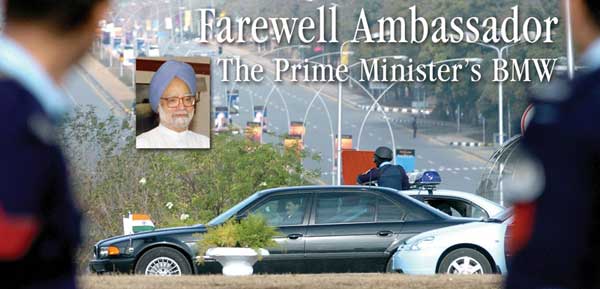 Manmohan Singh (inset, above), unlike almost all his predecessors, will travel in a plush, black BMW. (background) Farewell Ambassador: The Prime Minister's BMW - By Siddharth Srivastava Move over, Ambassador. Thanks to his predecessor A.B. Vajpayee, Prime Minister Manmohan Singh will move around with style—in an armored, custom-made BMW, writes Siddharth Srivastava. While the Indian political establishment may be divided over the way economic reforms should further progress in the country, there are no doubts about the ultimate badge of honor and status — it is he/she who rides a BMW, a brand that’s as multinational as it can get. And, made to roll over, is the symbol of political and bureaucratic power on the road till now, the completely swadeshi, bulky and often listless Indian Ambassador fitted with piercing sirens and red lights on top. The 14th Lok Sabha that met for the first time this week saw members, old and new, in a wide array of car makes, often in contrast to their avowed stance of equitable distribution of the country’s resources. Among those who stood out in their cars were Avtar Singh Bhadana, Member of Parliament, from Faridabad in Uttar Pradesh, one of the poorest states of India, in a black Mercedes; Rana Gurjit Singh, Congress MP from Jalandhar (Punjab) also a Merc; Congress MP Nikhil Kumar in a Honda City; former Prime Minister Chandrasekhar in a Honda Accord; Kuldip Bishnoi, first-time Congress MP, in a dazzling Hyundai Terracan bearing the number 0001; Samajwadi party leaders Jayaprada and Amar Singh in a white Lexus; Santosh Bargodia in a Hyundai Accent; Congress MP Praneet Kaur, wife of Punjab chief minister Capt Amarinder Singh in her Mitsubishi Lancer. While the above pretty much served as an advertisement for the various brands that circulate in the country, Prime Minister Manmohan Singh who alighted in a black custom-made BMW, stole the show. Actually, Singh should thank his predecessor Atal Behari Vajpayee under whose regime the BMWs replaced the fleet of bullet proof Ambassadors that all previous prime ministers rode in. A mention also has to be made about the lurking Lashkar-e-Taiba and al-Qaeda terrorists whose constant threat clinched the deal to procure the BMW for the prime minister. In order to enhance security and ensure comfort when the prime minister moves around in the capital, the Vajpayee government had ordered six bullet-proof BMWs that are also shock proof and mine-proof vehicles. The cars are a light-armored custom-made version combining features of the BMW 5i and 7i series that have special safety and security features, catering specially to VIPs around the world. Though questions had been raised about the need for six cars, each at over $250,000, the reasoning was that India could easily afford them, given the comfortable foreign exchange reserves. One of the first decisions of Vajpayee after he resigned was to renounce the BMWs that were sent across to Manmohan’s residence. Singh, a man of spartan habits, however, has decided that six BMWs are too many for his use and has made two available for the continued use of Vajpayee, given the security risk he faces. The remaining two were sought to be sent to Singh’s mentor Sonia Gandhi, but she has reportedly refused the flashy cars as her preference still remains the good old Ambassador. Although officials are tight-lipped about details due to security considerations, the look of the car is indistinguishable from the other standard 5i models but the cars offer a very high level of protection from an armed attack. The sedans have the ability to withstand direct hits from high caliber handguns and also protect its occupants from other physical attacks. Protective layers are built into the body of the car at creation rather than being retrofitted. This approach allows for a more comprehensive layer of immunity while maintaining the dynamic capability of the car at a very high level. Increased maneuverability of the car allows 360-degree movement from a standstill position. The cars are fitted with bullet-resistant windshields, door windows and rear windows. In addition, the protection also features extra strong protection glass and a number of optional special security features. These include the option of running the cars on flat tires at up to 80 km/h even if the tires have been shot out and a communication system that allows the occupant to communicate outside without having to open a window. The added security that the cars offer do not impose a significant weight burden. “The additional protection results in an increase in weight of no more than 150 kg with minor modification of the spring system and allows the car to retain a high level of performance with the ability to accelerate to 100 km/h in only 6.7 seconds (6.6 seconds for the standard 5i),” says an official closely involved with the prime minister’s security. The BMW roll out also marks, over the past couple of years, the slow but definite phasing out of the Ambassador, for long the favored car of anybody who wanted to announce power on the road. There are numerous stories of retired bureaucrats purchasing a second-hand Ambassador to retain a figment of the glory that they once enjoyed, at least on the road. In a recent decision the Delhi government plans to replace the Ambassador as its official vehicles. It will be the Ford Ikon, Maruti Baleno, Toyota Qualis or the Skoda Octavia instead. “The absence of low maintenance and dependability,” are the reasons given by Delhi Finance Minister A.K. Walia in an interview. Hindustan Motors, the manufacturers of the Ambassador, however, are gamely fighting on and say that the shift to other models is a result of “product fatigue.” “We sell about 15,000-20,000 Ambassadors every year, of which 20 percent is bought by the government. The ambassador is a national symbol for the common man. It has always been associated with the government. It is the appropriate vehicle from the security point of view and is easily driven in rural and semi-urban areas,” Soni Srivastava of Hindustan Motors was quoted in a newspaper recently. The company is trying to make the Ambys look more contemporary and has come out with two new models recently. But with BMWs for competition, the battle looks pretty much one-sided. Nobody knows as yet what Manmohan is going to do with extra two BMWs at his disposal. Lucky him. At any rate, few will mourn the passing of the Ambassador, which, rather like khadi, symbolized a spurious modesty of lifestyle far removed from the less pretty reality of politicians. - Siddharth Srivastava is a journalist based in New Delhi. |TOP|
Tears of joy flowed freely after close relatives separated for decades in Kashmir were brought together by the BBC. A Siliconeer report.
The BBC took a groundbreaking online initiative to bring together divided families in Kashmir. The response was passionate and warmly positive, the global broadcaster said in a press release. “For the first time in years, families separated by the Line of Control which divides Kashmir between India and Pakistan have been able to see each other and talk through a video conference organized and Webcast by bbcurdu.com,” the BBC press release said. Alana Potts, who managed the technical side of the Webcast in Muzaffarabad, spoke about how moved she was by the emotional encounters: “For the past three days I have seen lots of people cry, both women and men, and each time it has brought a lump to my throat. Luckily, the tears are tears of joy as various Kashmiri families see relatives via a videophone for the first time in decades.” The event saw poignant scenes in Muzaffarabad, the capital of Pakistan-administered Kashmir, and Srinagar, the capital of Indian-administered Kashmir. Abida Masood, who saw her sister through this Webcast for the first time in 19 years, could not control her emotions: “I feel like somehow going through this screen and going to the other side and touching my sister. We have spent all our childhood together and now we are separated. God only knows when we will be able to go across and meet our loved ones.” As news spread of the initiative, BBC journalists Zulfiqar Ali in Muzaffarabad and Altaf Hussein in Srinagar were stopped on the streets by people asking them if they could also talk to their families on the other side of the Line of Control. The editor of bbcurdu.com Mirza Waheed said: “We were delighted to connect about 30 people on each side who could see and talk to their loved ones via bbcurdu.com But our initiative has also sent many more positive signals across the lines of political divide. I hope we can do it again.” The video conference was Webcast live June 21, 22 and 23 and is available online at bbcurdu.com. FINANCE Wise Today, Happy Tomorrow: Investing for A Secure Future - By Ashok Gupta Owning a variety of securities can protect you from large losses if one asset class performs poorly, writes Ashok Gupta.  It’s 10 p.m. Do you know where your retirement portfolio is? Just as parents worry about their children, investors worry about their retirement portfolios. One way to help reduce your investment worries is by allocating your retirement portfolio in a variety of asset classes. Owning a variety of securities in different assets classes helps protect you from large value declines in the event that one asset class performs poorly. Professionally-designed asset allocation programs can help you find the mix of stock and bond investments that work together most efficiently to achieve the highest return possible at a risk level you’re comfortable with. And, while a professionally managed process of asset allocation cannot guarantee a profit, it is a way for investors to increase potential returns and reduce risk. Understanding the Role of Stocks in a Retirement Portfolio. Stock investments are generally necessary to grow capital, which impacts your standard of living now and in retirement. The growth of capital is a source for higher income in retirement and can help make possible a stable, and potentially rising standard of living. Inflation is a risk from which you need to protect your financial assets. Over the short-term, rising prices may go unnoticed. But over a decade or two, the impact can be significant. Assuming an average annual inflation rate of 5 percent the purchasing power of $1 will shrink to about 38 cents over a period of 20 years. Historically, a diversified portfolio of stocks has provided investors an effective method to beat inflation over time. Though stocks may present greater short-term volatility than bonds, over longer time periods, the additional risk of owning stocks has been much lower. Time increases the likelihood of investment success. Finding the Investment Mix That’s Right for You. Allocating your assets correctly can be critical to the success of your retirement portfolio. To make this determination you need to closely consider three things:
An investment professional can help you with these three steps by performing a thorough financial review. Once the review is complete, the professional can make a recommendation on the best allocation of your investment portfolio. So stop worrying, and contact your investment professional today. He or she can help make certain your portfolio is allocated appropriately to ensure a long and successful retirement. - Ashok Gupta is a financial adviser based in San Jose, Calif. |TOP| EVENT:  Ethnic Extravaganza: San Francisco Dance Festival Ethnic Extravaganza: San Francisco Dance FestivalA Siliconeer report From Scottish dancers to our very own Kathak master Chitresh Das, the San Francisco event was a rich, diverse visual and cultural spectacle. A Siliconeer report. The 25th annual San Francisco Ethnic Dance Festival, the oldest festival in the United States dedicated to the presentation of cross-cultural ethnic dance, was hosted over three weekends June 7-22. Thirty dance companies from Northern California representing more than two dozen nationalities performed over three weekends at this unique festival. This year was particularly memorable for South Asians, as at the opening night festivities North Indian Kathak master Pandit Chitresh Das received the annual Lifetime Achievement Award. This prestigious award has been renamed The Malonga Casquelourd Lifetime Achievement Award for Excellence in Ethnic Dance. The Chitresh Das Dance Company and guest musicians from India performed that evening. This year’s ethnic dance program celebrated the past, the present, and the future of ethnic dance, with performances representing a variety of dance styles and nationalities. Mayor Willie Brown June 5 hosted a reception at City Hall to celebrate the festival’s 25th year. Participating groups at the festival included the Dunsmuir Scottish Dancers (Scotland), with its jigs, reels and warrior dances performed to the powerful and haunting drone of bagpipes, and to lively reels by musicians on bodhran, guitar, fiddle, viola and tin whistle; Likha Pilipino Folk Ensemble (Philippines), which presented a dance of the indigenous Bagobos tribe about the cycle of rice planting with long bamboo poles, accompanied by tangungo gongs, kubing, and drum; and the Hala Dance Ensemble (Egypt), which presented a country folk-style cane dance, and a dance set to a modern Egyptian pop song that proclaims the love of the singer’s life. Other South Asian participating groups included Ghungroo Dance Academy, Lasya Dance Company and the Prabhath Academy for Music and Performing Arts. ARTS:  ImaginAsian: ImaginAsian:Asian Theatre in New York A Siliconeer report ImaginAsian, a new 300-seat Asian American arthouse theatre and cultural center in New York, opens July 15 for the screening of feature films, music performances, satellite-fed events (such as live cricket matches) and exhibitions. A Siliconeer report. Recently formed multi-media entertainment company ImaginAsian Entertainment Inc. is opening a new Asian American art house theater and cultural center in New York July 15, according to a press release. The ImaginAsian will be the only theater in New York City dedicated to first-run Asian and Asian American films. The 300-seat theatre will be available for the screening of feature films, music performances, satellite-fed events (such as live cricket matches) and exhibitions. Additionally, The ImaginAsian will feature a café offering Asian snacks, beverages, and internet access. The ImaginAsian has signed its first event — the 27th Asian American International Film Festival. The festival, presented by Asian CineVision in association with the Asia Society, is the longest running of its kind in America. From July 16-24, screenings will be held both at The ImaginAsian and at the Asia Society. Additionally, ImaginAsian TV, the 24-hour Asian American television network formed by the company, will premiere nationally in August, 2004 to serve the entertainment and information needs of the more than 14 million Asian Americans residing in the U.S. “ImaginAsian TV will be fully advertiser supported and will offer American premieres of the best programs that Asia has to offer as well as original productions developed and produced by the network,” the press release added. ImaginAsian Entertainment CEO Michael Hong has appointed Rohi Mirza Pandya as director of acquisitions and theatrical operations. Previously, Pandya organized film screenings and movie release premiere parties for South Asian-themed films and popular hits such as Monsoon Wedding, The Guru and Bend It Like Beckham. She has also produced films, including, the feature-length Fillum Star: The Peter Patel Story. The ImaginAsian TV program schedule will consist of feature films, drama series and sitcoms, new variety and game shows, animation, children’s programs, music videos, sports and documentaries. COMMUNITY NEWS IN BRIEF: Pride of India Award ... $250,000 for Kerry ... Condoling Reagan’s Death ... Eventilo Fashion Show ... Art Exhibit ... NCCA Win California Cup ... Classes at ICC ... Anoushka Condemns Cruelty Pride of India Award 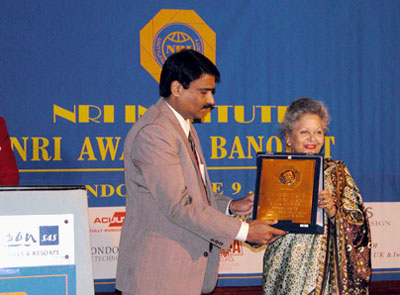 Dr. Srinivas Pentyala receiving the Pride of India Gold Award from Baroness Shriela Flather at the NRI Awards Banquet in London, June 9. Dr. Srinivas Pentyala receiving the Pride of India Gold Award from Baroness Shriela Flather at the NRI Awards Banquet in London, June 9.Dr. Srinivas Pentyala of Stonybrook, N.Y., was awarded the “Pride of India” Gold Award by the NRI Institute for his contributions in teaching and bringing awareness to science, research and education June 9 in London. Dr. Pentyala is a faculty member in the School of Medicine of SUNY Medical Center, Stony Brook, NY. The NRI Institute is an international organization that encourages interaction between prominent Indians who live outside of India and those who reside in India. The Pride of India awards are given to outstanding nonresident Indians for their “contribution towards socioeconomic development of India and also the country of their adoption.” Pentyala is one of 26 recipients who received awards for excellence in different categories at a banquet ceremony. As many as 12 awards went to NRIs from the UK, four from the U.S., two from South Africa and one each from Canada, New Zealand, Seychelles, Kenya, Tanzania, Netherlands and Oman. One award went to an NRI currently residing in India. Keith Vaz, MP and former minister for Europe; Lord Navnit Dholakia, president of the Liberal Democrats Party; Baroness Shriela Flather; and Kiran Billimoria, NRI entrepreneur, were among the dignitaries who attended the banquet. Collaborating with the Kerry Campaign and Democratic National Committee, APAP members Curtis Chin, Monica Flores Lodise, Raj Balasubramanian, Wei Hsie, Nina Ahmad, Anson Chong and countless others have generated great momentum in setting up house parties nationwide, of which number now exceeds well above 60 parties. The target of this event is $50,000. Estimated total contribution by members of APAP to Kerry Campaign is measured well above $250,000, representing more than a third of all funds raised at the Gala. “As a young grassroots’ organization powered by internet and national network of Asian Pacific Americans, APAP is very proud of its achievement,” the press release said. “Leading the new wave of Asian Pacific Americans’ progressive political and social movements in the US, APAP is well recognized by the Kerry campaign, DNC and APAP elected leaders for its hard work, pulling the resources together and achieving an impressive result in such a short length of time.” APA for Progress is a national membership organization with local contacts in over 35 states. Interested readers can find information about APAP on the Internet at the organization’s Web site at www.apaforprogress.org “I fondly remember meeting President Reagan on numerous occasions including one in the oval office,” Dandona said. “I saw him as a truly charismatic and amiable leader and aptly called the ‘Great Communicator.’ His leadership and communication skills had an everlasting impression and were a constant source of inspiration to me. On our very first meeting, Ronald Reagan made me feel as if we were friends and knew each other for years.” Reagan gave a warm welcome to Rajiv and Sonia Gandhi during their visits to the United States and was a great friend to India, the press release added. INCA president Shanker Shetty added, “In spite of Ronald Reagan and Rajiv Gandhi belonging to different generations, they hit it off.” Kamal Dandona added, “We shall miss Ronald Reagan.” The fashion show featured top Indian designers Suneet Varma and Vikram Phadnis May 15 at the Santa Clara Westin Hotel. Suneet Varma’s entry into the world of fashion took off upon graduating from the London School of Fashion in 1986 and interning with couturiers Nicole Farhi in London and Yves Saint Laurent in Paris. He has been involved in the research and development of couture embroidered garments for international design houses like Donna Karan, Carolina Herrera, Carmen Marc Valvo, Mary McFadden, Betsey Johnson and Nicole Miller and designing and manufacturing embroidered handbags and fashion accessories for the Met in New York. One of the few Indian fashion designers who have managed to make a mark internationally, Suneet was chosen over U.K.-based designer Antonio Berardi to be part of the Italian Couture Week in July at Alta Roma, where he’ll show his collection along with the likes of Versace and Valentino. With no formal training in fashion, Phadnis prides himself as a self-made stylist who offers advice to celebrities on everything from wardrobe to hair and make-up. Although Phadnis is responsible for many glamorous makeovers in Bollywood, he believes in practical clothing, which people can actually wear. Vikram Phadnis’s growing list of celebrity clients includes Salman Khan, Aishwarya Rai, Sushmita Sen, Bipasha Basu, Akshaye Khanna, Sanjay Dutt, Raveena Tandon and Bobby Deol, among others. With Big B Amitabh also reported to be favoring the Phadnis look, the dressmaker could in fact become one of tinseltown’s hottest property in the days to come. This enterprising designer is now eyeing cricket, the only other national obsession that rivals cinema in India. Having attired icons Sachin Tendulkar and Rahul Dravid in the past, he’s now set to give an image makeover to other luminaries of the game like Jonty Rhodes, Wasim Akram, Glenn McGrath, Andy Flower and “Turbanator” Harbhajan Singh for a prestigious ad campaign. Launched in 2004 over lunch, Eventilo was inspired by four entrepreneurs who saw a need in the marketplace for high-end event conception and management. It specializes in staging corporate and social functions worldwide, with services ranging from event concept, creation, design, promotion, execution and management. Interested readers can find more information on the Internet at Eventilo’s Web site at www.eventilo.com. “We are proud to showcase a world-renowned artist and his unique work is a must see for all art lovers,” she said. Laxman Pai is an innovative and diverse artist focused on Indian decorative tradition. His trademark is bright and colorful representations of movement and life. His art covers a wide range of subject matter and media with versatility in watercolors, oils, acrylic, ink and even woodcarvings. He received his diploma in painting from the Sir J.J. School of Art in Bombay in 1947 and one year later he received the school’s top honor, the Mayo Medal. In 1951 he moved to Paris for 10 years and then moved back to India. He has received three Lalit Kala National Awards This was the first victory for NCCA over SCCA since 1997 and winning the series by two games to one was a major victory for them. Earlier in the summer the SCCA had beaten their Northern rivals fairly convincingly but the tables were turned this time.
NCCA and SCCA are the two largest and most competitive cricket leagues in California and have each existed for over 50 years. Together they manage more than 70 cricket teams in seven hierarchical organized divisions. Players from practically every cricket playing country are represented in these two associations. Games in both leagues are scheduled on weekends across more than 30 cricket grounds spread across the state. All games are played in accordance with the ICC’s One Day International rules. “Mona is an international dance icon who has designed, choreographed and performed numerous shows worldwide and has received a number of prestigious dance awards. We are so fortunate to have such high caliber instructors, like Mona, at ICC,” said Julie Craft, ICC’s director of marketing. “People need to register early for our classes, as ICC has quite a reputation for recruiting the best instructors from around the world and classes fill up quickly.” This summer, ICC will offer 63 classes in dance, music, language, sports, cooking and more at ICC’s three locations; Milpitas, Sunnyvale and Mountain View. “We are also honored to have the acclaimed Yoga master Mahendra Lohmor teaching an innovative ‘Yoga for weight management and healthy living’ course at ICC which features practical nutrition instruction from Dr. Jayashree Joshi and Dr. Jain,” said Mangala Kumar, ICC .director of programs. “This unique program is designed to help people who have tried quick-fix diets and exercise with limited success and are now looking for a holistic lifestyle change for healthier living.” ICC will introduce Kathak classes for kids and adults taught by Parna Ghosh, award-winning instructor, performer and student of world-renowned Pandit Birju Maharaj. Parna Ghosh’s experience includes performances in the films Devdas and Gadar, Birju Maharaj’s ballets Simhaasan and Meera and an appearance before India’s president in 1992. Interested readers can find more information about ICC at its Web site www.indiacc.org or call (408) 934-1130. “As the world’s leading killer of chickens, KFC has the responsibility to take the lead in eliminating at least the very worst abuses, but to this date, KFC has done nothing to address them,” writes Anoushka. PETA attempted to work with Yum! executives prior to launching its “Kentucky Fried Cruelty” Campaign, but despite assurances made long ago by senior vice president Jonathan Blum that KFC would “raise the bar” on animal welfare, the company refuses to eliminate the worst abuses. Seinfeld star and ex-KFC pitchman Jason Alexander had his contract with KFC canceled after PETA enlisted him to speak to company execs about the suffering of chickens. PETA has had additional high-profile support from hip-hop mogul Russell Simmons, actor Pamela Anderson, comedian Richard Pryor, rock icons Paul McCartney and Chrissie Hynde, and civil-rights leader Dick Gregory. “Chickens raised for food at KFC’s supply farms are denied everything that they naturally need and desire,” the PETA release added. “They are crammed by the tens of thousands into sheds that stink of ammonia fumes from accumulated waste and given barely enough room to move (the space allotted to each bird is roughly the same size a standard sheet of paper). They routinely suffer broken bones from being bred to be top heavy, from callous handling (workers roughly grab birds by their legs and stuff them into crates), and from being shackled upside-down at slaughterhouses. Chickens raised on factory farms are still babies when they’re killed, not yet 2 months old, whereas a chicken’s natural life span is 10 to 15 years.”
AUTO REVIEW
Bigger, Better Hybrid: 2004 Toyota Prius – By Sally Miller Wyatt It's simply impossible to drive the new Prius without marveling at this modern engineering miracle, writes Sally Miller Wyatt.  Most of us just get in our cars, turn the key and take off, with little thought to those mechanical machinations going on under the hood. This is not possible with the 2004 Toyota Prius. You just can’t drive this car without being constantly reminded you are motoring around in a modern engineering miracle. While many may be familiar with the original Prius’ concept — a gas/electric hybrid vehicle — this year’s all-new, second-generation version is bigger and better in many ways. This new Prius is the first Toyota to use Hybrid Synergy Drive, a gas-electric hybrid powertrain. Frankly, the more I learned about it, the more I realized it is a beautifully sophisticated piece of technology. Hybrid Synergy Drive basically allows the car to operate in either electric or gas modes, and the system alternates between these modes to maximize gas mileage. When you are driving at low speeds, power is provided by the electric motor, using energy from the battery. When battery supply is low, the system automatically recharges the battery using the gas engine. When you require heavy acceleration — such as when merging on the freeway — the system takes input from the gas engine and the electric motor. At highway speeds, the gas engine powers the wheels and the electric motor through the generator. The car also has an electronically continuously variable transmission, which means the transmission does not have fixed gears like we are all so used to having, but instead shifts in response to driving conditions. This computer-controlled powertrain’s task is to blend the power from the gas engine, the electric motor and generator, so that you will not feel a traditional “shift” while accelerating. You do, however, feel a “shift” when the car alternates between gas engine to electric motor. That took a little getting used to, because it felt for a moment like the car had stalled. After all is said and done, what you have here is a vehicle that gets nearly 60 miles to the gallon, has super-low emissions and — perhaps most surprisingly — an impressively powerful acceleration. Quick acceleration on a car such as this? It’s true. The Prius’ system has been designed to provide more power from both the gas part of the engine, as well as the electric motor, which gives it acceleration levels that comparable to a four-cylinder, mid-sized car. For example, the 2004 Prius can accelerate from 0 to 60 miles per hour in 10 seconds, as compared to 12.7 for the previous models. There is ample amount of cargo-carrying room in the trunk, even if you don’t fold the rear seats, which is also a bit of a surprise for a car in this size classification.
There are also several nice-to-have standard features, such as cruise control, heated side mirrors, power windows and door locks and remote keyless entry. Overall, I found the 2004 Toyota Prius to be quite an impressive display of engineering technology and a fun little car to drive, to boot. - Sally Miller Wyatt is a freelance writer Guftugu Well, the plan has backfired. First, Shiv Sena activists have raised a stink about his Girlfriend, ransacking cinemas in Bhopal, Indore, Nagpur and Bhubaneswar, charging the film of insulting Indian culture, whatever that means. Now it just got worse with gay activists joining in the chorus. “Not only is it a cheap and titillation-oriented film masquerading as one that’s liberal, but it portrays the minority community in a negative light,” said Chatura, and activist with the Organized Lesbian Alliance for Visibility and Action. Ouch! Gay activist Ashok Row Kavi says: “We have a major problem with director Karan Razdan for demonizing lesbians. The film takes our sexual identities and makes a joke of them.” The only people who seem to be happy are the frontbenchers, who appear to be watching the film in droves to see what the fuss is all about. Now, if that’s the case, maybe Razdan isn’t exactly ready to burst into tears, is he? The lamentable results of this heroic endeavor are well known to all. Poor Jha got beaten so badly that he forfeited his deposit, and kept making plaintive noises about rigging and booth capturing. Well, all is not lost, it would seem. Even if his attempt to represent the good folks of Bihar hasn’t made much headway, he has gathered enough material and experience to spin another gritty drama—and appropriately enough, the film will be called Apaharan, Hindi for “kidnapping.” Hey, we are talking about Bihar here, folks, so what do you expect, a satsang? “I am looking at the industry of kidnapping in Apaharan,” Jha says. “I have incorporated several real-life incidents in the film.” To be shot in Mumbai, Pune and Satara, Apaharan is scheduled for release in January 2005. All of this means gossipmongers are having a field day. And the yellow press has been so busy speculating Zinta’s relationships that they are on the verge of pretty much exhausting all young males. Which makes Preity maha gussa. “”I’m tired of telling people that I am single and happy. And I’m even more tired of hearing about my rollicking affairs with every man under the sun,” she recently said with a sigh. She declares: “The day there is a man in my life, I’ll tell the public.” But what to do about all those salacious stories about her? Preity doesn’ believe in taking the culprits to court, because it takes too long. She has a startlingly simple plan: Next time anybody asks her about her “affair,” she is going to slap the writer. “At least they’ll stop saying irresponsible things. More importantly, I’ll have the satisfaction of having dealt with the situation.” So gossipmongers, beware! So how’s it doing? Not too bad in India itself, but in NRIland, the film appears to have sunk like a stone. In the U.S., Dev collected $84,728 on 35 screens (Rs. 3.83 million) in its opening weekend. The per screen average is a paltry $2,420. In U.K., the film didn’t impress much either. The film collected £40,509 on 25 screens (Rs. 3.36 million) in its opening weekend. The per screen average is £1,620. The collections as well as per screen average are lower than that of Hum Tum, which is running in its third week. Hum Tum, starring Saif Ali Khan, meanwhile, continues its victorious march in both in the U.S. where it has collected $97,312 on 35 screens in its third weekend and in the U.K. where it has collected £62,170 on 27 screens. All told, the film has netted a tidy total of $686,007 (Rs. 31 million) in the U.S. and £446,177 (Rs. 37 million) in the U.K. Not only has he recently bought a painting of his beloved Aish for Rs. 50,000 at a charity auction, he lavished 30 gifts on her 30th birthday—one for each year. He’s just an incurable romantic, he says. “I like the idea of getting drenched in the rains in an auto-rickshaw with your partner. The moment has to be just right — for example, as you leave the college in the evening. It’s getting a little cold and raindrops are spattering you from time to time in the open vehicle. Now imagine yourself snuggling close to someone you are fond of. Can there be anything more romantic than that?” Probably not. So maybe he will add an extra dollop of passion in the forthcoming Monsoons? The film, as its name suggests, has a steamy, rain-drenched love scene, and Vivek, romancing in the rain, should be quite a sight. Just how successful he is apparent by the fact that he is in both recent releases, Lakshya and Dev. And that’s not all. He has a whopping 15 to 20 films waiting to be released in the next couple of years. Big B’s new lease of life, it is generally agreed, came with hosting the game show Kaun Banega Crorepati. His sheer class in dealing with contestants made the show a TV cult classic. Recently at a pre-release press meeting campaign of his forthcoming movie Deewaar, Lets Bring our Heroes Home the Big B was his genial, philosophical self: “Work has now become a necessity. Sometime ago, I was breaking my back to find work and trying to revive my company, AB Corporation, and for the family. Now, despite the situation not being too different, I am fortunate to be getting work.” As of now, he has not signed any films and is considering various offers. A little bird tells us Shekhar Kapur had a four-hour meeting with him in Mumbai. The two discussed the script in detail, we are informed. The project brings together Hollywood and Bollywood as The Lord of the Rings producer Barrie Osborne and Elizabeth director Kapur have announced that they will make two films in India together. Osborne and Kapur reportedly plan to start their first collaboration by the end of the year. Now it turns out that Mumbai police aren’t the only law enforcement authorities looking for him. Apparently his name appears in the wanted list on the Police National Compute in England. “The investigation remains open and inquiries continue to trace the suspect,” a police spokesman was quoted as saying in The Times. British police want to question him for allegedly threatening a former London friend and harassing his family with a baseball bat, according to The Times. Police in Britain want to speak to Gustad in connection with the reported harassment of author William Rhode, 32, who published his first novel “Paperback Raita” last year. Gustad is said to have demanded money and threatened Rhode’s family in a park in Kensington. Rhodes admitted that he knew Gustad seven years earlier in India and had drawn on his experiences in Mumbai for the book. Gustad thought that the anti-hero in the book, who smuggled drugs to fund his film projects, was based on him, and filed a libel case and won compensation from Rhode’s publishers six months ago. During the case he admitted to e-mailing a message detailing his libel complaint. “If I don’t succeed legally, you can be assured I will, every other way, until such time as I clear my name.” “I know where you live. I know your number on both sides of the Atlantic. I know where your wife works.... Right is on my side and I will nail you for the scum you’ve revealed yourself to be. I will not let it rest, and I assure you, you will have to spend the rest of your life looking over your shoulder.” That’s pretty heavy stuff. Gustad has few friends in Bollywood, where people have been put off by his cocky arrogance. As for critics, the less said, the better. His wildly misnamed Boom, was in fact a spectacular bust. Hindi Film Review Poor Aim Misses Target  LAKSHYA Directed by: Farhan Akhtar Music: Shankar-Ehsaan-Loy Starring: Amitabh Bachchan, Hrithik Roshan, Preity Zinta, Om Puri, Boman Irani, Sushant Singh, Parmeet Sethi, Raj Zutshi and Kushal Punjabi Okay, call me cruel. But I think Farhan Akhtar deserves to be judged by far more exacting standards than your run-of-the-mill masala filmmaker because he stunned us with his outstanding debut in Dil Chahta Hai. This talented son of scriptwriter-poet-lyricist Javed Akhtar and Honey Irani gave us hope at a time when Bollywood aspires to cross-cultural and global markets but fails to get out of its age-old formula of maudlin sentiment, melodrama, titillation and wanton mayhem. A slew of pretentious “Hinglish” films—the egregious Boom being the latest example—have taken a stab at getting out of the old rut, but it’s all style and no substance. Or as they say in Texas, all hat and no cattle. Farhan Akhtar, on the other hand, was different. His Dil Chahta Hai had a refreshing take—from filmmaking to storyline, it had a fresh approach and displayed a consummate skill and understanding of the medium—and surprise! It did quite will in the box office, and not just at the multiplexes, either. So when Farhan decided to make another film, of course audience—the discerning audience, at any rate—were waiting expectantly with the fervent hope that this wasn’t just a one-film wonder. Add to that the return of Javed Akhtar, who with Salim years ago had wrought a makeover of Hindi cinema with their sharp angry-young-man dialogues that catapulted Amitabh Bachchan to fame, and the expectations ran pretty darn high. The result is Lakshya—and the news is both good and bad. The good news is that Farhan Akhtar is not a one-film wonder; even with its flaws, the film has got class and depth. The bad news is Farhan has sacrificed artistic judgment to filial piety. Was this father-son joint effort supposed to be a son’s loving tribute? Farhan hasn’t told us, but the result doesn’t work, even if Javed’s script at times does have good, powerful dialogues. The reason is simple: Farhan and Javed belong to very different genres—schools, if you will—of Hindi filmmaking. While it’s true Javed is good at what he does, he comes from an old school of traditional masala filmmaking that undercuts Farhan’s strongest suit—his freshness, his out-of-the-box approach that could yet create a viable crossover niche in Bollywood. So next time, dear Farhan, keep Papa out. If you want to go all mushy over him, take him out to dinner. In films, your joint efforts are apt to work at cross purposes. Having said that, in story, concept and plot, Lakshya shows a kind of class and good taste that bodes well for Bollywood. The premise of the film is a noble one, and also a quite plausible one. It’s about a dissolute, affluent youth and his apathy towards the army, and how he gets changed as he joins the army and experiences combat firsthand. Here’s how the story goes: Karan (Hrithik Roshan) is a happy-go-lucky, laidback youth without a care in the world. His sunny nature is unburdened by any thought of what to make of his life, buy his girlfriend Romi (Preity Zinta) is different. Modeled along war reporter Barkha Dutt, Romi is modern, emancipated, focused and very successful. So what brings the big change in Karan’s lifestyle? A tongue-lashing from Romi, believe it or not. Alas, the world of romance is strewn with brokenhearted and frustrated girlfriends/ fiancées/wives who will tell you this is simply absurd; much of real-life relationships of women trying to reform men and men doing their damnedest to resist. But let it pass. Karan joins the army, and is determined to make something of his life. However, boot camp is something that his pampered lifestyle hasn’t prepared him; he soon finds he cannot handle it and returns home. Romi is appalled, and the two break up. This being a Bollywood film, of course they meet again, in Ladakh, plumb in the middle of a war zone, where Romi is a reporter and Karan—you guessed it—is an ace army officer. Here’s where the film’s second flaw lies. The film’s lakshya, which till now seemed to be a nuanced exploration of feckless, affluent youth, seems to shift, and we seem to be in the middle of a war movie. Not that it’s badly done. The production values are actually quite impressive, and the sequences, particularly one where Karan and his associates scale a sheer mountain to surprise Pakistani troops is quite compelling. But the thrust of the story seems to change. The obligatory climactic scene with Karan hoisting the tricolor at the summit will perhaps muster deafening applause, but a thinking viewer will doubtless wonder: was this, then the filmmaker’s lakshya? Somehow this is hard to believe. If indeed Farhan had set out to make a war movie, then a lot of the earlier developments are overly long and almost extraneous. On the other hand, if his goal was to essay a nuanced character study, then the war sections are intrusive and distracting. The result is a confused film which should have at least 30 minutes excised from it. This is a real pity, because, even when its flaws, the film bears the unmistakable imprint of a filmmaker who knows his stuff, and has something that’s rarer than hen’s teeth in Bollywood: a mature, refined sensibility that firmly eschews melodrama, histrionics and the cheap hijinks that B grade Bollywood moviemakers love so much. The music is forgettable, and the acting is not bad, but Hrithik is simply competent, which isn’t good enough for him, given his talent. Big B is unfortunately wasted, as is Om Puri. The cinematography and overall production values are quite good. Despite its flaws, Lakshya is still worth watching, because flawed or not, Farhan has got class, and so does his film. Too bad his lakshya isn’t so good. Be warned, Farhan. Next time you won’t get off so easily. Bollywood needs good work from you. Rating: *** (Good) |Return to Bollywood Index| |TOP| Tamil Film Review: Talented Director, Ho-Hum Film Aayitha Ezhuthu Cast: Surya, Madhavan, Sidharth, Trisha, Meera Jasmine, Esha Deol, Bharatiraja. Director: Mani Ratnam  The film revolves around three men with varied backgrounds, aspirations and attitudes: Inba, the hired assassin; Michael, his intended victim, and Sidharth, the innocent by-stander caught in the cross-fire between the two. A horrific shoot-out at the beginning of the film results in their lives going in total disarray, changing their destinies. So what’s new about the script, characters and narration? As far as the three male protagonists go, we’ve seen them all in many earlier films. The heroic-rowdy who’s the hired henchman of the local politician; the fiery student leader who’s the bete noire of the same politician; and the youth-in-love, caught in a dilemma to go abroad or stay back for his love. The episodes hold nothing new for the viewer. If you are looking for a different narrative style, well, don’t expect to be surprised. The three episodes are inter-linked, rather neatly, but the multiple-narrative and cuts-to-the-past for each protagonist is a style which seems to be quite popular these days. We’ve seen it in Virumandi, and Nagesh Kukunoor’s Theen Deewarein, among other films. All again off-shoots of the Kurasowa-Rashomon multiple-narrative style. Again, as it happened in the director’s earlier films like Bombay, where he deals with serious issues, the clarity and a definite stand is missing here too. For example, student politics and the cleansing up of the system is dealt with rather naively, the scenes predictable and clichéd, leaving many questions unanswered. That said, it looks like only Mani Ratam can get Madhavan to give a decent performance (Run was an exception). As Inba, the actor has got his body language and looks right. Surya, as Michael, is a clear winner with his steely eyes and cool, confident demeanor. His meaningful smiles when Selvanayagam taunts him is bears mention. Poor Sidharth is yet again short-changed here. Bharatiraja in the role of the unscrupulous politician Selvanayagam is a total miscast, standing out like a sore thumb. With the male protagonists taking over the story, the women do not seem to matter much here. Trisha looks like she’s come straight out of bed, with her dull eyes, unkempt look. Meera Jasmine, with her mercurial expressions, looks a bit naïve about camera angles while Esha is disappointing in her Tamil debut, with zilch screen presence. The lengthy climax scene on the bridge is well-shot. Ravi K. Chandran’s camera catches effectively stunt choreographer Vikram Dharma’s splendidly choreographed chase scene, with Sreekar Prasad’s fast cutting adding to the impact. But A.R. Rahman’s music is disappointing. The film ends on an abrupt note, one not sure whether to get up and leave or not, in case something more turns up on the screen! One wouldn’t mind such a film from any other director. But from Mani Ratnam, one surely expects much more. Something definitely more distinct and original by way of scripting and narrative style, not a film with an already-seen feel. — Malini Mannath |TOP| RECIPE: Spicy Potato Dish: Bengali Aloo Dum - By Paramita Roy Paramita Roy shows you how to cook a Bengali favorite dish.  Ingredients:
Method:
– Paramita Roy is a homemaker. She lives in Pleasanton, Calif. |TOP| July Horoscope By Pandit Parashar ARIES (March 21 to April 20): You are in for a good time with family and friends. You may treat yourself with fine food and buy some expensive perfumes and clothes. You will keep making constant progress in career as you move closer to your goals. A loan application will go through. TAURUS (April 21 to May 20): You may be thinking of buying a commercial property. You will start to pay more attention to your health and buy some expensive clothes. You may need to change prescription for your glasses. Pending issues with a government agency will get settled. Someone like minded will flirt with you. GEMINI (May 21 to June 20): If you do not find a quick solution, it can drain you out financially. Confusion can continue and mistakes committed long ago may haunt you again. Progress will slow down in ongoing projects. Financial juggling may decrease pressure. You will be taking a short break with family. CANCER (June 21 to July 22): If you are not careful you will be dragged into a nasty litigation. Interview will go well and you will be offered the opportunity. You may join a fitness program to get into shape. Slow progress and isolation will cause little depression. Try to keep yourself busy and have patience. LEO (July 23 to August 22): Grab the opportunity as soon as you see one. You will meet someone during the course of a business trip and it can turn into long term friendship. Your output will increase and you will enjoy the new project. You may work on a huge project which will require change of residence. VIRGO (August 23 to September 22): You may have to settle for lot less but at least you will have something to stay busy. Old payments will come in mail giving you temporary relief. You will be looking for new business associates. It will be a busy week for people connected with hospitals or health industry. LIBRA (September 23 to October 22): Mind will stay restless as fears develop. You will need to keep emotions under control and not allow anybody to take undue advantage. You will make the right choice at work and take a challenging project. You may get big money out of a property deal. SCORPIO (October 23 to November 22): You may start a new relationship with someone with both, good looks and brains. You may take a short break and go on pleasure trip with close friends. Negotiations for new job will go well but without any assurance. You may sell recently purchased stocks for a decent profit. SAGITTARIUS (November 23 to December 22): New financial opportunity will cause lots of excitement in life. You may make some money through stocks as well. Past deeds will make you known in society and you will be recognized everywhere. You will focus more towards your professional goals. You will be relaxed. CAPRICORN (December 22 to January 19): Property related issues will keep your mind occupied, but without any solutions. Any change in career at this point will prove lucky and relaxing. You will take a short vacation with family. Minor health issues and fast recovery is on the cards. AQUARIUS (January 20 to February 18): You will be working on a great business plan. Help and money you need, will be available on time. You will enjoy parties as you catch up with old friends. You will buy some new gadgets for the house and take a short trip to a nice place with the family. PISCES (February 19 to March 20): Business will flourish. You have easy money coming too. Proper exercise will improve health and help you shed those extra pounds. You will send a big payment to the government, maybe property taxes. Some of you will start a new relationship. Bay Area-based astrologer Pandit Parashar can |TOP| |
|
|
|
|
Advertise in Siliconeer | Home | Subscribe PRINT Issue | About Us (FAQs) | Contact | Locations | Staff Login | Site Map
© Copyright 2000-2013 Siliconeer • All Rights Reserved • For Comments and Questions: info (AT) siliconeer.com |
|





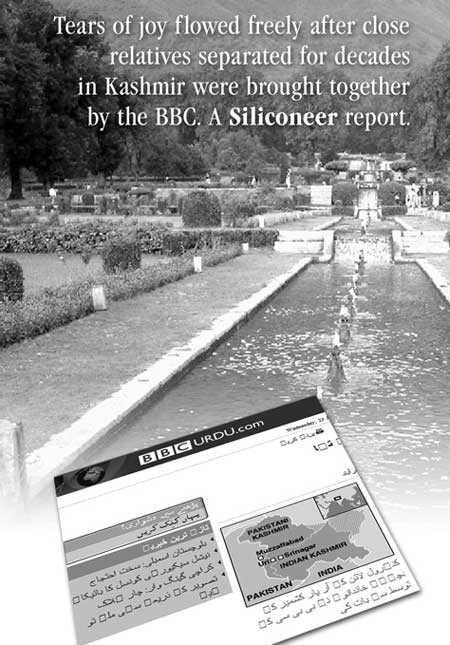 Tears of Joy: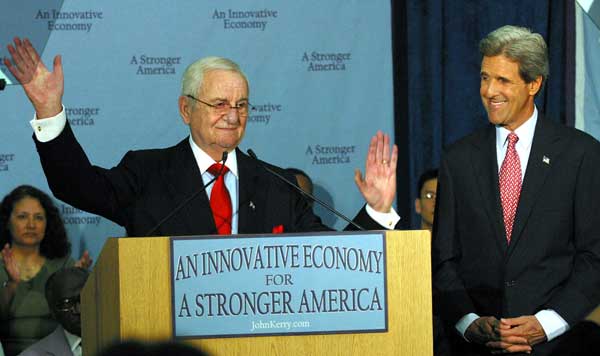
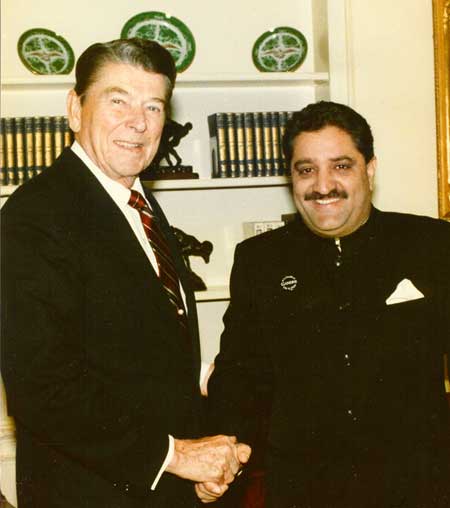 Kamal Dandona with former President Ronald Reagan at the Oval office in White House.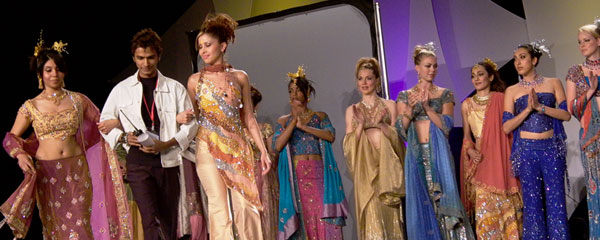

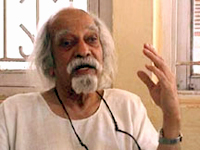 Padma Shri award recipient artist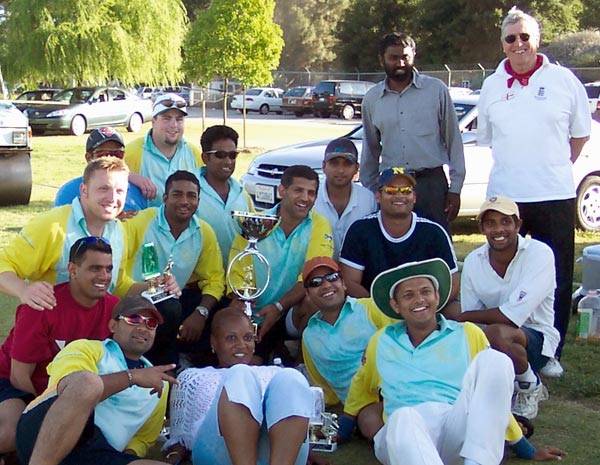

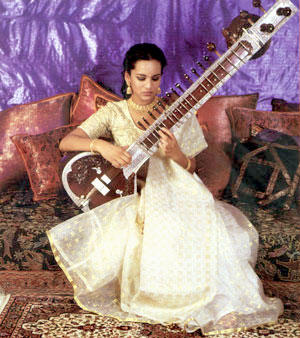 Grammy Award nominee and longtime supporter of People for the Ethical Treatment of Animals, Anoushka Shankar, has fired off a letter to Pete Bassi, chair of KFC’s parent company, Yum! Restaurants International, urging him to eliminate such practices as scalding chickens to death in defeathering tanks and breeding and drugging birds to grow so large so fast that their legs break under their own weight, according to a PETA press release.
 Power is also drawn from the kinetic energy that occurs during coasting and braking. When you are coasting or apply the brakes, the electric motor essentially becomes a generator, converting the energy that would normally be lost as heat into electricity. It uses this new energy to recharge the batteries. When you come to a stop, the engine shuts off to prevent wasteful idling, and the electric motor is silently ready to power the car at acceleration again.
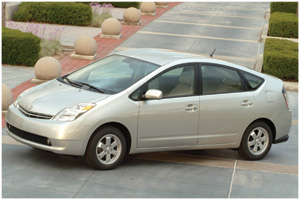 Once on the road, you’ll find the Prius handles quite like a snappy little sports car. Visibility is good the front and sides, but I found the rear window offered a partially obstructed view because of the hatchback’s glass design. Seats were comfortable and provide a good amount of head and leg room for driver and front seat passenger, as well as outboard rear passengers. The rear middle passenger, alas, must contend with a stiff back seat cushion, because of the arm rest that is set in there. The rear seat folds in a 60/40 split, which helps if you have to transport long items, such as ladders, skis or fence posts.