!-- Start Alexa Certify Javascript -->
|
|||||||||||||||||||||||||||
|
|||||||||||||||||||||||||||
|
|
|||||||||||||||||||||||||||
|
|||||||||||||||||||||||||||
|
|
|
|
|
|

FEBRUARY 2005 |
IN THIS ISSUE |
|||||
|
Publisher's Note
The brouhaha over outsourcing continues to simmer below the surface, and now it has begun to take an ugly turn. A hip-hop radio station in Philadelphia recently placed a call to a call center in India and the caller, a radio jockey, abused the call center employee with such endearments as “bitch” and “rat eater.” What’s important is that Indian activists got on the case quickly, and the radio station, initially not all that keen to do anything about it, was forced to suspend the radio jockeys for a day and apologize. This is not just a freak incident. Our India correspondent Siddharth Srivastava writes in our cover story this month that many call center employees are reporting abusive calls, and Indian companies are figuring out strategies to deal with it. The broader picture, however, remains bright. India is well on track to claim a sizable chunk of the outsourcing pie which will continue to mushroom according to expert projections. Three scientists, cancer researcher Nina Bhardwaj in New York, defense physicist Thomas G. Thundat. in Oak Ridge, Tenn., and agronomist M.S. Swaminathan in Chennai have been included in Scientific American magazine’s annual Scientific American 50, “a diverse list of those who during 2003-2004 exhibited outstanding technology leadership in the realms of research, business and policymaking.” This month’s issue has details. However, the story is less happy for regional minorities. Telugu and Tamil speakers now can go see a movie made in their mother tongue, but Bengalis or Marathis have a much harder time. Bengalis are beginning to do something about it. A slew of Bengali films are slated to be screened this February in a rare, regional language film festival in San Jose. Details in this issue. MAIN FEATURE: 'I Just Called to Say I Hate You' : Dissing Indian Call Centers By Siddharth Srivastava The outsourcing backlash has taken an ugly turn. A radio shock jock recently called up a call center in India and hurled unprintable abuse. The Internet is rife with chats of people who have taken up a new sport: figuring out innovative ways to hassle call center workers in India. As Indian call centers draw up plans to deal with this new menace, the fundamentals of the call center economics remain reassuring, writes Siddharth Srivastava.  Do you think that the anti-outsourcing backlash against India, one of the biggest back-end service providers to multinational firms in the world, was an issue limited to the U.S. presidential elections? Think again. In what seems to be a growing trend of individual vigilante action by people who feel aggrieved, folks in the U.S. are making hate calls that are blatantly racist and abusive to harass Indian call center operators, who take queries by U.S. customers sitting in India. This phenomenon has taken alarming proportions after the U.S. elections, with incumbent George W. Bush considered to be more positively inclined towards outsourcing in contrast to John Kerry, who lost. Do you think that the anti-outsourcing backlash against India, one of the biggest back-end service providers to multinational firms in the world, was an issue limited to the U.S. presidential elections? Think again. In what seems to be a growing trend of individual vigilante action by people who feel aggrieved, folks in the U.S. are making hate calls that are blatantly racist and abusive to harass Indian call center operators, who take queries by U.S. customers sitting in India. This phenomenon has taken alarming proportions after the U.S. elections, with incumbent George W. Bush considered to be more positively inclined towards outsourcing in contrast to John Kerry, who lost. The Internet is an excellent window into the public mood in today’s wired age, has proliferated with messages that urge fellow U.S. citizens to fight against the movement of jobs away from U.S., which has resulted in the coinage “Getting Bangalored.” Call center employees, who form a sizable chunk of jobs that have moved offshore, especially to India, given its large English speaking population, are facing the brunt of this ire. The following are some samples chats that are doing the rounds, though many are not printable due to the explicit language: *** “Q: I’m curious as to what kind of responses you have been getting. Do you use curse words at them? A: I made an Indian woman cry and promise to quit her job in 60 seconds. You can do it too!’’ *** “Actually the usual response is confusion...I get the impression these are not the brightest bulbs in India’s chandeliers. Often, they give me a ‘courtesy laugh’ as if I were joking and ask how they can help me. Usually, I limit the calls to 60 seconds anyway, so I can call back and really hammer them. I’ve been doing this about 20 minutes a day. It’s great fun!’’ *** “I have inside knowledge of call centers, having worked in several. It’s crucial that the agents be efficient. Barraging them with 60-second calls will ruin their stats and also lower their morale. Eventually, they’ll start thinking ‘another damn rude American a**hole’ every time a call comes up. All of this will have a cumulative effect. If 100 people across the US would commit to spending 10 minutes a day, we could cripple them, and bring those jobs back.’’ While the producers thought the script was funny, when the excerpt was posted in the Web and eventually Indian Americans found about it, it provoked angry responses amongst Indians all over the world. Though the script has been removed from the official Web site of the radio station, it has been picked up by several blogs on the Internet. The transcript reads as follows: Star: Hi, Stain-a, you say? Steena: Yes. Star: (In fake Indian accent) Yeah, I called and I just got hung up on. I’m calling from America about the quick beads for my daughter’s, uh, hair. Quick beads. Steena: Okay. May I have your ZIP code please? Star: 10274. Steena: 10274? Star: Yes. Get it right. Now are you in India? Because I just spoke to someone in India who hung up on me. Steena: Thank you. I am from India, ma’am. Star: Okay. So my call is being outsourced to India. Steena: That’s right. Star: In...in regards to my six year old, white American daughter who wants to get the quick beads like Serena and Venus Williams. Steena: Now. I’ll definitely place an order for that. See... Star: What’s that? Steena: In the ad, she called to place a quick bead of counier. To ensure proper handling... Star: Ma’am, I don’t know what the hell you’re saying. Hang on a second. Let me try and get something straight here. The quick beads, like Venus and Serena Williams, that to advertise to—to the white kids on television. This call has been outsourced to India? Steena: That’s right. Star: Well, ma’am, what the eff would you know about an American white girl’s — uh, uh — hair? And quick beads. Steena: Just to inform you, ma’am, we’re a national chain services company. And we’re just taking calls on the opposite... Star: Listen, bitch! Don’t get slick with the mouth! Don’t you get slick with me, bitch! Steena: Now if you continue to speak this language, I will disconnect the call. Star: Listen to me, you dirty rat eater. I’ll come out there and choke the eff out of you. (laughter) Star: You’re a filthy rat eater. I’m calling about my American six year old white girl. How dare you outsource my call? Get off the line, bitch! (Laughter, end of tape) Star: Pull it up. (Laughter) Star: Heard they listen well out there. Public protest can work, though. Star and Bucwild were eventually suspended for a day by their station for making the abusive and threatening call. A number of blogs, including TurbanHead, DesiBlog and SepiaMutiny followed the story, as did members of the list serve for the South Asian Women’s Creative Collective, and posted contact information for the radio station’s personnel. According to the Power 99 FM’s News and Community Affairs Director, Loraine Ballard Morrill, the station received more protest emails and phone calls than it had for any past incident. The vast majority of the emails came from outside the Philadelphia area. Initially, Morrill said no disciplinary action was intended for the duo. The Philadelphia Inquirer reported that the only disciplinary action being considered initially was for the station employee who had posted the segment online. Soon, however, following rising protest, the station changed course. Morrill said that Clear Channel, the station’s parent company and by far the largest owner of radio stations in the U.S., had pushed for the suspension. In addition to the suspension, the station posted a public apology for the segment on its Web site: “The Star & Bucwild Show prides itself on walking on the edge. On December 15th, we crossed it. We know the pain racial slurs cause and apologies that this comedy segment went too far.” But it’s not just loose cannons who are doing this. Sober Americans, instead of the odd drunken ones that exist everywhere, are calling just to abuse. There are now many complaints, being widely reported by the media in India of call center workers having to deal with customers who are downright uncouth. Employees working in call centers say that they are at the receiving end of nasty phone calls more than ever before. “Earlier, people would get abusive if we didn’t answer their questions satisfactorily. Now, I get calls—on some days up to five a shift—from people who are calling only to abuse,” Shalini J, a 22-year-old engineering graduate who works in a major call centre in Mumbai has been quoted. Some prominent call centers in India—Wipro, Spectramind, Daksh, Exl, Convergys—have tried to bring about technological changes as well as staff training to deal with the problem. In accordance with norms followed by them and the guidelines set by clients, no call can be disconnected once it is received. Some call centers have installed screeners and filters to blank numbers with a repeated record of abusive calling. Others have given the option to workers to mute their response when the caller is being unnecessarily rude. This prevents the caller from hearing any spur-of-the-moment retort by the call center employee who can continue with the conversation once the tirade is hopefully over. In this way the concerned employee can keep his/her cool and avoid being stressed, one very common complaint among call center operators who have to keep long night hours to keep U.S. time in India. Deal with a barrage of inquiries, sometimes rude, just adds to the stress.. The larger picture, however, seems to be bright for the Indian offshore service providers. According to estimates, the business and process outsourcing industry will gross $5.7 billion in revenue in the year 2005. A recent McKinsey report on Information Technology-enabled Services has revised the previous figure of $17 billion to $21-24 billion by the year 2008 with India slated to garner 25 percent of the offshore market, with the U.S. the largest source providing 60 percent of business. Estimates suggest that 200,000 to 400,000 jobs have moved from the U.S. since the outsourcing trend began in the 1990s, which is still a fraction of 138 million jobs in the U.S. The Information Technology Association of America says only around 2 percent of the 10 million computer-related jobs have been sent abroad; 12 percent of IT companies have “outsourced” work, compared to 3 per cent of non-IT firms. The most high-end projection is by Forrester Research—a loss of 3.3 million jobs by 2015, including 1.7 million back-office jobs and 473,000 IT jobs—which will admittedly create a dent in the U.S. job market but not the wreck everyone fears. With U.S. industry firmly backing outsourcing, given productivity increases, higher profits and lower costs, the latest distasteful happenings will not change the broader picture. Outsourcing is here to stay, and the economic imperatives are simply too powerful for anybody to do anything against it.
INFOTECH INDIA  IT for All ... $8M R&D Center ... $6 Billion in Software Exports ... Profits Surge ... Profit Below Forecast ... Research with Cambridge ... Dataone in Coimbatore ... Net Profit Dips ... Bharti Profit Jumps ... Infotech Affiliate IPO ... Brigade Buys Webhelp — Here is the latest on information technology from India IT for All Telecommunication facilities and benefits of information technology should percolate down and reach the rural masses at an affordable cost, Union Communications and IT Minister Dayanidhi Maran said in Chennai Jan. 30. “If the technology cannot benefit the common man or if the cost of services provided is beyond his reach, such a technology will lose its relevance,” he told a national conference on emerging professional opportunities for chartered accountants. An onerous responsibility had been cast on chartered accountants to suggest ways and means to cut down the cost of providing telecommunication facilities and IT services like Internet, e-mail and broadband, he said. Maran said he had already initiated measures to manufacture computers at economical rates for the benefit of common man. If chartered accountants have to succeed in the global economy, they need to reorient themselves and offer value-added services to meet the requirements of the global clients. IT would not only add value but also give a clear competitive advantage, he said, adding that chartered accountants should be in a position to use and leverage IT. The California-based software firm, like several other global tech firms, carries out R&D in India to take advantage of its large pool of talented software professionals, and its R&D centre in India is the largest outside the United States. “In October 2002 we announced we would invest $50 million in India over the next five years and we are fairly ahead of those investment plans,” Gupta said. Adobe, that produces the Photoshop and Acrobat software, said it planned to hire 150 engineers in 2005 to take its total strength to 525. It also hired 150 engineers in 2004. IT officials said that the sector would achieve 35 percent growth in 2004-05. M.K. Shankaralinge Gowda, Information Technology secretary of Karnataka, said that the total exports were expected to touch $5.3 billion in the current year. “We had an export of $4.02 billion for the year 2003-04. This year the growth will be about 35 percent. We are going to touch $5.3 billion this year. I was hoping we would touch about $6 billion. That was my target. By the end of this year, by September we would have touched $6 billion,” said Gowda. Gowda also said that around 160 fresh IT companies have come up in Bangalore, taking the total number of companies to 1,500. India’s software service industry and the accompanying Business Process Outsourcing sector have been growing aggressively. With more than 18,000 software professionals and 60,000 BPO employees, the city is a major investment destination for the IT industry. The boom in call centers, human resource management services, medical transcription centers and other services have led to more multinationals setting up shop in Bangalore. Wipro said that in the last year it had been forced to replace 90 percent of the staff in its business process outsourcing operations, which employ 14,340, mainly in call centers. “We have to get that under control,” vice chairman Vivek Paul told Reuters. Wipro wanted to reduce the BPO unit’s focus on call centers, which represent 90 percent of its work, he added. Wipro said new clients paid more in the third quarter and it expected fourth-quarter IT services revenue to rise to $370 million from last quarter’s $367 million. “On the face of it, the (Wipro) results don’t look very exciting, since the ‘other income’ is on the higher side. But the guidance is positive and pricing going up is good news,” said Apurva Shah, an analyst with broker ASK-Raymond James. The Bangalore-based company said net profits in its fiscal third quarter to Dec. 31 rose to 4.27 billion rupees ($98.7 million) from 2.66 billion a year earlier. Revenue grew 34 percent to 20.9 billion rupees. Indian software firms are enjoying a growing interest abroad in offshore outsourcing of software services. Recently, TCS and Infosys posted 54 percent and 52 percent profit growth rates, respectively. Wipro announces results Jan. 14. Satyam said October-December net profit rose to 1.75 billion rupees from 1.46 billion a year earlier. Total revenue rose to 8.94 billion rupees from 6.91 billion. A Reuters poll had estimated the company would post a net profit of 1.8 billion rupees on revenue of 9.03 billion. “Both the top line and bottom line are lower than my expectations. The only positive is that the margins are intact,” said Gurunath Mudlapur, head of research at Khandwala Securities. But Satyam’s earnings per share for the quarter was 5.49 rupees, slightly higher than its guidance of 5.47 rupees. “Students of SRMIST will be selected to pursue research in the field of biotechnology in Cambridge University,” he told reporters in Chennai Jan. 24. The decision to go in for collaborative research came after the green signal was given by the International Advisory Board, he said. Cambridge University’s Biotechnology Institute director Dr. Christopher R. Lowe, who was also present, said his institute was interested in collaborative research to get “good quality” students. Lowe is part of SRMIST’s IAB. Lowe, who visited the SRMIST campus here, appreciated the “tremendous facilities” that SRMIST had. Asked to compare BT parks in India with those in U.K., he said it could not be done because the philosophies behind developing such parks between the two countries were different Pachamuthu said this year the SRMIST board had allocated Rs. 400 million for campus and college developments, including Rs. 100 million to set up an 200,000 sq. ft. IT Park. The facility, at a cost of Rs. 20 million, would be extended to 36 more exchanges, providing 10,000 connections by March-end, after installing new equipment, he said. The booking has already exceeded the equipped capacity of 48 connections in Tirupur. The service would enable the subscriber to surf the Internet and also have a telephone conversation simultaneously. The locations were likely to be changed depending upon the demand profile, he said. Subsequently virtual private network, multicasting, video conference, video-on-demand, broadcast application would also be provided, which would enhance applications in various field like telemedicine, tele-education, scientific research and tele-agriculture, Varadarajan said. As a special incentive to come forward and utilize the service, for both home and business plans, additional usage charges would not be levied up to June 30, 2005 for those who joined service before March 31, he added. MTNL also declared an interim dividend of 20 percent on its paid up equity capital. The company’s income from services in Q3 declined to Rs. 1261.49 crore against Rs. 1,526 crore in the same quarter a year ago. The company’s staff expenses went up by Rs. 67.79 crore over Q3 of the previous fiscal to Rs. 412.48 crore. New Delhi-based Bharti, the top performer on Mumbai’s main stock index last year, is expected to more than double full-year profit to about 13.5 billion rupees ($308 million), according to Reuters Estimates, as mobile sales surge in Asia’s fourth-biggest economy. Bharti, 28-percent-owned by Singapore Telecommunications Ltd., said on Jan. 7 that its mobile base jumped 79 percent in 2004 to 9.83 million users and its total subscribers, including fixed-line users, rose 75 percent to 10.63 million. An early entrant in India’s soaraway wireless market, Bharti has been a big beneficiary of booming demand in a country where fewer than five in 100 people own a mobile phone compared with more than 25 in 100 in China. It gave no details of the proposal. ICICI Bank accounts for less than 30 percent of the overall business of ICICI Infotech, which has now been renamed 3i Infotech, a statement said. Brigade is already the largest third-party BPO Company in Andhra Pradesh in terms of size and revenue. This deal will help to considerably strengthen our position further.” Discussing the company’s future plans, Sri Dasari said: “Brigade has some very exciting expansion plans. Committed business from existing clients and strong pipeline would require us to add about 500 people in the next quarter to the existing 1400. After that, looking at current trends, we should be adding 400 plus people every quarter. The goal is to increase beyond 3000 people in 2005. We have also acquired 4 acres of land in Madhapur to build a 1,50,000 sq ft state-of-the-art campus. This will create additional space for our future expansion. Work on the campus will start in the first quarter of the new financial year.”
HONOR
 Clockwise from top left: Scientific American honorees Nina Bhardwaj, M.S. Swaminathan and George J. Thundat. Three Leaders in Science: Scientific American 50 - A Siliconeer Report Three Indian scientists are among Scientific American magazine’s list of those who exhibited outstanding technology leadership in 2003-2004. A Siliconeer report. Three scientists of Indian descent are among the third annual Scientific American 50, “a diverse list of those who during 2003-2004 exhibited outstanding technology leadership in the realms of research, business and policymaking,” according to the monthly magazine Scientific American.. New York-based cancer researcher Nina Bhardwaj, Oak Ridge, Tenn.-based defense scientist. Thomas G. Thundat, Chennai-based agronomist M.S. Swaminathan have been honored for their outstanding contributions by this respected scientific periodical. Thundat shares the honor with University of Nevada Reno Prof. Jesse Adams. “Scientific American believes strongly that the best hope for a safer, healthier, more prosperous world rests in the enlightened use of technology,” said John Rennie, editor-in-chief of the magazine. “The Scientific American 50 is our annual opportunity to salute the people and organizations making that possible through their outstanding efforts as leaders of research, industry, and policymaking.” The “Scientific American 50” is published in the magazine’s December issue and the winners were honored at a celebration Nov. 16 at the New York Academy of Sciences in New York City. “Most of the members of this year’s honor roll are from the U.S., but they also hail from as far afield a s India, Ghana and Israel,” the magazine said. “These awards demonstrate the love of knowledge driving basic research, the entrepreneurial spirit spurring development of, say, a nanotube microchip, and the desire to find new ways to make tiny fuel cells or to use the Internet to assist poor south Asian farmers. All originate from a common need to take what we know one step further.” The magazine hailed Dr. Bhardwaj as one of the world’s leading experts on dendritic cells who has significantly advanced prospects for dendritic cell vaccines with a series of discoveries about the cells’ properties and behavior. Dendritic cells, named for their finger-like projections, play a key role in priming the immune system. They capture foreign proteins called antigens from viruses or tumors, and then display the antigens to T-cells, the immune system’s attack cells, for future recognition and attack. “Nina Bhardwaj, already one of the world’s leading experts on dendritic cells, significantly advanced prospects for dendritic cell vaccines this year with a series of discoveries about the cells’ properties and behavior,” the magazine said. “Among these findings, Bhardwaj clarified several of the mechanisms that dendritic cells use to identify invaders and stimulate T cells. She also showed how tumor cells can suppress dendritic cells and, in another study, demonstrated that dendritic cells’ activity appears not to be diminished by hepatitis C, a common co-infection in HIV patients. She is currently conducting two clinical trials of dendritic cell vaccines in HIV patients and planning for another vaccine trial in melanoma patients soon.” ”India produces more than enough food to feed its entire population, but poor infrastructure and local corruption keep that food from reaching the tables of roughly one fifth of its billion citizens,” the magazine said. “Through his research foundation, M. S. Swaminathan has helped alleviate Indian hunger. He has worked from the bottom up by providing farmers with access to current information on market prices, weather forecasts, farming techniques, medical treatments and alternative income options. “In 2003 the foundation launched the National Virtual Academy for Food Security and Rural Prosperity, a Web site through which villagers can query scientists and obtain information in their local language. The Web site’s multimedia format allows for access by the illiterate, and efforts to encourage female community members to act as local liaisons have helped increase the status of women who live in rural areas.” |TOP| OUTSOURCING DIGEST: 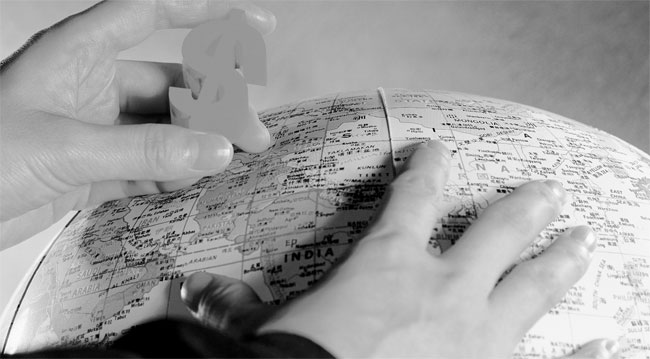 Outsourcing Digest: Siliconeer presents of the latest news from the world of outsourcing. India Outsourced $11B ... Mortgage Industry Favors Outsourcing ... E-Learning and India ... Dell To Open Campus ... 24/7 Opens New Center ... Belgium Keen on Outsourcing ... Bengal Moving Up: CM ... LG Software in Bangalore ... Debt Collection Outsourcing ... U.K. Outsourcing Up 150% ... Capco to Double Employees India Outsourced $11B Contrary to the general perception that India was a major beneficiary of global outsourcing, the International Labor Organization Dec. 3 said that the country has emerged as the fifth largest economy in the world in terms of outsourcing to other economies. “India has turned out to be the fifth largest economy in the world, which outsourced IT and business services to the tune of $11 billion by the end of 2003-04 to U.S., U.K., Germany and Japan,” ILO deputy director M. Bussi said at a meeting in New Delhi. At an Assocham-organized program , he said India had spent 2.4 percent of its GDP in outsourcing of IT and services as against the U.S. where outsourcing accounted for 0.4 per cent of GDP last fiscal, the chamber said in a release. The U.S. spent $41 billion for outsourcing in 2003-04, followed closely by Germany at $39 billion, U.K. at $35 billion, and Japan at $16 billion, he said. India was followed by China in outsourcing to other countries, which spent $8 billion in the last fiscal. Regretting the trend of critically looking a outsourcing and subsequent job losses, Bussi said although it creates unemployment initially, it pays off adequately in the long-run as the labor market has tremendous scope for adjusting economic distortions created through outsourcing. |Back to Outsourcing Digest| |TOP| Mortgage Industry Favors Outsourcing Forty-two percent of the respondents to a survey of mortgage industry leaders said they are likely to outsource at least some services within the next two years, according to a U.S. study released in December by Ocwen Financial Corporation. The Ocwen-sponsored study, titled “Business Process Outsourcing: What Mortgage Industry Leaders Really Think,” was conducted by an independent survey firm that asked mortgage industry leaders whether they were likely to outsource over the next two years; what they think are the motivating factors for outsourcing; and what they think are the key benefits to outsourcing. Respondents included mortgage brokers, mortgage servicers and correspondent and retail lenders. More than half of the respondents stated that they agreed that the growing cost of human resources was a motivating factor for outsourcing, although overall respondents thought the two greatest motivators for outsourcing were management accountability and an increase in customer expectations. Most respondents cited access to state-of-the-art technology and reducing or avoiding capital expenses as key benefits of outsourcing. Language barriers related to outsourcing were not considered a major concern. “It has been our experience that companies that have been successful in the outsourcing arena generally have developed their approach by following four basic rules,” said W Michael Linn, Ocwen’s executive vice president. “First, they began by establishing a clear strategic vision for how Business Process Outsourcing could best be utilized within the organization. Then, to ensure improvements were being made and documented and to reduce the risk of the investment, these companies leveraged a quality improvement methodology such as Six Sigma. Third, they applied the most advanced, proven technology infrastructures, and finally, these companies focused attracting and retaining the most highly qualified and motivated staff.” Van Dam was in Pune to meet the company’s partner Maximize Learning and create awareness about e-Learning. “I would term e-learning as net-enabled learning targeted to achieve business goals,” he said. “The enterprise is a significant user of e-learning as a tool since it is faster, better and cheaper. Companies spend millions of dollars on training and e-learning reduces the overall training costs by 30 percent to 40 percent. “It also reduces training time by as much as 50 percent on the same subject and decreases time-to-market of new skills globally. More courseware is available at significantly less costs. It has been noticed there is a 25 percent to 50 percent higher retention of knowledge due to e-learning.” E-learning as a solution did not exist before 1996, he said. The term itself took root after 1997. By the year 1999, the global e-learning market touched $ 1.7 billion. Currently, it stands at $ 6.5 billion and IDC has predicted that market is likely to witness an exponential growth and touch the $ 28 billion mark by 2008. “I firmly believe e-learning simulations are the next big thing in learning,” he added. Hyderabad is the home of Dell’s second customer contact center in India, opened in March 2003. The first center opened in Bangalore in May 2001. In November Dell announced a third center scheduled to open in Chandigarh in March 2005. The $43 billion company plans to move its entire customer support team from its current leased premises, also in Hitec City, to the new campus. The center offers multiple services to various Dell business segments, including sales, customer care, technical support, e-mail support and shared services. More functions could be added in the future depending on business requirements. “Building our own campus is a clear indication of Dell’s long-term commitment to India and Hyderabad. The customer contact centers in India have transitioned into a premier operation for Dell,” said Romi Malhotra, managing director, Dell India. Dell has also established a global Product Group in Bangalore that focuses on the company’s enterprise products, including servers and storage solutions. In addition, a global Software Development Center provides application planning, design, development and testing services with all Dell business segments, including sales and marketing, worldwide operations and corporate systems. With a capacity of over 250 seats, 24/7 has plans to expand this facility to 500 seats in few months, he said, adding that within nine months from now, the company plans to add about 1,000 seats for the Chennai facility. “Initially, we will start off by providing technical support to a leading computer manufacturer from Chennai, where around 1,000 employees will be assisting the customers,” he added. “We expect to grow in the years to come as Chennai is turning out to be a major IT hub in India, apart from Bangalore. Though we start off here by providing BPO services to the technological companies, we would also concentrate on other areas such as financial services, insurance soon,” Kanan informed. “24/7’s turnover last year was around $21 million and the company expects to achieve a turnover of around $45 million this fiscal,” he added. Inaugurating the new facility Nasscom president Kiran Karnik said, “Software exports from India has outnumbered the other products exports last year, thus paving way for improving the knowledge base of the country. IT industry in India has a good growth in the future as far as Nasscom is expecting software exports to grow up to $142 billion by the year 2009.” “Tamil Nadu government has planned to develop about 800,000 sq. feet space for setting up of new IT companies in Chennai and best support would be extended to those who wish to set up their IT base here,” said Tamil Nadu IT secretary Vivek Harinarain, who was also present during the inauguration along with the director of the Software Technology Parks of India, R. Rajalakshmi. Currently, there are 30 Belgian companies in India spanning across industries including IT, ITES, shipping and logistics. Even though bilateral trade between India and Belgium is tilted in the latter’s favor with diamonds making up nearly 60-70 percent of trade, the EU member is striving to broadbase trade relations. New areas such as biotechnology, pharmaceuticals, environmental engineering, port management, infrastructure management, tourism and restoration of heritage sites are segments that the country aims to pursue as part of its bilateral trade relations with the sub-continent. “There are so many opportunities that India can take forward with Belgium especially, when one considers that Belgium is the heart of Europe and is the only EU member that officially recognizes English as a foreign language giving rise to a comfort factor for Indian entrepreneurs seeking to set up business in Belgium,” said Jayant Nadiger, trade commissioner of Flanders, Export Vlaanderen, Flanders’ Export Promotion Agency. “Lloyds Bank has recently showed interest in setting up a BPO center in Kolkata and we are in talks with them,” Bhattacharjee told the 103rd Annual General Meeting of the Merchants’ Chamber of Commerce in Kolkata. He said that the IT sector was emerging as a big area in the state. “I must admit that we are a late starter in this, but now our growth is 120 percent against the national growth of 35 percent,” he said. Microsoft, he said, was going to set up two training institutes in the metropolis while Wipro has also recruited about 1,600 people in its newly set up center here. “By 2007, Wipro’s center is likely to have 7,000 people.” Azim Premji had recently asked for another 40 acres for setting up another unit at Rajarhat. Other companies like Satyam, Tata were also coming to the state because of its human resources, Bhattacharjee said. The chief minister, however, acknowledged that the market mechanism was a “serious problem” in the state for development of the agri-sector. “We need more cold storages and better market mechanism to increase our agri export.” In the manufacturing sector, he said the state had received projects worth Rs. 2,718 crore in iron and steel and recently. Jindal Iron and Steel had shown interest in setting up a big plant at Kharagpur. “We are in the final stages of negotiation with Jindals,” he said. “The headcount would be ramped up to 800 by 2009,” said Paul Jeong, CEO, LG CNS Global. The center plans to touch revenues of $30 million in five years. The company estimates around 25 percent of the revenues to come from LG Electronics projects. Announcing the launch of operations, B.C. Jung, president and CEO, LG CNS, said, “We want to provide the best software engineering capabilities to our customers in the U.S., Europe and Korea. India was a logical choice for us to set up a strategic center given its unbeatable talent pool and latest technology.” The Indian center would work on projects involving software products (product reengineering), solution based services for the overseas market and would look at verticals like manufacturing, healthcare, retail and transportation. Part of the team that works at LGSI would be merged with the LG CNS team, informed Jeong. He added that the cost advantage in India is five times less compared to Korea. At present the $1.4 billion LG CNS group, has eight global subsidiaries across countries like Korea, China, USA and Europe. Already, units of General Electric Co, Citigroup, HSBC Holdings and American Express are using their India-based staff to pursue US credit card debts and mortgage payments by phoning delinquent debtors or tracking their whereabouts. Dozens of smaller Indian companies have begun offering third party debt collection services to U.S. and European banks and other companies, the paper said. Indian debt collectors are also opening their own offices or buying companies in North America to drum up more business. In October last year, for example, ICICI OneSource Ltd of Mumbai bought a large U.S. debt-collection company, Account Solutions Group LLC of Amherst, New York, enabling ICICI to combine its low-cost Indian work force with collection agents on the ground in the U.S., it said. According to Indian outsourcing executives, their operations, which have lower salary and technology expenses than their American rivals, can significantly reduce debt recovery costs and make it worthwhile for U.S. companies to go after even the smallest of debts. The Indian firms’ 24-hour service, said the paper, can also improve recovery time. Top decision makers from the IT and BPO exports organizations attended the event. The Global Outsourcing Forum had presentations from IDC analysts like David Tapper and Jason Bremner of U.S., Phil Hassey of Asia Pacific and Pradeep Gupta of IDC (India). A look at the top 100 outsourcing mega-deals by country and a comparison between 2002 and 2003 reveals that although U.K. leads with 46 in 2003, its share has come down from 57 in 2002. Denmark and Sweden have considerably increased their share in the top 100 outsourcing deals. But when it comes to off shoring these services, only 1.1 percent of the IT outsourcing services was off shored to other locations. This percentage is predicted to increase to 1.8 percent by 2008, though still small, however, in absolute numbers could be significant for players like India. “For many countries in Europe, Germany in particular, the near shore market in countries such as Poland, Czech and Russia are very important, due to the integration of several countries under the European economic umbrella. Opportunities are rapidly emerging in these countries for both domestic and multinational providers to have a significant presence and capability,” said IDC AP services associate director, Phil Hassey. “For top financial institutions to achieve business transformation change and profit from new services and technologies, we must go beyond traditional consulting by developing, running, and commercializing new processing services and products,” said Predrag Dizdarevic, executive vice president, Capco, and head of Capco Reference Data Services. “We are now building a client franchise in Bangalore that functions as a 24/7 extension of our global consulting, solutions and data analyst teams, particularly around managed services.” CULTURE: Celebrating Cinema: Bangla Film Fest - By Nandini Pal  Talk about a sweet deal. Bengali film buffs have a rare opportunity to watch a handful of Bangla films, and also get to support the Bengali initiative at the University of California at Berkeley, writes Nandini Pal. Talk about a sweet deal. Bengali film buffs have a rare opportunity to watch a handful of Bangla films, and also get to support the Bengali initiative at the University of California at Berkeley, writes Nandini Pal.If you speak Bangla or love Bangla culture, it’s a good bet that you miss the pleasure of watching good Bangla film. Screenings of Bangla films in the Bay Area are rarer than hen’s teeth. Bay Area Bangla speakers will have a rare opportunity to see a number of contemporary Bangla films Feb. 26-27 at the IMC6 theater of San Jose, Calif. It’s for a good cause, too, because profits will support the Bengali Initiative launched by the University of California at Berkeley, where Bangla instruction has already begun. Unlike the large cinema-going Andhra and Tamil populations, Bay Area Bengali film buffs fall into two groups. One group has almost completely converted to Bollywood fans, the other has resigned itself to watching an occasional screening of Satyajit Ray films or even less frequent screenings of a few independent films that make it here. Directors like Aparna Sen and Rituparno Ghosh have created an audience for themselves that have outgrown the local Bengali population.
This is quite sad. When we go home to Kolkata—or Bangladesh—-for our brief vacations each year—if indeed we are that lucky enough home each year, it is almost impossible to see much more than one movie. Relatives, food, theater, shopping—all of these and a hundred other things take up our time and that’s that. I am convinced that if we had access to good contemporary films, not necessarily art films, or huge-star cast films, Bengalis would love to watch them. Especially since a lot of us already watch every Hindi film released in the theaters locally. This optimism, though a little premature with just this Bengali film festival in hand, is not an unreal proposition. Creating a regular market for Bengali films is certain to have long-term benefits. Everyone knows that Shah Rukh Khan is a supreme example of what the foreign market can do for the film industry. The raging popularity of his films have created a brand new distribution and production avenue for Bollywood films. Hopefully, in the long run, the Bengali film industry will also reap similar benefits, when the demand for more Bengali films, with relevant content, and superior technology drives the production of films in Kolkata or Dhaka. Profits from the Bengali Film festival will support the Bengali Studies Initiative at the Center for South Asia Studies, UC Berkeley. As a key volunteer and fundraiser for this initiative, and a prabasi (expatriate) Bengali all my life, with little opportunity to study the language, I feel particularly strongly about preserving and promoting Bangla for expatriate communities Once our generation, which still has some ties to our language and culture, have passed on, it will be harder and harder for our children, grandchildren and all future generations of Bengalis to recall their heritage. We imbibe a lot of our culture and traditions just from hearing the sounds of our language. We need to keep our language alive. The Bengali-speaking population, according to National Geographic magazine, is the fifth largest in the world. Yet there was no university-level Bengali language study west of Chicago until recently. Since Fall 2004, the Center for South Asia Studies at the University of California at Berkeley has raised over $150,000 and initiated its first language class. The goal now is to raise $2 million to make Bengal studies a permanent part of the university curricula, making Bengali not only available to our children but also to those who wish to study our literature, history, economics, and performing arts. Most people would like to support such a great cause. This is an easy way to give without feeling the pinch. You watch a film, and we donate the money. The festival is called Jalsha (pronounced “jaw-lsha,” Bengali for gathering. The idea is that everybody comes out for the weekend, watches the films and gets to chat a little with old friends or new friends for a little bit of the famous Bengali adda (a little more than chat, a little less than gossip) in between screenings. The films to be shown at the jalsha cut a wide swath. If this is successful, Bengalis will see many more such film events. - Nandini Pal is organizing the Bangla Film Festival. She lives in Fremont, Calif. |TOP| REPORT: For a Good Cause: Kiran Bedi and SevA - A Siliconeer Report India's best-known cop Kiran Bedi was in Fremont, Calif., for the opening of a legal aid center set up by her sister Anu Peshawaria. A Siliconeer report.  Kiran Bedi (r) with her sister Anu Peshawaria. Over 200 people came at an event in Fremont, Calif., to listen to India’s internationally-famous woman cop Kiran Bedi Jan. 29 along with a screening of a remarkable film on her work with prisoners, especially using vipassana yoga to curb recidivism and other prison discipline problems. Bedi, India’s first woman police officer, is arguably also one of India’s most respected. Her work in India’s Tihar jail in Delhi, following a “punishment” posting, made the world sit up and take notice. Her compassionate yet disciplined approach utterly changed the prison, dramatically improving the quality of life of prisoners while slashing recidivism. Bedi’s presence was to help out SevA, an India-Vision Foundation-founded by Bedi, which inaugurated its first clinic for providing free legal aid to needy and underprivileged Indians. India Vision Foundation has now been brought to U.S. by Anu Peshawaria, an attorney and Bedi’s sister. Formerly a Supreme Court lawyer in India, she is presently an immigration consultant, and also president of SevA. Attendees included Union City Mayor Mark Green and Fremont City Council member Anu Natrajan. Several people attended from out of state. Magsaysay award-winning SevA has several ongoing projects such as Listen, Defend, Protect, Care, and Hope. Listen. Seva will be organizing several “free legal aid clinics” clinics at gurudwaras and temples in the San Francisco Bay Area and as other parts of the U.S. Defend. This SevA project is dedicated to providing justice to Indians in their homeland in India — the group’s lawyers file cases on issues of public interest. Protect project tries to protect Indians from being prey to mammoth and intricate law-SevA has booklets of law made easy for distribution to ordinary people. SevA has tied up with Vivekananda College in Delhi for improving course curriculum to incorporate ethics and morality in law related courses. Care. This project provides compassionate justice to Indians by focusing on the fact that the law must understand the common man’s background rather than being blind. Hope stresses on creating interest groups and building pressure on the Indian government to modify archaic and mammoth laws. SevA needs volunteers and sponsors. Readers can send suggestions/ donations at its office at 39111 Paseo Padre Parkway, Suite 209; Fremont, CA 94536.
REPORT: Blogging the Tsunami: Internet and Disaster Relief - By Siddharth Srivastava In the wake of the December tsunami, bloggers have provided a wealth of information to the affected population affected as well as friends and relatives seeking clues about their loved ones lost in the melee, writes Siddharth Srivastava.  It began as a trend in the recent past and has only gathered momentum. A tragedy of the scale of the tsunami has resulted in a battery of government agencies, non-government, voluntary and aid organizations, private citizens trying to contribute their best to mitigate the effects of the disaster. Add to them the powerful medium of the Internet. Bloggers have provided a wealth of information as an alternative to media reports, to the population affected as well as friends and relatives seeking clues about their loved ones lost in the melee. Nobody doubts that bloggers have begun to play a critical role in disaster recovery. (For the uninitiated, a blog is a personalized journal published on the Web open to the public. A blogger is a person who writes a blog.) As one blogger has written from Phuket (Thailand, one of the worst affected areas): “The tsunami has destroyed the hotel I was staying in, but luckily the Internet has survived the waves.” It is no surprise that ABC News decided to anoint the blogging community as the “Person of the Year” due to their stellar role in organizing aid, collating details of missing persons, as well as providing news updates and pictures when the World Trade Center towers were struck in September 11 as well as during the war in Iraq. The tsunami tragedy has been no different. There are several Web sites that have sprung up consequent to the disaster, some as adjuncts to already existing popular blogs as well as personal Web sites set up by individuals around the world keen to contribute in any way. Among the blogs being sought out include http://www.tsunamivictims.org, http://www.tsunamihelp.blogspot.com, the South East Asian Earthquake and Tsunami (SEA-EAT) blog, Worldchanging.com, command-post.org. In India Chennai-based Kiruba Shankar (www.kiruba.com) has been regularly blogging about the tsunami and its effects since the waves broke out Dec. 26. His blog is now a hub of information and comments by bloggers affected as well as others all around the world. At sumankumar.com, another popular blog, a contributor who has also uploaded photos and commentary from Chennai, says: “Some drenched till their hips, some till their chest, some all over and some of them were so drenched that they had already stopped breathing. Men and women, old and young, all were running for lives. It was a horrible sight to see. The relief workers could not attend to all the dead and all the alive. The dead were dropped and the half alive were carried to safety.” His postings included a photo of a body on a sidewalk with a buffalo walking by. “It now seems prophetic,” he writes, “For according to Hindu mythology, Lord Yama (the god of death) rides on a buffalo.” Indeed, it is the immediacy of the experience that makes blogs such a compelling medium. One blog from Indonesia reads, “Found 5 of my friends, 2 dead. Of the 5, 4 are back in Colombo. The last one is stranded because of a broken bridge. Broken his leg. But he’s alive. Made contact. He got swept away but swam ashore. Said he’s been burying people all day. Just dragging them off the beach and digging holes with his hands. Going with gear to get him tomorrow morning. He sounded disturbed. Guess grave digging does that to you.” Another blog from Sri Lanka reads, “Buses were seen in the middle of the ocean, boats in the middle of the road and carriages on top of houses. In an aerial view, it wouldn’t be any different from a bunch of toys thrown all around. By daylight corpses were lying almost everywhere.” There are two questions that are often raised about blogs — one, do they or can they be an alternative to mainstream media, in disseminating news and information? Two, do blogs really help in relief work? There is no doubt about the answer to the second question — they do. “The Internet is being used more and more by the families of victims because it is faster and the communication is much more effective,” said Ankit Gupta, one of SEA-EAT’s volunteers based in New Delhi. “One always comes across red tape no matter what in our Third World countries.” Indeed, with help lines jammed, aid workers whether from the armed forces, harried and tired voluntary organizations, the Internet does provide an alternate route to garner facts and information. The other aspect about blogs being an alternative to television and newspapers is more difficult to answer — the main problem is of gauging authenticity and veracity of information that people get to read. Most reputed media organizations have a stringent process in place which ensures that all news reports that are uploaded, televised or printed are correct, with professional reporters ensuring that. Blogs can often be amorphous and disaggregated without the most efficient system to sieve the wealth of information. However, where the blogs score is over the emotional content of the matter being put up due to the personal experience of the people affected. No reporter inured by covering tragedies over time can possibly spell out a disaster better than anyone who actually sees it unfold in front of his/eyes as well as suffers because of it. As one commentator put it: “It is the difference between buying food at a restaurant (all dressed up, edited, good language etc) and street food, organic and as it is.” Also, nobody can deny the utility of blogs as well as the wider role that the Internet can play. Di Maio, a television producer based in Sri Lanka who has been involved in the setting up of SEA-EATS, has said governments and aid agencies could use the Web far more. “The Internet is reasonably reliable and fast, is not used by authorities or rescue services to communicate, despite the fact that it has been up without interruption during the entire crisis. Governments and authorities should use the Internet as we do. Costs would be lower and results much better coordinated.” Indeed, changing times and technology opens new vistas and opportunities. As usually happens, some people take to it first. Hopefully the rest will follow. Ramdhan Yadav Kotamaraja, originally from India, who lives in Dallas, says, “All my blogger friends started linking up my site, and I saw a lot of people other than my friends. I’d say 70 percent of the donations came from people I don’t know. It’s simply unbelievable to me, that people that I don’t know will come and start donating.” - Siddharth Srivastava is India correspondent for Siliconeer. He is based in New Delhi. |TOP|
HEALTHCARE:
Healthy Resolutions: Good Health Forever - By Dr. Tat S. Lam, MD   We are more focused when we are mentally active, and we are stronger when we exercise our muscles and bones, so it’s important to take care of our health, writes Tat S. Lam, M.D. We are more focused when we are mentally active, and we are stronger when we exercise our muscles and bones, so it’s important to take care of our health, writes Tat S. Lam, M.D.A new year has begun, and as we wish our loved ones health, happiness and prosperity, we should resolve to make these wishes a reality. Good health requires a strong and balanced body, and the key is to ensure that our circulatory system is flowing properly and our immune system is strong. Healthy lungs and circulation are essential to good health. Smoking is one of the major obstacles to our body’s natural rhythms. If you have breathing problems like allergies or asthma, avoid situations that may irritate your breathing and take the medications your doctor prescribes. Certain foods and beverages can also cause toxic chemicals to remain in your system longer. Eating fresh fruits and vegetables high in fiber and antioxidants rids your body of these toxins. Stay healthy by exercising regularly, eating foods and drinking beverages that are low in saturated fat and cholesterol, avoiding smoking and maintaining a proper weight. Even with a healthy lifestyle, our bodies change as we grow older. Our metabolism slows down, blood pressure rises and cholesterol and sugar levels are more difficult to keep at low levels. Talk to your doctor about how to manage your health as your body changes. The immune system is our number one ally in staying healthy. A strong immune system can fight off many illnesses, and has an excellent memory. Prevention with vaccines and immunizations helps our immune system recognize illnesses in the future, forming a line of defense before we ever encounter our “enemies.” The immune system can also fight bad cells in our own body. Your immune system needs quality nutrition, rest and relaxation to stay healthy. When we do not eat well or get enough sleep, our immune system doesn’t function as well – and our “enemies” can creep up on us. We are people of habits. We are used to our way of life, whether our choices are healthy or not. In this coming year, make a resolution to live each day more healthily – but know that new habits take time to sink in. Health, just like prosperity, is earned with pennies and dimes. We are more focused when we are mentally active, and we are stronger when we exercise our muscles and bones. Many ex-smokers were able to quit because they were committed to their own health and the health of their loved ones because they got help changing their habits from their doctor. We have a better chance of winning these important health battles by making healthy choices. Regular physical check-ups are essential, even when we are feeling well. It is ultimately up to us to make that choice, whether it is happiness, health, or prosperity. Happy New Year to you all! Published in association with New California Media and Kaiser Permanente. |TOP| REPORT: War Against Smoking: Proposition 99 - A Siliconeer Report California’s 15-year anti-tobacco program has paid off where it counts most: new data shows smoking among youth continues to decline. A Siliconeer report.  (Photo Left) Sacramento middle school students celebrate the success of Proposition 99, the landmark anti-smoking legislation that passed in 1988. (Photo Left) Sacramento middle school students celebrate the success of Proposition 99, the landmark anti-smoking legislation that passed in 1988.Fifteen years after California launched its tobacco control program and 10 years after passage of an statewide smoke-free workplace law, new data show that smoking among youth continues to decline. State health officials and public health advocates joined Sacramento middle-school students to celebrate the success of Proposition 99, the landmark Tobacco Tax and Health Protection Act of 1988, and California’s smoke-free workplace law that took effect in 1995. “Today we celebrate 15 years of reducing adult and youth smoking, exposure to secondhand smoke and tobacco-related diseases and deaths,” said Kim Belshé, secretary of the California Health and Human Services agency. In November 1988, Proposition 99 was approved by California voters and instituted a 25-cent tax on cigarettes and earmarked 5 cents of every cigarette pack sold to fund the California Tobacco Control Program, the nation’s longest running and most emulated comprehensive anti-tobacco program. New figures show that smoking among California youth has decreased to record lows. According to the 2004 California Student Tobacco Survey released today by the California Department of Health Services, 13.2 percent of high school students in California smoked last year, compared with 16.0 percent in 2002 and 21.6 in 2000. OBITUARY: Farewell, Mogambo: Amrish Puri (1932-2005) - A Siliconeer Tribute Amrish Puri, the towering villain of Bollywood, died recently. Siliconeer presents a tribute.  A veteran of over 200 films in his vast, 30-year career, the remarkable thing about Amrish Puri was not that he towered as a Bollywood villain. What made him special, and confirmed his consummate acting skills, was the nuanced diversity he managed to bring to one of Bollywood’s most hackneyed roles. Whether it was the Hitlerian comic villain Mogambo (Mr. India), or the benign zamindar modeled after Marlon Brando in Godfather (Virasaat), or his superb turn as an the eccentric idealist from Uttar Pradesh (Ghaatak), Puri was always a dominating presence. Who can forget his looming presence in the blockbuster Dilwale Dulhaniya Le Jayenge as the surly martinet? Yet the funny thing is he had an awful time getting into films. He was the brother of Bollywood character actor Madan Puri and had his first screen test at 22 in 1954. The filmmaker balked, saying his face was “too harsh” for a hero. Amrish went to back to stage until 1971 when he acted in the critically acclaimed Reshma Aur Shera. Unfortunately, he was barely noticed. Enter art filmmaker Shyam Benegal, who gave him a slew of important roles in Nishant, Manthan, Bhumika and Kondura. Still, mass appeal continued to elude until the off-mainstream Hum Paanch, a sort of modern Mahabharata where Amrish was Duryodhan. That was the start, and after acting in Subhash Ghai’s blockbusters Vidhata and Hero, Amrish played Mogambo in Shekhar Kapur’s Mr India, and he never looked back after that. Even international fame beckoned after his role as a bloodthirsty, murderous cult leader in Indiana Jones and the Temple of Doom. Offers from the West flooded in, but Amrish wasn’t keen. He preferred to rule the roost in Bollywood till his death. REPORT: Movie-ing Towards Peace: Veer Zaara and Indo-Pak Ties The hit film is latest proof that both Indians and Pakistanis crave for peace despite official Indo-Pak ties taking a tumble, writes Siddharth Srivastava.  There are various prisms through which relations between India and Pakistan can be glimpsed. One of these is the enormous outpouring of creativity that stems from the deep sense of emotional affinity that people feel for each other. Given the fickle nature of relations between India and Pakistan, it is important to get the timing right to ensure commercial success of any creative venture, especially movies. A few months back, noted Bollywood director Farhan Akhtar, known for his funky hit Dil Chahta Hai, released a movie called Lakshya based on the Kargil war fought in the northern reaches of Kashmir between India and Pakistan in 1999. When Farhan started filming the movie he never imagined that former Indian Prime Minister Atal Behari Vajpayee and Pakistan President Pervez Musharraf would be shaking hands in Islamabad in January 2004 and the two countries would be playing cricket matches on each other’s grounds for the first time after more than a decade. Lakshya encapsulated all that was evil about the Kargil war, included some breathtaking cinematography of the region, and contained the kind of firebreathing dialogues which made another movie, Gadar, which had earlier caught the angst of dipping Indo-Pak relations, a super hit. Lakshya did not go down well with the audience. Here are two recent apparently paradoxical developments of the recent past for the reader to contemplate. It is no secret now that the peace process between India and Pakistan has reached a cul de sac, yet Veer Zaara, a film on cross-border love, is a big hit with people both in India and Pakistan. In the case of official India-Pakistan ties, though the Indian Foreign Ministry’s year-end review talks about an end to a “reactive policy” which oscillates between euphoria and despair, observers say that things are getting difficult and testy. The bone of contention is, of course, Kashmir, with Pakistan linking any substantial progress to breakthrough in the region that suits its interests and long-standing demands. Thus the purported road link between the Pakistan and Indian portions of Kashmir still remains embroiled in endless talks while India’s demand for concessions from Pakistan on the gas pipeline from Iran as well as reciprocal most favored nation status to boost trade has shown no progress. The huge U.S. military aid package for Pakistan has also not gone down well with India, and Musharraf has gone back to his old ways of communicating his feelings, criticisms and brainwaves of the moment about solutions to Indo-Pak problems through the media. Insider sources in the Indian government suggest that New Delhi is now going to get tough. Though there have been some positive steps in moving forward the confidence building measures, with India unilaterally announcing further easing of visa norms, the core issues of state-promoted terrorist infrastructure in Pakistan and Kashmir remain intractable. Thus it is likely that India will seek to drag the situation in the Pakistan portion of Kashmir in further talks. Though it is quite unlikely that there will be any reversal in the progress made so far in easing travel, communication, visa links and confidence measures between the two countries, there is an air of resignation with expectations of slow and protracted progress. It is in this context that the recent Bollywood release Veer-Zaara starring Bollywood super stars Shah Rukh Khan and Preity Zinta is so remarkable. The movie is a super hit in India and preaches or rather romanticizes the love between the two protagonists who live on two sides of the border with the good feeling between the main stars by default extending to good words of peace between the two countries. It is also in a long time that viewers in India get a glimpse of the cities of Pakistan in a movie, a reflection of the eased visa norms between the two countries. Though screening of Bollywood movies is banned in Pakistan, the stars, music and films are very popular in the country where a flourishing illegal trade in Indian movies exists. Veer-Zaara has been particularly successful with reports that it is illegally and successfully running in cinemas in Pakistan. The more important development is that people of both countries are lapping up the theme of peace, though official relations between India and Pakistan have taken a slight tumble and one would half expect the same for the movie going by past records of Lakshya and Gadar. It is also true that Yash Chopra, the doyen of romantic movies in India, has managed to deliver another riveting script and extracted powerful performances. Nevertheless, commentators in India say that officials of the two countries, Musharraf as well as Indian Prime Minister Manmohan Singh would do well to watch the movie so that some of the effect rubs off. Preity Zinta has said that she would not mind going over to Pakistan for a special screening of the movie for Musharraf, while Shah Rukh Khan also thinks that the film can act as a bridge. Indeed, if the two leaders do end up watching the movie, if nothing more, it can bring about a feeling of bonhomie and goodwill. Even if purely symbolic, such gestures matter. After all, it was one well-publicized handshake between Vajpayee and Musharraf during a multilateral summit that broke the initial ice between the two leaders. It was during cricket matches between India and Pakistan early last year that people got a real opportunity to express themselves through any means — banners, hospitality and the good wishes. One of the criticisms of Manmohan’s style of functioning is that he is too understated in his approach, hemmed in by the presence of other senior Congress leaders, doctrinaire Left parties that provide crucial support to his coalition government as well as the omnipotent Sonia Gandhi. It is time perhaps to bring in a little bit of drama and theatrics to get the jammed wheels of Indo-Pak peace talks moving. Veer Zaara could be one answer. - Siddharth Srivastava is India correspondent for Siliconeer. He is based in New Delhi. |TOP| COMMUNITY NEWS IN BRIEF: Western Union’s Offer for Tsunami Victims ... TiE Tsunami Fund To Rehabilitate Displaced Tsunami Victims ... Republic Day Reception ... Housing Woes Trouble Deedees Restaurant ... Hasya Kavi Sammelan in Bay Area ... NJ Tamils Raise $15K for Tsunami Victims ... APIASF to Provide $300,000 in Scholarships ... TiE Silicon Valley’s New Executive Director ... ‘Chalo Hindi Bolay’: Hindi Lessons on DVD Western Union’s Offer for Tsunami Victims DENVER – Western Union Financial Services, Inc. announced a special price on money transfers sent to Indonesia, Malaysia, Maldives, Sri Lanka, Thailand and the effected areas of India including Tamil Nadu, Andhra Pradesh, Kerala, Andaman Nicobar Islands and Pondicherry *.
From January 10 through February 10, 2005, Western Union Money Transfer service fees from the United States to the impacted region will be reduced to US $7**. Western Union will offer comparable rates to the impacted region in other currencies around the globe. In addition, the Foundation has agreed to match all donations made directly to the Foundation by First Data/Western Union employees to the International Federation of Red Cross and Red Crescent Societies. Similar programs are in place for Western Union agents. These programs were implemented as an incentive to employees and agents to participate through the Foundation. First Data and Western Union strongly encourages consumers to thoroughly research any charitable organization prior to making a monetary donation to ensure that it is a legitimate business. * To take advantage of the special tsunami relief pricing when sending money to the effected areas within India, consumers must reference the India Tsunami Region when initiating their money transfer transactions. ** In addition to the money transfer fee, Western Union makes money when it changes dollars into foreign currency. Today, the exchange rate from the United States for US$1 is 42.3259 India Rupee, 8,851.8150 Indonesian Rupiah, 12.7858 Maldives Rufiyaa, 3.7750 Malaysian Ringgit, 95.3546 Sri Lanka Rupee and 37.2576 Thai Baht. Foreign exchange rates change frequently. Please call 800-435-2226 for the latest rates. “Our reason for starting a fund with this particular focus is that we consider the displaced fisher-folks from over 3000 miles of devastated coastline, kindred spirits. They represent micro entrepreneurs and it is appropriate that we as an entrepreneurial organization support them,” says Apurv Bagri, chairman of TiE Global. By focusing on livelihoods, TiE plans to put these entrepreneurs back to work. Along with TiE chapters in the affected areas, such as TiE Chennai, plans include helping people get micro-finance loans to build up family businesses, adopting villages and helping develop model communities. Specific initiatives include helping fisher-folks and village-folks with new nets, repairs to their boats and other equipment for getting their lives together again. Unlike organizations that have a broad charter dedicated to relief and immediate first response efforts, TiEâ™s Tsunami fund will leverage the organizationâ™s specialties, helping entrepreneurs build successful businesses. Finally, TiE will focus efforts on India as there are people already on the ground in TiE Chennai and TiE Hyderabad. They will work directly with NGOs in states that are focusing on this phase of the relief efforts. Additionally, TiE is considering allocation of some funds raised for Sri Lanka, which has suffered substantial damage as well. To contribute to the TiE - AIF Tsunami fund please visit http://www.aifoundation.org/site/GetInvolved/donate.html. The event was marked by a recital of India’s national anthem Jana Gana Mana followed by a message from Indian President A.P.J. Abdul Kalam read by Consul General H.H.S. Viswanathan (top, left). Several other dignitaries also spoke at the event. |Return to Community News Index| |TOP| No, this is not due to slow sales or bad economy, it is because Deedee’s is located on a property has become a target of the housing crunch that is extremely common in Silicon Valley. Suketu and Daksha Desai, owners of Deedee’s have been challenged by their landlord to relocate to a different location as plans for a new housing community requires the land where Deedee’s has been treating it’s guests and customers to traditional Indian food for over five years. Deedee’s was a favorite for those who yearned for home-cooked food at a price that was affordable. Students from Stanford University frequently visited Deedee’s for food and groceries, as that was the most convenient store to shop given the fact that there is no other Indian grocery outlet that is as easy to access as Deedee’s. Daksha has been weighing the idea of relocating against her age. At 54, she doesn’t feel comfortable having to relocate and restart the whole process that is essentially the same as that needed to establish a new business. Deedee’s frequent customers have launched a campaign and all trying to help Daksha in dealing with this ordeal.
|Return to Community News Index| |TOP| NJ Tamils Raise $15K for Tsunami Victims In order to provide aid to the victims of the Tsunami disaster, New Jersey Tamil Sangam organized a fundraiser Jan. 15 at East Brunswick High School. The program which raised $15,000 included performances by kids and a light music concert by Symphony Ramani group. The Symphony group performed for this charitable event at no cost. Seven Families provided home made food for sale at the event and donated the money to the Tsunami relief fund. The East Brunswick school authorities provided the school auditorium at a reduced cost. All the proceeds collected through this event will be donated to the Tsunami victims through the appropriate organizations approved by the NJTS Committee. NJTS is a non-profit organization serving New Jersey area since 1989. Interested readers can get more information at the following Web site: http://www.njtamilsangam.info. APIASF has been successful in attracting support from organizations like McDonald’s, The Coca-Cola Company, Asian McDonald’s Owner/Operators Association, AT&T Foundation, Washington Mutual Bank, Wells Fargo & Company, Wal-Mart Stores, Hilton Hotels Foundation, General Mills Foundation, Southern California Edison, IW group, Asian Pacific American Institute for Congressional Studies, Organization of Chinese Americans and Southeast Asian Resource Action Center. APIASF has also received support from Hispanic Scholarship Fund and United Negro College Fund for their efforts in educating young Americans. Scholarship applications for college-bound students of Asian and Pacific Islander American descent are now available online at http://www.apiasf.org. Students who plan to enter into the freshman class of an accredited college, university or vocational institution in the fall are encouraged to apply by Feb. 15. APIASF plans to award more than 100 scholarships in May. Each scholarship will be $2,000. For further information regarding APIASF, readers can visit http://www.apiasf.org or call (415) 808-0805. Seshan retired from his professional career as a corporate business executive last year to focus on spending the next decade in the non-profit world as way to give back to society. Prior to this commitment also, Seshan has been strongly committed to community programs. He has been an active member of the IITM alumni association and was a key contributor to the success of the IIT50 event held in 2003 and is providing support to the IIT 2005 event in Washington, D.C. ‘Chalo Hindi Bolay’ succeeds at its mission. It sings and dances its way through teaching children Hindi and their culture. The show is broken down into a series of songs, games, story times and travel segments. The show stars South Asian kids from ages 3 to 11 and has Hathi the elephant for its mascot. Key concepts are integrated and repeated throughout the show for reinforcement and memorization of each new idea. Popular Hindi and English nursery rhymes are presented and translated for children to follow easily and build their Hindi vocabulary. The entire show can be played with English subtitles. ‘Chalo Hindi Bolay,’ is directed by Vinay Chowdhry, a professor at New York College. Acclaimed musician, Spencer Corbin, created the original music score. Interested readers can get more information by visiting the Hindi Kids Web site at http://www.hindikids.com.
AUTO REVIEW
Elegance for the Larger Family: 2005 Chrysler 300 Limited – By Sally Miller Wyatt The 2005 Chrysler 300 is a rock-solid car is a delight to drive and an elegant-looking way for a larger family to travel, writes Sally Miller Wyatt.  Chrysler’s popular full-sized sedan, the 300, gets a complete make-over for 2005. It takes on not only a new look, but also offers rear-wheel drive for the first time in many years, as well as the HEMI V8 engine. Chrysler’s popular full-sized sedan, the 300, gets a complete make-over for 2005. It takes on not only a new look, but also offers rear-wheel drive for the first time in many years, as well as the HEMI V8 engine. Chrysler’s designers have crafted a dramatic look for many of their 2005 products, and the 300 is no different. With its prominent front grille and long hood, it has a distinctively European attitude about it. The rear-wheel drive configuration “gave us the freedom to sculpt a long hood, short deck and a dramatic profile ... while maintaining a spacious interior package,” Trevor Creed, Chrysler’s senior vice president of design, stated in Chrysler’s press materials. Other design elements include a more upright windshield and more upright seating. Seating has actually been raised over two inches, to give the driver a “command of the road” feel. The shift to rear-wheel drive will make drivers happy, too. It improves handling because the front wheels are steering and the rear wheels are “driving.” The 2005 Chrysler 300 is available in three engine sizes: the 2.7-liter DOHC V-6, the 3.5-liter SOHC V-6 and the 5.7-liter HEMI V8. Our test car was equipped with the 3.5-liter V-6, which was certainly gutsy enough. Behind the wheel you can immediately feel the car’s commanding seating and road presence. The 300 handles very well, has a tight turning radius and truly feels most “at home” on freeways, although it also provides a solid ride on city streets. The 300 is a sedan that is good-sized for larger families, offering plenty of head and leg room, as well as comfortable seating. Visibility throughout the vehicle is good. Overall, we found the Chrysler 300 was a rock-solid car that handles well and is a delight to drive. It’s also an elegant-looking way for a larger family to travel.
- Sally Miller Wyatt is a freelance writer Guftugu Bollywood star Parveen Babi was known both for her on screen performance as well as her off screen lifestyle that defied the staid mores of those times. Her torrid romance with the likes of Kabir Bedi and Mahesh Bhatt, her relationship with live-in boyfriend Danny Denzongpa, made her the talk of the town every bit as her sensuous presence on screen, oozing oomph. She created a sensation when her sensuous body was splashed on the cover of Time magazine with the tongue-in-cheek headline “Parveen Babi Showing Her Talent.” She didn’t mind at all. In fact, she loved it. She was less oomphy than Zeenat Aman, but had no less class. However, for many of her fans the old Parveen was gone much before she died. In later years, the bloated woman who made shrill conspiracies seemed a travesty of her glamorous, chic peak-time persona. Insiders said she had schizophrenia, and later in her life she became so paranoid, she cut off contact with pretty much everybody. Her funeral was poorly attended, with one-time lover Mahesh Bhatt one of the few Bollywood representatives. What a sad way to go. “KBC will definitely re-launch this year in June or at the most July,” says Sameer Nair, Star India chief operating officer. “We have started talking about it. The groundwork for the show will begin to roll from March onwards.” The game show catapulted Big B to dizzying heights in popularity at a time he needed it desperately: his films were bombing and his company ABCL was going belly up. Such was his star appeal in the show that many contestants said they were more thrilled about spending time with Bachchan than winning. His final warning, “Lock kiya jaye?” became an entire nation’s punch line. Besides brushing up on general knowledge, KBC also gave the nation a chance to brush up on their Hindi with Bachchan’s deep baritone in shuddh Hindi, and his impeccable manners. Star had originally planned to launch the new season of KBC in December 2002. As a pre-run, The Best of KBC was aired in September 2002. At that time the channel had plans to whet the audience’s appetite before the new season. However, the show failed to take off as scheduled, with reports that the busy Big B was too busy with his film commitments. Now, finally things have been rolling in the right direction for the return of KBC. According to Siddhartha Basu, producer-director of KBC, “We have always been on our marks and ready to roll whenever told.” Lock kiya jaye? “Aishwarya and I met in Los Angeles last year – some months ago – where it was discussed we should work together. Hope things work out,” Douglas told a newspaper in Mumbai. Racing the Monsoon will be the third part in an adventure trilogy, following Romancing the Stone and Jewel of the Nile which hit screens 20 years ago. “Right now we’re developing the screenplay (for Racing the Monsoon ) and hope to begin production in early 2006,” said Douglas, who was visiting Mumbai on a scouting mission, told the paper. Now you have thought such a piece of good news would be received with unmixed pleasure. But hey, this is Bollywood, so gossips are whispering to each other whether Aish is going to kiss. In Bollywood, she has never done that. Can she say no to Hollywood too? For instance, he loves his country, there are no two ways about it. This January 26, Dharam was at an event in Kolkata where gave away gifts to 15 freedom fighters at an event to mark the nation’s 58th Republic Day. The film star, was himself given the Bharat Mata (Mother India) award by organizers National Thinkers Forum at the function. With a charm and humility that is rare in Bollywood , the MP from Bikaner urged people of the country to keep their religious identity separate from their national identity. “People should work together for the development of the country,” Dharam said, lamenting the fact that a section of the country’s people are moving away from their roots. The freedom fighters, who had many a tale to tell of their varied experiences and gallantry during the independence movement, included Adhir Bose, brother of famous martyr Binoy Bose, and Sudhanshu Ganguly. “I’ve been shooting almost non-stop ever since I came to the industry with Refugee,” Kareena said while—you guessed it—she was shooting. It’s a Priyadarshan film co-starring Salman Khan. “Last year, I had five to six releases, and now this year I have Bewafaa coming up in February, followed by Satish Kaushik’s Milenge Milenge, for which I just shot for two weeks with Shahid Kapur in Dubai. Now don’t you think I’ve earned myself a break?” You sure do, babe. What is the pretty little thing going to do during her hiatus? “I haven’t really decided what I’m going to do for the next three months,” she says. “I’ve never had such a long layoff from work before. I don’t know whether I’d get bored after a while. But I didn’t want to be part of any film that wouldn’t take me beyond what I’ve already done. After working with the likes of Mani Ratnam, Sudhir Mishra, Govind Nihalani and Dharmesh Darshan, I’ve to be careful about what I do next.” “A sea change has come over film music. Now people see songs rather than hear them,” Bhosle told reporters during a stopover in Agra after a performance at northern Indian state Uttar Pradesh’s Chief Minister Mulayam Singh Yadav’s ancestral village, Saifai. “Gone are the days when people were found humming film songs all the time. Those were the days when films were full of memorable songs. It is not so now.” How true. But can she really compete with mounds of flesh shown on TV to sell lousy songs? Shah Rukh Khan and Rani Mukherji walked out away with the Best Actor and Best Actress awards at the Global India Film Awards, and anybody who was anybody in Dubai turned up. Almost entire Bollywood appeared to fly in. The proceedings took off with Amrita Rao’s performance, followed by the “Saki” track by Koena Mitra. Shahid Kapoor, Saif Ali Khan, Akshay Kumar, Kareena Kapoor and Lara Dutta also performed subsequently. Hindi Film Review: Beautifully Designed Dud  KISNA Produced, co-written and directed by: Subhash Ghai Music: A.R. Rahman and Ismail Darbar Starring: Vivek Oberoi, Shivaaji Satam, Vikram Gokhale, Zarina Wahab, Yashpal Sharma, Rajat Kapur, Amrish Puri, Polly Adams, Caroline Langrishe, Om Puri, Michael Maloney, Vivek Mushran, Sp.App.: Hrishitaa Bhatt and Sushmita Sen and introducing Antonia Bernath and Isha Sharvani Sometimes, even the masters screw up big time. What else can one say after watching Subhash Ghai’s disastrous albatross of a film? Here’s a guy who you would have thought has a finger on the pulse of the janta as well as the gumption and smarts to make a good old fashioned blockbuster of masala movie—God knows he has done it many times before—yet what you see is enough to break anybody’s heart. No, Kisna is not a trashy or poorly executed film with tacky production values. Oh, Ghai is no Satyajt Ray, but he is very good at what he does which is simply this: Make a film that adheres to the Bollywood idiom, and do it with panache. Ghai seems still to inhabit the old world of past decades, and hasn’t realized that as times change, so do tastes, and any creative artist has to be able to reinvent himself or herself to remain artistically or commercially relevant. That’s exactly what Ghai fails to do in his latest attempt, and it’s sad, because he clearly has talent, and it shows in the film’s technical values. The film is gorgeously shot, it has superb music, and for the part excellent ensemble acting. Yet it doesn’t all add up—the film is like a bimbo in a Christian Dior suit—looks great, but not much happening upstairs, if you get my drift. Here’s how the story goes. The film is set in the turbulent 1940s when India is struggling to throw away its shackles of British colonialism. Kisna (Vivek Oberoi) is a young Indian youth who defies his family and shields Catherine (Antonia Bernath), a British girl, from an enraged mob of nationalists. Catherine is the young daughter of a ruthless British deputy commissioner (Michael Maloney) Kisna decides to escort Catherine to the British High Commission in New Delhi, but before that he has to face opposition from his uncle (Amrish Puri), elder brother Shankar (Yashpal Sharma) and a scheming, lusty and power-hungry prince, Raghuraj (Rajat Kapoor). During this journey, Kisna and Catherine’s friendship blossoms into love, thereby complicating Kisna’s, as his relations with fiancée Laxmi (Isha Sharvani) are strained. After this, the story gets completely lost in a muddle of subplots, and the main theme itself is no less muddled. It is unclear what values Ghai is promoting here. In any case, it’s difficult anymore to take the film seriously as kitsch and cliché overwhelm the film. The problem of the film can be traced right back to Ghai’s head. The film draws inspiration from a grab bag of Ghai favorites as disparate as Titanic, Hum Dil De Chuke Sanam, his own Saudagar and seemingly even Veer-Zaara. There’s even a little cameo by Sushmita Sen that is eerily reminiscent of Mughal-E-Azam. The plot gets convoluted, and even a huge dash of patriotism cannot salvage it. Talk about too many cooks spoiling the broth. This nonsense of a script, we are informed, has no less than four authors—Sachin Bhaumick, Farrokh Dhondy, Margaret Glover and the great showman himself. Ghai needs to do a serious rethink—it’s been downhill for him right from Pardes to Taal to Yaadein and he has to ask himself why. Bollywood buffs are a forgiving lot, and any amount of borrowing is okay, but a film needs an original touch, an original vision, if you will. Ghai has the basic talent in spades, all he needs is to believe in himself. Bollywood needs him. Rating: *1/2 (Poor) |Return to Bollywood Index| |TOP| Tamil Film Review: Weak Script, Inane Characterization  Iyer I.P.S. Iyer I.P.S.Director: P. Harirajan Cast: Satyaraj, Sanghavi, Megha, Anandraj, O.A.K. Sunder, Narayan Rao, Satyapriya, Anumohan, Ragasuda He alternates between the watchable and the mediocre. So if Satyaraj gives interesting watchable fare like Mahandigan, where his talent is well exploited, one is sure that he’ll follow it up with some mediocre films where he’s totally wasted. Iyer I.P.S. falls in the unwatchable category. The weak script, inane characterization where the director’s skill is reminiscent of a fish out of water in the milieu he’s chosen, have all taken their toll on Satyaraj’s performance too. Satyaraj plays a dual role: That of Gopal Iyer, a senior cop from a conservative Brahmin household, who doesn’t mind bending the rules to bump off anti-social elements. Satyaraj tries to fit into the milieu with the Brahmin lingo et al, but ends up cutting a sorry figure. In fact, the way the director depicts the whole Brahmin ambience in Iyer’s household seems like a mockery, with Satyaraj, “mother” Satyapriya, and “father” Narayan Rao, all failing miserably to fit in, particularly Rao, with his exaggerated movements and expressions being the noisiest of the lot. The other Satyaraj is the dark-complexioned dreaded underworld don Venkatachalapathy, with his two dreadful sons (Anandraj, O.A.K. Sunder). The trio is a pathetic sight with their faces darkened and patchy, like their make-up had gone haywire. The don is a mute; probably the director wanting to make up for all the verbal diarrhea he makes the other Satyaraj go through. The director does his bit for national integration too. While the cop is a Brahmin, he marries Nazrin, a Muslim (Sanghavi has little to do here), and is helped in his mission to nab the don by Jennifer, a Christian, who has her own hidden agenda, and her actions are ambiguous till the end. After making Jennifer cavort around in peek-a-boo tops and minis (one has no doubt why debutant Megha is in the film!), it’s outrageous when the director tells us that she’s a nun. After making about 10 mega serials, some of them successful ones, (Mangai and Gangai), Harirajan debuts as producer-writer-director on to the big screen. And now that he’s done his bit of experimentation on it, one only hopes he comes better prepared for his second venture. — Malini Mannath |TOP| RECIPE: Desi Dinner: Dum Aloo & Onion Paratha - By Seema Gupta Tired of pizza? Here’s a simple but delicious dinner recipé, prepared by Seema Gupta.  Preparation time: 30 minutes Preparation time: 30 minutesServes: 3 people Ingredients: Dum Aloo Onion Paratha - Seema Gupta is a homemaker. She lives in Elk Grove, Calif. HOROSCOPE: February 2005 Horoscope By Pandit Parashar ARIES (March 21 to April 20): If you are quick and play your cards right, you could come out victorious an ongoing battle. You will aggressively continue to look for a better job and may extend your search out of state. Children will show huge improvement in studies. Trips will be fruitful. TAURUS (April 21 to May 20): A small miscalculation will upset your budget and you will need to make extra efforts to raise funds at the last minute. You will replace some electrical items at home. Efforts to solve financial challenges will be successful to a certain extent. You may be moving to a better place soon. GEMINI (May 21 to June 20): It will be hard to take the right decisions, as you mixed opinions about what’s right what’s not. Competition will mount considerably. You will be planning a short trip towards the end of this month. Relocation plans will be delayed. You will be visiting few old friends. CANCER (June 21 to July 22): Major improvements in career will ease off earlier stress. You will explore new avenues to enhance your income. Legal papers will need to be signed and dispatched in a hurry. Money will simply slip out of your grip. You will consult an old confidant. LEO (July 23 to August 22): Hard work performed in the past will show results and bring in additional revenue. Health issues will come under control with new diet and exercise. You will find a suitable match for an eligible child. Some of you may locate a lucrative business and proceed to procure it. VIRGO (August 23 to September 22): Boss will not appreciate your ideas. There will be a sudden fall in business revenues. You will look for proper advice and help. A government agency will accept your appeal and ease things for you. An old acquaintance will invite you to a celebration. LIBRA (September 23 to October 22): Even a temporary separation from some one close in the past will hurt you badly. Money anticipated for long will finally arrive but in parts. You will invest heavily in a business. A trip will be short and hectic. You will receive advice from an experienced person. SCORPIO (October 23 to November 22): The concentration of planets in eighth house does not look favorable. Use extreme caution and do not take any risk for a little while. There will be changes at work and new the boss will be very accommodating. Savings will plunge due to unavoidable expenses. SAGITTARIUS (November 23 to December 22): An old partner will quit and may relocate to a new city. You will be exhausted from all the traveling you have been doing in the past. Expecting women should be very careful for next few weeks. You will come across a brilliant suggestion from an older person and pursue it. CAPRICORN (December 22 to January 19): Competition may be a little too much for you to handle. Consistency with what you are doing will ensure your victory as time passes. A major shift in career should take care of all the concerns, but it will happen at its own pace. Health will improve with new medication. Payments will finally start showing up, but will come in bits and pieces. AQUARIUS (January 20 to February 18): Conflicting reports may stop you from taking an important decision. A minor surgery will remove the problem completely. Spouse will support your ideas and also motivate you. A government agency will issue their approval clearing most of the confusion you had been facing earlier. PISCES (February 19 to March 20): Speculations will be extremely fruitful. You will buy high ticket items that have been on your shopping list for quite some time now. Negotiations for a new job will go well. You will plan for an overseas trip coming summer. People will try hard to test your patience without any luck. Bay Area-based astrologer Pandit Parashar can |TOP| |
|
|
|
|
Advertise in Siliconeer | Home | Subscribe PRINT Issue | About Us (FAQs) | Contact | Locations | Staff Login | Site Map
© Copyright 2000-2013 Siliconeer • All Rights Reserved • For Comments and Questions: info (AT) siliconeer.com |
|










 Bharti Tele-Ventures Ltd., India’s top listed mobile services firm, Jan. 28 posted a 131 percent rise in third-quarter profit as it gained more users and expanded its reach in the world’s fastest growing mobile market.
  ICICI Bank Ltd.’s information technology services affiliate, ICICI Infotech, said Jan. 27 its shareholders had approved plans for an initial public offering of shares.
  There are light-hearted comedies (Teek Eke Teen and Tok Jhal Mishti), high drama (Desh), a touching, sentimental film (Alo), an acclaimed debut film (Bhalo Theko), and Bengal’s first science fiction film (Patal Ghar). There will also be a special documentary film on the life of Bhanu Banerjee, Bengal’s funniest comedian, the Mehmood of Tollywood.
 SAN FRANCISCO – The Indian Consulate in San Francisco hosted a luncheon reception to mark India’s Republic Day at the War Memorial building here Jan 26. The event was attended by several senior government officials and members of the Indian community.
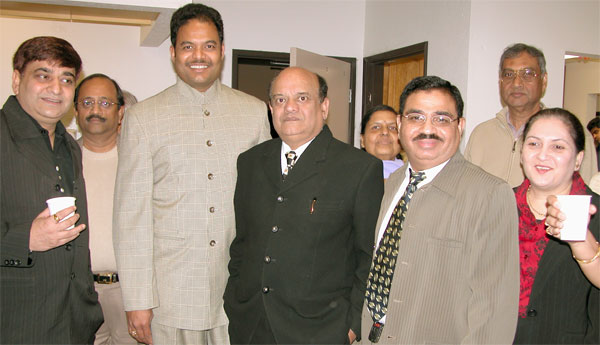 Seen at the “Hasya Kavi Sammelan” are (from l to r): Arun Gemini, Mahesh Bajoria, Anil Yadav, Surender Sharma, Lalita Agarwal, Dr. Atul Tandon, D.R. Agarwal and Dr. Shobha Tandon.
 You’ve seen Barney, Sesame Street and Dora the Explorer, but nothing for teaching the Hindi language to the young. “Chalo Hindi Bolay” or “let’s speak Hindi” is the first DVD released by Hindi Kids. Hindi Kids is the brainchild of Namrata Grover. As a mother of three, she has watched numerous hours of children’s television and knew if the series was to be watched, it had to be entertaining to hold a young mind’s attention. Her mission was to create a series that her kids and their friends would enjoy and at the same time learn about their heritage.


 Today’s Test Drive