 !-- Start Alexa Certify Javascript -->
|
|||||||||||||||||||||||||||
|
|||||||||||||||||||||||||||
|
|
|||||||||||||||||||||||||||
|
|||||||||||||||||||||||||||
|
|
|
|
|
|

JULY 2005 |
COVER STORY |
||||||||||||||||||||||||||||||||||||||||
|
EDITORIAL:
NEW LOOK, NEW CONTENT The copy of Siliconeer that you have in your hands has a completely new feel in both content and look. While readers have loved what we have provided, we have also received numerous requests to devote our focus to the dynamic and diverse South Asian community in its entirety, rather than focusing specially on technology or science. The argument made to us was simple: There are specialty periodicals to cater to the needs of those interested in technology and science, while the growing community deserves our full attention. We hear you, reader, and from this month Siliconeer will become a general interest magazine for the South Asian reader. While we are at it, we have done a complete revamp of the layout of the magazine (pending some tweaking and fine-tuning). We are proud to say that the magazine is comparable in design to any mainstream periodical. That’s no mean achievement. Mainstream magazines have a million-dollar revenue stream from advertising and subscription, while we continue to distribute the magazine free of charge. At Siliconeer we continue to change and evolve and seek new ways to make our magazine a better read and a more satisfying aesthetic experience. So the makeover is not the end, but the beginning. We hope to bring many changes to you in the future. Here’s a brief wish list, which we will implement as time and space allows. Book reviews. With s highly educated community as our readership, we have long felt the need of a section that informs our readers about the most stimulating and interesting books that are coming out. We don’t plan to limit ourselves to South Asian authors or subjects, either. Mainstream arts and culture. Siliconeer will try to break out of the ethnic cultural ghetto and take a peek at what’s going on outside the desi scene. Surely South Asians do not limit themselves to desi performing arts. Why should a magazine for South Asians? There is a wondrous world of art and culture out there — theatre, ballet, cinema, you name it. Cricket. A passion for cricket is something many of us have brought with us from the old country, but looking at the mainstream media here, you wouldn’t even know the sport existed. Yet South Asians have a vibrant league here here, and most cricket aficionados keep a keen eye on developments in the cricket world. Politics. Outside the odd fundraiser for the local lawmaker who is happy to utter the standard bromides about the model minority, the community’s knowledge or involvements in politics is abysmal. Yet America is a dynamic democracy, and you ignore politics at your peril. Our focus will be mainly on issues that affect the South Asian minority. Other issues. We plan to cut a wide swath. Issues like civil rights, even when it does not directly involve South Asians, has long term implications for the community. We also plan to occasionally publish South Asian fiction, which may be contemporary or classical, or translated from Indian languages. What won’t change. Some things will remain the same, because they ought to. Every month, we will remain just as committed to providing you a compendium of well written and interesting articles in a format that is easy on the eyes. Although we have become a general interest magazine, we will continue to keep a keen eye on science and technology, it’ll just be part of a much larger pie. And we will continue to call ourselves Siliconeer. It’s true that given the current focus, the name does not fit the magazine as well as it used to, but it’s a name that has helped establish our reputation. It’s true Shakespeare once said: “What’s in a name?” but for once, we beg to disagree with the Bard. COVER STORY: Modadugu Gupta's Blue Revolution - A Siliconeer Report
The unassuming Indian scientist, whose research and grassroots work have helped fishery output skyrocket in countries like Bangladesh, India, Vietnam and Laos, has won the World Food Prize. A Siliconeer report. He’s an unassuming scientist, but his work has changed the lives of millions in some of the poorest parts of the world. Till the mid-1970s Modadugu V. Gupta was a scientist who was exploring ways to increase fish yields. But he was dissatisfied with the fact that his research was not translated into actual benefits for the impoverished rural folks who really needed it. So he moved from pure research to more hands-on work with grassroots organizations. His peers raised their eyebrows, but he didn’t care. What mattered was making sure the benefit of his scientific techniques didn’t get buried in some dusty report but actually made a difference in real people’s lives. In 2001, the Penang, Malaysia-based World Fish Center estimated that 1.04 million farmers/families practiced his low-input aquaculture technologies. Now, nearly 60 non-government organizations are working with these farmers to maintain and improve their aquaculture practices. This year, he has been named winner of the $250,000 World Food Prize for his work to enhance nutrition for over one million people, mostly very poor women, through the expansion of aquaculture and fish farming in South and Southeast Asia and Africa. Gupta’s name was announced by Ambassador Kenneth M. Quinn, president of the World Food Prize Foundation on June 10 at a ceremony at the U.S. State Department. Quinn said Gupta had been selected for this honor based on his work over three decades at the World Fish Center, a member of the Consultative Group on International Agricultural Research of the World Bank. “Through his dedicated and sustained efforts in Bangladesh, Laos and other countries in Southeast Asia , Dr. Gupta made small scale aquaculture a viable means for over one million very poor farmers and women to improve their family’s nutrition and wellbeing,” As a result of Gupta’s efforts, freshwater fish production has risen dramatically in these countries by as much as three to five times, he added. Gupta is the sixth citizen of India to receive the World Food Prize since it was established in 1986. Previous recipients include : Dr. M.S. Swaminathan, 1987; Dr. Verghese Kurien, 1989; Dr. Gurdev Khush, 1996; B.R. Barwale, 1998 and Dr. Surinder K. Vasal, 2000. “My research in India till 1976 was more of science developing technologies for high productions of fish from aquaculture,” Gupta told Siliconeer. “When I joined the United Nations Organization (its various agencies) in 1977 and worked in a number of developing countries in Asia and Africa till 2004, I have realized that what the poor, under-nourished, poverty stricken farmers need is not just scientific technologies, but technologies that take into consideration their resources and needs and that could be easily adopted by them. Realizing this, I closely worked with the rural farming communities and the NGOs who have been working at grass root level. Though the life was not easy, it gave me lot of satisfaction that my work could make much difference to these poor rural families, especially the women. Initially I was criticized by my peers that instead of doing research, I am doing development work. But once the impact of work was evident, every one was all praise for the work.” Commenting on his career with the World Fish Center, Gupta said, “In my early years at World Fish when I started working with farmers and NGOs in Bangladesh, I was asked why I was doing development work instead of research. My answer was that science by itself will not help to increase production and improve the lives of rural poor. Science must take into consideration the socio-economic fabric and needs of the societies for whom the research is meant.” His tenacity in finding means to improve the nutrition and living conditions of poor people through low-cost and accessible aquaculture technologies has contributed to a “blue revolution” in India. Two outstanding techniques developed to raise the productivity of aquaculture were recycling farm waste and polyculture. Using affordable and readily available farm waste such as chicken manure, rice bran and weeds, and culturing more than one species of carp with different food habits in the same pond, thus giving better utilization of available natural food produced in a pond, saw productivity beginning to rise in the 1970s and increasing to this day. Gupta was the first to start to break through the yield barriers and to do it with low-cost inputs. The national mean productivity per hectare climbed from only 0.5 tons per hectare in the early 1970s to an average of over 2 tons per hectare. Some farms increased production spectacularly and produced over 10 tons per hectare. In another region of Asia, the lower Mekong basin countries, and at around the same time, the late 1970s, fish farmers were struggling to raise species which did not grow quickly enough. Gupta turned to other species and found that certain species of native Indian major carps could flourish in the Mekong basin environment. He introduced this species to the Mekong basin countries along with the technologies to breed and raise them. There followed a proliferation of hatcheries producing fingerlings of Indian major carps species. Now, in the north of Vietnam, Indian major carps have come from nil supply to comprise about 30 to 40 percent of total freshwater aquaculture production. In the late 1980s Gupta worked closely with the Bangladesh Fisheries Research Institute to find ways to increase fish production through pioneering low-cost aquaculture technologies. The agro-ecological environment conditions differed in different parts of the country and they worked to integrate aquaculture in farming systems under these different conditions. The results were remarkable. One study showed that fish production increased nearly eightfold, from 304 kg/ha to an impressive 2,574 kg/ha in 3-6 months. Moreover, with the new technologies, farmers tripled fish yields in the difficult season between monsoon floods, achieving yields of more than 1,000 kg/ha. Furthermore, many unused small water bodies in Bangladesh were turned to productive use. Nearly half of the untapped resource of more than a million ponds, including seasonally-flooded ditches, and hundreds of thousands of small seasonal ponds and roadside canals were turned into a new source of food and income. The fish raised reduced protein malnutrition among the rural poor, especially those living in flood-prone areas. Gupta was the first to recognize the resource and to find ways to tap the fish-growing potential of these water bodies. “The diets of more than a million impoverished farmers and women in Bangladesh, Laos and other countries in Southeast Asia now include high-quality protein thanks to his 40 years of work,” the Des Moines Register has said in an editorial tribute to Gupta. “Congratulations to Dr. Gupta, and to the Food Prize committee for selecting such a worthy recipient.”
BUSINESS: Turning the Academic Tide: The Rush to India - By Siddharth Srivastava With India becoming a magnet for global outsourcing, Western business and management schools are keen to send students to find out what makes India tick, writes Siddharth Srivastava.  One indicator that there is something good happening in an economy is when future corporate leaders of the world make it a subject of study. Indians heading to Western countries to pursue their dreams in education (there are 80,000 in the U.S.) is now commonplace. American and European students treading across to India for learning is a more recent phenomenon. Those who have come till now have mostly involved themselves in subjects like Sanskrit, spirituality, yoga, Ayurveda and Indian dance forms. But that’s changing. One indicator that there is something good happening in an economy is when future corporate leaders of the world make it a subject of study. Indians heading to Western countries to pursue their dreams in education (there are 80,000 in the U.S.) is now commonplace. American and European students treading across to India for learning is a more recent phenomenon. Those who have come till now have mostly involved themselves in subjects like Sanskrit, spirituality, yoga, Ayurveda and Indian dance forms. But that’s changing. The Indian software sector, with last year earnings of $22 billion (exports over $17 billion) is one enterprise in which India is a leader. Topping the list for close observation as well as understanding are the two information technology giants, Wipro and Infosys, who have been at the vanguard of the software revolution. Both the firms have witnessed a huge jump in the number of management students seeking to make them part of their project coursework. Apart from credit-granting programs, many business schools in the U.S. have begun to bring students groups to India. Wipro has played host to a team of students from the Royal Institute of Stockholm and the Stockholm School of Economics. Recently, a team from Stanford visited Infosys and Wipro. Kellogg School of Management, Northwestern University, has a full-fledged program called Global Initiatives Management and is looking at offshore outsourcing as their topic of study. Students from the university will soon be visiting India. Schools like Wharton, Stern, MIT Sloan, Michigan, School of Management Boston plan to visit the country to build up knowledge in offshore sourcing. Recently, India was host to C. Jischke, president of Purdue University, the first president in Purdue’s 135-year history to visit India with the object of “globalizing” U.S. education. He is probably also the first head of a U.S. university who came to India to network personally and to talk to leading Indian institutes and identify subjects for study. “We are aiming at subjects India is strong in: engineering, pharmacy, management,” said Jischke. Jischke felt that with globalization, multinational firms with operations around the world will and have been showing preference for candidates who have had experience in study abroad as well as exposure to different cultures. “It demonstrates an ability to work in different environments at times more challenging,” he says. Purdue has already inked deals with the prestigious Indian Institute of Technology (IIT-Mumbai) as well as GE to arrange for short stints for students to imbibe a first-hand experience of the Indian syllabus as well as management style. Infosys, which is looking at attracting high-caliber professionals from around the globe, has a global internship program called InStep to introduce students around the world to Infosys and India. Infosys officials say that they have been receiving interns from colleges like MIT, Harvard, Stanford, Wharton, St Gallen (Switzerland), London Business School, Darmstadt (Germany) Hitotsubashi (Japan) and RMIT (Australia). InStep has received 3,000 applications for 33 positions this year. The company presently has interns from more than 12 different countries. In an interview Prabhudev Konana, professor at the McCombs School of Business, University of Texas at Austin, said he plans to bring a large contingent of students to visit India soon. The professor said since more than 50 percent of Fortune 500 companies and most other big global firms are looking at India for IT outsourcing, it is imperative for MBA programs to expose students to economic, political and cultural issues of doing business with India. The United States Education Foundation of India too has been involved in identifying India-specific study abroad programs that give American students a view of this country. Usefi has identified over 50 such packages, ranging from week-long to full-year to semester-long study options that can range from subjects such as religion and culture to law, engineering and the sciences. “India is strategically and culturally an important country for U.S. students. Knowledge of India is valued by universities,” says Jane Schukoske , executive director of Usefi. This, however, is not the first time that India has been involved in the education process of Americans. In what has been termed as outsourcing of education or e-learning, Indian e-teachers tutor students from the grade of 3-9 across America, sitting at their work stations in India due to shortage of teaching manpower in the U.S. Outsourcing companies such as Career Launcher, Educomp, Datamatics and NIIT have identified this opportunity that arose after the George W. Bush administration signed the No Child Left Behind Act with its multi-billion dollar funding. NCLB requires reading and math tests in grades 3-8 and high school. Of course when today’s global students come to get a first-hand feel of the information technology powerhouse that is India, it is an indicator that tomorrow’s professionals will follow or have already arrived. The interest of foreigners in Indian industry has been at two-levels — one, high-end technology and multinational jobs (for example, in GE, Nokia) and two, language specific requirements further to India emerging as a hub of outsourced jobs catering to international customers. A recent research has pegged the potential demand of over 160,000 foreign language professionals in call centers and other back end operations by 2010. Estimates put the number of foreigners working in India in the software and outsourcing industries to be mounting at a rapid pace, the last count, as recorded in the foreign registrar’s office in New Delhi, having crossed 50,000 and growing. There are jobs up for grabs. Estimates suggest that 200,000 to 400,000 jobs have moved from the U.S. since the outsourcing trend began in the 1990s, which is still a fraction of 138 million jobs in the U.S. The most high-end projection is by Forrester Research — a loss of 3.3 million jobs by 2015, including 1.7 million back-office jobs and 473,000 IT jobs — which will create a dent in the U.S. job market but not the wreck everyone fears. Elsewhere, hardly a week goes by without Indian IT whiz kids hitting the jackpot somewhere in the world. In the most recent instance, two IIT graduates are set to become dollar billionaires by listing their internet gambling company, Party Gaming, in London. The London Stock Exchange flotation is expected to be worth $10 billion. It is the LSE’s biggest flotation since the $29 billion listing of Orange, the mobile telephone company, four years ago. The extraordinary entrepreneurial saga of an Internet upstart hitting the big league will redefine rules of wealth creation, and again, perhaps, provide ground for future study material. - Siddharth Srivastava is the India correspondent for Siliconeer. He is based in New Delhi. |TOP| NEWS DIARY: June Roundup  Acquittal Suspended In Pak Rape Case Acquittal Suspended In Pak Rape CaseSPELLING BEE: Indian Kids Spell Victory WHITE HOUSE TRANSCRIPTS: Indira Gandhi a ‘Witch,’ Indians ‘Bastards’ Bail for Former Bangla Ruler’s Wife Indians: World’s Biggest Readers | BJP Drops Spokesman | Slow Response to Tsunami US Plea for Nepal Democracy | Communists Protest in India | Flood Shuts Power Project ‘Water’ to Open Toronto Fest | ‘Flood-scam’ Suspect Surrenders | Pranab Raises Heat Acquittal Suspended In Pak Rape Case Pakistan’s Supreme Court has suspended the acquittals of five men in a notorious gang rape case. The Lahore High Court had earlier acquitted the five who are accused of raping Mukhtar Mai in 2002, allegedly on a village council’s order.
The court ordered the men be detained in custody pending the appeal hearings. The Supreme Court agreed to suspend the acquittals following appeals by the 33-year-old woman and the government. Supreme Court Chief Justice Iftikhar Chaudhry said the court would re-examine the evidence. In his ruling, he ordered 14 men — the five acquitted by the Lahore court, a sixth man whose death sentence was commuted to life imprisonment by that court and another eight men acquitted at the original trial — be held in custody. “I am very happy, I am feeling satisfied,” Mai said. A village council allegedly ordered the rape because her younger brother was seen with a woman from the more influential Mastoi clan. “For many American contestants, the most uncommon words at last week’s national spelling bee were not appoggiatura and onychophagy, but the names of the top four finishers: Anurag Kashyap, Aliya Deri, Samir Patel and Rajiv Tarigopula. All were of Indian descent,” the newspaper wrote in a long article that commented on the propensity of Indian Americans to excel in this most quintessential of American institutions, the National Spelling Bee. To be sure, it’s not just the kids. Indian American parents are often passionately if not obsessively involved in training succssful kids.
The U.S. State Department declassified many documents this month on U.S. foreign policy of the time. One conversation transcript comes from the meeting between Nixon and Kissinger in the White House Nov. 5, 1971, shortly after a meeting with the visiting Indira Gandhi. “We really slobbered over the old witch,” says Nixon. “The Indians are bastards anyway,” says Kissinger. “They are starting a war there.” He adds: “While she was a bitch, we got what we wanted too. She will not be able to go home and say that the United States didn’t give her a warm reception and therefore in despair she’s got to go to war.” The Indo-Pakistan war took place between November and December 1971, following demands in 1970 by erstwhile East Pakistan (later Bangladesh) for autonomy, which became a demand for independence following an impasse in March. India supported Bangladesh and ties with the U.S. plummeted.
The 73-year-old general has also accused her of not divorcing her previous husband. The government has also filed charges, including one of money laundering. Bidisha was granted bail on all four cases. Neither the government nor Ershad has commented. Bidisha was previously married to British national Peter Wilson, with whom she has two sons. Before her arrest, Bidisha had been expelled from the Jatiya Party which her husband leads and in which she was a leading figure. Her lawyers say she is the victim of a political conspiracy within the Jatiya Party. The NOP World Culture Score index surveyed 30,000 people in 30 countries from December 2004 to February 2005. Analysts said self-help and aspirational reading could explain India’s high figures. Perhaps Indians have a healthy dislike of television and radio: India came fourth last in both. Thailand and China took second and third place respectively in average hours a week spent reading books, newspapers and magazines. Britons and Americans scored about half the Indians’ hours and Japanese and Koreans were even lower - at 4.1 and 3.1 hours respectively. R. Sriram, chief executive officer of Crosswords Bookstores, a chain of 26 book shops around India, told the BBC that Indians are extremely entrepreneurial and reading “is a fundamental part of their being.” Indian writer and editor, Tarun Tejpal, however, said the survey only made sense if it excluded the high numbers of illiterate Indians. Leading columnist Venkateshwar Rao told Britain’s Sunday Times newspaper he could not see Indians flocking to book stores. “Reading books just isn’t a habit with them because they’re not into cultural pursuits. It’s not a part of their make-up. All they want to do is consume.”
Sinha had publicly criticized BJP president L.K. Advani for describing Pakistan founder Mohammad Ali Jinnah as secular. The comments sparked a furor in India among Hindu hardliners. BJP leader Arun Jaitley told journalists in Delhi that the party had reshuffled its spokesmen, but did not specify why Sinha had lost his job. He said he and Sushma Swaraj, another BJP leader, would now speak officially for the party. Advani sparked the row during a visit to Pakistan in early June, when he spoke of Jinnah’s “forceful espousal of a secular state in which every citizen would be free to practice his own religion.” His comments caused an outcry in India. Despite over $3 billion in pledges, NGOs point to a lack of co-ordination and no clear plan. Over 30,000 people died in the tsunami and half a million were made homeless in Sri Lanka. The overwhelming need is for shelter, but so far across the country only around half of the temporary homes are up and only a few thousand of the 90,000 permanent homes needed have even begun construction. Six months ago, the only way to walk along the coastline in the southern town of Galle was to walk on the rubble of people’s fallen homes. Now that’s been removed. The debris has been cleared away and in its place has sprung up a chaotic mixture of wooden shacks and tents. Slowly the tents are going, but a lot of the transitional shelters that are replacing them are nothing more than huts. “Six months on people definitely should have been moved out of tents. There is no reason why they should be living in tents,” Malindi Langasinghe from the aid information centre in Hikkaduwa told the BBC.
The king seized direct power in February, saying politicians had failed to tackle the nation’s Maoist rebels. The U.S. and other countries criticized the move as a backward step. Camp, the U.S. principal deputy assistant secretary of state for South Asia, said that unity between the king and the parties was crucial to restoring democracy and tackling the Maoist insurgency. The parties have called for the reinstatement of the parliament that was dissolved three years, peace negotiations with the Maoist rebels and fresh national elections. The king has rejected the demands so far. Critics accuse him of seeking to return to the absolute monarchy. Camp said that a return to pre-1990 Nepal would be unacceptable to the world including the U.S. He also urged the Maoist rebels to declare a ceasefire and resume peace talks that broke down two years ago.
The left-wing parties, angry at the recent increase in fuel prices, also oppose the government’s policy of selling off some of its stake in state-owned corporations to raise funds for investment. India’s coalition government, led by the Congress Party, relies on four left-wing parties to maintain its majority in parliament. Police in the capital, Delhi, used batons and water cannons to push back hundreds of demonstrators protesting against the fuel price hikes. Protesters carried placards which read: “Take back petrol, diesel price hikes.” Elsewhere, trucks and commercial vehicles stayed off the roads as part of a “wheel-jam” called to protest against the hikes. Earlier, the communists had announced they were suspending participation in the policy co-ordination panel with the government. However, they said their protests were not aimed at bringing down the government. Thousands of people were left stranded after the level of the Sutlej river rose in Himachal Pradesh. They include several hundred tourists who are being rescued by helicopter. Twenty-nine foreigners are among those who have been evacuated. Although the level of water has receded, officials say they are still on a flood alert. “It is the high silt content which is forcing us to keep the (Nathpa) project closed,” a top official at the power project told the BBC. The Nathpa project houses Asia’s largest underground power complex and only came into operation last May. It supplies states across northern India as well as the capital, Delhi. It is not yet clear what caused the water level to rise but officials said it could be due to flooding in Parechu lake in neighboring Tibet, which has affected the Sutlej further downstream. The overflowing river destroyed villages, farmland and roads with the damage estimated at eight billion rupees ($183.7m). In 2000 floods on the Sutlej killed about 150 people in Himachal Pradesh.
Directed by Deepa Mehta, the movie follows the lives of Hindu widows. Filming in India was abandoned five years ago after hard line Hindu protesters burned its sets, claiming the movie distorted Indian culture. Filming was completed in Sri Lanka. Its world premiere will open the festival, which runs from 8 to 17 September. Water beat movies by better-known Canadian film-makers Atom Egoyan and David Cronenberg for the prestigious opening slot. Mehta, an Indian-born Canadian citizen, received death threats while shooting Water in north Indian city Varanasi. Although Time magazine dubbed him an “Asian hero” for his flood relief work, the former civil servant stands accused of siphoning off state funds for victims of monsoon floods that devastated Bihar last year. Goswami, who has denied misusing funds, has been in hiding for several weeks. “There is no scam,” he told the Indian Express. “The whole exercise was transparent. I don’t know why people are dragging my name into this. What I think is people are simply jealous of me.” The High Court in Patna has turned down his application for anticipatory bail. About 1,000 people died and millions made homeless in the flooding in Bihar last year. Goswami joined the S1 billion Sahara group, which has since sacked him. In its list of leading personalities from Asia last year, Time described Goswami as a “bureaucrat who saves India’s flood victims.” Bihar authorities announced an inquiry into the alleged diversion of funds in April. Mukherjee met with U.S. Vice-President Dick Cheney, Secretary of State Condoleezza Rice and National Security Adviser Stephen Hadley during his trip. He told U.S. officials Pakistan President Gen. Pervez Musharraf is yet to dismantle the infrastructure of terrorism. Mukherjee’s initiative to put incremental pressure on Musharraf on cross-border terrorism comes only days after national security adviser M.K. Narayanan detailed at his meetings in with U.S. officials proof of Pakistan’s continuing efforts to destabilize Jammu and Kashmir and spread terror to other parts of India. DEVELOPMENT: Whither Bangladesh? Another Somalia or Another Malaysia? - By Mahfuz Anam Beneath all the bad news constantly coming out of Bangladesh, there are great things happening. However, if all its people don’t get engaged, Bangladesh may fall between the cracks, Mahfuz Anam told expatriate Bangladeshis in a speech. Here are excerpts.  I am a journalist, so I will make sweeping comments. In my view, right now two Bangladeshs exist simultaneously. One Bangladesh is degenerated Bangladesh. A decaying, Bangladesh, which is rotting, stinking. A Bangladesh that is headed towards an abyss. At the same time there is another Bangladesh. This Bangladesh is regenerative, creative, changing, adaptive, innovative and moving forward. A big part of the degenerating Bangladesh is its rotting politics. Another is its backward bureaucracy. Another part is corruption. Another is a section of business. Almost all the awful things you hear about Bangladesh are true. But it’s not the whole truth. It’s only a part of the truth. The rest of the truth is that of regenerative Bangladesh –Many NGOs are contributing towards the development of this Bangladesh, where a lot of community leadership is coming up, where an innovative, creative class of entrepreneurs are coming up, where educators, engineers, doctors, lawyers contribute, and Daily Star and Prothom Alo are also a very small part of this Bangladesh. Now which Bangladesh will prevail? The decaying Bangladesh, or the regenerative Bangladesh? That depends on where people like you and I stand. There is no room for sitting on the fence or being neutral here. Bangladesh can go down the road of Somalia or Bangladesh can become another Malaysia. But it won’t become Malaysia if we just sit it out. If we sit it out, it’ll surely go down the road of Somalia. I don’t want to castigate Somalia, I’m just taking it up as an example where the state is disintegrating and society is not progressing.
After living in a problem-ridden society for so long, perhaps we have forgotten how to acknowledge the positive. When I joined UNESCO in 1977, Paris had a substantial Middle Eastern population. Through my work, I made many Palestinian friends. You know, Palestinians are the brightest of the Arabs. They are most educated, they are doers. When my Palestinian friends would hear about our history, that after just a nine-month-long freedom struggle we became a free country, they would go green with envy. My Palestinian friends told me that they were born in the ’50s and ’60s, but they had never ever lived anywhere besides a refugee camp. I became conscious how lucky I was to be a citizen of an independent country, however problematic, however backward. If you look at a map of the world today, at least you can look at one country and say, “This is mine.” Something no Palestinian has ever had an opportunity to experience. I had once gone to Senegal while working for UNESCO. Senegal is a central African nation. Its western part touches the Sahara desert. I had to go there. For the first time I saw a desert. After talking to people there, I learned that not a thing grows there, and for a bucket of water, somebody from the family has to go out in the morning and return in the afternoon. I thought of verdant, riverine, bountiful Bangladesh, full of ponds, where if you through away the core of a mango it grows into a tree, where you can sleep in the outdoors eight months in a year. I became fully conscious how bountiful nature has been to us. Perhaps we are so overwhelmed by the problems that Bangladesh has, we have forgotten to realize the bounty that Bangladesh gives us. What we have failed to do is to manage Bangladesh. It is our fault, not Bangladesh’s fault. And that’s the primary message I am sharing with you. Let us now examine, in the midst of all the problems that we have, what has been Bangladesh’s achievement? If I concentrate on the last decade and a half, on an average Bangladesh’s GDP growth rate has been over 5 percent. Now if you look at the economic achievements of many countries of the world, an average of over 5 percent for more than a decade is a major significant achievement. We have had the beginnings of industrialization in Bangladesh. We have made some modest progress in the social sectors. We have the beginnings of, if you like, capitalism. The entrepreneurs, the free market, the beginnings of it are there. This is on the economic side. In politics, however flawed, we have a democracy in Bangladesh. Compared to Pakistan, compared to Nepal, I think in terms of developing a democratic society, as I said, however flawed, we have a semblance of democracy. The beauty of our democracy has been that in the last three elections all the time the opposition won. I think that is saying something. A country where the opposition always wins has something going for its democracy. But I do not for a moment want you to think that Bangladesh doesn’t have any problems. I think it is foolish to ignore Bangladesh’s enormous economic problems. But it is fatal to be overwhelmed by those problems. Let me use an icon in Bangla culture—our mother—as a metaphor. There was a time when your mother was young, hardworking, beautiful, vivacious, perhaps sang as a hobby, did so many things. You were born to this mother. That mother of yours is sick, unwell today. She can’t do a lot of things she used to. Her looks are also not what they used to be. At a moment like this, are you going to constantly criticize your mother? Or are you going to gird your loins and get down to work to help ease your mother’s discomfort? I don’t think we have any alternative. Bangladesh is our country. Its limitations are countless. Its shortcomings are no less. There are many things my country doesn’t have. All the same, it’s my country. We were born there. Whatever success we have achieved, all credit goes to our motherland and family. With that claim of the motherland in mind, I ask you to join us in changing the future of Bangladesh. I believe it can be done. It is with that belief that I took my family back home to work. The good news for you is that a change is happening in Bangladesh. Perhaps not to the level that’s necessary, but we are also changing. We are becoming more modern, we are gradually becoming aware that to we need to change a lot if we are keep pace with the modern world. You will have to find the right partner. I just want to say that I am really, really bullish about Bangladesh. This is not a pie-in-the-sky optimism. I live in that country. I have seen how honest, decent, hardworking, ordinary folks are in Bangladesh. Bangladesh’s problem is its wealthy elite. The previous British high commissioner, after a four-year stint in Bangladesh, told me before leaving, “Mahfuz, I’ve lived in Bangladesh for four years, and I have traveled all around the country, and I am going back with the conclusion that you people are poor by choice.” What he meant was that there is no reason for Bangladesh to be poor. With a bit of effort we can get out of poverty. But we don’t do it because we lack long-term vision, and suffer from immature leadership, and a lack of earnestness. But all of this can be changed. We have to change it. We can change it. - Mahfuz Anam is editor of the Daily Star, Bangladesh’s leading English language daily. |TOP| LIVING: Energy Saving Tips: Save Energy, Save Money - A Siliconeer Report The state funded Flex Your Power campaign is encouraging families and businesses to practice energy efficiency and conservation as the summer crunch time comes. A Siliconeer report.  As the summer energy crunch nears, Flex Your Power is launching an aggressive energy efficiency and conservation campaign to encourage families and businesses to think about the real cost of appliances. As the summer energy crunch nears, Flex Your Power is launching an aggressive energy efficiency and conservation campaign to encourage families and businesses to think about the real cost of appliances.“We are working with the ethnic press to ensure that all Californians take home the financial savings of energy efficiency,” said Walter McGuire, president of the state-funded energy efficiency campaign Flex You Power. “The average household can cut its current energy bill significantly by switching to appliances with the Energy Star label, which use less energy than standard appliances.” Every appliance that uses electricity has two costs: the price tag at purchase and the energy consumption reflected on your electricity bill. Energy-efficient products may cost more than inefficient models, but they quickly pay back the price difference – and then some – through much lower monthly bills. This adds up to hundreds of dollars in savings every year. Refrigerators offer the greatest opportunity for energy savings since they use more electricity than any other household appliance, about 18 percent of all electricity in a home. Replacing a 10-year-old refrigerator with a new Energy Star model reduces bills by approximately $30 each year. Also, unplugging and recycling an old second refrigerator or freezer will reduce your energy bills. Visit Flex Your Power’s website or check with your utility company to see if you are eligible for cash rewards for recycling old refrigerators and freezers. Save even more by taking advantage of rebate programs. For instance, Pacific Gas and Electric (PG&E) offers a rebate of up to $75 on Energy Star clothes washers. Energy Star clothes washers use 40 percent less water and 50 percent less energy than older models, saving you up to $875 in energy and water bills over the life of the machine. Here are some purchasing tips when replacing your old energy and money draining appliances: 1) check the yellow EnergyGuide label to compare how much energy it takes to operate and estimate the difference in annual operating cost between comparable models; 2) look for Energy Star qualified models; 3) choose a size that meets your household needs. But it is not just what you use, it is how you use it. The most efficient refrigerator can still waste energy if the door is left open. Clothes washers are wasteful if they are operated at full capacity with small loads. Likewise, dishwashers without full loads mean you are wasting energy and water. Filling up maximizes each use of your appliance. Lastly, if you hear the Flex Your Power NOW! alert, your area is using too much energy. Hold off using major appliances like clothes washers until after 7 p.m. to reduce the strain on peak energy supplies and transmission. To learn more about how you can save money and energy at work and at home, visit the Flex Your Power Web site at www.FYPower.org. |TOP|
MINORITY RIGHTS:
FBI Unbound: Witch Hunt at Lodi - By Veena Dubal and Sunaina Maira The Pakistani community that has made this small Californian town home for over one hundred years has been investigated, intimidated, and cast under a shroud of suspicion, uprooted, displaced, all within days, write Veena Dubal and Sunaina Maira.  On June 7, national and international media attention focused on the small, agricultural town of Lodi, located about 40 miles south of Sacramento. The FBI arrested and detained two Pakistani-Americans, who they suspected had al Qaeda affiliations. The investigation was presented as a “terrorism case” by the government and news sources. The initial affidavit released to the media said that U.S.-born 23-year old Hamid Hayat had attended a terror-training camp in northeast Pakistan along with “hundreds” of other terrorists, and returned to the U.S. intending to “attack . . . hospitals and large food stores.” This kind of detail resulted in a flood of sensationalized media coverage, portraying 23-year old Hamid as a prospective mass murder and his father, Umer Hayat, a 47-year old ice cream truck driver, as the financial supporter and mastermind of an alleged “Lodi terrorist cell.” On June 7, national and international media attention focused on the small, agricultural town of Lodi, located about 40 miles south of Sacramento. The FBI arrested and detained two Pakistani-Americans, who they suspected had al Qaeda affiliations. The investigation was presented as a “terrorism case” by the government and news sources. The initial affidavit released to the media said that U.S.-born 23-year old Hamid Hayat had attended a terror-training camp in northeast Pakistan along with “hundreds” of other terrorists, and returned to the U.S. intending to “attack . . . hospitals and large food stores.” This kind of detail resulted in a flood of sensationalized media coverage, portraying 23-year old Hamid as a prospective mass murder and his father, Umer Hayat, a 47-year old ice cream truck driver, as the financial supporter and mastermind of an alleged “Lodi terrorist cell.” Neither allegation, however, was in the affidavit filed with a federal court in Sacramento the same day. The FBI retracted their affidavit alleging Hamid’s plot to attack domestic targets and began downplaying the seriousness of the presumed threat the men posed. Both Hamid and Umer were ultimately charged only with lying to federal investigators about Hamid’s recent visit to Pakistan in 2003. Three other Muslim men from Lodi, among them two respected imams, were also detained on suspected visa violations. One of the imams, Mohammed Adil Khan, had actually been the target of FBI surveillance beginning three years ago when a secret court used the Foreign Intelligence Surveillance Act (FISA) to approve wiretapping him. While the Justice Department has maintained that it was not deliberately trying to precipitate an anti-Muslim witch hunt, the difference between the two affidavits — the one released to the media and the one filed in court — as well as recent FBI activity in Lodi, tell a different story. None of the five men have been charged with carrying out or planning to commit any act of violence. Nevertheless, one senior adviser reminded the public, “This is not an event that says to the American people, ‘Head for the hills.’ But it also says, don’t slide into any dangerous complacency here, because these people are still coming at us.” The many inconsistencies in the case and the hysteria it stoked coincided very neatly with Bush’s campaign to renew and expand the 2001 Patriot Act, which can only be justified if there was an ongoing “terrorist threat” and the public continues to fear that there are Muslim or Arab terrorists in their midst. After the arrests, President Bush remarked, “‘I was very impressed by the use of intelligence and the follow-up, and that’s what the American people need to know, that when we find any hint about any possible wrongdoing or a possible cell, that we’ll follow up — by the way, honoring the civil liberties of those to whom we follow up.’’ Despite Bush’s passing comment on civil liberties, the Pakistani community in Lodi and their attorneys maintain that much of this investigation has been conducted unlawfully and the media has certainly been hysterical in its profiling of Muslims as terrorists. The “American people” in Lodi, on the other hand, are repeatedly reminded of the “terrorist cell” in their backyard. As one Lodi resident fearfully noted, “It’s very surprising to find out that you’ve had a neighbor that you’ve been cordial with for the past 15 years and then all of a sudden to find out they’re affiliated with a terrorist camp.” Despite the fact that no one in the town has yet been charged with anything related to terrorism, media headlines continue to use the language of terror and to drum up fear in the community and surrounding area, and the nation at large. As late as June 22, 2005, the day after both Hayats pleaded not guilty to lying to federal investigators, the Sacramento Bee headline still referred to the Lodi incident to the “terror case,” basically assuming that the Lodi men are already guilty of association with terrorism. This sort of media coverage has led to a racist backlash by some Lodi residents agitated by the lurid reports about Islamic terrorists and sleeper cells. Pakistanis living in the town have been afraid to leave their homes, to go to work, and to wear South Asian clothing in their neighborhoods. Even the mayor of Lodi noted that he witnessed four white men harass a Pakistani boy. But Mayor Beckman also seemed to be more concerned about the impact of the FBI probe on the town’s public image and tourist potential, rather than on its South Asian residents, remarking, “We don’t want the new slogan to be, ‘Come to Lodi; taste our wine; and meet our terrorists.’” On June 14, we traveled up to Lodi to assess the situation ourselves impact of the arrests and surveillance of the local South Asian community, which is estimated to consist of over 2,500 Pakistanis, some of whom have been living in the town for three generations. Basim Elkarra, executive director of the Sacramento office of area the Council on American Islamic Relations office, has been diligently organizing around in response to the arrests and interrogations of local Pakistanis by FBI agents swarming into town. Though Elkarra warned us prior to our arrival about the extent of surveillance and the fear the community felt, no amount of warning could have prepared us for the state of near siege in the town. As soon as we stepped out of our car, we were made aware of the FBI’s presence. FBI agents cast a broad dragnet in Lodi in the days following the arrest and have interviewed many Pakistani residents, sometimes without an attorney present, and they have also surveilled the attorneys and activists who were trying to make sure that the community’s constitutional rights are upheld. During our brief visit with Elkarra and civil rights attorneys from the ACLU, we saw a man wearing a large afro-wig circle us in a blue SUV and take photos. When we tried to approach him, he fled, only to return later to take more photographs. His conspicuous appearance made us realize the extent to which the FBI harassment is not at all a secret investigation; it is an overt act of intimidation of the community at large.
The government’s investigation in Lodi has been conducted in a way that does not respect the legal rights and dignity of the Muslim community: Individuals have been systematically discouraged from exercising their right to an attorney and have been disallowed access to attorneys; and there has been at least one detention of an individual who was not read his Miranda warnings; and women and children have been intimidated and denied medical care. Perhaps equally disturbing, however, is that the general public has been given new reason to fear South Asians and Muslims as presumed terrorists. For neighbors, the mosque is no longer a place of worship but “a terrorist cell.” A community that has made this area home for over one hundred years has been investigated, intimidated, and cast under a shroud of suspicion, uprooted, displaced, and rendered outcaste, all within days. |TOP| MEDIA: NCM in New York: Ethnic Media Convention Over 50 ethnic news organizations and their top advertising partners gathered at Columbia University to attend New California Media’s Expo.  Clockwise from top left: The Siliconeer booth at NCM Expo in New York; a view of the expo venue; The Indian Life & Style booth at the expo and Columbia University, the expo venue. Clockwise from top left: The Siliconeer booth at NCM Expo in New York; a view of the expo venue; The Indian Life & Style booth at the expo and Columbia University, the expo venue.Ethnic media and advertisers met at Lerner Hall in Columbia University to put ethnic media on the radar of decision makers, national advertisers and mainstream media. Attendees explored new strategies for communicating news and information in the emerging global society and pondered ways of strengthening cross-racial, cross-ethnic media exchange on a national level. Among South Asian publications in California, Siliconeer and Indian Life & Style attended the expo, which was also attended by numerous English and non-English ethnic media. SOCIAL WORK: Atherton Fundraiser: Two Pakistani Legends - By Ras Siddiqui Actor-performer Zia Mohyeddin, Imran Khan headlined a luminous fundraiser, writes Ras Siddiqui. 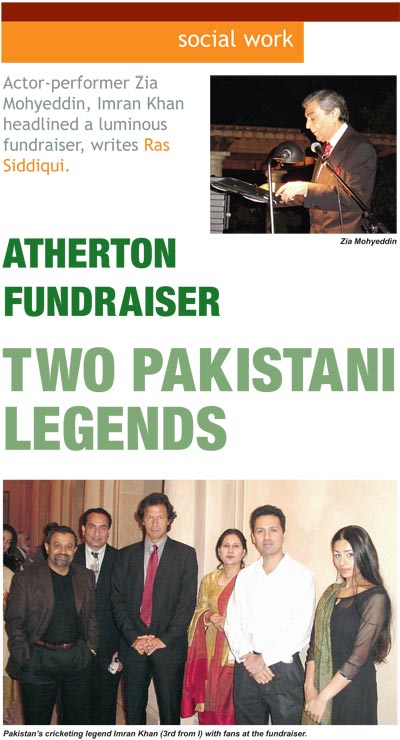 Top: Zia Mohyeddin Top: Zia MohyeddinBottom: Pakistan’s cricketing legend Imran Khan (3rd from l) with fans at the fundraiser. Affluence and influence meet head on in the tony California town of Atherton. When fundraising is a goal for a Pakistani charity, you have to gather together some of the most successful Pakistani-South Asian-Americans around in Silicon Valley to raise money for a cause that you know is worthy. Thus the Abdullah residence was the place to be after the closing of OPEN Forum 2005 held in nearby Stanford during the day on May 21, 2005. The sports figure behind the cause, cricket legend Imran Khan presented the afternoon keynote speech at a forum earlier in the day, but the fundraiser at the beautiful residence of Isha and Asim Abdullah in Atherton for the Shaukat Khanum Memorial Hospital, was certainly the icing on the cake for the local Pakistani community that day. Imran Khan has spearheaded and helped sustain this unique cancer treatment facility in Lahore, Pakistan, a facility that runs on donations so that many of its patients can be treated without facing financial ruin. In addition to the presence of Imran Khan here at this gathering another Pakistani legend, from the world of entertainment just cannot be overlooked. Zia Mohyeddin, a household name in Pakistan (but not here in the United States) delighted this exclusive gathering in his own special way. This king of dual diction — both Urdu and English — and the originator of thayka, the Urdu precursor of rap, was with us for over a wonderful hour of so. And we will return to him shortly. “It cost us $22 million to build the hospital,” he said. “It was a hospital built by people across the country (from Peshawar down to Karachi). The school children played probably the biggest role in the fundraising,” he added. “They created a mini revolution in the country.” Imran described the hospital as a rare place on the planet where without government subsidy the majority of cancer patients get free treatment. “This of course means that there is a huge deficit every year,” he said. “The hospital generates only 42 percent of the budget every year,” said Imran. “58 percent of the budget we have to collect every year through zakat and donations,” he added. He also spoke with pride about the hospital winning a World Health Organization award for its performance last year. “It is important that this hospital remains supported,” he said. He added that an expansion in Karachi has started, and that next year a major step, insha allah, in the project is on the cards at a site near the Aga Khan Hospital facility in the city. “Finally, I want to thank Asim and Isha. Thank you very much for organizing this wonderful evening.” Zia Mohyeddin was introduced next as “a true renaissance man,” an actor, producer and director. And right off the bat, using the Persian core as a benchmark for Urdu, Zia sahib proceeded to describe the beauty of the surroundings that we all sat in. There was no point in taking notes from then on because he had already crossed the outer periphery of this writer’s grasp of the Urdu language in the first two sentences that he presented. And that was not all, because his grasp of English is equally intimidating. Zia Mohyeddin has spent many years as a Shakespearian actor in Britain. His role in Lawrence of Arabia was not accidental. After listening to him on a few occasions, it seems obvious sometimes that he can detect the limitations of his audience and he (thankfully) comes down to our level of understanding every now and then. A true weaver and portrayer of tales, narrating writings from the Urdu and English greats, Zia sahib did not disappoint us once again here at this small gathering. But this was one time during the evening that I felt the need to have at least a couple of hundred more educated listeners or connoisseurs to appreciate a true artist who paints not in the language of color but in the colors of language on the canvas of two cultures. Asked if he was going to repeat a favorite segment of mine that I had heard him present two years ago at a local venue, he said that he had brought a “Naya Guldasta” or “New Bouquet” with him this time. And this new bouquet did not disappoint as its fragrance remains with some of us to this day. Zia Sahib, maan gayai hum aap ko.
“What is this Thayka?” Many including our kids here in America will ask? Well Zia sahib actually introduced Pakistanis to rap fifteen years before we had even heard much about this form of expression here in America. He was indulging in Urdu rap (Thayka) long before any of us realized what it was. Perhaps Pakistani Americans will wake up from their torpor and take the initiative to introduce their young ones with the rich heritage of the old country. HEALTH: Pregnancy Blues: When it’s Hard to Start a Family - By Anjali Tate, MD  Many Indian women are finding it difficult to get pregnant. Is “culture shock” to blame? Anjali Tate, MD, explains. Many Indian women are finding it difficult to get pregnant. Is “culture shock” to blame? Anjali Tate, MD, explains.When I meet a young patient in my practice she will often tell me that she wants to start a family but is having difficulty getting pregnant. As we talk further, it becomes clear to me that a part of the problem is that she is having irregular periods, sometimes as infrequently as every two to three months. Upon further questioning I will find out that she has put on a little weight, maybe ten pounds or so, over the past two or three years. As is typical in many instances, her weight gain coincides with her periods becoming irregular. In addition, she is beginning to notice more facial hair and acne. While infertility is defined as the inability to conceive after one year of actively trying, with irregular periods it is difficult to know when you are ovulating to even begin trying. Your difficulty conceiving may be due to a condition called polycystic ovary syndrome — PCOS. PCOS is a very common hormonal problem in women, especially in Indian women. It affects 5 to 7.5 percent of all women during their childbearing years,1and may be higher for Indian women. Although the cause is unclear, there are some common characteristics. They are:
While the specific cause of polycystic ovarian syndrome is unknown, we do know that a normal ovary depends on the selection of a follicle in the ovary in which an egg will mature. In order for this to happen, an ovary responds to two hormones produced in the pituitary gland of the brain, follicle stimulating hormone (FSH) and luteinizing hormone (LH). In PCOS, there is excess secretion of LH which leads to the hormonal imbalances that cause the lack of ovulation and the other symptoms of PCOS. Treatment. Treatment of infertility in patients with PCOS will often require medications such as metformin and clomiphene citrate (Clomid) to stimulate and improve the quality of ovulation. Also of great importance are lifestyle changes one can make that will reverse the effects of PCOS. PCOS and lifestyle changes. Through diet and exercise, a weight reduction of as little as 5-7 percent is associated with improvement in menstrual cycles and skin appearance. With weight loss, you can reduce the risk of diabetes and cardiac disease by as much as 58 percent!2 And with the weight loss and the resumption of regular periods and ovulation, your chances of getting pregnant are greatly improved. PCOS and the Indian Woman. I have observed that many of my Indian patients experiencing fertility difficulties are immigrants to the United States from India. In many instances, the difficulties conceiving (PCOS) can be traced to what would be called “culture shock,” brought on by significant lifestyle changes experienced when a woman moves from India to America. Diet is markedly different, food portions are huge, junk food is everywhere, exercise is not a priority, and the pace, particularly in Silicon Valley and other large metro areas, is extremely hectic — to name a few lifestyle changes. Of course, there is the added stress of new surroundings, a new family situation, new friends, and so on. It is no wonder, then, that hormones are imbalanced and conception is difficult.
What to do? Don’t put off seeing a physician if you are having difficulties conceiving. When you see your physician, be sure and talk about yourself and share your observations and concerns. This may seem obvious, but we all fall into routines, even physicians. Lab tests are just part of the equation. The other part, many say the more important part, is making sure your physician knows the “whole” you: your life, your concerns, your major life changes such as moving here from another country, and your observations about your body. The more complete the picture, the greater the likelihood of an accurate diagnosis. In many instances— and this is for all woman— the effects of PCOS can be can be corrected through the lifestyle changes and medication mentioned previously. The big difference with Indian woman who are immigrants to the United States is that the factors that led up to PCOS and fertility problems are relatively recent, i.e. since immigrating, and therefore more easily corrected. HEALTH: A DOCTOR'S WORD Keeping Your Kids Safe: Summertime Tips As a parent your job is to teach your children to be safe while they have fun. Here are some tips from Dewey Doo, MD, that he gives his young patients and their parents.  Well, it’s summertime. As a parent your job is to teach your children to be safe while they have fun. They’re excited! But safety and caution need to be part of the equation, too. Here are some tips I give my young patients and their parents: A word about helmets. Every child should have a helmet. Helmets are important for biking, roller-blading, and horseback riding, among others. Look for a safety-approved helmet by ANSI or Snell that .ts the head well. If your helmet has been damaged in any way, replace it. Roller Blading
Bike Riding
Swimming and Boating
Camping and Hiking
Boating
|TOP| EVENT: Bollywood in Amsterdam: IIFA Awards Click here to view the photo gallery All your favorite Bollywood stars in town, with Big B, Aish and Abhishek dancing on stage. Or how about going to a cricket match between Shah Rukh X1 and Hrithik XI. Bollywood fans at the IIFA weekend in Amsterdam thought they had died and gone to heaven. A Siliconeer report.  CLOCKWISE FROM TOP LEFT: Shahid Kapur and Kareena Kapoor during a performance at the IIFA Awards; Amitabh Bachchan, Aishwarya Rai and Abhishek Bachchan during a performance at the IIFA Awards; Shabana Azmi (l) and Javed Akhtar arriving for the IIFA Awards. Azmi received the Lifetime Achievement award; IIFA brand ambassador Amitabh Bachchan rides a bike with Ambassador of Netherlands to India E.F. Neihe; Daler Mehndi strikes a bhangra pose; Urmila Matondkar (l), Shabana Azmi (c) and Rani Mukherji share a light moment at the IIFA Awards. (PHOTOS BY FOTOCORP INDIA) CLOCKWISE FROM TOP LEFT: Shahid Kapur and Kareena Kapoor during a performance at the IIFA Awards; Amitabh Bachchan, Aishwarya Rai and Abhishek Bachchan during a performance at the IIFA Awards; Shabana Azmi (l) and Javed Akhtar arriving for the IIFA Awards. Azmi received the Lifetime Achievement award; IIFA brand ambassador Amitabh Bachchan rides a bike with Ambassador of Netherlands to India E.F. Neihe; Daler Mehndi strikes a bhangra pose; Urmila Matondkar (l), Shabana Azmi (c) and Rani Mukherji share a light moment at the IIFA Awards. (PHOTOS BY FOTOCORP INDIA)Bollywood superstars Shah Rukh Khan and Rani Mukherjee walked away with the Best Actor and Actress trophies as Yashraj Film’s Veer-Zaara bagged six awards at the International Indian Film Academy Awards ceremony in Amsterdam June 11. The International Indian Film Academy’s three-day bash June 9-11 including the IIFA Weekend 2005 and IIFA Awards 2005 included a celebrity cricket match, a film festival and the world film premiere of Parineeta. Veer-Zaara, directed by veteran director Yash Chopra, bagged awards for Best Picture, Direction, Actor, Supporting Actress, Music Direction and Story with only the Best Actress and supporting Actor awards not going its way. The movie, a super hit in India, portrays a love-story between an Indian army officer and a Pakistani girl, set in Pakistan. At home it has won nearly all the major awards, including the Filmfare. Earlier, filmmaker Yash Chopra June 11 inaugurated the first-ever IIFA film festival at the famous Pathe Tuschinski theatre in Amsterdam. The three-day festival opened with Veer Zaara. For seven euros per film, Bollywood fans here were able to view Bollywood hits over the next two days. Movies screened during the festival included Black, Mughal-e-Azam, Dhoom, Dil Chahta Hai, Ek Hasina Thi, Kal Ho Naa Ho, Hum Tum, Lakshya and Oscar nominated Little Terrorist. Shah Rukh Khan may be the king of Bollywood, but when it comes to cricket, Hrithik Roshan seems better.
Man-of-the-Match Aftab Shivdasani who hogged the limelight with his antics- nearly taking off a man’s head when he hit a sixer into the stands- and bowling out Shah Rukh. “The Shah Rukh scalp may have just cost Aftab the chance to work with him in a movie,” commentator Boman Irani remarked. And last but certainly not the least, did you know that a tulip has been named after the pretty Aish? Special tulips were named “Aishwarya Rai” after the former Miss World during a press conference on the first day of the four-day International Indian Film Academy Weekend in Amsterdam June 9. Presenting Rai with the tulips and the certificate authenticating their new name, Hans van Driem, managing director of the Netherlands Board of Tourism, said that the tulips were a celebration of Rai’s beauty. “Herewith I give you the Tulip - the symbol of the tourist destination Holland. This tulip represents all the beautiful things of Holland. This tulip will be named after one of the most beautiful women in the world - Aishwarya Rai,” van Driem intoned before sprinkling the pink tulips with champagne. CONCERT: FUNDRAISER: UDIT NARAYAN LIVE - By Som Sharma Udit Narayan (l), Shreya Ghoshal (r), actress-dancer Prachee Shah (bottom) headlined a fundraising concert June 18 for the Foundation for Excellence, which has to date given 8,400 scholarships to bright and needy Indian students. A photo essay by Som Sharma.  |TOP| COMMUNITY: News in Brief “The convention exceeded our wildest expectations,” said Vijay Bondada, outgoing NASABA President. “We had an exceptional keynote speaker in Wallace Oppal, and everyone, especially the planning team in DC did a tremendous job.”
Among the sessions and breakout panels, numerous discussions circulated around several key topics including: The 1965 Immigration and Civil Rights Act; South Asian Attorneys in Local Government; Post 9/11 Discrimination Litigation; Federal Judicial Nomination Process; and subtleties involving Doing Business in South Asia. Incoming president Sabita Singh added, “Our programs, keynotes and panels all highlighted the impact South Asian attorneys are having in public service, private practice, government and academia.” First launched in India in 2003, “Going to School in India” is a multimedia presentation of photography, graphic design, and text. “This compelling book relates the personal hopes and challenges of some of India’s school-age children, including nine-year-old Amla, who learns from an outdoor puppet show, and thirteen-year-old Devki, who attends a night school for girls that is lit by solar lanterns,” the release adds. “The book was inspired by a seven-year-old student who curiously asked his teacher, author Lisa Heydlauff, ‘What is it like to go to school in India?’” Heydlauff, who was raised in England, Canada, and the United States but now calls India home, promised that if she ever got the chance she would find out. Over a period of seven months, Lisa traveled extensively across India and observed firsthand how children in India navigate busy streets, cross rivers, trek across deserts, and climb mountains in order to go to school. “Often against incredible odds, these spirited children overcome great obstacles in order to pursue their basic right to go to school,” says the author. “Going to School in India,” like other photo-illustrated children’s books published by Shakti for Children, represents the collaborative efforts of children’s-book authors and photographers, including artful photographer Nitin Upadhye and graphic designer B. M. Kamath, renowned for his vivid and dramatic style.
“The community clinics in our state are an important part of the safety net for people who have no other access to health care,” said Gary L. Yates, TCWF president and CEO. “These frontline providers face many linguistic and cultural challenges in ensuring competent care, particularly in growing Asian Pacific Islander American communities.” More information is available at the foundation’s Web site at www.tcwf.org.
Kavi’s perseverance paid off when he became the first ever South Asian actor to be signed on as a regular in a major television series. That series was St. Elsewhere, an award-winning show that appeared on NBC in the early-eighties. This led to appearances on other shows like The A Team, Hardcastle and McCormick, Hunter and M*A*S*H. Kavi also appeared in feature films including Night Train to Katmandu, Warning Signs and Terror Squad. Kavi received training in acting at The Lee Strasberg Institute where he received instruction from some of the finest acting coaches in the world.
Among the 140 people who participated in the event was the Maharashtra Industries Minister Ashok Chavan. It was also announced that the state government would participate in the India Day Parade to be held between August 21 and 23 by sending over an exclusive float showcasing the culture and traditions of Maharashtra. Deshmukh also called upon Indian Americans to invest in his state which, he said, had worked to do away with red tape and was welcoming investors. “Ours is an investor-friendly state,” he proclaimed, “We will extend a warm welcome to all.” He further noted that entrepreneurs would be given help in the form of infrastructure and other facilities. Earlier, FIA president Dr. Sudhir Parikh welcomed the chief minister and his delegation. “This will be the largest event that FIA has hosted in its 35-year history and the largest parade in the last 25 years,” Parikh told an enthusiastic crowd. The four courses each carry three semester hours of credit through FIU and are transferable anywhere. Students anywhere in the world are most welcome to take the courses. The courses, offered in conjunction with Hindu University of America, comprise the first accredited on-line Sanskrit program in the world. Banerjee, who lives in Winchester, is a founding member and director of the domestic violence program of Saheli, a Burlington, Mass.-based non-profit organization that has been helping South Asian women with a variety of issues and challenges for the past nine years. She also serves as associate professor of information technology at Emmanuel College. She was chosen from 20 finalists, all of whom were among the more than 350 attendees who packed the annual event, which recognizes and celebrates the business and community achievements of South Asian women throughout New England. This year’s 20 finalists were chosen by the paper’s editorial staff from a roster of nominations by INDIA New England readers. All 20 are profiled in a special “Woman of the Year” supplement of the June 20 issue of the newspaper. “This is a wonderful event that recognizes and celebrates some of the incredible contributions South Asian women have made to this region’s business and social community,” said Peter Glaser, associate publisher of INDIA New England. “We are very proud to host this event, and to recognize this year’s winner, Gouri Banerjee, for her work at Saheli and at Emmanuel College.” This festival opens August 3 with the free movie Bride and Prejudice. This special event will be hosted by director Gurinder Chadha. ”A multitude of events in music, dance, film, theatre, visual arts and will be joined by provocative panels and succulent South Asian dishes create the largest festival of its kind in North America,” organizers said in a press release. “This vast array of events include Canadian music debuts for U.S. tabla girl Tina Sugandh and for twin sitar playing sensations Sonal & Simrit Mann from India. Dance includes the world premiere of a work by Sukalyan Bhattacharya and the North American debut of the Rajasthani folk music and dance ensemble KERAP. Other highlights include the Canadian debut of U.S. theatre duo Kalapani and a tribute to Pakistani Urdu poet Sohail Rana. MUSIC — The second Brit InvASIAN concert features UK’s RDB (Rhythm, Dhol and Bass)! Manj, Nindy and Mitch Hyare. Also featured from the UK are Sonik Gurus and Canada’s R&B sensation Deesha. A rare live concert of traditional Afghani classical music will be performed by Ottawa’s Mushfiq Ensemble. Sonal and Simrit Mann from India will perform jugalbandhi on the sitar. DANCE — When Cultures Collide showcase presents the world premiere of Toma Que Toma. This Flamenco and Kathak fusion incorporates music and dance with original compositions by Jorge Miguel — a Spanish Canadian Flamenco guitarist and group leader. Sukalyan Bhattacharya and his entourage, present the world premiere of Down Memory Lane. FILM — Filmi’s sixth annual South Asian Film Festival will present the 2005 Oscar-nominated film by Ashwin Kumar, Little Terrorist. Filmi’s annual festival presents more than 18 hours of short films, documentaries and features throughout the festival. INFOTECH INDIA: ROUNDUP World’s Cheapest Computer? | IBM to Hire 14,000 | Outsourcing Scandal | Hiring Spree Few Women in IT? Blame Desi H-1Bs | $400M Testing Plant | Branching Out Semiconductor Foundry | Pfizer to Outsource World’s Cheapest Computer? A new paperback-sized PC running open-source software is making a bid to become one of the world’s cheapest computers at just $200. Developed by a small Indian company, Encore, and backed by the national government, the machine is billed as offering conventional features of a normal PC but at an affordable price. Users can carry out basic applications, like word processing and spreadsheets, access the Internet and related media, as well as synchronize the system with regular PCs. Dubbed “the people’s computer” for its affordable price and ease of use, the system has been designed specifically with Indian technology users in mind. Its compact design means it weighs just 500 grams. The manufacturer hopes the small size of the system, which comes without a hard disk, will boost the 1 percent ownership of computers among India’s population. In a country that has become one of the world’s most vibrant technology hubs, the computer is seen as an enabler for those without the skills or money to own their own machine. According to Encore, it has been under development since first being announced in 2001, in a bid to “bridge the digital divide,” and bring computers to citizens of the Third World with features tailored to local needs. For more advanced users, the company is to unveil a second system that can be used as a desktop and a laptop, with USB, wireless modem and the standard 15-inch monitor. Both models are due to hit the Indian market within the next few months, when Encore says they should receive a warm reception from domestic users and the “urban affluent” of developed countries. The systems are expected to provide data useful to farming communities, through dial-up or GPS, while also offering services like micro banking and sales automation. Such features would build upon Encore’s earlier model, the Simputer. Mostly, these will operate through a text to speech translation facility, aside from tools like built-in local language support and a six hour battery back-up. IBM has in recent years gone on a cost-cutting frenzy, due to a changing global economy and lackluster financial results. The computer technology and services company announced the European and U.S. job cuts in May, and is also seeking to unload a 200mm semi plant in East Fishkill, N.Y. All indications point to India, targeted by an increasing number of companies seeking to outsource work and set up low-cost plants, becoming a favored location for IBM’s future expansion. In June 2004, IBM’s Global Services India Ltd. subsidiary said it would seek approval of the Indian government to manufacture computer systems and related peripherals in India. Earlier this week, IBM reportedly agreed to take a $150 million, or 24 percent stake in fledgling Indian wafer fab company India Semiconductor Manufacturing Co. The 8 inch fab, with a capacity of 30,000 wafers per month, is slated to begin operating July 2006. The newspaper reported that a reporter posing as a businessman purchased the bank account details of 1,000 Britons — including customers of some of Britain’s best-known banks — for about $5.50 each. The worker who allegedly sold the information bragged to the undercover reporter that he could “sell as many as 200,000 account details a month” and declared that “technology is made by man and it can be broken by man,” according to the newspaper. The Sun said the worker received the information from “a web of contacts who work in call centers.” The newspaper’s report has renewed criticism that outsourcing firms have failed to erect adequate protections against fraud in their zeal to take advantage of the booming demand from foreign companies seeking to lower costs by shifting some office operations abroad. The incident also has played into the hands of workers and politicians in Britain, the United States and other developed countries who see the outsourcing phenomenon as a threat to employment and prosperity at home and are eager to find ways to discredit it. The report comes on the heels of another scandal in which several Indian outsourcing workers in the western city of Pune are alleged to have used their positions to steal $426,000 from New York-based customers of Citibank. “This is California” during the Gold Rush, said Shankar Aiyar, a business journalist and senior editor at India Today magazine who has written widely on outsourcing. “Everybody who sees an opportunity sets up shop. They want to start fast, they’ve got a contract in hand, and some of them are taking shortcuts.” TCS, the largest Indian technology services company, will hire 13,500 employees during the current fiscal year, which ends in March 2006, executives said. In March 2005, 45,714 people worked at TCS, so the additions will mean a 29.5 percent rise in the number of employees. (In December, the number of employee had risen to 43,681.) In 2004, the company hired 10,000 people. Most of the new employees will be hired directly out of schools in India, although about 2,000 will come from Eastern Europe, the United States and other western regions. TCS, Infosys, Wipro and other Indian services companies have been rapidly growing revenue and employees for the last five years. Wipro, for instance, has experienced a 45 percent annual growth rate in revenue for five years and has seen its employee headcount rise from 8,000 to 42,000. These companies manage customer help desks and write server applications for businesses in other countries that have laid off many of the employees who used to perform such functions. Increasingly, Indian companies are moving into consulting and other higher-end service fields. Mumbai, India-based TCS has set a goal of becoming a top 10 technology services company worldwide by 2010, said Nagaraj Ijari, the delivery center head for TCS Bangalore offices. Currently, the company ranks around No. 13. Although double-digit annual salary increases remain common in India’s tech world, the average employee working for these companies earns less than his or her counterpart in Europe and the United States. Incoming college graduates at TCS this year will start at between 250,000 to 350,000 rupees a year, which comes to between $5,735 and $8,030. The Programmers Guild released a report that re-examines data from a workforce diversity study published recently by the Information Technology Association of America industry group. Among the guild’s arguments: the use of H-1B visas contributes to low shares of information technology jobs held by women and some racial minorities. A huge portion of H-1B visa holders come from India. “Often employers force their U.S. workers to train their H-1B replacements, under threat of termination for cause and loss of benefits--driving women and underrepresented minorities out of the profession,” the report states. A number of reports, including the recent ITAA study, have documented a decline in women’s share of tech jobs. The ITAA found that the percentage of women in the IT workforce dropped from 41 percent in 1996 to 32.4 percent in 2004. That report also discovered that employers hired men at a higher rate than women between 2003 and 2004. The number of unemployed skilled male IT workers dropped 34.4 percent from 189,000 to 124,000, while the number of unemployed skilled female IT workers dropped only 5.2 percent, from 97,000 to 92,000. The company will invest approximately $400 million in building the facility, which will likely be located near Bangalore or Chennai, India Communications Minister Dayanidhi Maran told Reuters. The deal will be announced in a month, according to the news report. The Communications Ministry had earlier issued a press release stating that Maran handed a letter from India Prime Minister Manmohan Singh to Intel chairman Craig Barrett outlining the benefits of building in India. Maran was on a five-day trip to the United States. At that time, though, the deal was only a possibility; the purported benefits outlined in the letter would accrue “in the event of” Intel’s decision to build in India. Intel declined to comment, but spokesman Bill Calder said: “We are always looking at different places.” Rediff.com, based in Mumbai, is launching three new services aimed at expanding its local base of 35 million registered users and boosting its international audience. The company, which is listed on the Nasdaq exchange, is expanding its offerings to include voice over instant messenger geared for low bandwidth connections, a social networking site, and a news site with computer and human-generated listings. The instant messenger over VoIP (voice over Internet Protocol) service, released recently, allows people to send text messages to mobile phones and offers calls of good quality with connections of 14.4 kilobits per second, Rediff.com CEO Ajit Balakrishnan said during an interview with CNET News.com in San Francisco. VoIP IM helps people “speak to people in other parts of the world for free. It’s a utility tool, not just something that teenagers use,” he said. A key focus is that it will work on low-tech systems. Broadband in India means 128kbps, and it remains fairly sparse. Eighty percent of computer users in India are still using Windows 98, Balakrishnan said, and roughly 60 percent of PC Internet access takes place through Internet cafes. Rediff.com, which is in English, eventually will offer chat “avatars” — or personalized animations — that can be used on gaming platforms, Balakrishnan said. It is currently developing compatible games with Chinese developers. “Gaming is showing traction in cybercafe markets,” he said. The company also has launched a beta of its new India Connexions social networking Web site, which already has 500,000 testers, Balakrishnan said. The site, which will be opened up for a wider release in three to four weeks, will be particularly useful for getting recommendations for small businesses — hotels in Goa, guitar teachers in Mumbai, for example — that don’t have their own Web sites, he said. “Commercial search is low in India” because of the dearth of business Web sites, he said. In addition, Rediff.com’s new Newshound service will be available for beta testing in several weeks. It will include headlines from about 700 news sources with news updated every five minutes. A human editor will summarize the most important news alongside the headlines, which link back to the original stories. The plant, which is expected to begin mass production from July 2006, will process 200-millimetre semiconductor wafers, the company said. NTSI was established in April 25 by South Korean businessman Min Byung-joon, head of the South Korea-based computer chip consulting firm Intellect Inc. This will enable the New York-based drug maker to join other large corporations that are sending information technology jobs to a growing number of firms in India, China and other countries. Infosys Technologies Ltd. and Satyam Computer Services Ltd. of India will partner with Pfizer and provide some of the computer and technology-related services, reports here said. According to a company memo, “Evaluating Options: Moving IT Services to Low Cost Locations,” the outsourcing would be done at a “carefully planned pace.” The internal document was obtained by The Day newspaper of New London. “The outsourcing won’t affect current Pfizer employment,” a spokeswoman told media. Pfizer, which employs about 6,000 people in New Jersey, has a plant in Lincoln that makes animal health products and does research. The company also has extensive research facilities in New London and Groton, Conn. Pfizer officials declined to comment on the document, calling it internal correspondence with its worldwide research and development associates.
ADVERTORIAL: Real Estate and You:
Getting your Money’s Worth: Home Buyer Essentials - By Raja Ahluwalia Buying a home? Real estate consultant Raja Ahluwalia offers tips on how to get a bargain.  Get pre-approved, not pre-qualified Do you want to get the best property you can for the least amount of money? Then make sure you are in the strongest negotiating position possible. Price is only one element in the negotiations, and not necessarily the most important one. Often other terms, such as the strength of the buyer or the length of escrow, are critical to a seller. In years past, I always recommended that buyers get pre-qualified by a lender. This means that you spend a few minutes on the phone with a lender who asks you a few questions. Based on the answers, the lender pronounces you ‘pre-qualified’ and issues a certificate that you can show to a seller. Sellers are aware that such certificates are worthless, and here’s why! None of the information has been verified. Many times unknown problems can come to the surface. Some of the problems I’ve seen include recorded judgments, alimony payments due, glitches on the credit report due to any number of reasons both accurately and inaccurately, down payments that have not been in the buyer’s bank account long enough. The way to make the strongest offer is to get pre-approved. This happens after all information has been checked and verified. You are actually approved for the loan and the only loose end is the appraisal on the property. This process takes anywhere from a few days to a few weeks depending on your situation. First Sell Your Property, then Buy If you’re concerned that there is not a house on the market for you, then go on a window-shopping trip. You can identify possible houses and locations without falling in love with a specific house. If you feel confident after that then put your house on the market. Another strategy is to make the sale ‘subject to seller finding suitable housing.’ Adding this phrase to the listing means that when you do find a buyer, you will have some time to find the new place. If you don’t find anything to your liking, you don’t have to sell your present home. When looking for a home, remember the difference between ‘style’ and ‘substance.’ Substance is the set of things that cannot be changed such as the location, view, size of lot, noise in the area, school district, and floor plan. Style represents easily changeable surface finishes like carpet, wallpaper, color, and window coverings. Buy the house with good substance, because the style can always be changed to match your taste. I always recommend that you imagine each house as if it were vacant. Consider each house on its underlying merits, not the seller’s decorating skills. Don’t Be Pushed Into Any House Don’t forget to check into the school districts in the area you’re considering. Information is available on every school; such as class sizes, percentage of students that go on to college, SAT scores, etc. Stop Calling Ads
Did you know that many homes are sold without a sign ever going up or an ad ever being released? These deals go to those people who are committed to working with one agent. When an agent hears of a good buy, he calls his client, who he has a legal obligation to work hard for. To get the best property always hire your own agent.
AUTO REVIEW
Understated Class: 2005 Nissan Murano SE AWD - By Sally Miller Wyatt Quiet and non-assuming, the Nissan Murano leaves you with an impression of class, without overstating its stature, writes Sally Miller Wyatt.  When you think of safety features, do you only think of seat belts and air bags? While they are indisputable lifesavers, manufacturers have made tremendous strides in providing us motorists with a plethora of safety enhancements. From state-of-the-art braking technology to safety cages and crumple zones, we can feel pretty secure in many of today’s models. When you think of safety features, do you only think of seat belts and air bags? While they are indisputable lifesavers, manufacturers have made tremendous strides in providing us motorists with a plethora of safety enhancements. From state-of-the-art braking technology to safety cages and crumple zones, we can feel pretty secure in many of today’s models. The technology is terrific, but it also helps to have enough horses under the hood to muscle you out of unexpected traffic situations. That thought occurred to me as we were motoring around in this week’s test car, the 2005 Nissan Murano. The Murano has a standard 245-horsepower, 3.5-liter DOHC V6 engine, and having that quiet giant lurking under the hood offers drivers a comfortable assurance. The horses are there for those times when you need to accelerate unexpectedly – and without hesitation – to avoid absent-minded drivers. Not that we were in a near-miss, but it just occurred to me as I was entering the freeway that having a responsive engine can sometimes be as great a confidence-booster as side curtain air bags and pretentioners on your seat belts. The Murano’s muscular V6 isn’t an in-your-face engine, either. It is elegantly responsive and powerful, which is a perfect fit for this crossover sport utility vehicle that seeks to combine the functionality of a SUV with the comfort of a sedan. Our test car was equipped with the Touring and Technology packages, as well as a Dynamic Control Package that included Vehicle Dynamic Control, Traction Control and a Tire Pressure Monitoring System. Also added was XM Satellite Radio. The added conveniences added slightly more than $10,000 to the car’s base sticker price, however. Even without the enhancements, the Murano is a well-appointed vehicle that is a pleasure to drive. Standard safety features include dual-stage air bags, active head restraints for the driver and front seat passenger, front and rear crumple zones, an energy-absorbing tilt steering wheel and a vehicle security system. An AM/FM/CD audio system is also standard, with six speakers emitting an impressive sound. Cruise control, AC, power windows, door locks and outside mirrors, as well as keyless remote, are also standard. Behind the wheel, we found the seats were solid and accommodating in all five positions, with a generous amount of leg room for all, even the rear middle position. A host of teens will be able to spread out in here. Visibility for the driver is good. On the road, the Murano is quiet and non-assuming. Road noise is practically absent at freeway speeds. The turning radius is tight and the vehicle handles well. Overall, the Murano leaves you with an impression of class, without overstating its stature. - Sally Miller Wyatt is a freelance writer who writes family-oriented auto reviews for newspapers, magazines and the Web. |TOP| BOLLYWOOD: Guftugu It’s Splitsville!  What’s with the uncharacteristic low-key birthday bash, you wonder? Pity poor Karisma. Well, what kind of a birthday party would you have if your wedding of the season soured into the messiest divorce of the season? What’s with the uncharacteristic low-key birthday bash, you wonder? Pity poor Karisma. Well, what kind of a birthday party would you have if your wedding of the season soured into the messiest divorce of the season?First the break up with Abhishek, now this. Can you blame the poor lass for teetering towards depression? Her recent birthday party was a low-key, private affair, with a handful of guests including sis Kareena, her boyfriend Shahid Kapoor, Malaika Arora Khan and her sister Amrita Arora. Ah, I digress, you complain. You want to know the juicy stuff. What caused the divorce? Was there any woh involved? Was Karisma’s mom Babita the spoiler busybody? That depends on who you ask. All sorts of gossip are making the rounds, with equally angry denials following in their wake. Rumor has it that Karisma’s hubby Sunjay was getting too cozy with interior decorator Gunita Thukral for Karisma’s liking, but Gunita has called it “a pack of lies.” As for Babita’s alleged interference, Karisma’s family friends say that just ain’t true. Some are saying it was just a Delhi/Mumbai thing. Who knows what’s the truth? The sad fact is a child, Samaira, is now caught in the mess, and the yellow journalists are going to town with stories of Karisma demanding a whopping Rs. 70 million in alimony. Insiders say the marriage did not happen in the most auspicious circumstances to begin with. In Karisma’s own words, it happened “on a rebound” following her break-up with Abhishek. Now it’s over, with Karisma literally holding the baby. You could weep for the poor lass. Bhansali had hired the studio at Film City in Goregaon, in January last year for 45 days at Rs 45,000 per day. It paid 50 percent of the rent in advance to the corporation. However, during the shooting of the Amitabh Bachchan and Rani Mukherji starrer, a fire broke out Feb. 18, reducing the 15,000 sq ft studio to ashes. Despite reporting the fire to police, corporation and the fire brigade, Film City officials say that the fire was caused by negligence. The state-run Maharashtra Film, Stage and Cultural Development Corporation says Bhansali has caused “immense damage” to its studio at Film City. A Film City official, confirming that a legal notice had been served, said that since there was no response from the production house, the corporation had decided to file a civil suit against it for recovery of Rs. 60 million. Bhansali isn’t talking to anybody, but he has apparently told the studio authorities that the fire had happened due to faulty electric connections. The studio isn’t buying it. “We have rejected their contention. Hereafter, we will not rent our studio to Bhansali Productions,’’ a Film City official said. It’s also going to court to force Bhansali to cough up Rs. 60 million— Rs. 20 million for damage, and Rs. 40 million for lost rent. Things, you have to say, look rather black for Bhansali, if you will pardon that execrable pun. Of course, the recent media hype hasn’t hurt. She’s been on NBC’s Late Hour with David Letterman and ABC’s 60 Minutes. Gurinder Chadha’s masala take on Jane Austen, Bride and Prejudice was supposed to be her big splash in the West. Things didn’t quite work out that way, it must be said. But many are still bullish about her. Los Angeles-based director Jagmohan Mundra says, “Ash has raised levels of curiosity the world over by appearing on magazine covers, television shows and crossover films. She has indeed played a major role in creating a brand awareness for India.” Well, that remains to be seen. Her swooning (and almost wholly desi) admirers notwithstanding, her appearance on American television wasn’t without its critics. Ash seemed more than a bit giggly and awkward with Letterman, and Bride and Prejudice was a critical disaster. However, her foray into the West seems well under way. After two desi themed cross-cultural films — Jag Mundhra’s Provoked and Paul Berges’ Mistress of Spices, she has been signed for the real thing – a $70 million Hollywood blockbuster, Last Legion. An action-adventure film featuring Ben Kingsley of Gandhi fame and Colin Firth and set during the fall of the Roman empire, the film will be shot in Tunisia, Italy and Slovakia. Ash is a trifle peeved at critics back home who have been badmouthing her. “There never was any doubt in my mind about which way my career abroad would go,” she says. “But the doubters back home seemed to feel I was imagining the offers when in fact they were coming in constantly.” The real test, though, will come when the film actually releases. Will Western audiences take to her like, say, Penelope Cruz? For that we will have to wait, but good luck to her. Last Legion begins shooting in August. “Yes, she has shaped up all right, but is it real?” sneers one crone. The broad hint is that plastic embellishments have been at work. This is after all the town that gave Sushmita Sen the unkind epithet silicone valley. Esha scoffs at these rumors. “This is not true. I don’t need surgery at my age,” she says. “People undergo surgeries in their old age to look young. I lost all my weight at the gym and not on the operation table.” She added that it was her hard work and not some surgeon’s scalpel that had wrought the magic. “The media has always said that I’m on the plumper side. I realized that if I didn’t shape up, I’ll be out of work pretty soon. I hit the gym to reduce weight and tone the body,” she says. Times are good for Esha these days, with two back-to-back hits Dhoom and Kaal. A sensitive performance in Main Aisa Hi Hoon has drawn admiring murmurs of approval. Now she says she isn’t going to accept any vapid roles. “I’ve decided no faltu roles for me. I’d rather stay home than do something I don’t believe in.” You go, girl! Take the talented Revathy, whose Phir Milenge on the AIDS scourge has drawn critical acclaim, or Aruna Raje (Tum). Or Pooja Bhatt (Paap). You have Tanuja Chandra as well. But talented or not, they still struggle to excite producers to hand them the moolah to make their next film. Not Farah Khan. The feisty choreographer has made a triumphant transition to directing with her effervescent directing debut Main Hoon Na. Talk to her for a minute, and it becomes clear why she has it so good. “I want to be one of the guys. I just want to entertain,” she declares. “And it’s perfectly all right if Sushmita Sen looks wet and sensuous in Main Hoon Na.” Of course she believes in gender equality. But she hasn’t the slightest interest in ramming her political views down the throats of viewers. “I’m not interested in making girlie pictures. Unlike other woman directors I don’t want to tackle gender issues or talk about women’s right in my films.” Of course, chutzpah alone is hardly enough. The fact that she truly loves the old world family masala entertainers of the ’60s and ’70s, and has the filmmaking smarts to make films like that certainly helps. And the fact that Shah Rukh Khan is ready to back her doesn’t hurt either. In fact, Shah Rukh will star in her next film Happy New Year. “It will be fun and frothy, like Main Hoon Na, though very different from it in content and treatment,” she promises. The Pakistani star is all set to appear in another Indian movie opposite Ajay Devgan. She has already been filmed for her Kasak with singer-director Lucky Ali. She said that shooting for Umraao-Jan-e-Ada, produced by Afzal Khan and starring Ajay Devgan, will begin in July. She says Kasak, where she plays the role of a nurse, was a good movie with great music. “Its songs are great,” she adds. “I have done the songs according to the demand of the role.” She added that she would soon be performing in another film by Mahesh Bhatt. Boy, this woman doesn’t let grass grow under her feet. The star will be honored with a Special National Film Award at Nepal’s first National Film Festival scheduled for July 11-17. “It is Dev Anand who inspired Nepalese film industry by shooting his films in background of Nepal’s scenic beauty,” said Nepali film star Krishna Malla, who is a member of the main preparatory committee of the festival. Dev’s films Johnny Mera Nam, Hare Ram Hare Krishna and Ishq Ishq were all shot in Nepal. The films not only inspired Nepal’s film industry but also helped in promoting its tourism industry, Malla said, adding that he opened the eyes of the Indian film personalities, who visited Nepal only for holidaying. “Dev Anand, who displayed love and respect to Nepal and Nepalese people, deserves to be honored,” Malla said. Anand has been visiting Nepal for the past 30-32 years, and was the royal guest during the coronation and wedding ceremonies of late King Birendra, he said. Anand’s son Sunil, Bollywood star Manisha Koirala and All India Motion Pictures Association chairman Pahlaj Nihalani are also expected to attend the festival. Nihalani is being invited on the occasion to spread a message that Nepal is a safe destination for film shooting, Malla said. At the festival, 44 films produced within the past couple of years will compete for 24 categories of awards. Besides, four special critic awards will also be given to films produced in the past four decades, Malla said. Ismail Merchant, who died at the age of 68 in May, was “a frank, freewheeling man who was endowed with energy, charm and prodigious chutzpah,” the London Times said in its obituary. His association with director James Ivory made it into the Guinness Book of World Records for having had the longest creative partnership in film history, but what makes their partnership remarkable is the high standards the duo set for itself. “Few filmmakers, let alone filmmaking teams, are ever famous enough to have their names turn into synonyms for the brand of art they produce,” USA Today wrote. “DeMille, Hitchcock, Spielberg. Those who sought a well-mannered oasis away from noisy blockbusters and dumb comedies knew what they were getting when they bought Merchant Ivory, the big-screen answer to TV’s Masterpiece Theatre. “Their 40-plus film output, best represented by the Oscar-nominated A Room with a View (1985), Howards End (1992) and The Remains of the Day (1993), most often was entertainment with a literary pedigree. Their period pieces, dusted with a layer of refinement, were full of repressed Brits, denied emotions, sumptuous furnishings and stellar acting by the likes of Emma Thompson, Helena Bonham Carter and Anthony Hopkins.” Merchant/Ivory productions set an international standard for superior production values at the least possible cost. The division of labor was clearly demarcated: Merchant raised money, hired actors (for “peanuts,” in his own gleeful admission), harangued technicians, haggled with everyone in sight, and distributed their films; Ivory directed them. Their long association survived their many battles; Merchant and Ivory were almost constantly at each other’s throats over artistic and financial matters — and made no effort to hide their squabbles from the public. A gourmet cook to boot, he never lost his sense of humor. More than 30 years later, when he directed his first feature-length film, In Custody (1993), he was asked why it had taken him so long to direct. He deadpanned: “Oh, I thought I’d give Mr. Ivory a chance to get established first.” HINDI CINEMA: Parineeta  Vinod Chopra Productions’ Vinod Chopra Productions’Parineeta Produced and co-written by Vidhu Vinod Chopra Directed and co-written by Pradeep Sarkar Music Shantanu Moitra Starring Sanjay Dutt, Saif Ali Khan, Raima Sen, Divya Mirza, Sabyasachi Chakraborty, Achyut Poddar, Ninad Kamat, Rekha and introducing Vidya Balan Something very interesting is happening in Bollywood, no question about it. This review page has been notorious for its continuous haranguing and carping, but let’s be honest, Bollywood has often deserved it. For too long, filmmaking has lacked any semblance of professionalism as directors scrambled to put together a package with equal parts of pathos, maudlin melodrama, violence, slapstick comedy, then threw in a few song-and-dance sequences and the odd titillating scene and hoped for the best. It was largely a vain hope. If it occasionally worked in India, this strategy can hardly be expected to bear any fruit as far as Bollywood’s global ambitions go. The contrast between the hype and reality could not be stronger. Right at the time when the captains of industry were making loud noises about how Bollywood was ready to take on the world, incompetent filmmakers lacking either vision, sense or taste, were churning out execrable potboilers that were sinking like lead balloons in the box office at home. Now there are signs of change. It’s still a tentative move, but Parineeta, like Sanjay Leela Bhansali’s Black, aims to make a distinctive statement. It’s filmmaking with a seriousness of purpose that shows. While it has its flaws, the film is a luminous example of what Bollywood is capable of if it gets its act together and a filmmaker proceeds with a coherent aesthetic strategy. Parineeta is based on the redoubtable Bangla storyteller Sarat Chandra Chattopadhyay’s novella of the same name, though the setting has been moved from the beginning of the last century to the 1960s. We will return to this point later, but first, the basic story line. Shekhar sometimes doesn’t look like the world’s best catch, though. He is father-dominated, hot-headed, pampered, possessive and spoiled. When he can’t have his way, he loses sight of all reason. There is someone else in the wings: Girish (Sanjay Dutt), a gregarious London-returned bachelor. He loves Lolita too, and he is a lot more calm and practical. Meanwhile Shekhar’s grasping father Navin Rai, keen to climb the social ladder, figures usurping Lolita’s uncle’s property is just the ticket. He plans to build a posh hotel on it. He dismisses Lolita as a whore, and manipulates Girish’s love for Lolita. Shekhar is hamstrung by his wimpish fear of his father as well as a searing jealousy when he sees Lolita hobnobbing with Girish. Out of spite, he agrees to marry Gayatri Tantia (Diya Mirza), a spoiled wealthy brat of his father’s associate. Needless to say (this is after all, a Hindi film) all the loose ends gets tied up in the end and Shekhar and Lolita get together, but it is to the enormous credit of Vidhu Vinod Chopra and director Pradeep Sarkar that the predictable end takes nothing away from the enjoyment of the film. What the film has going for it is its seamless combination of a lush, retro look, wonderful music and a sensitive, warm story, well told. Crisp narration is enhanced by superb packaging — director Pradeep Sarkar’s stint in advertising stands him in good stead here — along with Nataraja Subramaniam’s exquisite cinematography and Keshto Mandal and Tanushree Sarkar’s sets, Shantanu Moitra’s superb background score, and it all adds up. But the film belongs to Vidya Balan. This must be the most spectacular debut since Dimple Kapadia in Raj Kapoor’s Bobby. Whether it’s mischief, pain or fierce anger, this talented debutant simply lights up the screen. This little spitfire of an actress is going places. To be sure, although the film borrows from Sarat Chandra’s novel, the change of the setting to a more contemporary era throws the dynamics of the characters out of whack. Bangla aficionados of the novelist will have a hard time recognizing Shekhar’s father Navin. In the novel he is a flawed, but nuanced character; in the film he is a raging villain. The Kolkata of the ’60s portrayed here has very little to do with reality. It’s an idealized Disneyfied version, if you will, charming and pretty to look at, no doubt, but not quite the real thing, not by a long shot. Their understanding of Bengali culture and life also leaves a lot to be desired, let it be said. So what? Only a fool would expect a Hindi film to adhere to documentary realism, and Chopra and Sarkar are not the first filmmaker in the world to create their own geographical fantasy. What matters is the film works. At the end of the day, Vidhu Vinod Chopra and Pradeep Sarkar have managed to put their indelible aesthetic stamp on cinema with this film, and if Bollywood continues to produce films of this caliber, someday reality may indeed match the hype by those folks at FICCI. Bollywood buffs are looking forward to that day. Rating: **** (Superior) |TOP| TAMIL CINEMA: Ullam Ketkume: Engaging Debut  For his debut directorial venture 12B, he’d used a double narrative style where he depicted the protagonist in two contrasting situations, one real and the other hypothetical, both tracks running parallel. But the film didn’t quite reach the masses, so this time cinematographer-director Jeeva adapts a straight, simple narrative style using just flash cuts to depict the lives and loves of his five protagonists. For his debut directorial venture 12B, he’d used a double narrative style where he depicted the protagonist in two contrasting situations, one real and the other hypothetical, both tracks running parallel. But the film didn’t quite reach the masses, so this time cinematographer-director Jeeva adapts a straight, simple narrative style using just flash cuts to depict the lives and loves of his five protagonists.It’s the nostalgic looking back of five friends Priya, Eman, Pooja, Shyam and Irene (it was titled PEPSI earlier to go with the first letter of their names), as they reunite for the marriage of friend Eman, a popular cricketer, when the film opens. You can even catch a glimpse of cricketer Srikkanth attending the marriage of Eman to lend authenticity to the proceedings. Jeeva has created a youthful, colorful ambience etching each character with care and sensitivity and a lot of insight as they go through the crises in their lives. The bitter-sweet memories of the five friends as they go back in time and recall their bonding and how each had loved and lost and found their bearings again, their strong bonding of friendship the constant factor, all make for some engaging viewing. Shyam, Eman, Priya, Pooja and Irene are college mates and friends moving around in a group. While Shyam, the flirtatious one, finds himself drawn to the traditional and orthodox Priya, Pooja, boisterous and tomboyish, makes no bones about her fondness for Shyam, at times to his irritation. Eman and Irene are mutually drawn to each other. But as their college days come to an end, the relationships too change, leaving some bitter-sweet memories for the five. They go their different ways and it’s years later at Eman’s marriage that they all meet. It’s commendable that Jeeva has opted for the more healthy fun and sensitive part of campus life to focus on. The film does not have any form of vulgarity, double entendre or violence. The interactions among the five has been depicted in a very natural way. Except for Shaam and Laila, this would have been the debut Tamil film of the other three, had it hit the theaters on time. But fortunately, the time gap doesn’t reflect on the film in any way. The cast has performed admirably, fitting perfectly well in their roles. Shaam plays the protective leader of his group with conviction. Arya as Eman is the rugged macho, an actor to watch out for. As the sensible outspoken Priya, Asin has a wholesome appeal, while Pooja is credible as Irene. But the surprise packet is Laila who, playing Pooja, is totally uninhibited in her antics, a livewire on screen, stealing the scene many a time. Jeeva’s camera provides some colorful visuals and together with Harris Jairaj’s peppy numbers adds to the film’s entertainment value. Ullam Ketkume is a good urban yarn, worth a watch. RECIPE: Royal Treat: Vegetable Biryani and Raita - By Seema Gupta  There’s nothing quite tempting and delicious like biryani, the perennial North Indian favorite, and Seema Gupta shows you how to make a vegetarian version. There’s nothing quite tempting and delicious like biryani, the perennial North Indian favorite, and Seema Gupta shows you how to make a vegetarian version.Vegetable Biryani Ingredients: 2 cup rice, boiled and drained 1 carrot chopped lengthwise 1 cup cauliflower florets 2 big potato boiled and diced ½ cup French beans chopped lengthwise 1 onion chopped lengthwise 1 bell pepper chopped lengthwise 2-3 chilies chopped lengthwise 3-4 cloves ½ tsp ginger powder Raita - Seema Gupta is a homemaker. She lives in Elk Grove, Calif.
|TOP|
HOROSCOPE: July 2005 Horoscope By Pandit Parashar ARIES (March 21 to April 20): Legal matters will be resolved favorably. An old friend could be of help for a project that you have in mind. You will spend on kids. You will be taking a family vacation. Offers will pour in from distant places. TAURUS (April 21 to May 20): Things will work out as planned. You will drive long distance to attend parties. Workload will pile up as your boss will want to squeeze the most out of you. A lucrative offer will be hard to refuse. It will be a good month for brokers. GEMINI (May 21 to June 20): You will put many important issues on hold as you enjoy life with family and friends. Hard work performed in the past will start to reap huge rewards. Your decisions will be influenced by an outsider. Do not make rash decisions about work. CANCER (June 21 to July 22): You will work long hours. Isolation from a close aide will bother you. You will visit a holy place with family and make generous contributions. There will be considerable improvement in career. Major changes are foreseen. LEO (July 23 to August 22): Bold actions and hard work will pay off. A contract signed now will reap a lot of funds later. You will be working with new business partners. Your automobile will need minor repairs and you will buy some high tech gadgets for yourself. VIRGO (August 23 to September 22): You may lack the basic energy and look around for help, which will be hard to find. Expenses will reduce considerably with a change in your current strategy. Your projects will head in the right direction at a fast pace. A social mixer will be relaxing. LIBRA (September 23 to October 22): You may have to use mediation to recover money loaned in the past. Expenses and commitment towards immediate family will increase. You will be making payments on several big bills. Plans to move will be delayed. SCORPIO (October 23 to November 22): You will receive good guidance and help from a mature person. A big promotion is in the air. You will enjoy a get together with prominent people. A property deal will make life more exciting. You will meet few old friends. SAGITTARIUS (November 23 to December 22): There will be fortunate changes in life. A deal will fall in place. An addition to family is possible. Health will improve if you change your diet. An old friend will pay a surprise visit. CAPRICORN (December 22 to January 19): Stress about career will continue as you may not get favorable replies. You will make big changes in financial plans and trim expenses. Spouse will work hard to meet the challenges. Kids will keep you entertained and busy. AQUARIUS (January 20 to February 18): A modest start now will become huge later on. Opponents will try to interfere. You may make money through speculation. You will spend money towards a trip and buy some electronic items for your home and personal use. PISCES (February 19 to March 20): You will be shaky but determination will lead you towards financial freedom. You will make home improvements and spend on children. An old friend will send an invitation. You will be going on a family vacation. Bay Area-based astrologer Pandit Parashar can |TOP| |
|||||||||||||||||||||||||||||||||||||||||
|
|
|
|
Advertise in Siliconeer | Home | Subscribe PRINT Issue | About Us (FAQs) | Contact | Locations | Staff Login | Site Map
© Copyright 2000-2013 Siliconeer • All Rights Reserved • For Comments and Questions: info (AT) siliconeer.com |
|





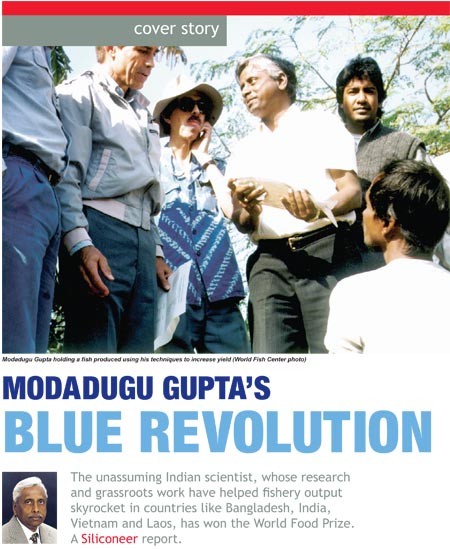





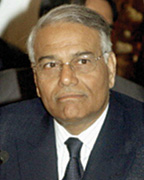
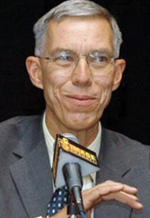
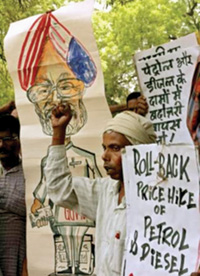
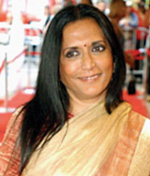
 Gautam Goswami (l), suspected of masterminding a multi-million dollar flood relief scam in of Bihar, has surrendered. He has been sent to judicial custody for 14 days.
  Defense Minister Pranab Mukherjee (r) has told Washington that proof of Pakistan’s commitment to end cross-border terrorism would be to launch joint operations along its border with India to hunt for terrorists.

 One of the attorneys we spoke to noted said that the Pakistani American community in Lodi feels “terrorized.” Residents believe that they are being interviewed and interrogated by the FBI and placed under automatic suspicion because they were Muslim. Pakistanis who attended the “Know Your Rights” trainings workshops held by CAIR in Stockton, Lodi, and Pleasanton were all subject to obvious FBI surveillance. One Muslim mother told an attorney that her young child was followed from her home to an ice cream store by an FBI car. Others complained that they were taken out of their places of employment by the FBI for questioning and then could not return because their co-workers became suspicious of them. The most shocking of these reports was that of an incident where the FBI stormed the Hayat home, when only women and children were present, by ramming down the front door and putting a gun to a woman’s head. When her eleven-year old daughter girl passed out, she was denied medical attention, a gross violation of human rights that outraged even the local emergency care personnel.
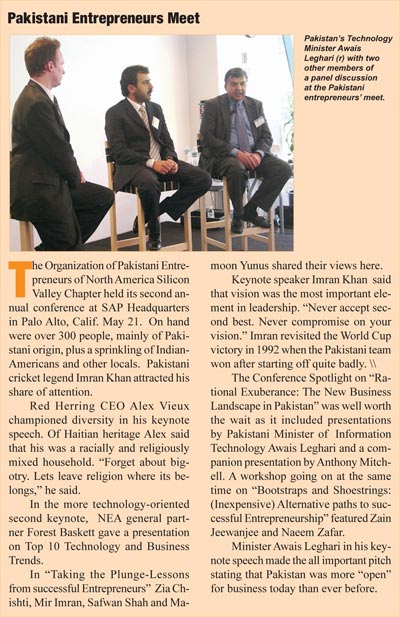

 Diagnosis of PCOS is made based upon a person’s symptoms, as well as lab tests to evaluate a woman’s hormone levels. Once the diagnosis of PCOS is made, a patient should also then have her cholesterol and glucose levels tested because of the increased risk of diabetes, heart disease and hypertension.

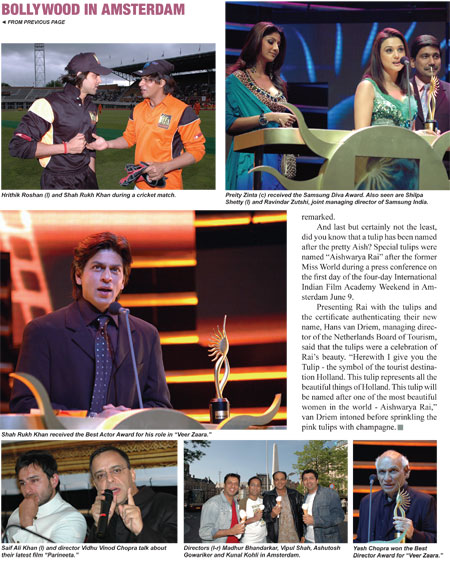
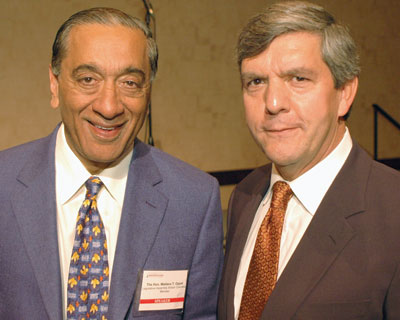
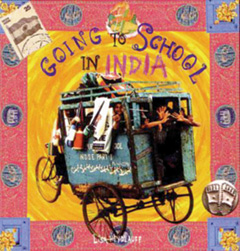 Shakti for Children, developer and co-publisher of multicultural books and resource guides for young readers since 1996, has announced the release of a new book, “Going to School in India” by Lisa Heydlauff, according to a press release from the publishers.



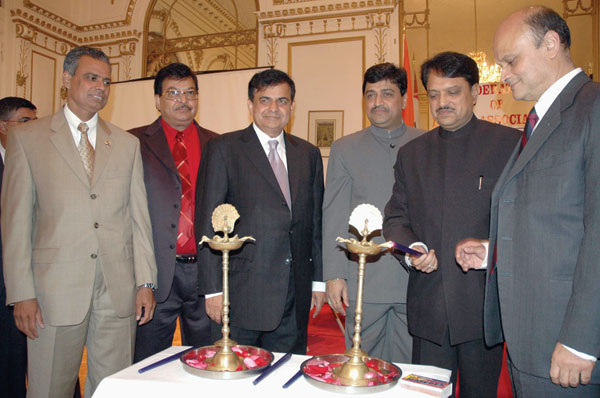
 IBM Corp. is adding 14,000 jobs in India after recently slashing 13,000 jobs in Europe and the U.S., according to a New York Times report.
  The outsourcing boom has created a hiring spree at India’s Tata Consultancy Services.
  Capitalizing on a growing local market and inexpensive labor, Intel plans to build a testing and packaging facility in India, according to an Indian government official.
  For 2005 Nissan added a few enhancements to the Murano, some of them are cosmetic, and some of them to add conveniences. Three new exterior colors have been added to the selection, and the S models are now available in both 2WD and AWD configurations. A side curtain air bag with rollover sensor is now standard. Nissan has also added five packages: a Convenience Package that provides drivers with a 10-way power seat and power lumbar feature, as well as adjustable pedals; a Technology Package with DVD-based navigation system and RearView monitor; an SE Leather Package with leather seats and a four-way power passenger seat; SL and SE Touring Packages that adds Intelligent Key to the list of features; and the SL Leather Package, which adds optional wood trim with the choice of a “Café Latte” colored interior.
 Ace filmmaker Sanjay Leela Bhansali barely has had time to revel in the critical acclaim or that lovely moolah from his unusual film Black. The film may yet live up to its name as far as he is concerned, with Film City slapping a whopping Rs. 60 million lawsuit on him.
  How nice to learn things are looking up for our pretty Ash. Did you know that according to an Internet survey and Web search statistics, Aishwarya Rai is one of the most searched celebrity on MSN the world over?
 Garam Dharam’s little princess has grown up to be quite a hot little star, and now she is beginning to look sharp. Esha Deol has shaped up, and Bollywood gossips are at it again.
  Bollywood is a male bastion, and nowhere is it evident more than in directing. While you’ve had women directors coming up lately, it’s been tough going.
 She’s back in the news again. Pakistani film star Meera , who’s debut in the Bollywood movie Nazar created a sensation surrounding a rumor of a kissing scene and the resulting outcry in her country. This time, happily, it’s for more mundane reason.
  He made the Himalayan country popular to millions of Indians, now it’s the country’s turn to honor evergreen hero Dev Anand.
  It is a strange marriage we have at Merchant Ivory,” film producer Ismail Merchant once said. “I am an Indian Muslim, Ruth is a German Jew, and Jim is a Protestant American. Someone once described us as a three-headed god. Maybe they should have called us a three-headed monster!”
 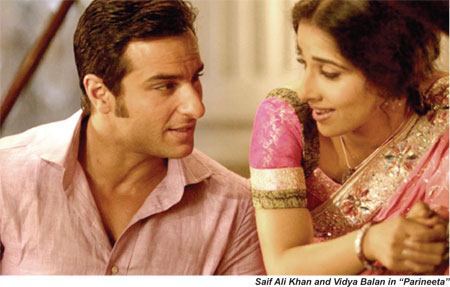 Shekhar (Saif Ali Khan) and Lolita (Vidya Balan) are neighbors who have grown up as childhood friends, and at some point mutual affection blossoms into love. Lolita is an orphan who lives with Gurcharan’s (Achyut Poddar) loving family.
 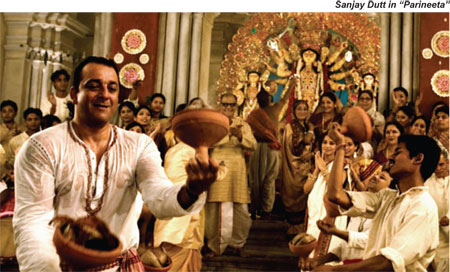 The film also triumphs because of the superb performances the filmmakers manage to extract. Saif Ali Khan supersedes past triumphs like Dil Chahta Hai and Ek Hasina Thi — no mean achievement, and Sanjay Dutt is also pretty good. The supporting cast do their work well, especially Sabyasachi Chakraborty.