 !-- Start Alexa Certify Javascript -->
|
|||||||||||||||||||||||||||
|
|||||||||||||||||||||||||||
|
|
|||||||||||||||||||||||||||
|
|||||||||||||||||||||||||||
|
|
|
|
|
|

MAY 2005 |
MAIN FEATURE |
||||||||||||||||||||||
|
PUBLISHER'S NOTE:
 Although India has hit the headlines all over the world with its prowess in information technology — and currently in its skill in attracting back office work and call centers — it’s easy to forget amid the hoopla that the beneficiaries of this boom are a tiny sliver of India’s privileged and English educated. Then what of the vast millions who live in India’s villages or, for that matter, city slums? Are they going to fall by the wayside as the Indian IT juggernaut merrily moves along? Educator and researcher Sugata Mitra has come up with an exciting model to bridge the digital divide: Just give the kids a computer and let them learn on their own. His own study shows that in a matter months, even illiterate kids can teach themselves basic skills of computers without any sort of adult supervision at all. He must be on to something, because the World Bank has jumped on the bandwagon, providing him with financing. Now, 75 computers serve 7,500 kids in free public kiosks. Our cover story this month has details. MAIN FEATURE: Hole in the Wall: Computers for Kids - A Siliconeer Report When the idea of educating underprivileged kids comes up, most people are thinking basic reading and math skills. Not Sugata Mitra. This scientist believes communities can go a long way towards bridging the digital divide by simply exposing kids to a computer. Mitra has set up public kiosks for kids with state-of-the-art computers which kids can explore completely on their own with amazing results: In nine months an entire group of children in a village can reach the level of an office secretary, which means they can drag and drop files, they know downloading, they can play video and audio and they can surf the Internet. A Siliconeer report.
“Groups of 6 to 13 year old children do not need to be ‘taught’ how to use computers,” says the Web site for the innovative project “Hole in the Wall.” “In experiments conducted in India since 1999, it has been shown that children can self-instruct themselves to operate computers.” Mitra says the kids can do it regardless of their educational background, literacy levels in the English language or any other language, social or economic level, ethnicity and place of origin or geographic location. He calls it Minimally Invasive Education. After his initial experiment, currently 75 computers are serving 7,500 children. Computers have been made available in free public kiosks in the states of Uttar Pradesh, Madhya Pradesh, Delhi and Maharashtra and abroad in Alexandria, Egypt, and Cambodia. The World Bank has pitched in, with funding from the International Finance Corporation. Mitra, who works at NIIT’s Center for Research in Cognitive Systems, began the experiment in Kalkaji, New Delhi. The experiment later continued by CRCS and through a company, Hole-in-the-Wall Education Limited, set up in 2001 for this purpose. HIWEL is a joint venture company between NIIT Limited and the International Finance Corporation, the industrial financing arm of the World Bank. Mitra said his studies show that an estimated 100 children can learn to do most or all of the following tasks in approximately three months, using the “hole-in-wall” arrangement with a single PC:
“However, we do not know yet, if these latter effects are universal and evident in all children,” the Web site cautions.. So how does this work? According to the Web site: “One child explores randomly in the GUI (Graphical User Interface) environment, others watch until an accidental discovery is made. For example, when they find that the cursor changes to a hand shape at certain places on the screen. “Several children repeat the discovery for themselves by requesting the first child to let them do so. “While in step 2, one or more children make more accidental or incidental discoveries. All the children repeat all the discoveries made and, in the process, make more discoveries and start to create a vocabulary to describe their experience. “The vocabulary encourages them to perceive generalizations (“when you right click on a hand shaped cursor, it changes to the hourglass shape for a while and a new page comes up”). “The group divides itself into the ‘knows’ and the ‘know nots,’ much as they did into “haves” and “have nots” in the past. However, they realize that a child that knows will part with that knowledge in return for friendship and exchange as opposed to ownership of physical things where they could use force to get what they did not have. “A stage is reached when no further discoveries are made and the children occupy themselves with practicing what they have already learned. At this point intervention is required to introduce a new ‘seed’ discovery (“did you know that computers can play music? Here let me play a song for you”). Usually, a spiral of discoveries follow and another self instructional cycle begins.” However, for the project to work, certain conditions are import0ant: The computer should be in an outdoor, public, and safe location. Children, and often their parents, are apprehensive of enclosed spaces such as closed rooms or “clubs.” “Locating computers indoors, even inside a school, is associated with regimentation, control, “studying” and other negatives associated with formal schooling. Locating a computer in a school playground, on the other hand, is ideal,” said the Web site. “Children should use the computer in heterogeneous groups. Since the MIE process depends on exploration and discovery, working in groups is essential. Collaborative constructivism is the main paradigm of MIE. Children teach each other very effectively and are also effective at self-regulating the process. That is how over 100 children are able to use one computer. “There should be no adult intervention or supervision. Adults should not use the kiosk. All activity should be monitored remotely to ensure that the kiosk is being used for the right purpose.” It costs about $1,900 for every computer put into a village, and Mitra believes it is worth it. The relatively high cost goes in maintenance as the technology has to withstand a tremendous pounding from the elements and the users. Of course, not everybody is convinced. Economist technical editor Tom Standage is skeptical of such projects. But after a trip to a village in Rajasthan, BBC Radio Four producer Mark Rickards found that the new computer for kids had children engrossed, and parents weren’t complaining either. “The Internet is the future,” says one elder, “and our children have dreams.”
INFOTECH INDIA  India’s Biggest Supercomputer... Cisco Eyes SMB Market ... $6 Billion Deal for Boeing ... HCL BPO to Employ 40,000 ... Bharti Launches Service in Salem ... Israeli Firm, IndiaGames, Sign Accord ... Nanotech Center in Madras Varsity ... CARTOSAT-1 Launched ... TRAI Order Quashed ... New Asian Era — Here is the latest on information technology from India India’s Biggest Supercomputer The Institute of Genomics and Integrative Biology has decided to set up the country’s biggest super computer with 4 Tera flop peak capability making way for India to join the world’s top league in life science supercomputing. “IGIB — a constituent laboratory of Council of Scientific and Industrial Research — has decided to set up country’s biggest super computer with 4 Tera flop peak capability with the help of Hewlett Packard,” IGIB director Professor. Samir K Brahmachari told reporters here April 28. With the powerful 4Teraflops HP Cluster Platform supercomputer, the institute will get a boost to conduct research which could lead to the development of new technologies in various areas of life sciences, he said. “The platform provides a scalable architecture that allows us to complete large simulation experiments such as molecular interactions and dynamics, virtual drug screening and protein folding in far less time,” he said after signing an agreement with Hewlett Packard. The platform allows the researchers to quickly develop complex bioinformatic algorithms, facilitates easy sharing, pinless adoption and joint collaboration with the best tier institutions, CSIR director Dr. R.A. Mashelkar said. Under the strategy, Cisco will develop sub-vertical specializations such as networking solutions for SMBs in textiles, engineering, auto-components, he said. Dalal said Cisco’s “go-to-market strategy” was aimed at tapping the fast-growing sectors of auto component manufacturing, retail, textile and garments. “SMBs in these sectors are finding an increased need to adopt advanced inter-networking and telecommunication technologies such as VoIP (Internet telephony), IP-based video conferencing and Internet applications to stay competitive. “At Cisco, we are looking to tailor-make solutions that suit the business needs of these verticals, thus customizing our approach in every market,” he said. Dalal said Cisco was concentrating on 50 towns and cities in India, whereby its officials would identify re-sellers of networking technologies to SMBs in these places. The 777-200 LR medium capacity ultra long range aircraft will seat 250 in a three class configuration and is presently undergoing test flights while the 777-300 ER medium capacity long range 350 seater is in service with several airlines. The Boeing 787 Dreamliner with 25 percent fuel efficient engines will seat 250 in a two class configuration and is expected to enter commercial service in 2008. On the controversy generated by Airbus regarding alleged changes made after the issue of the request for proposal, Air-India said no changes whatsoever were made after issue of the RFP. Among the 40,000 people, only about 3,000-4,000 employees will be working outside India and the remaining staff will be based at Indian cities. Addressing an international conference on “Emerging Opportunities in Infrastructure for IT/ITES Services,” organized by Infratech Infrastructure services, he said revenue of the BPO arm is expected to grow by nine times by 2009. The current revenue of HCL BPO is $100 million. Quoting a McKinsey report, he said the BPO sector was expected to employ about 800,000 people in the next 3-4 years and about 120 million sq ft of space would be created for IT/ITES sector. “Last year we added about two lakh ft of space and this year we will add three lakh sq ft,” he added. “With the launch of services in Salem, Airtel broadband and services has expanded into eight cities in Tamil Nadu and Pondicherry,” said Deepak Pande, chief operating officer, Bharti Infotel Ltd. In Tamil Nadu, Airtel broadband and telephone services are currently available in Chennai, Coimbatore, Madurai, Tirupur, Vellore, Hosur and Pondicherry. “Airtel has redefined paradigms in all its regions of operation and with a range of customized and comprehensive communication solutions, Salem will be no different,” he said, in a press release here. In Salem, the broadband and telephone service operations will be offered in Fairlands, Four Roads, Shevapet and Bazaar areas,” the release said. Pande said Bharti has partnered with telecom majors like Siemens, ECI, Lucent and Duraline for its network. The attraction of the Israeli company’s offering lies in the multiple user aspect of each game, the report said. Indiagames is one of the leading global mobile content publishers and develops and markets computer games designed for a range of platforms like the Internet, PCs, palm computers, game consoles and cell phones. A proposal to this effect was awaiting clearance from the Tamil Nadu government, university vice-chancellor Dr. S.P. Thyagarajan told reporters. The centre would offer post-graduate and doctorate programs in this area, he said. Referring to the memorandum of understanding entered with two other oldest universities in the country, Mumbai and Kolkata universities, he said the nanotechnology and sciences program there would be a collaboration between the three universities. The three universities April 27 signed an MoU in the presence of President A.P.J. Abdul Kalam. Thyagarajan said under the collaboration, Madras University will concentrate on nano-biometrics, Kolkata on nano-chemical materials and Mumbai on nano-nuclear materials. He said joint degree program between Mumbai and Madras universities would commence from academic year 2005-06, while joint programs between Madras and Kolkata varsities would begin from the next academic year. As part of the collaboration between the three universities, which would complete 150 years of existence in 2007, the first initiative was starting of a tele-education program for which Rs. 50 million each as the first installment has been granted by the University Grants Commission. The 1,560-kg CARTOSAT-1 along with 42.5 kg HAMSAT was launched by the Polar Satellite Launch Vehicle from the newly set up state-of-the-art second launching pad at Indian Space Research Organization’s Satish Dhawan Space Centre, Sriharikota, Andhra Pradesh May 5. India’s 11th remote sensing satellite, CARTOSAT-1, a Rs..2.5 billion project of ISRO, will be used for cartographic applications and the data from CARTOSAT-1 is expected to provide enhanced inputs for stimulating newer applications in the urban and rural development, land and water resources management, environment impact assessment and various other geographical information system applications. HAMSAT is expected to meet the long-felt need of the amateur radio operators in the South Asian region who possess the required equipment and operate in the UHF/VHF band based satellite radio communication. This is the first time ISRO launched “two Indian satellites” in one mission. The new second launch pad at the SDSC has been constructed at a cost of Rs.4 billion. It has been built to accommodate all the vehicles of ISRO, including the advanced launch vehicle to be built in the next decade and beyond and it is expected to increase the annual satellite launch frequency. TRAI had lowered international bandwidth prices by up to 70 percent projecting that the move would help tariff reduction of Internet and broadband services besides boosting their penetration. Setting aside TRAI’s order, TDSAT asked the regulator to have a re-look at the entire exercise and share the full facts and basis of calculation with VSNL in a transparent manner. VSNL, a major bandwidth provider, had challenged the order saying international bandwidth prices cannot be looked at in isolation and questioned TRAI’s methodology on arriving at the price ceilings. According to VSNL, the price ceiling set by TRAI was below the basic cost of the company. When contacted, D.P.S. Seth, member, TRAI, told reporters, “We shall study the order once we receive it and take appropriate action.” In a joint statement signed April 29 by Prime Minister Manmohan Singh and visiting Japanese Premier Junichiro Koizumi, the two leaders said both sides would take several measures for tapping the complementarities of the two economies and enhance bilateral trade. India, the largest recipient of official development assistance from Japan, confirmed that the ODA will continue to be utilized to support the country’s efforts at accelerated economic development, particularly in infrastructure. The two leaders directed the India-Japan Study Group, which is to be launched by June this year, to submit its report within a year, focusing on measures required for a comprehensive expansion of trade in goods, services, investment flows and other areas of economic relations between the two countries. The two countries also called for a roadmap for increased ICT cooperation, including the idea of an IT databank.
CINEMA
Cannes Tribute: Honoring Satyajit Ray - By Dilip Basu 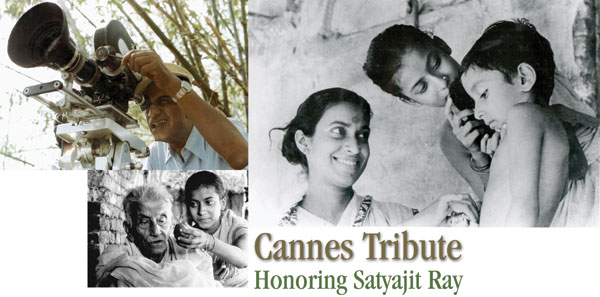 Clockwise from top left: Filmmaker Satyajit Ray; Scences from "Pather Panchali" Satyajit Ray’s Pather Panchali will kickoff the Classics Series in Cannes this year. Ray aficionado Dilip Basu reflects on how this came about and ponders on some darker moments of this timeless classic. Pather Panchali, Satyajit Ray’s trailblazing first film, returns to Cannes this May. It will kick off this year’s Cannes Classics series May 12. A fresh-cut restored print, with English and French subtitles, will screen at 5:00 p.m. at Salle Bunuel on the fifth floor of the Palais de Festivals. The Classics series was introduced by Thierry Fremaux, the artistic director of the festival, and Van Papadopopoulo, the director of Cannes Classics, in 2004 to showcase rare and classic films on its prestigious spotlight. This year Cannes Classics will focus on the preservation mission of the Film Foundation established in New York by Martin Scorsese along with Woody Allen, Francis Ford Coppola, Stanley Kubrick, George Lucas, Sydney Pollack, Robert Redford, Steven Spielberg, Robert Altman and Clint Eastwood. Their mission is to restore and preserve works “so as to assure the future of the cinema of the past.” Representing this mission the two films chosen for screening are Pather Panchali (1955) and Jean Renoir’s The River (1951). Both have been restored at the Academy of Motion Pictures Arts and Sciences Archives. The choice of Pather Panchali for the special honor is obvious enough: it is its fiftieth anniversary; it won its first international award in 1956 in Cannes; it is regarded by film buffs as one of the world’s greatest. Ray aficionados the world over will greet and rejoice the news of its selection with pleasure and pride. The celebratory moment should not obscure the darker side of the story of the making of the film, and its near extinction.
Satyajit Ray’s reputation further surged with the completion of the Apu Trilogy (Pather Panchali, Aparajito and Apur Sansar) (1959). By the time of his death in 1992, he had made some 29 features and 7 documentaries and shorts. A few weeks before he passed away, he was honored at the 64th Academy Awards with a Life-time Achievement Special Oscar, a rare honor for a director. I was appointed a consultant for Satyajit Ray Remote by the Academy for producing Ray’s Oscar acceptance speech from his hospital room in Kolkata. It was shocking to the producer of the Academy Awards show as well as to Audrey Hepburn, who was asked to do the honors for Ray, that very little material was available on Ray’s impressive oeuvre that could be included in the montage on Ray’s films for showcasing on the Oscar night. Ray’s films were clearly a prime candidate for a major restoration project. I was invited by no less a person than Audrey Hepburn to help facilitate it. In brief, with the help of the Ray family and Ray admirers in India, The Ray Society in Kolkata was established in 1993 and its “sister” in California where I live and teach — the Satyajit Ray Film and Study Collection (Ray FASC). The Ray Society invited Ismail Merchant to become a trustee. Merchant offered to restore six Ray films and obtain rights to show them in North America. He got the original negatives, took them to a London Lab for restoration where tragically they burned to ashes in a major film fire. These films included the Apu Trilogy.
The print that screens May 12 at Cannes is the most recent upgrade at the Academy done by Michael Pogorzelski, the AMPASA director and Joseph Lindner, the coordinator of its Ray restoration project . I continue to coordinate the restoration project among The Ray Society and The Ray FASC and AMPASA. Tom Luddy, my good friend and director of the Telluride Film Festival, connected me to Thierry Fremaux, artistic director of Cannes. Fremaux liked the idea of showcasing Pather Panchali during its fiftieth anniversary. However, he wanted to be assured of the quality of the print. He came to California in early April and we arranged a special screening of select scenes of the restored print at AMPASA. He was pleased with what he saw. Fortune favored Pather Panchali soon after it was released in Kolkata. Satyajit Ray later recalled that a giant owl perched itself on the window sill of his study a day after the release of Pather Panchali and continued to stare at him for several days on end. The owl is goddess Lakshmi’s pet and Lakshmi is of course the goddess of wealth. In its fifty-year odyssey, there is little doubt that Pather Panchali has enormously benefited from Lakshmi’s blessings .It still remains India’s biggest never-ending foreign exchange earner among films. |TOP| Outsourcing Digest: Siliconeer presents of the latest news from the world of outsourcing.  Outsourcing Losing Luster? Dell to Employ 10,000 Pesticide R&D More High-end Work Now, Even Hollywood eBay Mulls Outsourcing Outsourcing Losing Luster? Very few organizations have realized the benefits of outsourcing with companies now returning projects back in-house, according to a new study by Deloitte Consulting. The study, “Calling a Change in the Outsourcing Model,” surveyed 25 large organizations with combined outsourcing contracts valued at $50 billion. A whopping 70 percent reported negative outsourcing experiences and many companies are now taking a more cautious approach to future projects. Even more drastic is that the study found 25 percent of respondent companies have taken outsourced functions back in-house with nearly half claiming the practice hasn’t delivered the cost savings anticipated. “Outsourcing as we know it will increasingly lose luster,” the report concludes. For outsourcing to really make sense and deliver savings, Deloitte senior strategy principal Ken Landis said companies need to be far more strategic. Management can also be a big problem, the study found, with 62 percent of the companies surveyed saying that outsourcing was a larger management drain than expected. Last year, Dell had shifted back some of the technical help services to the U.S. from India, giving boost to the anti-outsourcing campaign. “It was a failure to manage and service our rapidly growing resources in India. That was read by some as a lack of confidence in India. It was an over-reaction.... But we are happy now,” said Dell president and chief executive officer Kevin Rollins, at a press conference in Bangalore April 29. Rollins added: “The talent base here (India) is great and second to none. We will be 10,000 strong in the country by end of this year. We also look for having presence in more cities.” Currently, Dell has manpower of 7,000 spread across Bangalore, Hyderabad and Chandigarh, offering multiple services to various company’s business segments, including sales, customer care, technical support, e-mail support and shared services. The centers are part of Dell’s global network of about 50 contact centers around the world. With the WTO’s patent regime coming into force, “several multinationals want to put their research and development centers in India,” said Salil Singhal, chairperson and managing director of the Rs 3.25 billion PI Industries. “Syngenta, an agribusiness major, has already announced plans and a few others are following suit making good use of Indian scientific talent,” Singhal told the agency. Set up four decades ago, PI Industries has two production units in Rajasthan and Gujarat. They conform to global standards with a major focus on custom manufacturing for outside sources. The company invests around Rs. 200 million annually on research and development activities. “Several Indian companies are working with multinationals to develop their molecules in India. We are one of them,” said Singhal, who is also chairman emeritus of Crop Care Federation of India, an industry body representing over 90 pesticides companies. The estimated Rs. 40 billion Indian pesticides industry is currently exporting Rs.25 billion worth of products to about 120 countries including U.S., Japan and the E.U. With the Bangalore centre becoming operational, it would be GSK’s seventh after two groups in U.S., two in the U.K. and one each in Canada and Italy. “The India centre will not service country (India) needs but will service the parent company’s global work,” said Penny Clarke of Biomedical Data Sciences GSK. GSK plans to house both the CDMCI and Biomedical Data Sciences India in Bangalore as the city has a huge number of statisticians, biometricians and clinical data reviewers and scientific writers, said Ashwini Mathur, general manager, GSK pharmaceuticals. Barrie M. Osborne, who also produced The Matrix, said here that he was in touch with some Indian studios working in the field of animation and digital special effects for undertaking specific works. “We might collaborate with some of the Indian studios in the near future for doing digital visual effects and animation work,” Osborne said. Osborne is visiting India for the first time “I think the talent is here. The artistry and rich cultural heritage of India offer a great opportunity for the Indian animation industry to work for Hollywood,” Osborne said. Expressing the hope that full-length three dimensional (3D) animation films would be produced in India, Osborne said with the huge talent pool in the subcontinent it was possible for international productions to take work from them to produce great films. According to industry estimates, the Indian animation sector has the potential to generate about $1.5 billion annually. N. Madhusudhanan, the national award winner in the visual effects category for the Tamil film Alavandan, said the Indian animation sector had the potential to replicate the success of the IT services sector. “It will not be long before we can start seeing most of the Hollywood work moving to India. We have already started doing some work for Hollywood films,” Madhusudhanan said. “In the next few quarters, we will initiate some process,” Avnish Bajaj, country manager of eBay India, formerly Bazee.com which he headed before being acquired by U.S.-based world online marketplace e-Bay, told reporters. eBay was aware of the benefits of India’s talent pool and it was evaluating the “best functions” (to outsource from India), he said. eBay India currently employs 120 people. Bajaj said last month Baazee’s technology platform was integrated with eBay’s platform, giving access to Indian users to eBay global marketplace.. CYBER CRIME: Digital Heist: The MphasiS Swindle By Siddharth Srivastava 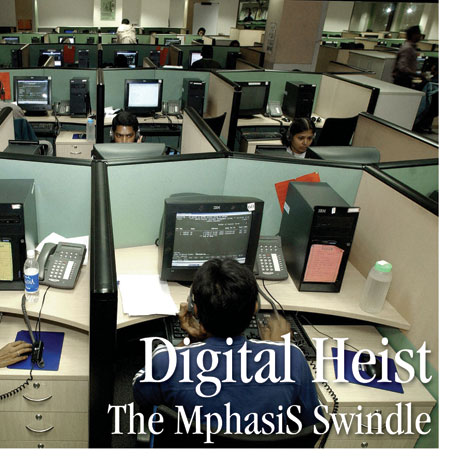 Sweet-talking crooks in India, in concert with corrupt former U.S. bank associates, stole half a million dollars from unsuspecting U.S. account holders in one scam, writes Siddharth Srivastava. Sweet-talking crooks in India, in concert with corrupt former U.S. bank associates, stole half a million dollars from unsuspecting U.S. account holders in one scam, writes Siddharth Srivastava.When you thought the reputation of Indian call centers couldn’t sink lower in the U.S., that’s exactly what happened. On top of the hostility to these establishments — business process outsourcing is the official term — is the new and real fear of privacy security. These fears were given a big fillip by a remarkable case of what could be called a digital swindle. A group of Indian call center employees sweet-talked American customers into disclosing what should be a well-kept secret — codes and passwords for their credit cards and bank accounts. The swindlers then opened fictitious accounts where money to the tune of half a million dollars were transferred. The plan was executed by former employees and a woman worker of MphasiS, a leading business and process outsourcing provider with help from former bank employees in the USA. The money was transferred into fake accounts from cyber cafes in Pune (a BPO hub in Maharashtra), before the police, following up on a complaint by Citibank account holders in the U.S. that was forwarded to Mphasis, swooped in. Crooks these days use two methods to get confidential personal information. The technique used by the call center executives is called “social engineering,” a fancy name for plain, good, old-fashioned sweet talk wherein the customer is befriended and critical information unsuspectingly garnered. The other method is called “phishing,” a digital route wherein bogus e-mails are sent to an account holder asking him to fill in details about his account and passwords for verification. People have become more wary about the digital format due to frauds in the past. MphasiS vice-chairman Jeroen Tas said in a statement: “There is no evidence of a breach or audit failure in the processes or systems employed by MphasiS and its client as it appears to be a case of password/PIN sharing and compromise. However, in the light of this incident, we are conducting full external audits on processes and compliance.’’ Interestingly, the heist was not committed by nerds out on an ego trip to achieve a technological feat considered impossible to achieve, the way it is with virus writers. There was no infringing of firewalls or decoding encrypted software. The crooks simply identified the right personnel to execute the job smoothly and share the booty after the passwords were accessed. The crime was perpetrated by young people, both Indian and American (former bank employees), some with MBA degrees, who coaxed sensitive information out of unsuspecting clients. The five who have been caught are under 30, with three of them below 25, from middle-class families with no criminal backgrounds. These youngsters who form the core of the young Indian BPO industry, are given to flashy lifestyles and are at the vanguard of the consumerist culture pervading urban India. Recently two young BPO workers committed suicide (one shooting himself and a girl on a drug overdose) in New Delhi, the reason ostensibly being the inability to cope up with stress of work and matching lifestyles. Indeed, the MphasiS-heist is the kind of attention that India’s BPO could have done without, given the antipathy that exists in the West against India’s back end office operations. The last thing that India needs is digital fraud as a further tool in the hands of the implacable enemies of outsourcing. Financial frauds happen across the world to the tune of billions of dollars every year, so it would be unfair to pin down the Indian BPO industry only. Earlier this month hackers stole details of 1.4 million credit cards of a large U.S. retail chain. The police in New Delhi recently arrested two people in possession of details of thousands of credit cards. But this is the first instance of such fraud in the still incipient Indian call center and outsourcing industry. The MphasiS crime been labeled by the Indian media as the country’s “first outsourcing cyberfraud.” India needs to be extra cautious, with a strict deterrent mechanism in place. In times of excessive competition, image counts for a lot apart from protecting consumer/customer interests. “Credit card fraud is a worldwide phenomenon but because it happened in India, which has emerged as the most preferred BPO destination, this incident was a bit over-hyped,’’ an MphasiS spokesperson has said. A prominent voice from the Indian BPO industry, requesting anonymity, said: “We need to create a robust framework of processes which ensures that minimal needed information access is given to the minimum number of people.” There is a lot at stake. A recent McKinsey report on the Information Technology enabled sector has revised the previous figure of $17 billion to $21-24 billion by the year 2008 with India slated to garner 25 percent of the offshore market, with the U.S. the largest source providing 60 percent of business. Estimates suggest that 200,000 to 400,000 jobs have moved from the U.S. since the outsourcing trend began in the 1990s, which is still a fraction of 138 million jobs in the U.S. The most high-end projection is by Forrester Research—a loss of 3.3 million jobs by 2015, including 1.7 million back-office jobs and 473,000 IT jobs. The ultimate protection, however, is for the customer to be vigilant, whether in India or abroad. Giving out private information without checking out who is asking for it is simply asking for trouble. Whether it’s a Western twang or Indian accent, one has to guard against danger that can lurk behind the sweet voices stationed anywhere in the world today. - Siddharth Srivastava is India correspondent for Siliconeer. |TOP| CULTURE: The Big Bangla Bash: Second Indo-Bangla Awards - A Siliconeer Report A virtual who’s who of artists from Kolkata and Dhaka performed in two U.S. shows. A Siliconeer report.  Usha Uthup (2nd from l) sings as other Kolkata stars cheer her. Usha Uthup (2nd from l) sings as other Kolkata stars cheer her.The two events were a Bengali’s dream come true. It’s as if a virtual who’s who of Bengali performing artists had been airlifted into California, that too from both Kolkata and Dhaka. Bay Area based Kala Music and Play hosted two mammoth events for the International Indo-Bangladesh Kala Music Awards April 23 in Hollywood for films and April 24 at Chabot College in the San Francisco Bay Area for television and music. This was their second, expanded version of the event they started last year in New York. Never ever have so many Bengali stars been brought together in one stage, not even in West Bengal or Bangladesh.
From Kolkata came the likes of Mithun Chakraborty, Rupa Ganguly, Sabyasachi Chakraborty, Chiranjeet, Mamata Shankar, Indrani Halder, Gautam Ghose, Sandip Ray, Usha Uthup, Arati Mukherjee and Indrani Sen, from Dhaka came Runa Laila, Subhash Dutta, Kumar Biswajit, Syed Abdul Hadi, Gazi Mazharul Anwar and Chashi Nazrul Islam. The events themselves tried to recreate some of the glitz of big American awards ceremonies—dance acts were an East-West fusion with special lighting effects, nominees/ nominations were announced with brief audio visual introductions projected on a movable screen preceded by pretty snazzy graphics and music. The show had its flaws, to be sure, and the most egregious among them was the penchant of pretty much most of the singers to lip-synch their popular hits rather than actually perform. Surely this is a grave injustice on the audience who paid good money to see their favorite singers perform.
Debu Ghosh, whose organization hosted the events, is determined to continue the annual Bangla bash. His aim is to promote Bangla culture globally, and Ghosh says he is willing to take the show out of the U.S. after a couple of years to the U.K., the Middle East and even Europe. Given his track record, only a fool would dismiss his grand dream, however implausible it may sound today. So, notwithstanding the shows’ flaws, here’s a hurrah for the gutsy event manager who not only has the fearlessness to dream and think big, but also the chutzpah to make it happen.
SPORTS: Ball 1, Ball 2, Howzzat? Cricket in Saratoga - By Aroon Vijayakar A childhood passion for cricket followed him from Bangalore to Saratoga, Calif., where he and his brother Nikhil have started the high school cricket club, writes Saratoga High sophomore Aroon Vijayakar.
This was perhaps the first time that I realized how much cricket meant to me. As it is, it was an honor to play on this magnificent field for my school team; the same field that players like Kapil Dev and Rahul Dravid had performed on. But to get someone bowled on this pitch with an extra punch as the stump flew out of the earth just confirmed my feelings. I loved cricket. When I was eleven, my family moved back to the United States. I couldn’t bring everything that I had accumulated over five years in India, but the one thing that I wasn’t willing to leave behind was cricket. I had dreams of running a cricket camp for my new American friends and visions of interschool matches. At the same time, that I would be successful was inconceivable. How would I inspire my friends to appreciate a game that is so similar to the popular baseball? Who would have thought that, nearly five years later, my friends would be more excited than me about the India vs. Pakistan series. The first innings. As I entered the sixth grade in Redwood Middle School, I hoped that my passion for cricket would rub off on others. Not so simple. All I heard about in school was baseball, this odd evolution of cricket. I would tease my friends about how baseball players were so weak that they needed gloves to catch the ball or I would suggest that they make the bat bigger so they could actually hit some shots. I casually introduced them to cricket. But it seemed they had no clue. They still thought I was talking about cricket. When I started eighth grade, my brother Nikhil was a junior in high school. He shared my inner passion for cricket. It’s not fair that he got placed earlier in the lineup and reached high school, where he had the opportunity to start a cricket club, long before I did! That was when he founded the Saratoga Cricket Club at Saratoga High School. At first, about 10 students signed up for this club. We then found the perfect pitch: the outdoor basketball courts in my middle school. Okay, it wasn’t so perfect, but it was all we had. I was granted an honorary membership to the club, as an assistant coach to Nikhil. In any case, there was no way that he could keep me out of this. I smelled a revolution. We unearthed our dusty cricket kits and found our old bats that we could use. Of course, using a leather ball was still out of the question until the basics of cricket were taught. We settled on used tennis balls. Sunday afternoon practices began. Dedicated members were still Nikhil’s friends. The guys picked up on the basics surprisingly fast and we even started having practice matches. But the cricket bat would still be flung to the side after a hit and they would still ask about “foul balls.” In two years we had managed to expand our membership to about 15 guys which included my freshman classmates. I was finally a full time member with total voting rights. We had upgraded to a baseball diamond (we could just imagine those poor baseball players peering curiously into the three mysterious holes scarring their beloved turf). Next we played two memorable cricket matches against the adult-run California Cricket Academy. The CCA coaches looked on aghast at our unconventional style of play and attire. It was reminiscent of the motley Lagaan team. As much as I hated the idea of my brother going off to college, I couldn’t wait to fill his shoes as the captain. By the end of Nikhil’s senior year, our club held elections for the new officers. In retrospect, I need not have been so nervous. I was unanimously elected as president of SCC for the ’04-’05 season. This was probably our year of exciting discovery. Besides finding that Homestead and Monta Vista High Schools had cricket clubs as well, we discovered that the Bay Area was in fact dotted with cricket pitches. Blackford High School became our home ground. We lost our first leather ball match against CCA by three runs last year in October. However, more recently, we teamed up with Homestead and Monta Vista to play a tournament against CCA. After losing one match, we worked hard for a week and came back to thrash the opposition in the second match. However, the club’s achievement cannot be measured by our record. Perhaps our single most important achievement has been introducing American students to the sport, and showing them how much fun cricket really is. While I initially expected all of our players to be Indian-American, SCC has had 3 Caucasian members, 2 Persian members and 2 Chinese members. In fact, one of our opening batsmen is a Caucasian, who scored 26 runs for us in our first match. This definitely proves the success of our club; reaching out to the local community. Now, my goal is to help make cricket an official school sport within the next few years. The challenge was and will continue to be to maintain the members’ interest in SCC. Like the game itself, there are always highs and lows, but that powerful memory of that triumphant afternoon at Chinnaswamy Stadium will always keep me fired up about cricket. - Aroon Vijaykar is a sophomore at Saratoga High School. |TOP|
HEALTH CARE: A DOCTOR'S WORD
The Medicine Cabinet: Spring Cleaning for Health - By Deborah Gould, MD  When cleaning home in the springtime, take a look at the medicine cabinet, advises Deborah Gould, MD. When cleaning home in the springtime, take a look at the medicine cabinet, advises Deborah Gould, MD.As people go through their houses to clean out the vestiges of winter in the springtime, everyone should consider what’s in their medicine cabinet. I suggest to the families I see at my clinic that they make a once-a-year effort to go through the household items that are important to their family’s health: Medications. Clean out your medicine cabinet. Medications have a shelf life just like foods do. When they reach the date of expiration, you need to throw them out. The reason is that as the product degrades, your liver and kidneys may not be able to metabolize it properly. A drug that was once helpful could now be ineffective or even harmful. This rule applies not only to prescription drugs, but also drugs you buy over the counter, such as acetaminophen and other pain relievers. You can find expiration dates in places like the label, the bottom of the bottle or at the base of the tube. Makeup. For women, you need to go through your makeup. Women tend to keep their makeup for a long time, even years. Just like medicine, makeup doesn’t last forever.
 Makeup that you use around your eyes should be replaced often. Replace mascara three months after you buy it. If it becomes dry, throw it away. All-natural products, those that have plant substances, may have shorter shelf life. Toss unopened packages after about 18-24 months. Don’t keep opened packages for more than three months. Powders, foundations and other topical ointments can be kept a little longer after they are opened. I recommend throwing those away after six months. To take the first step toward making sure the medicines you and your family use are safe, talk to your doctor. |TOP| CAREER DEVELOPMENT: On the Job Skills: New IT Programs - A Siliconeer Report Santa Clara Adult Education offers two job-oriented programs that provide a real-life corporate working environment. A Siliconeer report.  View of the class room at the Santa Clara Adult Education Center where Mastermind holds its classes. Seen in the picture is Mastermind's Deepak Vyas (center). Santa Clara Adult Education and Mastermind Educational Services have joined hands in providing specialized trainings at non-profit prices to the community. Two unique job-oriented programs at Santa Clara Adult Education launched this spring provide candidates with real-world skills of systems administration and web technologies. The programs have been carefully crafted to enable job seekers understand what it takes to don the role of a systems administrator or a web developer. The programs have been developed by Mastermind Educational Services Inc., a leading provider of UNIX and network security training. Mastermind CEO Deepak Vyas says that the programs fill the vital gap of providing the practical skills that employees look for. “Most employers face a common problem while interviewing candidates for systems administration or web development positions, as the candidates do not possess the necessary ‘hands-on’ skills required on the job,” Vyas said. “Though they have theoretical knowledge in the subject, they commonly lack practical hands-on skills which the job demands” Mastermind’s programs focus on setting up a network infrastructure for a simulated corporate environment that has multiple operating systems and has many different requirements. The training gives real-life experience in dealing with interoperating in such an environment, creating a domain structure, installing and compiling software for the development team, designing the backup strategy, configuring RAID, installing and configuring SAMBA, Email, FTP, DNS, Web services and network monitoring software. Deepak Vyas, the chief architect of this program, heads the systems administration workshop. Haricharan Ramachandra, who an enterprise application developer who provides Java trainings at Mastermind, heads the Web technologies job-oriented program. “The web technologies program gives participants an opportunity to develop enterprise web applications as a team working towards a common project, and creates an environment where candidates take up different role as team leaders, developers, test engineers, etc, and develop system specifications, design documents, test plans, to implement and deploy a real-time corporate portal,” says Ramachandra. REPORT: Sixer for Literacy: Kapil Dev in Bay Area - A Siliconeer Report Legendary Indian all-rounder and architect of the 1983 World Cup victory visited the SF Bay Area and helped raise $13,000 for Literacy India, which supports education for poor Indian kids. A Siliconeer report. 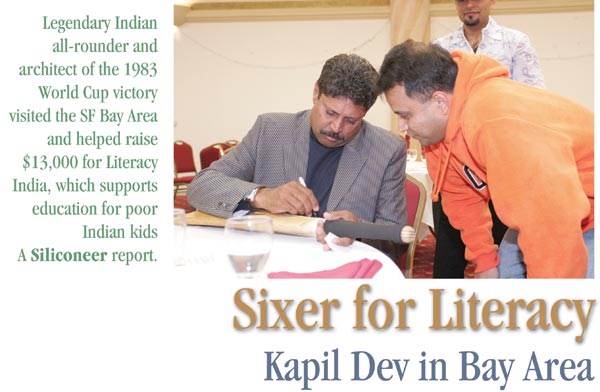 Kapil Dev signing a bat for a fan at a fundraiser in Fremont, Calif. The year 1983 may seem a long, long time ago, but you wouldn’t think so at all had you been present April 17 at the Golden Peacock in Fremont, Calif. When the legendary Indian cricketer Kapil Dev entered the auditorium, the entire audience of about 150 people cheered and milled around him as if his 1983 triumph of leading India to its only World Cup victory had happened yesterday. Kapil Dev may have been India’s indispensable pace attack for years, but he was never known to one of India’s more articulate spokespersons of the game. No matter. There is a fetching down-to-earth charm about this tall Haryanvi, his shy boyish smile, that has inspired enormous affection over the years, and it was evident in full force at the event. Kapil was here for a noble cause—he was here to help raise funds for a literacy program for underprivileged kids started by another remarkable woman—Indraani Singh. Indraani is Asia’s first Airbus 300 pilot, and brings a no-nonsense commitment to her Literacy India project. By the end of the evening, thanks to Kapil’s heartfelt pleas (“We don’t just need your money, we need your love and support”) and Indraani’s evident affection for the underprivileged, Literacy India raised donations and pledges of $13,000.
From five kids in 1996, Literacy India had grown to 350 children by March 2004, with more than 50 percent girls coming from nearby villages and construction worker’ slums, according to a Literacy India brochure. In eight years, Literacy India increased its reach from Ansal’s half constructed buildings and with two rooms in Chiranjeev Bharti School to Vidyapeeth Center in Chauma village, Palam Vihar, Gurgaon, Haryana, expanding to satellite centers (with the help of local village groups) in villages like Bijwasan, Caterpuri, Daulatabad, Sarai, Rajendrapark, Shankar Vihar and Ganga Vihar. “Children in any environment need affection, loving care and a sense of security besides food shelter and clothing,” the NGO’s Web site says. “In lower income groups, especially the underprivileged due to poverty, the mother is invariably working in odd jobs and seldom can devote time for the children, who fend for themselves or in the care of sibling brothers and sisters. A mother or a father figure is usually missing. We at Literacy India begin our work on this theme. We corset parents that since they cannot find the time sending children to our school, we will ensure that the child, especially girls, will be in tender and loving hands. Apprehension slowly turns into Hope as they start sending the child to school usually with a brother or sister to see what we are up to.” Depending on the age and whether the child has been to a school earlier, the NGO puts them in one of its projects. The first step is personal grooming. A new set of clothes, personal hygiene and cleanliness; a regular nutritious mid-day meal ensures freshness and energy for the child. Frequent visits by eminent personalities in the school help and inspire the children. “Entertainment learning is another novel way to reach out to these children,” the Web site adds. “Performing arts have always fascinated children, after all who does not aspire to be a film hero like Shah Rukh Khan or a heroine like Sridevi. Literacy India provides a platform for drawing out talent from these children so that they can even dream. Over 40 students participated in our production Alibaba aur Chalis Chor staged in Kolkata and Delhi and two children have shown an intrinsic artistic talent. Already one child has been selected and appeared in a nationally telecast teleserial. So it can happen even with the underprivileged-they need a helping hand and guidance.”
Kapil has supported Indraani in her efforts for years, she said. She recalled a time when she went to a dingy, smelly slum to clean it up. The local legislator went AWOL, but Kapil stood by her, and exhorted the slum dwellers to literally clean up their act. At the Fremont fete, he was equally passionate. “I’m a desi Jat,” he said with endearing modesty, explaining why he couldn’t make fancy speeches. But he did add that we all loved our country and wanted to do something for it. Between selling autographed bats and his autobiography “Straight from the Heart,” he managed to prove that when it comes to reach someone’s heart, one does not need fancy speeches: all you need to do, as Kapil did so well, is to talk straight from the heart. Interested readers can find more information about Literacy India at www.literacyindia.org. REPORT: Campaign for Oneness: Mahavir Mahatma Awards - A Siliconeer Report  (L-r) “Times of India” chair Indu Jain, Home Minister Shivraj Patil, Sri Sri Ravi Shankar and composer A R Rahman. (L-r) “Times of India” chair Indu Jain, Home Minister Shivraj Patil, Sri Sri Ravi Shankar and composer A R Rahman. The Mahavir Mahatma Awards was accompanied by the launch of the Oneness Forum which aims to unite global humanitarian organizations for collective action. A Siliconeer report. Indu Jain, chair of Times Group which publishes the Times of India, issued a call on everybody to unite in creating oneness not only in small communities but across the globe at the first national Mahavir Mahatma Awards recently in Delhi. On hand were spiritual guru Sri Sri Ravi Shankar, Vice-President Bhairon Singh Shekhawat, Home Minister Shivraj Patil, Defense Minister Pranab Mukherjee, Soka Gakkai dignitaries from Japan, industrialist B.K. Modi, Bollywood composer A.R. Rahman. “The purpose of the Oneness Forum is to unite global humanitarian organizations for collective actions to save and transform mankind by social, political and spiritual awakening,” said a press release from the Times Group. “The Mahavir Mahatma Awards are being conferred on youthful and active members of various socio-economic, spiritual and religious groups at ceremonies which shall be held at district, state, national and global levels.” “The forum is a helipad, a launching for everyone. Come let’s begin your campaign of oneness from here,” Jain said. “You can achieve anything you want if you help enough people to get what they want.” Sri Sri said: “Nature is diverse yet it is one. There is one human race, one truth and that’s why this Endeavour becomes significant.” “I am honored to get this award. I hope this Endeavour beings people together,” A.R. Rahman said. Expressing his father’s “lasting gratitude to (the) Times Foundation for conferring this award,” Hiromasa read out Dr Daisaku Ikeda acceptance speech. “Given the greatness of the two giants whose names adorn this award, its recipient bears an enormous weight of expectation for he or she must be actively engaged in the worthiest of endeavors to establish lasting peace for humanity.” COMMUNITY NEWS IN BRIEF: Actor Honored ... Writing Contest ... Festival of Cultures ... Asian-Indian-American Day ... Baisakhi at Gadar Hall Actor Honored
Raz has appeared in over 200 films and television shows. His recent appearances on TV have been in JAG, Strong Medicine, NYPD Blue, and Homicide among others. Raz has just wrapped up shooting for Big River a feature film in which he plays the leading role of Ali, a Pakistani man in search of his missing wife. He will also be seen in Albert Brook’s upcoming (yet untitled) film produced by Warner Brothers. Raz is currently in post-production on his own venture entitled The Gold Bracelet, a drama centered around a Sikh family set against the tragic events of 9/11. The film is slated to be released later this year. Entries must be short stories no longer than 1,500 words, double-spaced, typed and accompanied by an application, which can be printed out online at www.insightcollege.com or picked up at Insight’s Cupertino Office. The requirements are as follows: paper submissions should include two copies both with a cover page stating the title of the story, word count and grade level, but not the author’s name in order to ensure that the judging is anonymous. Author’s name should only be on the application entry form. One copy of each for e-mail submissions is enough. There will be two different divisions: one for freshmen and sophomores; and one for juniors and seniors. 1st, 2nd, and 3rd place prizes will be given in each category, as well as honorable mention certificates for many runners-up. The first place winner will win a $50 gift certificate to Insight Education; second place winner will get a $25 gift certificate to Books Inc., and the third place winner will get a Kepler’s Book prize. For more information about the creative writing contest or about Insight, readers can e-mail Ajit Jain at ajit@insightcollege.com or log onto www.insightcollege.com One of the Bay Area’s premier South Indian classical dance organizations, the Abhinaya Dance Company of San Jose, will participate. This year marks the Abhinaya’s 25th anniversary in the Bay Area. “We are fortunate to live in one of the most richly diverse communities in the world,” said Bruce Davis, executive director of Arts Council Silicon Valley presenting sponsor of the event. “The California Theater will be the backdrop for this unique and distinct group of artists which literally spans the globe on talent, drive and creativity. This event promises to be both thrilling and inspiring for people of all ages and cultures.” The Festival of Cultures opens with “Modern Jazz Meets The Great Brazilian Songbook.” Other performances include “Dance Underground” a vibrant dance showcase collaboration featuring San Jose-based Visual Rhythm Dance Company with special guests: Filipino hip hop group Nu Origins, theatrical hip hop group Mobility, and San Jose’s Asian hip hop group Bsyde. Interested readers can get more information at the following Web site: www.sanjosejazz.org “This is a part of Glimpse of India- Heritage Series as a celebration of Asian American Heritage Month,” said a press release from organizer Sam Rao. The program includes exhibits, cultural program and informational literature about Asian Indian heritage and the community’s contributions to the social fabric of America. The Month of May has been declared as Asian American Heritage Monthunder an executive order by President George Bush Sr. “Asian-Indian” is a term recognized by Census 2000 and revealed that over 150,000 Asian-Indians make the San Francisco Bay Area their home. Indians have migrated to U.S. for 100 years, and California was one of the earliest destinations. For example farming in California owes a lot to the Asian-Indians-especially from Punjab, many of whom work the farms till today, tending up to 75 percent of the state’s peach farming. “With an ancient tradition, culture and civilization of over 5000 years, people of Indian-origin have contributed to the philosophy, spirituality and civilization of the world and the U.S. for many generations,” the release added. “Come and join us to celebrate and enjoy a Glimpse of India as a part of a fascinating and rich cultural fabric of USA.” Interested readers can contact Sam Rao by phone at (510) 228-6417 or email him at indianamericanorg@gmail.com for more information. Prakash highlighted the importance of Baisakhi for the Sikh faith. He said it was good to see how well the overseas Indian community is still connected with it’s roots. ADVERTORIAL: Real Estate and You: Seven Selling Mistakes to Avoid - By Raja Ahluwalia Selling your property? Real estate consultant Raja Ahluwalia offers some tips on how to do it right.  Mistake 1 — Pricing Your Property Too High Mistake 1 — Pricing Your Property Too HighEvery seller obviously wants to get the most money for his or her product. Ironically, the best way to do this is not to list your product at an excessively high price! A high listing price will cause some prospective buyers to lose interest before even seeing your property. Also, it may lead other buyers to expect more than what you have to offer. As a result, overpriced properties tend to take an unusually long time to sell, and they end up being sold at a lower price. Mistake 2 — Mistaking Re-finance Appraisals for the Market Value Unfortunately, a re-finance appraisal may have been stated at an untruthfully high price. Often, lenders estimate the value of your property to be higher than it actually is in order to encourage re-financing. The market value of your home could actually be lower. Your best bet is to ask your realtor for the most recent information regarding property sales in your community. This will give you an up-to-date and factually accurate estimate of your property value. Mistake 3 — Forgetting to “Showcase Your Home” In spite of how frequently this mistake is addressed and how simple it is to avoid, its prevalence is still widespread. When attempting to sell your home to prospective buyers, do not forget to make your home look as pleasant as possible. Make necessary repairs. Clean. Make sure everything functions and looks presentable. A poorly kept home in need of repairs will surely lower the selling price of your property and will even turn away some buyers.  Mistake 4 — Trying to “Hard Sell” While Showing Buying a house is always an emotional and difficult decision. As a result, you should try to allow prospective buyers to comfortably examine your property. Don’t try haggling or forcefully selling. Instead, be friendly and hospitable. A good idea would be to point out any subtle amenities and be receptive to questions. Mistake 5 — Trying to Sell to “Looky-Loos” A prospective buyer who shows interest because of a “for sale” sign he saw may not really be interested in your property. Often buyers who do not come through a realtor are a good 6-9 months away from buying, and they are more interested in seeing what is out there than in actually making a purchase. They may still have to sell their house, or may not be able to afford a house yet. They may still even be unsure as to whether or not they want to relocate. Your realtor should be able to distinguish realistic potential buyers from mere lookers. Realtors should usually find out a prospective buyer’s savings, credit rating, and purchasing power in general. If your realtor fails to find out this pertinent information, you should do some investigating and questioning on your own. This will help you avoid wasting valuable time marketing towards the wrong people. If you have to do this work yourself, consider finding a new realtor.
It is extremely important that you are well-informed of the details in your real estate contract. Real estate contracts are legally binding documents, and they can often be complex and confusing. Not being aware of the terms in your contract could cost you thousands for repairs and inspections. Know what you are responsible for before signing the contract. Can the property be sold “as is”? How will deed restrictions and local zoning laws affect your transaction? Not knowing the answers to these kinds of questions could end up costing you a considerable amount of money. Mistake 7 — Limiting the Marketing and Advertising of the Property Your realtor should employ a wide variety of marketing techniques. Your realtor should also be committed to selling your property; he or she should be available for every phone call from a prospective buyer. Most calls are received, and open houses are scheduled, during business hours, so make sure that your realtor is working on selling your home during these hours. Chances are that you have a job, too, so you may not be able to get in touch with many potential buyers. |TOP|
AUTO REVIEW
Style, Safety & Comfort: 2005 Nissan Frontier Crew Cab By Sally Miller Wyatt For busy families with places to go and things to see, the Nissan Frontier Crew Cab is just the ticket, writes Sally Miller Wyatt.  Many families are so busy and going in so many directions, it takes a highly efficient time management expert to get through it all. Believe me, I know. With three children in a myriad of activities, I had an appointment calendar that was, on occasion, right down to the minute. I once had a neighbor comment he had never seen a garage door go up and down so many times in a single day as did ours. With that kind of lifestyle, a versatile vehicle is the only way to go. Many families are so busy and going in so many directions, it takes a highly efficient time management expert to get through it all. Believe me, I know. With three children in a myriad of activities, I had an appointment calendar that was, on occasion, right down to the minute. I once had a neighbor comment he had never seen a garage door go up and down so many times in a single day as did ours. With that kind of lifestyle, a versatile vehicle is the only way to go.Crew cab pickups are a great solution for some activity-packed families and Nissan’s Frontier is worth consideration because it offers all the best of a pickup without all that girth. Although classified as a mid-sized truck, Nissan tries to pack more into its 2005 versions. It is a bit larger and a tad more powerful, and it has more towing and cargo hauling capacity. Its versatility lies in its styles — it comes either as a king cab or a crew cab — and in its driveline configurations. You can choose from either 2WD or 4WD, and from several transmissions, such as a five-speed automatic, a six-speed manual transmission or a five-speed manual transmission. We had the Crew Cab for a test drive recently, and I was again reminded of just how terrific this style can be for busy families. Here you have seating for five and a truck bed that is large enough to carry all the stuff that children seem to require. For 2005, Nissan has made several changes. First of all, the truck’s wheelbase is 9.8 inches longer, which enhances ride and stability. Width and height dimensions have also been increased, and yet despite all the added dimensions, the truck did not seem oversized. The 2005 Frontier has an all-steel double-wishbone front suspension, as does the larger Titan truck. It also has a more powerful engine. A new, 4.0-liter V6 produces 265 horsepower and 284 lb-ft of torque, and according to Nissan’s press materials, these numbers are the highest for any available V6 truck engine. Also, a new Hill Descent Control feature provides drivers with the option of slowing their hill descent without having to apply constant brake pedal pressure. HDC is engaged via a switch by the driver. Hill Start Assist is a feature that allows the driver to release the brake pedal and not roll back for up to two seconds, allowing enough time to move the foot from the brake to the accelerator. This nifty feature is available on 4WD models. When properly equipped, the Frontier has a 6,000-pound maximum towing capacity, and 1,600 pounds of maximum payload. As for safety features, the Frontier has front and rear crumple zones, and Advanced Air Bag system and three-point front seat belts with retensioners. Front seat side-impact air bags and supplemental curtain air bags are available. Behind the wheel, I found the seats were comfortably firm. Visibility to the front and rear was good, and somewhat obstructed to the sides because of wide door pillars. On the road, the Frontier handles very well, has a tight turning radius and terrific acceleration. Road noise at freeway speed is not noticeable. The 2005 Nissan Frontier is a good-sized truck with a great road presence. For busy families with places to go and things to see, this truck is certain to get you there in style, safety and comfort. - Sally Miller Wyatt is a freelance writer Guftugu The films, never screened in India before, are Second Generation, Murder, White Teeth and Canterbury Tales Second Generation, a story about love, family and identity, is a romance set in a vibrant world traversing Brick Lane to Bollywood, the Asian Underground music scene, curry factories and East End homes of London’s second generation Bengalis. Based on the award-winning novel by Zadie Smith, and set against London’s racial and cultural tapestry, White Teeth revels in the diversity of modern life, flirting with disaster, confounding expectations, and embracing the comedy of daily existence. Murder centers on the impact a tragedy has on the protagonist and those around her. Angela’s (Julie Walters) world is torn apart when her 21-year-old son Chris is brutally killed. Delivering a twist on the familiar whodunit, Murder centers on the impact the tragedy has on Angela and those around her. John McKay’s The Canterbury Tales is set in the Asian Community in Gravesent and explores the role of the Asian Godfather to his community abroad. Jetender is a wealthy money-lender and importer/exporter: an Asian ‘Godfather’ figure to his community. He goes into business with the young Pushpinder, who falls in love with Jetender’s beautiful and extravagant wife, Meena. Puri had been conferred the OBE July last year for his contribution to the British film industry. When a pesky reporter asked him how come pretty Ash has kept a stony silence on their relationship, Vivek retorted: “I respect her decision about not talking about our relationship. It’s her choice. Anyway, I don’t see why the media wants us to keep on talking about our love lives. Every celebrity deserves some privacy. If we talk about ourselves, it’s fine, otherwise why should people keep on speculating about our relationship?” Now, now, calm down, Vivek. Getting antsy will only make the media smell blood and get into a feeding frenzy. Meanwhile, the rumor mill has it that the two have split. “It’s a free country,” Vivek hits back. “You can speculate as much as you want. Aishwarya and I are in love. And the fact that we are contemplating marriage should silence folks once and for all. But it’s not going to happen in 2006.” We are contemplating marriage? But we haven’t Ash say so, so how do we know? Never mind, we don’t want to upset poor Vivek. But still, once in a while some fans come up with such cockamamie schemes it’s hard not to laugh. Recently a bunch of fans of Rajinikant, for instance, have taken the concept of idol worship to a new high — literally. They have brought out a mega poster of his recently released Tamil film Chandramukhi measuring 10 feet by 120 feet. The poster, brought out by the megastar’s fans’ association in Tiruchirappalli had been brought out in the name of his “die-hard fans” and designed in 55 days. The printing took 27 days and several copies had been made, said G. Raju who was in charge of the poster. The poster has been split into 126 pieces which are pasted in three rows. The much-awaited film, coming after a considerable gap since Rajinikant’s last venture Baba, which failed at the box office, was released on Tamil new year’s day April 14 and has created a lot of hype among his fans. Still, the going hasn’t been entirely smooth for this group of fans. “Selecting a giant wall for pasting the poster itself is a big problem. Though we have allotted 10 copies for Tiruchirappalli, we could locate only five spots. We have made 44 posters to be pasted all over Tamil Nadu, including Chennai, and Bangalore,” Raju said. “The cost of one poster is about Rs. 2,000 including the labor for pasting it. We wanted to draw the attention of cinema goers by our mega-effort, and we have achieved our goal,” he added. Now that’s fan following for you. Come again? Mallika Sarabhai all covered up is like Amitabh Bachchan without dialogues. Not to worry, the show’s producers say, adding that our Mallika plays a role that is, shall we say, very apropos. Apparently Mallika plays a Haryanvi con girl who fools the dowager of the house and has the menfolk of the household eating out of her hands. By the time she is through, the matriarch of the house has much to be rueful about. According to producer J.D. Majethia, “Mallika is a big fan of the Sarabhais.” Sherawat shot for Sarabhai at Kanjur Marg studio. “It was through the channel (Star One) and common friends that Sherawat agreed to star in the TV serial,” says Majethia. Meanwhile, meanspirited Bollywood gossips are having a field day. “Well, I for one am quite ready to believe that Mallika will be spectacular in her role,” sneers one veteran Bollywood gossip. “I mean, playing a Haryanvi con woman? That should be a cakewalk for her. All she has to do is be herself!” But the man has a kind side, as many who have benefited from his generosity are ready attest. Now comes the news that he also has a quirky sense of humor. Take this incident in St. Petersburg. Salman, Mithun Chakraborty and debutante Sneha Ullal were shooting for their film Lucky. After the shoot, where Salman, Sneha and other stars were relaxing a scruffy stranger suddenly turns up. True to his bad boy image, Salman gets into a loud argument, and both Salman and the stranger get progressively more aggressive. The situation almost came to blows when, seeing Salman fighting fiercely with a stranger, poor Sneha started screaming for help. She was almost shaking with fear, when she suddenly noticed that the two men were rolling on the floor and were not fighting, but laughing. What gives? Turns out that the stranger is Mithun Chakrabarty in disguise, and Sallu and Mithun had planned the prank together. The whole thing was a hoax to scare the living daylights out of poor Sneha, who had to grin sheepishly and bear it all. Which goes on to show that our Sallu isn’t all bad. Bhatt April 14 said guidelines were being formed which will help the industry get rid of the problem. “It is a reality that the casting couch exists in Bollywood, but it cannot be allowed to continue,” he told reporters here. “With the help of the National Commission for Women, certain NGOs and the film industry, we are thinking of formulating certain strict guidelines which will help the industry get rid of the casting couch menace,” Bhatt said. “I have already talked to Congress leader Girija Vyas (who is also the chairperson of National Commission for Women) in this connection. Members of the industry along with some NGOs will pool our resources and create certain norms would be formed to bring order to the film industry and get rid of this social malaise,” he said. It’s all fine, but it remains to be seen whether any plan, however well-intentioned, can work. The fact of the matter is that Bollywood is filled with men in high places dying to get inside the pants of nubile women, and women who would do anything to get into films isn’t all that scarce either. Add it all up, and you don’t have to be a rocket scientist to figure out what the natija is going to be. Hindi Film Review: Good But Not Flawless LUCKY - No Time For Love Written and directed by: Radhika Rao and Vinay Sapru Music: Adnan Sami Starring: Salman Khan, Mithun Chakraborty, Sneha Ullal, Ravi Baswani, Vikram Gokhale, Navni Parihar and Kader Khan  Bollywood really seems to be changing. Oh, I don’t mean its relation to reality (always tenuous) or logic (pretty much nonexistent), what I mean is that there have been a recent spate of movies that are beginning to look and feel different from the standard masala potboilers. Lord knows it’s about time. Despite the hype and hoopla outside its foreign audience that has adored Bollywood since Raj Kapoor’s days, Hindi films have hardly made any inroads abroad, and the hardest nut to crack has been the Western audience. Lagaan and Asoka tried, but only limited success. However, if films like Lucky continue to be made, that might change. Now don’t get me wrong: This is not Bollywood’s answer to The Sound of Music, but it does eschew the tacky Bollywood production values that make Hindi films such a hard sell abroad. Of course, films should be made to entertain its own target audience, and it appears that savvy filmmakers are latching on to the fact that even desi audiences, thanks to exposure to global entertainment through satellite television, have developed more sophisticated tastes. Set in St. Petersburg and exquisitely photographed, the film feels Western, and that’s a very special compliment to filmmakers Radhika Rao and Vinay Sapru. The sensibility is still very Indian, but in production values and pace, it has a truly international flavor that’s especially praiseworthy. Soft beautiful schoolgirl Lucky (Sneha Ullal) is a dreamer. She runs into the ambassador’s son Aditya (Salman Khan), a drop-dead gorgeous guy who can make schoolgirls swoon at will. Fate brings them together and suddenly what follows is both a nightmare and a dream-come-true; because they get caught in a violent insurgency but they also fall in love. As they go through an unforgettable journey, from burning highways and moldy cemeteries to abandoned theaters and icy snowdrift, stalked by violence and tragedy, love blossoms. Amidst all of this, in comes Colonel Pindidas Kapoor (Mithun Chakraborty), for whom cheesy Hindi film dialogues hold the wisdom of the oracles, and who is looking for them to grab them and get them to join the Indian diplomatic contingent waiting in the airport to be airlifted out of the area to safety. Spectacularly framed scenes and touching, lifelike dialogues helps Lucky develop into a classic love fable. It’s done with style and class, but alas, the filmmakers fail to avoid the perennial pitfall of Bollywood—a scant regard for plausibility— and illogical gaffes abound. Aditya’s beloved car, (a Volkswagen Cabriolet) has a bullet-damaged windscreen that miraculously becomes okay when Pindidas recovers it and again, even more miraculously develops the old cracks and bullet holes when it’s bye bye time and Pindidas promises to ship it to India. Okay, so the continuity folks messed up big time here, right? But how on earth did Pindidas recover the car? Well, let’s not even go there. Then there’s Lucky, who at one time is game to eat fish, and at another time is a vegetarian. And she must have quite a constitution, because after being hypothermic, ill and shivering, she suddenly bursts into a dance in a flimsy party gown – and then runs miles to meet Aditya. Pindidas is supposed to be an ace intelligence man and great at disguise, but even then his meeting them at a museum raises more questions of plausibility. The acting, though, is quite competent (read fantastic for a Bollywood film, where annoying mannerisms can ruin many a performance). Salman acts with ease and is a natural, and looks good in his outfits. Sneha Ullal, despite similarity in looks and mannerisms with Aishwarya, acquits herself very well indeed for a debutante. In a nutshell, the film is a very positive sign that Bollywood is headed in the right direction. Its flaws, though, are a reminder that we are not quite there yet. Rating: *** (Good) |Return to Bollywood Index| |TOP| TAMIL FILM REVIEW: Neatly Packaged Rehash CHANDRAMUKHI Director: P. Vasu Cast: Rajinikant, Prabhu, Jothika, Nayanthara, Shiela, Nasser, Vadivelu, Avinash, Sonu, Malavika, Vinaya Prasad  Various questions pop up in the mind as one enters the theatre. Is it a role suited for the Superstar and how will he look in this film? After all, Baba had given us an unpleasant jolt in more ways than one. Then again, with claims and denials doing the rounds, is Chandramukhi a rehash of a Malayalam film? And if it is, how do the adaptation and the changes fit in? And, finally, does Jothika rise to the demands of the role in the crucial final scene? A Rehash? Yes, Chandramukhi undoubtedly is a rehash of the Fazil-directed Manichitrathaazhu. Whatever the variations brought in, the backbone of the film is its strong storyline and script, making it a different and an interesting psychological thriller. Vasu, while keeping most of the original scenes in tact, had brought in slight variations in the Kannada version which he’d directed earlier, and that’s the one we get to see in Tamil.| 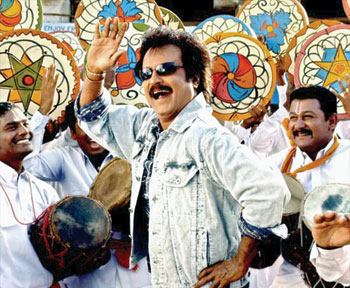 The Adaptation The AdaptationThe Malayalam version was a classy affair, subtle in its treatment and approach. Vasu has brought in the variations keeping the sensibilities of the Tamil audience in mind, and to satisfy fans of the hero who like to see him in larger-than-life roles. The comedy is grosser and the closing scenes more melodramatic. As an additional bonus, we also get to see an entire episode of another Malayalam film (Mohanlal-Manju Warrier starrer Aaraam Thamburaan) weaved into the portion where Nayanthara is depicted as the servant’s daughter, teaches music to the kids and has an altercation with Rajini because of it. But what one can’t deny is that Vasu has blended all these ingredients, both borrowed and his own, the subtle and the gross, all into a coherent whole, in a fairly neatly packaged entertainer, albeit with a sensibility different from the original. The camera and the music have been used to add tempo to the narration and create an eerie, suspense-filled ambience of the palatial bungalow, the legendary story connected to it, and the strange happenings. We get to see sparks of the Rajinikant of earlier films, and feel he can still deliver if given the right roles. But what is distracting is the jarring make-up, making him stand out like a mime-artist from the rest of the cast. And as the narration proceeds, the good look of the opening scene goes missing, the make-up only highlighting the deficiencies. There’s only that much of correction and camouflage that make-up can do. What it can’t do is turn the clock backwards. If the Superstar understands that, he can concentrate less on his make-up and more on doing challenging, suitable roles. There’s no doubt that he’s still a force to reckon with, and his charisma is still intact. — Malini Mannath |TOP| Recipé: Vegetarian Pad Thai - By Seema Gupta  With Indians now traveling all over the world, isn’t time for an adventurous gastronomic foray? Here’s a start with a trip to Thailand. Seema Gupta presents a recipé for a perennial Thai favorite. With Indians now traveling all over the world, isn’t time for an adventurous gastronomic foray? Here’s a start with a trip to Thailand. Seema Gupta presents a recipé for a perennial Thai favorite.Preparation time: 30 minutes Serves: Five people Ingredients: 1 packet Chinese noodles (The following vegetables have to be chopped lengthwise) 2 carrots Method Heat oil in frying pan. Add spice powder mixture. Stir for 30 seconds. Add onions. Stir for two or three minutes. Add all vegetables and salt. Stir for five minutes. Add noodles. Add sauces and ketchup. Mix well. Fry for 1-2 minutes. Garnish with crushed peanuts and bean sprouts. Side dish: Stir-fried Broccoli
- Seema Gupta is a homemaker. She lives in Elk Grove, Calif.
|TOP|
HOROSCOPE: May 2005 Horoscope By Pandit Parashar ARIES (March 21 to April 20): You will be highly motivated and set larger goals. Inflow of cash from all directions is foreseen. You will spend money on high end items. Business meetings will go very well and your plans will be well received on the other end. Old payments will finally arrive. TAURUS (April 21 to May 20): There will be several opportunities to improve earnings. Life will be exciting and you will enjoy every minute of it. You may invest towards a future pleasure trip. The idea of moving to a better area will continue to cross your mind from time to time. An old friend will call after long interval. GEMINI (May 21 to June 20): New company will make life more exciting. Opponents will disappear. Business will improve at a fast pace. Travel plans will mature. Family will suggest the idea of buying a bigger house in a posh area. You will work overtime to complete ongoing projects well before deadline. CANCER (June 21 to July 22): Once again, cash flow seems to be the main focus this month as money is seen pouring in from several places. Do not invest all of your earnings. Try to save some for emergencies. Some of you will be looking for better job opportunity. A minor health problem could flare up again but can be controlled by usual medication. You will express your ideas well on paper. LEO (July 23 to August 22): Interesting developments are foreseen in career. A member of the opposite sex will help you in your crusade. A property deal might close early this month. You will hear several encouraging news from various sources. New business partners will extend a helping hand. You will plan for a future pleasure trip. VIRGO (August 23 to September 22): This is a busy month. You will be overwhelmed with assignments but the rewards will be tremendous. Don’t forget to eat at proper intervals and eat healthy. Spouse will present some fancy gifts. You will be constantly in touch with people residing overseas. LIBRA (September 23 to October 22): Travel plans will change. An important invitation is on its way. You will do some juggling with finances and not only decrease your liability but also pocket some cash. You will be doing charity and may visit a holy place. You will badly miss some one from the past. SCORPIO (October 23 to November 22): You will overcome strong opponents and may be declared winner in a highly competitive exam. You will be in the company of a very interesting person. Expenses will be directed to socializing and entertainment. You will be assigned an important project that can take your career to the next level. SAGITTARIUS (November 23 to December 22): You will make fresh financial commitments and liabilities will increase. Some of you may also make a risky investment on the advice of a known person. A senior will quit making room for your promotion. You will continue your quest for a home in a decent neighborhood. CAPRICORN (December 22 to January 19): You might apply for a loan or have some construction done over your property. Things will settle down at work and your boss will appreciate your efforts. You will visit an old friend. An overseas trip is on the cards. AQUARIUS (January 20 to February 18): You will aggressively pursue your goals. You will get over all nagging issues from the past and start afresh, and the attempts will show promising results. Negotiations will go well but a deal will take more time to fall into place. Some of you may file litigation either to defend yourself or to prove your point. PISCES (February 19 to March 20): You will maintain your stand on an important issue. It may not be received well by people around you. Be careful when managing your finances and try to delay your spending and investment plans. Business will improve but at a slow pace. Spouse will plan a trip. Bay Area-based astrologer Pandit Parashar can |TOP| |
|
|
|
|
Advertise in Siliconeer | Home | Subscribe PRINT Issue | About Us (FAQs) | Contact | Locations | Staff Login | Site Map
© Copyright 2000-2013 Siliconeer • All Rights Reserved • For Comments and Questions: info (AT) siliconeer.com |
|





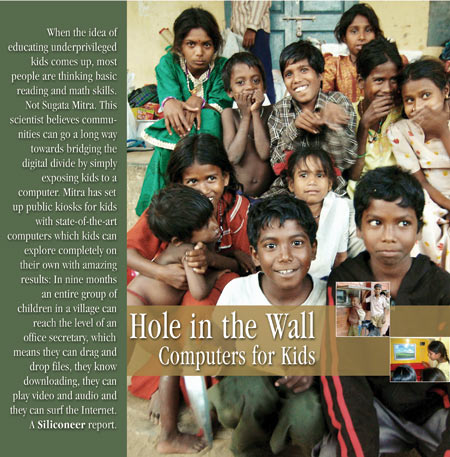

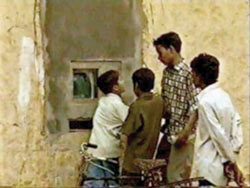 “We know that in nine months the entire group of children in a village would have reached approximately the level of an office secretary, which means they know dragging and dropping files, they know downloading, they can play video and audio and they can surf the Internet,” he told the BBC.
 The much delayed fleet acquisition plan for eight Boeing 777-200 LR (long range), 15 Boeing 777-300 ER (extended range) and 27 Boeing 787, which is under production and due to be flown in 2008, was based on the recommendations of the in-house techno-economic committee appointed for examining the bids, an Air-India statement said here.
 “The BPO arm started with 30 people in 2000 and today the division has grown into a 5,000 people organization. By 2009, the total strength of the BPO arm is expected to touch about 40,000,” HCL BPO chief operating officer N. Ranjit said.
  Bharti Tele-Ventures April 30 launched Airtel broadband and telephone services in Salem and said it would invest Rs. 210 million to roll-out these services in Tiruchirappalli, Tuticorin and Tirunelveli in Tamil Nadu.
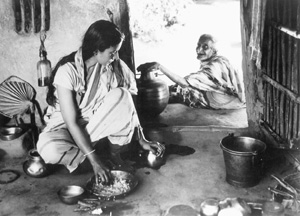
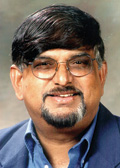
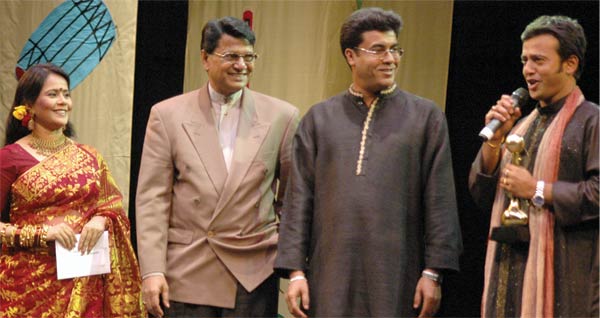
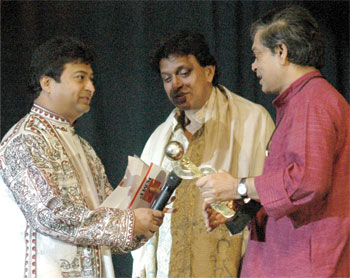
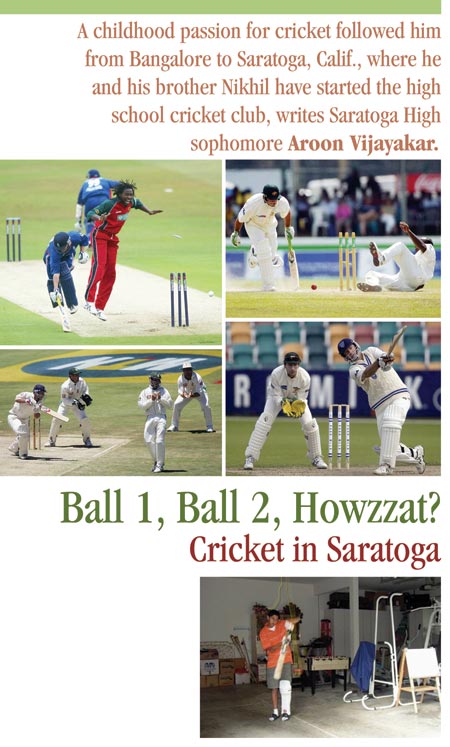
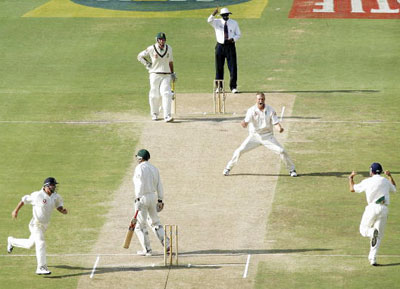 The second innings. With new freshmen, the club now contains nearly 20 players. After two years of training, we agreed that the team was now ready to use a leather ball. This meant that our equipment would have to be more sophisticated. So out came my old pads, gloves, and helmet. But this wasn’t enough. Thanks to a buildup of a modest club fund and the Internet, we ordered more gloves, pads, stumps, and another helmet. We were set to change our amateur image.
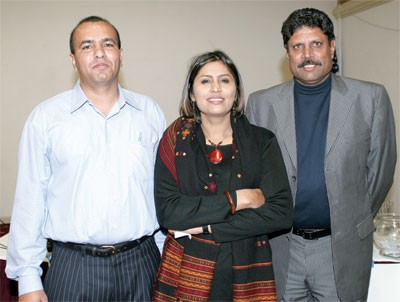
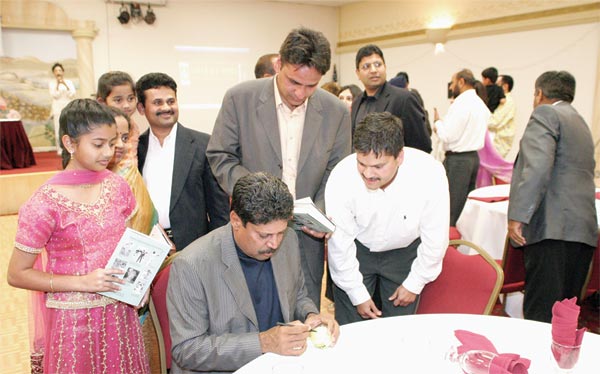
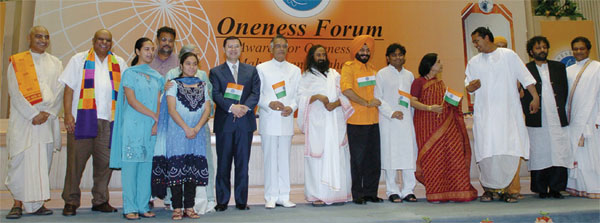
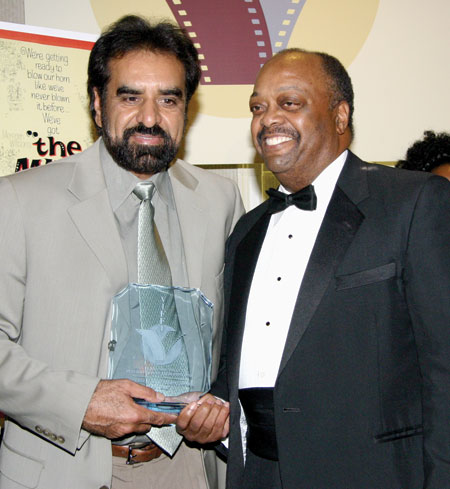





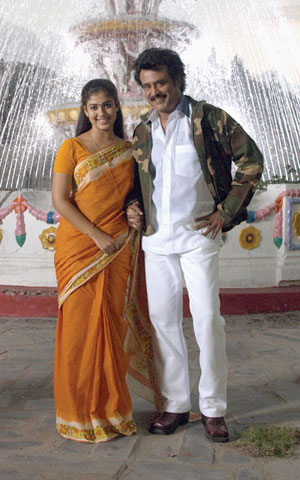
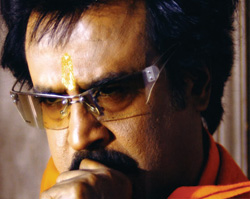 Last but surely not the least, how did the Superstar do? The film opens with a dramatic introduction of Rajinikant fighting some ruffians. The actor looks trim and good here. Playing Saravanan, a U.S.-trained psychiatrist who comes to visit his friend and his wife Ganga, and gets caught up in their problems. Rajini s in his element, the role giving him enough scope to indulge in comedy, fights, some serious scenes and some wicked humor towards the end, when he tauntingly provokes Chandramukhi with his “laka laka laka” refrain (the Superstar is more interesting to watch here than in the earlier scenes).

 Method