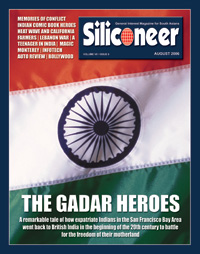
Siliconeer: August 2006

The ONLY Color Glossy Monthly General Interest Magazine
in West Coast U.S.A. for South Asians
Ranked #1 U.S. Print/Web South Asian Publication
(Based on Alexa.com Survey conducted Dec. 09, 2007)

Silicon Valley | San Francisco | LA | Sacramento | New York
Web www.siliconeer.com

icon


icon


AUGUST 2006
Volume VII • Issue 8

EDITORIAL: The Gadar Heroes
NEWS DIARY: Round up
TRAVEL: Magic Monterey
FOREIGN POLICY: Israel India Ties
FARMING: Not So Peachy
HEALTH: Prevent Cervical Cancer
FESTIVAL: Indian Americans Celebrate
Independence Day

POP CULTURE: Comics with Indian Attitude
TEEN TRAVEL: Hot Weather and Chai
CONCERT: Aap Ka Suroor in Oakland
COMMUNITY: NEWS in Brief
INFOTECH INDIA: Round-up
AUTO REVIEW: 2007 Toyota Yaris
BOLLYWOOD: Guftugu | Film Review: Kabhi Alvida Naa Kehna
TAMIL CINEMA: Kadhalae Enn Kadhalae
RECIPE: Desi Veg Burger
HOROSCOPE: August


EDITORIAL: Remembering the Gadar Heroes

August is the month of celebrating India’s independence, and Indian Americans will join festivities all over the U.S. with great joy and enthusiasm.

The degree of self-satisfaction within the community is in danger of becoming a cliché — U.S. politicians gladly play second fiddle as they come and utter the usual bromides like strong family values and stress on education as they pocket the moolah in the frequent fundraisers.

It is easy to forget that this wasn’t always the case. The second wave of Indian immigration, that began in the middle of the last century brought a wave of smart, highly educated Indian students who flocked to U.S. colleges. Later many became distinguished academics, doctors and engineers who lived happily ever after in leafy suburbia.

Things were very different at the beginning of the 20th century. That was the time when racism was still rife, Indians and Chinese were considered a threat by local labor, and all kinds of laws—ranging from miscegeny laws to curbs on property ownership—put Indian immigrants at a serious disadvantage.

It was in those circumstances that a group of Indian expatriates got together and decided that one of the reasons for their misery in the U.S. was the fact that their home country, India, was still under British rule. So they decided to give up everything and go back to their homeland to fight for the freedom of the country.

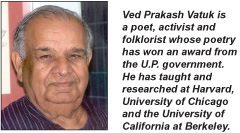
These are the Gadar heroes, and we are pleased to offer a poignant historical essay on these patriots by folklorist and award-winning poet Ved Prakash Vatuk.

Cracking jokes about the rustic and colorful Lalu Prasad Yadav is a popular sport among India’s chattering classes. This proud cowherd from one of India’s more backward and lawless states has drawn contempt, or at best condescension as analysts have darkly alluded to his political shenanigans and alleged involvement in one of the biggest scams in India. The so-called fodder scam was a brilliant trick to rob the government: Millions of rupees were shown to be spent on fodder for nonexistent cattle as crooks happily pocketed the proceeds.

God, newspaper columnist Russell Baker once said, is a cosmic joke player. One can only wonder what all those snobbish pundits have to say now that all the world’s top management gurus are lining up to study the Bihar cowherd’s management techniques after what can only be called a staggering achievement.

Lalu Prasad Yadav, this rustic villager who takes enormous pride in his village roots, has done the impossible. He has turned around the Indian government’s biggest white elephant, the Indian Railways, and has turned it into a money-making operation.

Experts from the Harvard Business School as well as the Indian Institute of Management are now making a beeline as sheepish snobs in Delhi look the other way.

The world’s attention has been focused on the dreadful carnage in Lebanon unleashed by Israel following a kidnapping of its soldiers by the Lebanese Shiite resistance group Hizbollah.

The daily images of the gruesome murder of civilians on both sides of the border, but far more lethal in the case of Lebanon, makes one wonder with sorrow and bafflement: When will we ever learn. Whether it is the ancient battleground of Kurukshetra or the millions of corpses strewn around Somme in World War I, war is a horrible, barbaric way to resolve conflict and yet human civilization still seems not to be able to have weaned itself away from its deadly seduction.

Roshni Rustomji-Kerns has seen it all, sometimes from close quarters, as she witnessed the carnage in 1947 as a child, sometimes from afar, as she witnessed the war in Vietnam on television screen while in the U.S. She has fond memories of Lebanon as a student at the American University of Beirut, and she weaves all these experiences into a moving essay about the terrible trail of destruction and pain left by war and conflict.

Ravi Swamy offers a tough critique of India’s growing warmth with Israel, given Israel’s persistent oppressive policies against its Arab neighbors and particularly its egregious behavior towards the Palestinians, whose land it continues to occupy. While Swamy supports increased people-to-people contact between the two nations, he takes issue with the growing military ties and elite cooperation, which he says flies in the face of India’s longstanding and distinguished historic record of standing up against colonial oppression.

Do drop us a line with ideas and comments about how we can make Siliconeer better serve you.
|TOP|

COVER STORY:
Gadar Heroes: A Stirring Tale of Selfless Patriotism

Nineteen-year-old Kartar Singh Sarabha, while in his solitary cell waiting to be hanged, wrote in the walls with coal: “The blood of a martyr is never shed in vain.” Poet and folklorist Ved Prakash Vatuk pays tribute to these remarkable Indian expatriates who left the Pacific coast in the 20th century to fight the British in order to free India.
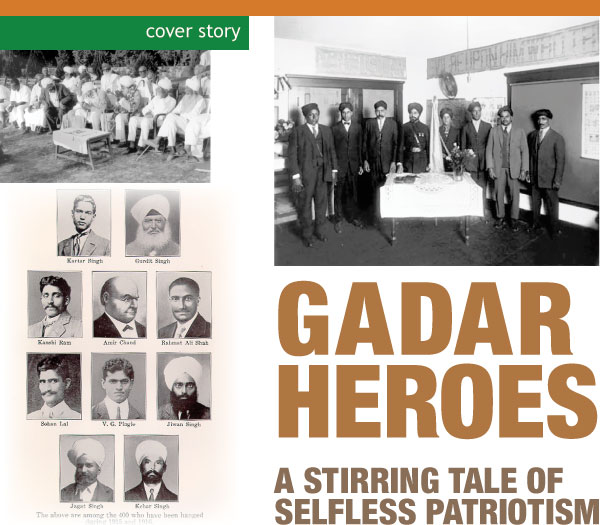
(Top left): 100th Birthday of Ghadri Baba Karam Singh Cheema, October 1966. (Sitting from right): Baba Kisham Singh Bundala, Baba Sohan Singh Bhakna, Baba Karam Singh Cheema, Baba Bhag Singh Canadian, Com. Har Kisham Singh Surjeet. (Standing behind from right): Pandit Kishori Lal, Gurcharan Singh Randhawa, Basu Pumia.
(Bottom left): Some of the 400 people who were hanged during 1915 and 1916. (Pic: T.S. Sibia/U.C. Davis)

(Top, right): A jatha, or group of freedom fighters, about to depart for India in San Francisco, 1924. The group was photographed at 5 Wood Street. (L-r): Genda Singh, Daswanda Singh Mann, Inder Singh, Mahendra Pratap, Shamsher Singh (Bud Dhillon), Bishan Singh Burj, Charan Singh Dhuleta, Dhula Singh.
“… Give me your tired, your poor, Your huddled masses yearning to breathe free/ The wretched refuse of your teeming shore/ Send these homeless, tempest-lost to me/ I lift my lamp besides the golden door!”

So read the grand proclamation inscribed at the 305-feet high Statue of Liberty, which the American poet Emma Lazarus called the “Mother of Exiles.” The statue stands on Liberty Island, a 12-acre island in Upper New York Bay. It invited all those people without hope to the “Land of Liberty” and the “Home of the Brave.” On the other side of the continent the Chinese saw the Gold Mountain: America — the land of opportunity, where everyone was free to make his/her mark with hard work and could pursue the dream of happiness and prosperity.

And then again, some brave soldiers of the Indian Army, who came to England at the end of the nineteenth century to take part in the celebration of Queen Victoria’s 60th year of rule, were given a chance to see part of the British Empire situated on the other side of the earth — Canada, a country with an area many times larger than India with very little population. They liked the country and wanted to settle down there. After all, they were the citizens of the British Commonwealth and had every right to settle down anywhere in the empire as dedicated soldiers who were ready to sacrifice their lives for the preservation and expansion of that empire.

So they came. Traveling by foot or by cart from their villages to the nearest railway station, taking a long train journey to a sea port like Kolkata (then Calcutta), catching a ship to the shores of Southeast Asia and then again making a long voyage to San Francisco or Vancouver. They borrowed money, they mortgaged their property, and they sold their land. They had a small bundle of their meager belongings and grand dreams. They would work hard, make lots of money and return home.

But they did not know that the lofty proclamations were not for them — that the Statue of Liberty spoke only to the Europeans and whites. The constitution of the United States declared, “All men are created equal,” but not all were included. It did not include the Native Americans, whom the fathers of the framers of the constitution slaughtered and displaced to build their empire.

Nor did it include the African Americans who were brought in the new world as slaves to work their plantations. Clearly women were excluded. Even white people without property were not given the right to choose their representatives. Asian immigrants soon found that they were entering not the gates of heaven, but were facing a life of hell. Before they could enter the mainland, they were housed in Angel Island prison to rot.

“I was a citizen of China
But I decided not to remain that,
And on my own will
I became an ox
My intention was
To come to America
And earn a living
The mansions of the West
Are exalted and grand
But it was not my fortune
To reside in them
How could I have known
That I shall be housed
In a prison.”


Those who made it in the end soon found out that they were not very welcome in their new country. The thick wall of white supremacy stood between them and the rest of society. When, by the end of the first decade of the nineteenth century, the number of immigrants from India reached ten thousand, both Canada and the U.S. began to warn of the horrible consequences if this invasion of yellow and brown race was not stopped. The fear was that these rag-headed uncivilized people of peculiar habits not only could not assimilate in the grand white society, but they would tear the whole fabric of civilized society to shreds. America and Canada in those days were countries that were racist to the core. Blacks and whites could not reside in the same neighborhood, could not use the same water fountain, could not ride side by side in buses or trains, could not intermarry. Even to look at a white woman could bring death to a black.

As far as Indians were concerned, whose nation was reduced to such a miserable state by British rule that the only way for them to get out of their misery was either to join the army or go abroad, their situation became even worse. They could work in factories or in fields for wages lower than other workers. By doing so they became the enemy of the working class, who thought they were bringing the standard of living for other workers down. The rest of society despised them for what they were — Indians. They could not own land, they could not buy any property, they could not get married to a white woman and could not bring their wives or other female relatives to America. Many riots took place against them. Sometimes they were chased out of their houses at midnight by rioters. They were needed to build America’s railroads, bridges, to work in its lumber mills, to work in its farms, but they were not worthy of any privilege or respect. Laws were passed against their countrymen’s entry into Canada and the U.S. If they went back to India, they would not be allowed to return. It was these conditions that forced a writer to exclaim: “We foreigners have no home. We are just the coolies of the world.”

It is true that Chinese and Japanese workers at that time also had the same fate. But there is a big difference. The governments of China and Japan backed their citizens. They talked to the governments of Canada and the U.S. about the rights of their citizens. But the only government the Indians had was the oppressive British government which did not want them to learn anything about human rights, human dignity and freedom. In fact, they were imploring the governments of Canada and the U.S. to keep a sharp eye on these Indians, otherwise, they would be infected by the virus of freedom, which would be detrimental to peace in the British empire. The so-called Indian government sent its agents to spy on them and report to the governments of Canada and the U.S.
It is against this background that we should look at the history of the Gadar movement. The few intellectuals like Lala Hardayal, Taraknath Das and others, and students at the University of California at Berkeley, who looked at their plight theoretically, came to the conclusion that the plight of Indians in America was the result of the fact that they came from a “slave country,” a nation of 330 million people subjugated by an island of 40 million.

They deserved to be treated like dirt. After all, Americans fought the British and became independent. Why can’t Indians do the same? As long as India remained a colony of white people, its citizens deserved no respect. What these intellectuals learned after reading lots of books, the illiterate and semi-literate workers learned by living and working in the fields and the factories.

Suddenly many of them — who were the products of the British Army — realized that they worked for the British empire to make it more powerful and thus reducing their own value to nothing. Suddenly they came to the conclusion that if Indians are to be treated like other respected human beings, they have to forget everything and begin working towards the goal of India’s freedom.

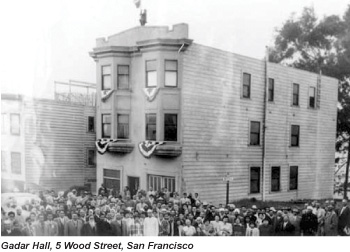
So one glorious morning in Astoria, Ore., they decided to establish an organization — Hindi Association of the Pacific Coast — and to launch a weekly called Gadar in several Indian languages. The headquarters of the party and paper was to be in San Francisco. It was named Yugantar Ashram. On November 1, 1913, the first issue of Gadar was launched in Urdu. It declared, “Today, there begins in a foreign land a war against the British Raj in our language.” The paper electrified the Indian community not only in the U.S., but everywhere in Asia and Latin America as well. It became so popular that people soon forgot the name of the of the organization and the name of its headquarters, which began to be called the Gadar Party and the Gadar Ashram. Money and volunteers began to pour in. The paper began to be published in Punjabi and other languages.

The Gadar Party and Gadar both declared that the aim of the movement was to attain “complete freedom for India” and “establish a democratic rule based on equality, economic and social justice.” It was a party of people who practiced what they preached. Its members lived together and all paid $2 a month. Intellectuals like Lala Hardyal, Maulana Barkatullah, activist young students like Kartar Singh Sarabha, Dalit worker (later founder of the Adi Dharma in Punjab) Mangoo Ram, workers, poets like Hari Singh Usman and party president Sohan Singh Bhakna, all sat and ate together. Many of the leaders of the party were very well-versed in theology and religion, even wrote extensively on spiritual matters like Bhai Bhagwan Singh. Pandit Jagat Ram and Maulana Barkatullah. But at Yugantar Ashram and in party work, religion was a subject never to be discussed. The job of the party was to prepare people for total dedication to fight for the independence of India. Gadar carried extensive exposes of the criminal deeds of the British empire, it carried poetry to inspire young and old. The first issue declared: “What is our name? Gadar. What is our work? Gadar. Where will it be? In India. When? Soon. The time will soon come when rifles and blood will take place of pen and ink.”

Occasionally Gadar carried an advertisement. It read: “Wanted: Enthusiastic Heroes to Organize Gadar in India. Pay: Death. Reward: Martyrdom. Pension: Freedom. Field of Work: India.” The poems in Gadar glorified the past of the nation, described its present plight and readers inspired to have a dream for the heavenly future. Making that future a reality would need sacrifice from each Indian. Total sacrifice — the body, the mind and the wealth.

They knew the path was not easy. Kartar Singh Sarabha used to sing while working on the paper, “It is so hard to serve one’s country/ Talk is so cheap/ Those who put their foot forward in the path of service/ Have to face thousands of hardships.”

The British government was so alarmed by the publication of Gadar that it pressured the American government to force Hardyal to leave the U.S. But Hardyal’s removal from the scene only brought more determination to Indians. They were transformed. No more destitution — it was all enthusiasm for the revolution, just waiting for the proper time.

They thought it came when World War I was declared. The party called on its workers: “Our enemy is trapped. Let us go home and fight.” And they did. Thousands of them left their property behind. From all over the world they came. To organize the people. To infiltrate the troops, to ask them to fight not for the empire but for the country. Their fight was not for themselves. It was for the common man and the nation as a whole.

But the country was not ready. All political parties were supporting the war efforts. Punjab, from where ninety percent of them came and the Sikh community to which ninety percent of them belonged, were the most supportive of recruitment efforts. The Gadar movement could not become a mass movement. Also, the British government knew practically everything they conceived. It had planted spies among them. They betrayed their date of actions. Most of them were arrested as soon as they set foot on Indian soil. Still, persons like Sarabha and Vishnu Ganesh Pingle kept working, going from village to village, going from army barracks to army barracks, trying to unite revolutionaries from Bengal to Maharashtra. Finally, they too were betrayed. The war against the emperor never materialized. They were arrested before the planned mutiny could take place, tried and sentenced.

Gadar was truly a people’s movement. It consisted of people from all walks of life with equal contribution. Its outlook was global. Work for the freedom of the country where you were living. Work for the masses. It was a completely secular movement. Unity was its strength. Equality was its goal along with social and economic justice.

Did the Gadar movement fail? In spite of the fact that several revolts almost took place in the army in British India, in Burma (now Myanmar) and other places, the fact remains that these plots were discovered in advance. Hundreds of soldiers were disarmed and punished severely. So one can say in the end not much was achieved.
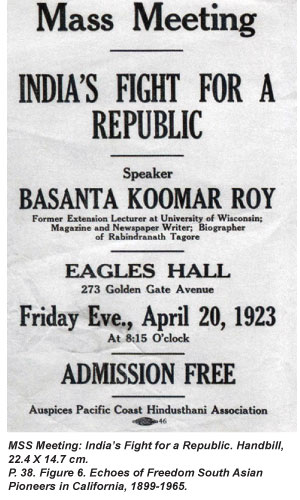
But did the Gadar movement really fail? Did the non-cooperation movement fail? Did the movement led by the revolutionaries like Bismil and Bhagat Singh fail?

Technically they all failed. After all, not many British were killed in all those movements and so many martyrs sacrificed their lives. But martyr after martyr, they all joyfully said that their sacrifice is like watering the orchard of freedom, where a crop of patriots would flourish. When the youngest and the most enthusiastic martyr, 19-year-old Kartar Singh Sarabha, was held in his solitary cell waiting to be hanged, he wrote in the walls with coal: “The blood of a martyr is never shed in vain.” All these so-called failed movements brought freedom a step closer. A battle was lost each time, so it would seem, but the war was about to be won. Each failed movement gave birth to a more dedicated movement.

The hanging of Sarabha gave us Bhagat Singh. But the main thing is that after leaving everything behind, the Gadar heroes never looked back in regret. They survived all the atrocities that a cruel government could mete out and came out with deeper dedication. Years of imprisonment in Andaman and Nicobar’s horror prison did not break them. Their spirit was never down. And that is their victory and ours.

Many of them saw India become free. But their dream remained unfulfilled. Sohan Singh Bhakna lamented that he could not be happy when millions still go hungry, when workers are still being exploited, when injustice prevails on every level of society, when equality still remains a dream, and exploitation remains the norm of the day, the divide between haves and have-nots keeps getting wider and wider. Not only that, during his speech to commemorate the 120th year anniversary of the first war of independence (May 10, 1977) one of the most daring Gadar heroes, Prithvi Singh Azad, lamented that people don’t even remember the sacrifices of all these selfless, brave people.

But then, each generation has to have its own Gadar heroes, its own gadar. Kartar Singh Sarabha wrote: “Our struggle will continue as long as a handful of men, be they foreign or native, or both in collaboration of each other, continue to exploit the labor and resources of our people. Nothing shall deter us from this path.” In fact, as long as even one person goes hungry on this earth, as long as one nation remains slave or occupied by any other country, as long as one group is discriminated against in day-to-day life, the spirit of Gadar remains unfulfilled.
|TOP|


SUBCONTINENT:
Harvard Goes to Lalu: Politician Reforms Railways
The desi snobs have egg all over their face as management experts from as far as Harvard come to study Railways Minister Lalu Prasad Yadav’s magic management style that has brought a stunning turnaround in India’s mammoth loss-making enterprise, writes Siddharth Srivastava.

(Clockwise from top): Union Minister for Railways Lalu Prasad speaking at the inauguration of the Public-Private Partnership Convention on Indian Railways in New Delhi in June; Lalu Prasad flagged off the newly introduced Madurai - Hazarat Nizamuddin Tamil Nadu Sampark Kranti Express at Madurai in Tamil Nadu. Union Minister for Railways Lalu Prasad addressing the media to announce a policy matter in New Delhi.
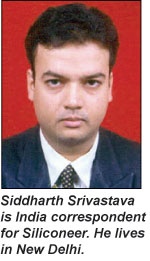
He may be referred to as a joker politician, some analysts may darkly speculate about his propensity towards corruption and nepotism, but Railway Minister Lalu Prasad Yadav also packs a lot of business sense. Don’t take our word for it. Some of the top management institutes such as Harvard Business School, HEC Management School, France and the prestigious Indian Institutes of Management think so. They have deemed his efforts as minister as fit for a case study by upcoming global managers.

This comes in the wake of a remarkable turnaround of the Indian Railways attributed to the maverick Lalu. After being on the brink of a debt trap, the world’s second largest rail network has close to $2.5 billion in fund balances (over $3 billion in internal resources), from $78 million in 2001 and has announced huge plans to invite investments, from within and outside, to ramp up a creaking infrastructure. Five years ago, a government committee wrote off Indian Railways, saying it was hurtling towards a terminal debt trap. Lalu has said the turnaround was achieved by changing the old dictum — hiking goods and passenger fares to minimizing cost.

Both Harvard and HEC France have shown interest in turning Lalu’s experiment with the railways into case studies for aspiring business graduates.

“We are looking at making the Indian Railways a part of our course. While nothing has been finalized as of now, I will be visiting India in October-November to talk to the concerned officials,” said Karine Lejoly of HEC.

The Times of India reports that Prof. Steven R Ditmeyer, a former faculty member of Harvard and now on deputation to the National Defense University, will also be visiting India later this year to study the railways model. Incidentally, Lalu is already a subject of a study by sociologists at Harvard University in the United States.

A senior official of the Indian Railways said: “The professor is intrigued by the man behind the success story of the railways and will be visiting India soon to learn more about him as well as the turnaround. His subject of the case study would be — How has a man with no formal education brought about a change of this magnitude? On basis of his view, Harvard Business School will consider a case study on the railways.”

Lalu himself is quite unfazed by such international attention and has said: “People all over the world want to know how the son of a cowherd has risen to such heights. Their interest in me is a victory of Indian democracy.”

The prestigious IIM-Ahmedabad has already introduced Lalu in their curriculum. According to Prof. G. Raghuraman from IIM-A: “We are not just working on the facelift that Lalu has given to the railways but also his personality, the team he works with and the initiatives he has taken. It was not as if Lalu applied some new principles, he was just the guy who said, ‘Let’s get down to it.’”

Indeed, it has taken some dexterous moves by Lalu to bring about the rail turnaround that has invited a pat on the back from none other than Prime Minister Manmohan Singh. Lalu has invited private-public partnerships and despite petroleum prices increasing, slashed fares, reducing air-conditioned upper-class categories from 18 percent to 10 percent, to also take on the budget airlines that have mushroomed.

The Rail Ministry has presented to the government a humongous plan to “transform Indian Rail forever” — a $100 billion plan for 2007-2012, up eight times from the meager $12 billion. Of this, $ 25 billion will be raised internally and through market borrowings and $40 billion from public-private partnerships.

Following the investment opportunities, the Indian Railways is being studied by some of the biggest global asset managers, investment bankers and consultants: UBS, Goldman Sachs, Deutsche Bank, McKinsey & Co and Credit Agricole’s CLSA.

Not too long back Lalu was considered a typical product of all that was wrong with Indian politics: where ideology rather than governance ruled supreme; where symbolism and not development can be the key to political survival; where visions of hope rather than substance reign; where caste and religion rather than performance are the criteria of an electoral base. With his performance as railway minister Lalu has upended all these assumptions.

But then that’s Lalu all over again. He’s the ultimate maverick in Indian politics.
|TOP|

NEWS DIARY: Roundup

Landmark Case | A Voice of Reason, Intellect, Muslims and Pakistanis | Bureaucrat Honored | South Asian Heart Center Opens | House Okays Nuke Deal | Hindi Classes in New Jersey High Schools | Sikh Stabbed in Hate Crime | Rajender Reddy Health Center at UC Merced | Pew Scholar | Moonda Murder


Landmark Case

An Indian American lawyer has won a landmark victory after the U.S. Supreme Court struck down the military commissions President Bush established to try suspected members of al-Qaida. The ruling, seen as a blow to the administration, came in Hamdan v. Rumsfeld, a case brought to the court by Georgetown law professor Neal Katyal for his client, Salim Ahmed Hamdan, a former aide to Osama bin Laden.

A five-justice majority ruled that the commissions, outlined by Bush in a military order on Nov. 13, 2001, were neither authorized by law nor required by necessity, and ran contrary to the Geneva Conventions.

As a result, no military commission can try Hamdan or anyone else, unless the president does one of two things: operate the commissions by the rules of military courts-martial, or ask Congress for specific permission to proceed differently.

Katyal, who had recently been named one of the nation’s “top 40 lawyers under 40,”has apolitical roots. His parents, immigrants from Punjab, were a doctor and an engineer. He became interested in law and politics when his father lost his job unjustly.

A former law clerk of U.S. Supreme Court Justice Stephen G. Breyer, Katyal’s career has had a dizzying trajectory. The Yale Law graduate went on to serve as national security adviser to the deputy attorney general and was commissioned by President Bill Clinton in 1999 to co-author a report on ways the legal profession can enhance its pro bono activities and diversify the bar. Katyal also served as co-counsel to Vice President Al Gore in the United States Supreme Court case of Bush v. Palm Beach Canvassing Board in 2000.
|Back to NEWS Diary| |TOP|

A Voice of Reason, Intellect, Muslims and Pakistanis
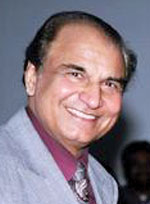
One of the leading voices of reason, intellect, Muslims and Pakistanis here in the San Francisco Bay Area, Professor Syed Hasan Jahangir Hamdani passed away July 28. His funeral was held the following day at the Rolling Hills Cemetery, 4100 Hilltop Drive in El Sobrante. Professor Hamdani was 66 years of age. He had been hospitalized for several days, and reportedly died of heart and lung problems and kidney failure.

During his many years of service to our Pakistani and Muslim-American community in California, Professor Hamdani touched several aspects of our lives in his own unique way. He was a speaker at what seemed like an infinite number of our cultural, political and religious gatherings during the past 25 years. His oratory skills, depth of analysis and affection for the people around him will be long remembered.

Professor Hamdani possessed excellent linguistic diversity and we often lost count of the languages that he spoke. He had a great grasp of Muslim and South Asian history and was considered a local authority on the Urdu language and some of its writers. His own poetry in Urdu was widely appreciated and we will certainly miss his presence at local mushairas and programs which he contributed to with the passion of a poet.

Hamdani Sahib had many interests. He spoke at India-Pakistan peace rallies, Muslim gatherings, Sikh events, Urdu language promotion programs and Pakistan Independence Day functions in northern California, to the delight of many. And he spoke from a scholarly authority which many of us had a chance to learn from. Pakistan Link reports covered some of these events.

As mentioned above, Hamdani Sahib’s range of interests covered a great deal. But beyond that he was a fine gentleman whom we will always remember for his cultured demeanor. Hamdani Sahib and some of us had politically opposite viewpoints. And even though we disagreed and were vocal about our differences, we never could turn down an invitation by him to the Hamdani family’s annual Naat Competition gathering to celebrate the prophet’s birthday. He could make his point, strongly disagree with someone and then shake his hand. We could all learn a great deal from his example.

An obituary is often unfair while attempting to squeeze a short description of a person’s rich and accomplished life, into a few sentences. That is very much the case here. And since we must now leave to others to write their own remembrance of Hamdani Sahib’s life, let us end by expressing our deep sadness to Mrs. Sohab Maqbool Hamdani, the Hamdani children and his siblings. This is indeed a great loss for not only them but our entire community. Inna Lillahe Wa Inna Alaihe Rajeoon

— Ras. H. Siddiqui.

|Back to NEWS Diary| |TOP|

Bureaucrat Honored
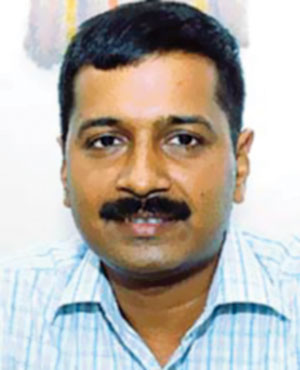
Delhi-based Arvind Kejriwal, a civil servant who has spearheaded the national campaign for the right to information, has been conferred the Ramon Magsaysay Award, the Asian equivalent of the Nobel Prize.

Nepal’s Sanduk Ruit, 54, head of the Tilganga Eye Center, won the award for peace and international understanding for “placing Nepal at the forefront of developing safe, effective and economical procedures for cataract surgery, enabling the needlessly blind in even the poorest countries to see again.”

The annual awards, named after late Philippine President Ramon Magsaysay, will be presented to six recipients at a ceremony in Manila on Aug. 31.

In naming Kejriwal, 38, for the Magsaysay Award for Emergent Leadership, the board of trustees recognized his activating India’s right-to-information movement at the grassroots, empowering New Delhi’s poorest citizens to fight corruption by holding government accountable to the people, the organizers said in a citation.

“The brazen corruption of the high and the mighty may grab headlines, but for ordinary people it is the ubiquity of everyday corruption that weighs heaviest. And that demoralizes. Arvind Kejriwal, founder of India’s Parivartan, understands this, which is why his campaign for change begins with the small things,” the organizers said.

Kejriwal is an alumnus of the Indian Institute of Technology in Kharagpur and has led Parivartan, a citizen’s movement for the right to information.

A mechanical engineer, Kejriwal joined the civil services and was posted in the Indian Revenue Service in 1992. He is on leave from the government for the past two years.
|Back to NEWS Diary| |TOP|

South Asian Heart Center Opens

The first nonprofit center in the world devoted to the prevention of coronary artery disease in people of South Asian descent, the South Asian Heart Center, opened at El Camino Hospital in Mountain View, Calif., July 12.

The unique center is designed to address the epidemic of heart disease among people from India, Bangladesh, Pakistan, Nepal and Sri Lanka, who are four times more likely to suffer a heart attack, at younger ages, without prior symptoms or warning, and without presenting the same risk factors as the general population. Through creating greater awareness, the center hopes to change the way physicians screen South Asian patients for heart disease.

More than half of heart attacks among South Asians occur before age 50, compared to an average age of 65.8 for the general male population, and 70.4 for the female population. In California, South Asians have four times the hospitalization rate compared to Caucasians and other Asian populations. The higher rates of heart disease in this group apply across the population, even for lifelong vegetarians who exercise regularly, do not smoke and are not overweight. This global epidemic affects both male and female South Asians living in the United States (including 350,000 who reside in the Bay Area), urban South Asia and elsewhere.

The center has a medical director and a council of physicians. The person who actually sees an incoming patient is a nurse practitioner and she does all the assessments. Each week the center’s medical director goes over all the results and comes up with a risk assessment.
A council of physicians, a panel of distinguished cardiologists, looks at the special or unusual cases. The center’s other goal is to educate physicians with regular symposia.

More information is available at www.southasianheartcenter.org
|
Back to NEWS Diary| |TOP|

House Okays Nuke Deal
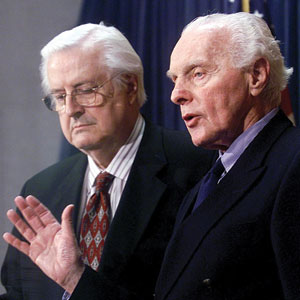
The U.S. House of Representatives has passed landmark legislation, approving the U.S.-India nuclear agreement by a massive 359-68 margin, rejecting several “killer” amendments on the way.

The House vote was largely bipartisan with backing from both sides of the aisle: 218 Republicans and 141 Democrats supported the deal; only nine Republicans and 59 Democrats opposed.

En route to the historic vote, the House rejected at least three “killer” amendments that supporters said would have scuttled the agreement. An amendment that would have the U.S. audit India’s fissile material stock annually was rejected by a 155-268 margin. Another that sought to restrict uranium exports to India until the president certified that New Delhi had frozen its fissile material production was rejected 184-241.

A third one tried to link the deal to India further supporting the U.S. in its campaign against Iran. That was defeated 192-235 by supporters who argued that New Delhi had already proved its credentials as a U.S. partner opposed to nuclear proliferation in the Iran context.

About the only significant amendment that was passed without contest was one that enjoins the United States to support only India’s civilian nuclear program, and not its weapons program.

At the end of almost five hours of marathon arguments and legislative procedures, the United States and India Nuclear Cooperation Promotion Act of 2006, to be renamed the Hyde Amendment after the lawmaker who engineered it, was passed by a handsome 359-68 margin.

“This is a significant development in the implementation process. The numbers are very encouraging,” said strategic affairs analyst C. Uday Bhaskar. But “this is not a done deal,” he added.

The House of Representatives vote was part of a drawn-out legislative process to ratify the deal, which also has to be cleared by the Nuclear Suppliers Group, a group of nations that export nuclear material.

The act, when passed by the Senate, will permit a certifiably nuclear-armed India to buy reactors and fuel from the international market for the first time in more than 30 years, subject to final approval and international consent, despite the fact it has still not signed the Nuclear Non-Proliferation Treaty. It will in effect mark the end of India’s nuclear isolation and possibly rearrange the global strategic architecture.
|Back to NEWS Diary| |TOP|

Hindi Classes in New Jersey High Schools
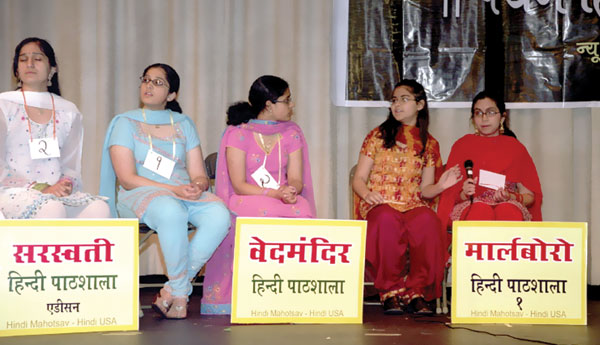
Following demand from the local Indian American population as well as a push from the Hindi language organization HindiUSA, two New Jersey school districts have applied for a federal grant that would enable them to teach Hindi in high school classrooms.
Edison Township and West Windsor-Plainsboro school districts in New Jersey will join Bellaire High School, a magnet school in Houston, Texas, in offering its students courses in Hindi.
Edison school officials have been considering adding Hindi and Chinese to their curriculum for nearly a year now.

If all goes according to plan, New Jersey high school students will be able to take classes in September 2007.

Thousands of parents, students and educators have signed an online petition in the last year asking U.S. school boards to add Hindi as an elective to their schools’ curriculum.
“Hindi will help bring us and our kids closer to India as well as help the United States to better understand and utilize the cultural and economic opportunities in Bharat,” reads the petition, which adds that similar efforts by members of the local Chinese community resulted in Chinese being taught in more U.S. schools.

Petition organizers — representatives from HindiUSA, a New Jersey-based organization that runs weekend Hindi schools — have also taken their cause offline. Representatives have met with school board members in West Windsor, where a large number of Asian Indians reside, to urge officials to offer Hindi by 2007. Other area towns with a sizable Asian-Indian population — Edison and South Brunswick — would then, ideally, follow suit, said Devendra Singh, coordinator of HindiUSA.

“Our main goal is to put Hindi as an elective language in high schools,” said Singh, who added that Hindi instruction is crucial for the large number of students of Indian origin living here and also because of the growing economic ties between the United States and India.

“This is not just for Indian students,” Singh said, “it’s for everyone.”
|Back to NEWS Diary| |TOP|

Sikh Stabbed in Hate Crime
A 66-year-old Santa Clara, Calif., Sikh man was the victim of a July 30 stabbing that authorities allege was a hate crime. Iqbal Singh was standing with his two-year-old granddaughter in his family’s carport in, waiting to go to a religious service at the San Jose Gurdwara, when he was stabbed once in the neck with a steak knife. Everett Thompson, the 25-year-old assailant, was a neighbor who said in police interviews that he stabbed Singh because he wanted to kill a Taliban.

According to family members, they did not know Thompson, and when he walked close, when Iqbal Singh asked what the matter was, Thompson stabbed him.

Singh then ran toward his family’s apartment building with Thompson in pursuit. At the same time, the rest of the Singh family, including Iqbal Singh’s son and daughter-in-law, emerged from the apartment. Thompson fled the scene when he caught sight of them.
Thompson was arrested at his home shortly thereafter, where police also found the weapon he used.

Thompson is being held in custody without bail. If convicted of the attack, he could face a sentence of life in prison.

At press time, Iqbal Singh was in stable condition at a local hospital. His granddaughter was unhurt. Bay Area South Asians, and Sikhs in particular, have expressed horror and fear over the recent spate of violence. Sikhs, whose traditional turbans are vaguely similar to those worn by the Muslim Taliban, are frequently the targets in these hate crimes. According to the Sikh Coalition, at least two Bay Area Sikh cab drivers have been shot to death since Sept. 11, 2001, and another was severely beaten. In 2004, bullets struck the entry sign for a Solano County gurdwara and in 2001, a 3-year-old Sikh boy was hit by a Molotov cocktail hurled through the window of his home.
|Back to NEWS Diary| |TOP|

Rajender Reddy Health Center at UC Merced
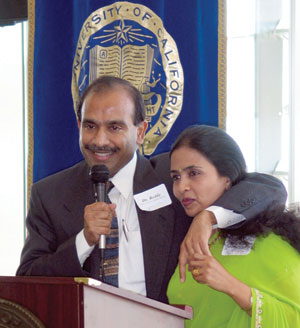
The health center at the University of California at Merced will be named Rajender Reddy Health Center after the cardiologist who donated $1 million to the project, university officials announced.

The gift from Dr. Rajender Reddy and his wife, Jhansi Reddy, will allow UC Merced to focus not only on providing basic health care for its students, but also on health education, preventive services and general wellness, vice chancellor of student affairs Jane Lawrence said.

The health center will offer around-the-clock nurse advising, urgent and primary care services, immunizations and a pharmacy. It also will provide nutrition information, contraception, smoking cessation assistance, substance abuse counseling and stress management. The center is scheduled to open in October.

“One of the principles that we want to stress for our students is to have a developed sense of physical and psychological well-being,” Lawrence said. “We want to make that a distinctive feature of UC Merced.”

The 4,000-square-foot center is set to open in October. It will occupy the second floor of the Joseph E. Gallo Recreation and Wellness Center.

Reddy, who was raised in India and once worked as a farmer, launched his Hanford cardiology practice in 1989. He said he plans to continue to support the university and hopes to donate to UC Merced’s proposed medical school.

“In Hanford, we are having a very hard time finding enough doctors. We will support anything that will train more doctors to serve the people of the valley,” he said.

Jhansi Reddy’s uncle, Hanimireddy Lakireddy, has also made large donations to UC Merced, including a $1 million naming gift for the campus’ Lakireddy Auditorium.
|Back to NEWS Diary| |TOP|

Pew Scholar
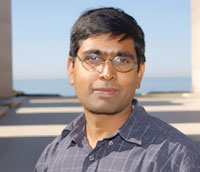
A biomedical researcher from the Salk Institute has been named a Pew scholar and will receive over $240,000 over four years for a research project at the University of California at San Francisco.

Satchidananda Panda, of San Diego, was among 15 promising early- to mid-career biomedical researchers who won the prestigious grant awarded jointly by the Pew Charitable Trusts and the UCSF.

Panda is an assistant professor at the Salk Institute’s Regulatory Biology Laboratory. His research has focused on the biological clock, or circadian oscillator, that coordinates behavior and physiology with the natural light-dark cycle.

Panda received his bachelor’s degree from the Orissa University of Agriculture and Technology, and a Ph.D. degree from the Scripps Research Institute in La Jolla, Calif. He has done postdoctoral research at the Genomics Institute of the Novartis Research Foundation in San Diego.

The Pew/UCSF program allows researchers the flexibility to choose their research agenda and encourages them to become entrepreneurs by taking calculated risks and following unanticipated leads to maximize the benefits their research brings to society, the Pew trust said in a statement.

“For more than 20 years, the Pew scholars have demonstrated that great advances in our understanding of human health can occur when creative and talented individuals are given the opportunity to take risks,” said Rebecca W. Rimel, president and chief executive officer of the Pew Charitable Trusts. “Since beginning this program, we have found that investing in the ideas of the nation’s most brilliant scientific minds reaps tremendous returns for society, both from their scientific discoveries and as leading advocates for high-quality research.”

This year’s scholars plan to explore a variety of issues including the role of specific proteins in promoting memory and learning.

“This year’s scholars, like their predecessors, are pushing the scientific frontiers with imagination and discipline,” said Dr. Torsten N. Wiesel, chairman of the Pew Scholars Advisory Committee and a 1981 Nobel Prize laureate in medicine. “Who knows what benefit our children and grandchildren will reap from the work of a scholar, which speaks to the power of this investment.”

Since 1985, the trusts has invested more than $100 million to fund nearly 400 scholars.
Previous scholars have gone on to win the Nobel Prize in chemistry, the MacArthur Award and the Albert Lasker Medical Research Award.
|Back to NEWS Diary| |TOP|

Moonda Murder

The details read like a juicy romance novel: A wealthy physician is said by authorities to have been killed by the other man — a handsome, young lover who’d been in and out of trouble.

The killing purportedly caps a highway robbery staged by the adulterous couple, who prosecutors say dreamed of getting their hands on the doctor’s millions.

That’s the torrid tale, at least, told in a federal affidavit released July 24 in the latest twist in the case of a Pennsylvania urologist killed last year along the Ohio Turnpike.

Donna Moonda, 47, of Hermitage, Pennsylvania, was charged on July 24 in federal court with interstate stalking that resulted in the death of her husband, Dr. Gulam Moonda. She also was charged with using a firearm in a violent crime.

Earlier, Damian Bradford, 25, of Monaca, Pa., near Pittsburgh, admitted in an Akron court to the same stalking charge leveled against Moonda and agreed to cooperate with authorities.

“He’s doing the right thing in his mind to step up to the plate,” said Michael DeRiso, Bradford’s attorney.

Gulam Moonda, 69, was shot May 13, 2005, when he pulled off the turnpike south of Cleveland to allow his wife to drive their car, authorities said. His wife said a gunman emerged from another vehicle, shot and robbed her husband and fled.

Federal court documents filed claim Donna Moonda and Bradford began an affair in 2004 after meeting in drug rehabilitation. The woman approached Bradford last year and promised him half of the $3 million to $6 million that she would receive from her husband’s estate if he killed the doctor, according to the documents.

Bradford implicated Donna Moonda on July 21, saying that on the day of the killing she gave him a map of the Moondas’ planned route to Toledo, where they were to visit for the weekend. The documents state Donna Moonda text-messaged Bradford’s cell phone to alert him when the family left the Pittsburgh area around 4:30 p.m.

According to the documents, Donna Moonda signed a prenuptial agreement before the couple wed in 1990 that limited her to only $250,000 in a divorce. The doctor’s will, however, promised his wife millions plus $676,000 in insurance policies and their home.

At a brief hearing before U.S. Magistrate Judge George Limbert in Youngstown, Donna Moonda showed no emotion as prosecutors entered the charges and said they would decide later whether to seek the death penalty.

Moonda’s lawyer, Roger Synenberg, said she intends to plead not guilty at her arraignment, which has not been scheduled.

Prosecutors say Bradford shot the doctor in the right temple after the doctor handed over his wallet in the staged robbery. Bradford also pleaded guilty to using a firearm in a violent crime.

During Bradford’s plea hearing, U.S. District Judge David D. Dowd Jr. said Bradford will get 17 1/2 years in prison. Bradford could have received life in prison if convicted by a jury.
|Back to NEWS Diary| |TOP|


REMEMBRANCE:
Witness to Wars:
Memories of Death, Destruction in a World of Conflict
Karachi, 1947. Lebanon, 1958-61. Vietnam, Afghanistan, Iraq. Bombs in Bombay. The recent war in Lebanon brought back searing memories of not only her days in the American University in Beirut, but also impressions of conflict and devastation experienced in five decades, sometimes from close quarters, sometimes from afar, writes Roshni Rustomji-Kerns.


A Lebanese woman displaced from a southern Lebanese village carries her daughter in one hand and a candle in another while holding a “Qana” sign in August. Lebanese people gathered in Sidon to hold a candlelight vigil to protest the Israeli massacre in Qana and the 21-day Israeli offensive against Lebanon that has left Lebanon’s infrastructures in ruins and killed at least 828 people. (Pic: Getty Images)

For nearly twenty years I have been writing down notes and sketches of some of the wars I have lived through. I find it difficult to put them together in any formal, traditional format as I attempt to make some kind of sense of these unending wars. Wars that have taken the shape of an adult’s slap on a child’s face, of the red, orange, green, blue and yellow flames engulfing the body of a monk or the body of a woman, of the stooped shoulders and the traumatized eyes of a man or woman whose dignity has been broken through conquest and poverty and of the corpses, the obscene slaughter of human beings and the tearing apart of the earth in the name of God, truth, revenge, justice and yes, even peace!

1947
I was moving towards my ninth year. One evening, the bells of the Hanuman Temple — at the end of the road, across the maidan where the dust rose and blew towards all our houses in summer—stopped. Just like that. They stopped and I haven’t heard them since. A silence without a past, present or future.  

The next morning, the past and the future became the now. The “there” of the rumors of a savage war became the “here” of refugees. People, strangers, suddenly appeared, flooding the streets of Karachi. My mother said, “To count them as if they are numbers is wrong. Each one is a single person. Think, Roshni, think what must each person be feeling!” I saw tears in my beloved grandmother’s eyes as she spoke of orphans, of children born of rape, of women who would die of rape or be forced to live with the memory of violence and the reality of abandonment. I tried very hard to understand. Looking back after nearly fifty odd years, I don’t know what I understood. I did realize that now we were independent. The land had been divided and there was bloodshed. My friend Asha told me about how her favorite aunt had wept as the red tilak on her forehead and the red sindoor in the parting of her hair was rubbed off when she was widowed. All that red of marriage and of families joining together turned to blood across the land.

1958-1961
Lebanon was the heartbreakingly beautiful land where I saw a boy, his face masked with blood, leap from a balcony moments after men in uniforms had entered the building. I stood below surrounded by the aroma of strong coffee and the smell of freshly shaved wood, a loud thud interrupting the sounds of Fairouz singing as the boy fell to the sidewalk. That day I learned about the cruelty of men towards boys who could be their sons. It was the first time I heard the indescribable scream of a woman as she watches her child being killed.

Beirut was the city where I passed the wall of lemon trees on my way from the dorms at the American University of Beirut to the lighthouse. One evening I saw two women embracing and weeping. I wanted to console them but didn’t know how and for what. One of them turned to me and said, “Binti, daughter, we cry for our lemon trees we will never see again in our home. Our Palestine.” The other woman showed me the key to the house she had left behind. The house, she had just learned, didn’t exist anymore. I didn’t have any words, so I did what I had seen a woman do to another woman who had lost her husband, her two children and her old father on the way to Karachi from Bombay. She had wiped the grieving woman’s face with her bare hands. Six months later, I tripped and hurt my knee. I went to the student health services and the nurse who treated me was the woman with the key. Her voice , her hands were gentle. Her eyes were shards of pain and grief.

I didn’t attend the funeral of a classmate. One of my friends told me that the mother had screamed at the corpse of her son not only for dying but also for having killed other mothers’ sons. Later, I heard the same story during the Nicaragua war between the Sandanistas and the Contras and then during the Zapatista rising up for justice.

1968-1917
Berkeley, California
A selection from my memories for stories:

I watch televised images of the American war in Vietnam as I learn to translate the Mahabharata and the Iliad. The women flow onto the battle of Kurukshetra mourning their dead, Achilles mourns the death of his beloved companion and drags Hector around in the dirt as his old parents watch in horrified grief and Vietnam is transformed into a blazing fire of trees and human flesh.

1987
My mother died.

I was six years old when the U.S/ dropped the bombs on Hiroshima and Nagasaki. I looked at my mother. Her calm, rather stern face was absolutely still. I remember thinking that this was how my mother would look when she died. My mother was born in Japan.
September 11, 2001

I turn on the TV and see Afghanistan.

Food is being distributed. The names of adult males are called. But most of the adult males are dead or gone and so the children are coming up to pick up the food allocations. A name is called out. Silence. No one comes up. And then one of the men smiles sadly and goes to the group waiting for food and calls a tiny girl. She has wild curly hair and the beautiful eyes of childhood. She comes forward and begins to drag the bag the men pointed to. Someone shows her how to sling it over her shoulder. The bag is as big as she was. Maybe bigger. And then they put a cardboard box in front of her. She tries to push it with her feet. The man who had brought her forward smiles sadly again and gestures that he will bring it to her house. It is that small gesture of compassion and the tiny girl-child going back into the crowd with her bag over her shoulder that shatters me. I sit screaming, bleeding from the womb that my body hasn’t possessed for over thirty years.

August 2004
The image of the little girl in Afghanistan becomes the woman in the documentary. She curses all of us, the Americans, who have brought death and destruction to her family, her friends, her neighborhood, her city, her country of Iraq. Sitting in the air-conditioned comfort of one of the theatres in an enormous multiplex cinema complex located not that far from San Francisco, we are stunned into silence. The munching of popcorn and chocolates, the bubbles of sodas, the soft shuffling of bodies stop. I see the woman in front of me trembling violently.

July-August 2006
But it started long ago — years beyond counting.

The two mothers I would like to speak with right now are Hagar and Sarah. I have no talent to find Hagar and Sarah caught in these spirals of time and violence so I speak to the women I know, women I do not know.

What happens at the exact moment when a hand aims the weapon or merely pushes the button to hurl a weapon “untouched” by human hands? What happens when the power of the weapon sent through space/time reaches a child sleeping?

Do not reason with me about “human shields.” War is not relegated to separate, perfectly defined places. Kurukshetra. Outside the city walls of Troy. Normandy. Even there, even then, wars and massacres engulfed non-combatants — the cheerleaders as well as those who worked for peace. Do not speak to me of “human shields” when this is the month when we dropped death deliberately on the citizens of two cities, Hiroshima and Nagasaki. Do not tell me that that action saved millions of life in the end. Would we say that if “the enemy” had dropped those two bombs on us? And please do not try to stop the torture and the killing of civilians and “prisoners of war” by saying that we (“our soldiers”) should stop such actions because we are “better” than “them.” That lie is one of the most indecent roots of violence. Call it hypocritical arrogance.

Ya Basta to rationalizing violence from any side, towards any side.

A Palestinian woman, a relative of a Hamas military leader Maysara Hassan, carries her child in front of an Israeli tank after seven houses were destroyed by Israeli forces during a military incursion on March 19 in Gaza City. (Pic: Getty Images)

Mumbai—Summer 2006
My sister calls me from Santa Rosa, California. I hear her beautiful voice stark with sorrow and horror, “A number of bombs have gone off at a number of train stations in Bombay.” I try to breathe. This is the time that our sister and brother-in-law in Bombay would be returning from their work at the Yoga Institute. They would be at the Khar-Santa Cruz station. My sister on the other end of the telephone line says, “I was able to phone them. They are OK. There was some kind of a holiday at the Institute today so they stayed at home. They were surprised that we had already received the news. Their neighbors haven’t yet heard the news—Just the sounds of the bombs.”

I call my family in Oaxaca as I have been doing every day. My husband combs through the Internet to find the news about Oaxaca — in English, in Spanish. The violence-free sit-in by the teachers of Oaxaca has been attacked in the middle of the night at the order of the governor of Oaxaca. The death and the disappearance of the teachers are horrible to contemplate. But can one even contemplate the death of the two little children—Zapotec? Mixtec? Mixe? Mestizas?—sleeping in that zocalo?

Emily Brown phones me. She, too, has a beautiful voice. “Roshni, the manara in Beirut has been bombed.” That lighthouse was special to us. The Browns from New Hampshire lived in a flat right next to that lighthouse in Beirut. It was in that house that I babysat their four children. It was in that house, in the office with the window that opened up to the base of the lighthouse that Jock Brown began my lessons in Greek and Sanskrit. Mama Glafira calls one evening before I have a chance to call her. It is 8 pm in California, 10 pm in Oaxaca. She is crying. “¡Hijita! Mi Hijita. La matanza de los niños en el Libano.”

I get emails, phone calls. Rallies and demonstrations have been organized. I send Genny information about the Day of Remembrance in honor of those killed in Lebanon and Palestine that is to be celebrated in San Francisco. The information message says that an altar will be set up in a garden to honor the dead in Qana. I receive an email for Genny. She had gone to the altar but was disappointed because it was an altar set up specifically to be created by a specific group in the community. I mention that it might help all of us if an altar were set up in New College for anyone who wished to honor the dead in this devastation in the Middle East. Within an hour she finds a place on campus for the altar, sends out messages, gets help from people. The altar becomes the focus of discussions, conversations. We receive a gentle, thoughtful reminder, an appeal requesting that we remember the victims of ALL the violence, from all the sides. A request that we make it an altar to peace.

A reminder. In our anger and mourning for the children of one country, one community, we have forgotten the killed children of those who have bombed other people’s children.

Genny responds:
I myself am a Buddhist pacifist and do not believe in war. Period. War is the lowest manifestation of civilization. I want to respect and acknowledge the many beautiful, innocent human lives that have been so recklessly destroyed. Especially children, through this obscene war. . . I hope you will join us in our expression of peace. Peace.

I send out my response to the writer of the email about peace for all.

I think that all these discussions about who started what, who hit whom is very important to look at and study as we try to address conflicts in a violence-free way. The altar I envision does not skirt these issues, does not even skirt the issues of the imbalance of power in this as in any war. There are avenues for discussions/debates on these issues including alas, violence. The altar would be there to honor the victims of all wars/conflicts through remembering the victims of the specific wars the U.S. is involved with at this time (the wars we know about). The Palestine-Israel-Lebanon war, the war in Iraq, the war in Afghanistan.

Maybe we could have something in words near the altar—We remember the children, the women, the men—the civilians as well as the armed combatants—killed in Lebanon, Israel, Palestine, Iraq, Afghanistan. Through honoring the children killed in Qana, we remember the victims of all wars. In honoring them, we stand among those who work for peace.

I write to Dalit. An Israeli activist who has joined her life with her sisters and brothers from Palestine and Israel, with all those who fight for justice and peace. I write to Dalit who carries both Israel and Palestine in her heart:

You are much in my thoughts this days. I am thinking of you with gratitude. You and my other Jewish-Israeli or non-Israeli friends. I am unable to hate or be angry with a whole community or a whole country because of people such as you. . . .To use anger not to destroy but to find violence-free ways to a just peace must be an act of wisdom.

Her latest email to me speaks of her dear friend, a beautiful young man from Lebanon who has just lost two cousins no, lost is such a curious word. They were murdered, killed in an air raid of the Israeli air force while trying to help others get to safety. The grief engulfs me. We cry together. His generosity, sharing grief with an Israeli woman. My cousin is in the Israeli air force. I do not tell him that. I tell him I will remember them. In my culture, this is what we promise to the dead. I ask for their names and pictures. He tells me that in his culture, all pictures of the dead are destroyed.

My aunt sends me an email with pictures of Israeli air force war planes. It is a flashpoint presentation with music. I feel so helpless. She too is swept with the wartime mania. I reply with a PowerPoint of pictures of the dead in Lebanon. . .I add a disclaimer—these are horrible pictures, you do not have to open, I am missing you all and praying this war will end soon. She and I had been sitting for days outside my grandmother’s hospital deathbed. We shared a death once.

- Roshni Rustomji-Kerns was born in Mumbai, India,
and has lived, studied and worked in India, Pakistan, Lebanon,
the United States of America and Mexico.
She is professor emerita from Sonoma State University and
was a visiting scholar at the Center for Latin American Studies
at Stanford University 1997-2005.

|TOP|


TRAVEL:
Magic Monterey
: Northern California’s Seductive Peninsula
From the mixture of Spanish, Mexican and American cultures was created one of the most seductive destinations in the New World, writes Al Auger.


Monterey is a magic name. A magic place. A magic experience. A city and a namesake peninsula that has a deeply imbedded multi-faceted culture. A place I go often to deposit reams of experiences in my bank of memories and fill a journal with history, culture, art, music, food. Names and places, like Don Juan Cabrillo, Father Junipero Serra, John Steinbeck, Stirling Moss, Mario Andretti, Dizzy Gillespie, John Sebastian Bach, Carmel, Pebble Beach, Pacific Grove, Big Sur, Nepenthe and on and on, fill these pages and memories.

In 1770, Father Junipero Serra founded San Carlos Borromeo de Carmelo Mission, more popularly known as Carmel Mission. The ecclesiastical center of Spanish Alta California and Monterey became Alta California’s first capitol under Commander Don Gaspar de Portola. With Mexico’s revolt in 1822, Monterey was now the Mexican capitol under Pablo Vincent de Sola. In 1846, Commodore John Drake Sloat anchored in Monterey Bay and raised the stars and stripes over the Custom House, ending Mexican rule. And from that mixture of Spanish, Mexican and American cultures was created one of the most seductive destinations in the New World.

The Monterey peninsula is also place of moods, fogged in when the sun is shining brightly elsewhere, or it will throw you a curve with blue skies and sunshine on Christmas day. Its unpredictability and ever changing face is one of Monterey’s most charming features.

World-famous Carmel and Monterey, celebrate life throughout the year with over 250 events of every conceivable theme, from the arts, the sybaritic, to sporting events. From an esoteric place setting festival, the world-famous Carmel Bach Festival or a clam chowder cookoff to international motor sports events to the Highland Games, it’s all happening here.

But, it is music that best showcases this most dramatic of geography. Beginning the first weekend of March with the Dixieland Monterey fest, the peninsula is turned into a Northern California kind of Salzburg. The sounds of jazz, operas, symphonies fill the streets and arroyos ending on the third weekend of September with the world acclaimed Monterey Jazz Festival. The MJF is the longest running continuous jazz festival in the country and draws both jazz fans and musicians from all over the world.

My “Magic Mojo” was by my side in our search of a hotel in keeping with the weave of history and culture of Monterey. Through friends in Monterey we were directed to the Monterey Hotel on historic downtown Alvarado Street. What we found was a surprising renaissance has taken place on Alvarado Street. New shops, repaving, cobblestone and bricks are used generously. And near the eastern end of Alvarado Street is the completely renovated and charming 115-year-old Hotel Monterey and Spa.

The Monterey Hotel is totally Victorian and European in its ambiance and service. Large fourposter beds with soft, warm comforters. Some rooms have sitting rooms and fireplaces. Many suites have panoramic bay views and some have their very own private spa tubs.

One of its biggest events of the year, and certainly its most well known around the world is the annual Monterey Jazz Festival. It was only natural the first Monterey Jazz Festival in 1957 starred Louis Armstrong. And from that time the stages have been occupied by very best in jazz, blues and big band. World-class musicians like Dizzy Gillespie, the Modern Jazz Quartet, Jimmy Witherspoon, the Count Basie Band, Charles Mingus, Miles Davis and a host of other great jazz musicians have graced the festival. The main stage hosts the giants of jazz, while other stellar attractions fill the many outdoor stages.

Food, as you might expect, plays a most important chorus to the music that goes on practically non-stop for some 31 hours over the 3-day weekend. My first stop on Friday night is to get to the fairgrounds early to have sufficient time to “graze,” which means hitting the exotic food stalls filling the grounds.

Food from all over the world is at your finger tips. You might find a Mid-eastern shop wrapped in the heavy aroma of succulent lamb, vegetables, yogurt sauce and couscous stuffed into a pita bread. Dessert might be a sinful overload of sweet potato pie from New Orleans. There’s at least two vendors selling a wide range of food from India and Pakistan. Outside the main arena is a mélange of booths offering everything from posters to jewelry, sculpture and original art with, what else, a jazz theme.


The late morning festival curtain and afternoon break offers the chance to explore and graze the eclectic restaurants of the Monterey/Carmel peninsula. On Sunday morning it’s toddled eggs, scones and exquisite jams at the Tuck Box in Carmel. Dinner on Saturday night is always one of the multi-starred restaurants on Fisherman Wharf.

Another internationally site is the famed Mazda Laguna Seca Raceway where the greatest drivers and riders in the world have competed. Throughout the year, beginning in March, Laguna Seca offers a menu of the finest in motor sports competition. The legendary Stirling Moss called Laguna Seca the most exciting track in America.

We began this story with Junipero Serra and the Carmel Mission and it’s the perfect way to end your sojourn on the magical Monterey Peninsula. Sitting at the southern tip of Carmel, the Carmel mission was the second of the missions built up the spine of California by the Spanish. This is one of the largest and most beautiful of all the California missions. Founder Father Junipero Serra’s sparse cell has been restored as it was when he died in 1784 at the age of 70 years. On weekdays when the tourist crowd is lowest, the mission is a place of quiet and meditation. A place to be visited more than once as each visit will bring something new to your thoughts and memory. 

|TOP|

FOREIGN POLICY:
Deadly Embrace: Israel India Ties
India cannot boost military and trade ties with Israel, whose assault on Lebanon is the latest example of its persistently brutal behavior, and expect to keep its reputation untarnished, writes Raja Swamy.
With Israel’s brutal war on Lebanon’s civilian population interrupted by an increasingly fragile ceasefire (at press time an Israeli commando attack in Lebanon with commandoes allegedly wearing Lebanese fatigues caused great concern in world capitals and outraged the Lebanese government), it is increasingly apparent that the Indian government cannot continue to expand military and economic ties with Israel and still expect to be untarnished by this association.

More than a thousand Lebanese people have been killed by Israeli bombardment, the vast majority of them civilians. At least 45 percent of the dead are children. Approximately a million have been forced to leave their homes from south Lebanon which Israel has illegally declared as its zone of operations, and tens of thousands of Israeli troops have been inside Lebanon waging a brutal and unrestrained war in which U.S.-supplied weapons rained destruction upon civilians unable to defend themselves or even flee. Israeli bombs have also destroyed 97 roads, 75 bridges, 4 airports, 7 seaports, 8,000 residential dwellings, 5 hospitals, 14 factories, 27 gas stations, 9 army barracks.1 This is an all-out war on Lebanese civilians by one of the most powerful armed forces in the world, equipped without reservation by the United States. This is nothing short of massive state terrorism by a state that has carelessly cultivated a reputation for being beyond international law or humanitarian norms, acting as always with impunity under the protective embrace of the U.S. government and military. Image 1 on page from Samidoun, a progressive Lebanese grassroots coalition provides a glimpse of the extent of destruction carried out by Israel.2


While it is commendable that the present Indian government, albeit under pressure from the Left parties, has condemned the Israeli bombardment of Lebanon and called for an “immediate and unconditional ceasefire,” the recent pattern of collaboration between the Indian and Israeli military and political establishments renders such condemnations and calls quite meaningless. Moreover, this official expression of concern came weeks into the bombardment, specifically in response to the brutal massacre of scores of civilians, a majority of them children and women, in the city of Qana, which only ten years ago was the site of another horrendously similar Israeli atrocity.

However, what is remarkable is the pattern of relationships developed by India’s political elites with the Israeli state and military over the period of the last decade.

While supporters of the relationship argue that the current Indo-Israeli bonhomie is mutually beneficial, the ethical question ought not be buried under the rubric of pragmatism: How can a country that emerged out of the darkest night of colonialism and its unquestionable terrorism, now stand side by side with a state that has embraced the worst aspects of a colonial power, meting out terrorism to Third World civilian populations with impunity?

I argue in this article that India can and should sever its ties to Israel, particularly military ties, since these ties from the point of view of the Indian (and Israeli) people are detrimental, especially since they are founded on the mutual interests of hawkish political elites in both countries at the expense of the best interests of their populations. There is of course nothing objectionable in people-to-people contact and relations between the peoples of India and Israel, but in the present context the relationship is dangerously tilted towards one between political and military elites helping Israeli defense industries develop markets for their wares and dangerously pushing South Asia into an arms race which benefits nobody but the sellers of weapons.

Moreover, such an unhealthy relationship is also founded on the complete alienation and betrayal of broader friendships and historical ties that India shares with the people of the Arab world, particularly those in the countries and occupied lands bearing the brunt of aggressive Israeli militarism. Just as India stood on the right side of history in the case of apartheid South Africa, so should our present leaders take on the responsibility of aligning India with the forces of justice, equality and peace — in support of the human rights and the right to self-determination of the people of Palestine and Lebanon.


Congress-BJP: Same Love Affair with Israel

As opposition party in 2003, the Congress Party had vociferously protested when the BJP’s L.K. Advani and National Security Advisor Brajesh Mishra proclaimed an emerging “strategic relationship” between the India and Israel. S. Jaipal Reddy, spokesperson for the Congress was reported to have said: “Obsession with Israel on the part of the coalition government is strange and perverse ... when Israel is facing international isolation. It shows the intellectual insolvency of the government.”4 Noting that the relationship between India and Israel “qualitatively differed” from that between India and the U.S., Reddy asserted that the two countries were separated by “ideological dissonance” as the Congress Party position towards the Palestinians was diametrically opposed to that of the Israelis. “There has to be a minimum ideological similarity for a strategic partnership.”

Barely a year after assuming office, the UPA government led by the Congress Party agreed to continue expanding collaboration with Israel’s military industries after the third “Joint Working Group” meetings between defense and security bigwigs from both countries concluded in 2004.5 On the table were expanded purchases of Israeli armaments by India, including 50 Heron spy drones (UAVs), and an agreement to hold joint air-force exercises involving U.S. built Israeli F 16s and Russian built Indian Sukhoi Su-30Mk1s. These deals were signed with much fanfare by the UPA government led by the very same Congress Party that swore by its commitments to Palestinian rights, to Indo-Arab relations, and to its supposed adherence to principled foreign policy. If the past NDA government led by the Hindu nationalist BJP ratcheted up relations with Israel on account of its perceptions of an “anti-terror” (read anti-Muslim) axis between India, Israel and the U.S., the Congress led UPA government has maintained a steady intensification of ties between India and Israel while holding that its commitments to all things principled in foreign policy remain untouched.
In the first three decades after independence, Congress governments sought to establish a leadership role for India among the non-Western, decolonized world. Israel was reluctantly recognized as a state only as late as 1950, and no formal ties were established for almost four decades, in tacit recognition of the rights of Palestinians brutally dispersed to facilitate Israel’s creation. In 1975 India voted at the United Nations in favor of the resolution equating the ideology of Zionism with racism. India was also the first non-Arab state to recognize the Palestine Liberation Organization, welcoming a Palestinian embassy in New Delhi by 1988.

In early 1992, anticipating the rapidly changing situation following the end of the cold war, and in the context of efforts by some Arab states to renegotiate relations with Israel (at the behest of the U.S.), another Congress government decided to establish formal ties with the state of Israel. In the decade following this normalization of ties, successive governments of both the Congress and BJP, irrespective of party ideology, have rapidly forged extensive military, economic and political relationships. Table 1 represents key events in the development of political and military relations between India and Israel since the late 1990s.3 Evidently the new relationship cemented through successive visits by heads of state, cabinet ministers and military officials of both countries was one in which India’s defense needs, which unfailingly grew each year, offered new and exciting prospects for Israeli armaments, while the availability of this new source of weapons allowed Indian political elites to pursue the fantasy of enhancing India’s military power in South Asia without the encumbrances of arms control regimes.

Significantly, the shift within the Indian ruling classes from the official position of non-alignment and state-centered economic development, towards the Washington consensus facilitated and encouraged this changed attitude towards Israel. The Washington Consensus, perhaps best exemplified by India’s subscription to the IMF’s structural adjustment program of the early 1990s, necessitated adherence to a U.S. centered economic (and hence political) agenda emphasizing privatization of state assets, liberalization of trade, and the globalization of economic activities. Into this new arena of free market fundamentalism entered the political maelstrom of Hindutva — which launched an assault on the secular, pluralistic pretensions of the post-independence state and openly advocated the further disenfranchisement and marginalization of India’s largely working-class Muslim population. Ideologically, the India’s ruling classes’ fantasies of “great power,” “emerging superpower,” etc. justified their growing servility to U.S. designs in the region, and opened the floodgates on unrestrained spending on weapons even as spending on social services, investment in crucial areas like agriculture and industry plummeted as per the diktat of the neoliberal program. It is in this context that the a trend of deepening Indo-Israeli military and political relations emerged through the 1990s and into the first decade of the 21st century.

Indo-Israeli ties have expanded under the UPA to include a host of non-military economic relations as well. Even in 2002 Israel’s non-military trade with India had grown to more than six times what it used to be in 1992 ($1.27 billion as compared to $202 million).6 A host of Indian cabinet ministers visited Israel in 2004, including the ministers for rural development, commerce and industry, agriculture, and science & technology. It is noteworthy that in a country reeling under the impact of a decade of neoliberal prescriptions, with millions of agricultural producers facing starvation and thousands taking their own lives, our leaders refuse to recognize the intellectual insolvency of imagining possible solutions through collaboration with an Israeli state built upon the doctrine of racial exclusion, unending war and expansionist aggression. Regardless of how much non-military ties have expanded between the two countries, Israel is India’s second largest seller of armaments after Russia. It is a disturbing truth today that India’s dominant political elites, with little difference across party-lines, display an unswerving dedication to developing India as a market for Israeli armaments industries.

Indo-Israeli ties are part of the anti-people policies pursued by the Indian ruling class.
The time has come to demand that the Indian state’s leaders reassess the deepening relationship with Israel. India is Israel’s second-largest trading partner in Asia after China. This means Israeli industries are dependant upon India’s markets. India’s dependence on Israeli markets however is negligible: exports to Israel from India topped $800 million in 2002, while Indian exports to the UAE rose to $3 billion in the same year. Leveraging this power to rein in the rampaging policies of the Israeli state would be a sign of maturity and goodwill by a country that traces its own heritage to the anti-colonial struggles of the twentieth century. However this cannot happen while the continued projection of India as an open market for Israeli armaments continues to be a priority of India’s political elites. Defense ties with Israel must be cut immediately or at the very least curtailed drastically in order to send a strong signal to the Israeli state that it cannot continue massacres of Lebanese and Palestinian civilians without costs to its long-term economic well-being. Moreover, it is about time the Indian state re-evaluated its priorities: there is far more for state spending on rural investment, urban and rural healthcare, primary and secondary education, disaster preparedness and management, among a host of other needs that cannot be met so long as huge portions of the state coffer is funneled to global weapons dealers. Every rupee spent on Phalcons, Herons, Baraks will not only increase the militarization of the subcontinent, thereby endangering the entire population, that rupee also will continue to be siphoned away from generating jobs, providing food, medicines, schools, and sustaining livelihoods for millions of our people. The choice really is between Israeli weapons and Indian livelihoods as much as it is between Israeli bombs and Lebanese or Palestinian lives.

Additionally the collaboration with Israel on the so-called issue of “terrorism” ought to be scrutinized by the public. What Israel is doing in occupied Palestine and currently in Lebanon is collective punishment, proscribed by the Geneva Convention and grossly in violation against international laws governing the inter-state system after 1945. The way its military functions and the apathetic reaction of its political leaders to ostensibly collateral deaths of innocent Palestinians strongly suggest that Israel’s leaders perceive every Palestinian man, woman and child as a legitimate target for physical liquidation, if not subjugation through the force of arms. In the current aggression against Lebanon, Israeli leaders have repeatedly referred to Lebanese civilians as indistinguishable from Hezbollah, and have carried out indiscriminate attacks against civilians under the pretext of fighting “terrorists.” Why should India continue participation in any “Joint Working Group” with Israel on the issue of “terrorism” when this term is used openly by the leadership of that country as a code word to refer to every Palestinian and Lebanese individual? There are already historical and contemporary precedents for such official attitudes in the bloody excesses by the armed state in Kashmir, Punjab, Assam, Manipur and Andhra Pradesh, where critics and opponents of the state’s policies ended up labeled as “terrorists,” and were frequently targeted for physical violence. Since the advent of Hindutva’s grip on the Indian elite imagination, Muslim youth are routinely picked up and tortured as “terrorists” in the wake of some atrocity committed against civilians, which unfailingly and often inexplicably gets attributed to “terrorists” allegedly always from Pakistan. Has the Indian state already begun emulating its new friend in more ways than it would like to admit? It would be a stretch to suggest that India has learned all these awful things from Israel, but it does not inspire much confidence to know that India’s leaders are imposing a regime of collaboration with Israel, a state that so blatantly uses the “terrorism” argument to justify its militaristic brutality against civilians in Palestine and Lebanon.

It would be in India’s best interests to sever military ties with Israel immediately – on ethical and political grounds. No country calling itself a democracy should have anything to do with an openly expansionist state that has relegated the very meaning of the term democracy to irrelevance by its adherence to the ideology and practice of racism, state terrorism and unrelenting brute force against the peoples of the lands it covets. No country calling itself a democracy should seek to purchase weapons of destruction from such a state especially when these purchases are made at the expense of the needs of its own population, and when the increasing stockpiles of such weapons increase the collective vulnerability of the entire population. No country calling itself a democracy should collaborate with a state that relegates with impunity, entire populations to the category of expendable human beings to be subjugated, their lands and resources stolen from them and in case of the slightest forms of resistance their bodies destroyed by advanced weapons. No country calling itself a democracy can continue to do so if its leaders see it fit to embrace a state like Israel even while the cries of human beings crushed by that aggressive expansionist state tear at the collective conscience of our humanity. It is time for India to wrench itself free from Israel’s morally enervating embrace.

NOTES
1. July 2006 War on Lebanon Blog – figures compiled from Lebanese media. http://july2006waronlebanon.blogspot.com/ The blog provides daily updates by volunteers working with refugees and victims of the war. Updates on the lives of refugee children coming to terms with trauma and loss are particularly notable and have been featured on the Guardian’s website.

2. Samidoun: SAMIDOUN is a grassroots coalition that aims to work in a democratic and participatory atmosphere. The coalition is multi-confessional and diverse in terms of nationality. The coalition is also diverse in its composition in terms of supporting organizations, from student groups, to the gay and lesbian center, to arts and film production collectives, to small political parties, to environmental groups. But the bulk of the work is through young volunteers from all over the country, some of whom are refugees themselves. [from their website: http://www.samidoun.org/]

3. Moving closer to Israel, Rahul Bedi, Frontline, Volume 20 - Issue 04, February 15 - 28, 2003, http://www.hinduonnet.com/fline/fl2004/stories/20030228002005500.htm

Also, ''Indo-Israeli Ties: The Post-Arafat Shift'', P.R. Kumaraswamy, Power and Interest News Report, http://www.pinr.com/report.php?ac=view_report&report_id=277&language_id=1

4. India's startling change of axis, Sultan Shahin, Asia Times Online, May 13, 2003, http://www.atimes.com/atimes/South_Asia/EE13Df01.html

5. India and Israel to further strengthen military ties: report, Outlook India, January 19, 2005, also see Israel to sell 50 Heron UAV's to India, India Defence, 8/11/05, http://www.india-defence.com/reports/840

6. India-Israel Partnership: Convergence and Constraints, Harsh V. Pant, The Middle East Review of International Affairs, Volume 8, No. 4, Article 6 - December 2004, http://meria.idc.ac.il/journal/2004/issue4/jv8no4a6.html#_edn24, also see: India-Israel Economic and Commercial Relations, Federation of Indian Chambers of Commerce and Industry, http://www.ficci.com/international/countries/israel/israel-commercialrelations.htm.

- Raja Swamy is a graduate student in the
department of anthropology at the University of Texas, Austin.

|TOP|


FARMING:
Not So Peachy
: Hot Spell Hurts California Farms
California’s deadly heat spell has struck a mortal blow to the Central Valley’s peach farmers, 75 percent of whom are South Asians, writes New America Media’s Viji Sundaram after a trip to Marysville, Calif.

First it was the long wet spring that took its toll on Sarbjit Johl’s peaches. Then the 10 straight days of triple digit temperatures last week, California’s deadliest hot spell in five decades, cooked the fruit on the trees.

“This has been the most brutal year I’ve ever seen,” lamented Johl, who’s been farming since 1976 and co-owns Johl Brothers Farms in Marysville, Calif. “We are probably going to see the lowest yield since 1983. There was bad weather then, something like what we’ve had this year.”

Johl’s lament finds an echo among Central Valley farmers in Butte, Sutter and Yuba counties, who say Nature’s one-two punch will cut deep into their profits this year. The Central Valley produces more than half of the state’s peaches. Nearly 75 percent of the peach farms here are owned by people of Indian descent.

In 1983, California’s peach farmers produced 339,000 tons of the fruit. Three years earlier, good weather helped the state to produce 744,000 tons, but has never been able to replicate that abundance since, Johl said. Last year’s yield was 481,000 tons.

Excessive rains keep the crops smaller than usual because the blooms set late. And some of the blooms rot on the trees. That is what happened this year before the unusually hot weather set in.

Farmers were not the only ones hit by this year’s weather. The punishing heat forced laborers, mostly immigrants from Mexico, to cut by two to three hours the amount of time they spent in the field picking fruit, hurting their pocket books as well.

“On hot days they quit at around 11 or 12 (noon), instead of stopping at the usual time (of 2 p.m.)” said Didar Singh Bains, as he drove up in his Silverado pick-up to see how his son, Ajit, was faring fork-lifting the peach-laden trays onto the trucks to be taken to the Del Monte Fruits canning factories, which contracts with many of the Central Valley peach growers. Bains is the director of the California Peach Association. He claims he is “the largest peach grower in the world.” He and his two sons own farms all across the Central Valley and Canada.

Even as it was, “labor was in short supply because of increased patrolling of the (U.S.-Mexico) borders,” observed Ajayab Dhaddey, California Canning Peach Association’s manager of field operations. The heat wave only worsened things, he said, noting that the weather drove many of the laborers to “kinder” climates like neighboring Washington State. Johl’s farm drew only about 60 percent of the labor it usually does for its peach harvest that lasts two months in early summer.

The relentless heat ripened the fruits on the tops of the trees, but not those at the bottom. This meant that farmers had to harvest the fruit in two picks, forcing them to pay more to the pickers. It also meant that the ripened fruit had to be picked quickly before the sun could damage them.

“Every load is graded (by our buyers),” Johl said. “The peaches can’t be too ripe, too green, too small or have anything cosmetically wrong with them.”

Between the rows of peach trees on his 550-acre peach farm, dozens of discarded golden fruit rot in the hot sun. Most of them had some minor cosmetic defect and would not have passed muster with Del Monte Fruits or Signature Fruits, the two canners Johl contracts with. His sorters had tossed them out of the bins even as they were being filled by the pickers.

Ajit Bains believes that the spring rain has cost his family about $1 million in losses. He estimates the loss from the heat wave could “easily be $150,000.”

“That’s the thing about Mother Nature,” Johl observed. “She has the last word.”.

|TOP|

HEALTH:
Preventable Disease: Cervical Cancer

Cervical cancer is preventable and, when detected early, it is highly treatable, writes Dr. Dan Huynh.
Dr. Dan Huynh is Division Chief of General Internal Medicine at Kaiser Permanente.

In the United States, an estimated 10,000 new cases of invasive cervical cancer are diagnosed annually, and there are 4,000 deaths from the disease each year. In some parts of the world, it is still the most common cancer among women, affecting approximately 500,000 women each year.

Despite these statistics, cervical cancer is preventable and, when detected early, it is highly treatable. The key is to educate women about screening and prevention.

Cervical cancer begins in the cervix, the part of the uterus or womb that opens to the vagina.  Major risk factors include sexual activity at an early age, multiple sexual partners, a high-risk sexual partner and sexually transmitted diseases. HPV (human papilloma virus) is a sexually transmitted infection also strongly associated with the development of cervical cancer.

Talk to your doctor about cervical cancer screening. A Pap test saves the lives of 70 percent of the women who might have died from cervical cancer had it not been detected. Recent advances in screening and the development of a vaccine could help eventually wipe out cervical cancer entirely.

Visit your doctor for Pap and HPV tests. Most tests should be taken once a year, but how often you should get tested depends on your age, previous test results and the kind of tests you decide on with your doctor. Women should start getting screened for cervical cancer by the time they are 21 years old or three years after they start having sexual intercourse, whichever comes first. There are different kinds of tests available, so talk with your doctor to decide the best plan for you.

Early cervical cancer often doesn’t have symptoms -- underscoring how essential it is to get screened every year. The most common symptoms are abnormal vaginal bleeding, bleeding after intercourse and vaginal discharge. If you are experiencing any of these symptoms, set up an appointment with your doctor as soon as possible.

The new HPV vaccine is a significant step forward in the fight against cervical cancer. The U.S. Federal Drug Administration has approved the vaccine for girls and women ages 9-26.  Patients who receive this vaccine should still get their annual Pap examination. If you fall within this age group, ask your physician whether you or your children are candidates for this vaccine.

Women who are screened see a dramatic reduction in the risk of cervical cancer compared to women who do not get tested.  I can’t emphasize this enough!  Most cervical cancer is preventable by early screening and detection. Talk to your doctor about cervical cancer screening.

|TOP|

FESTIVAL:
Saare Jahan Se Achchha
: Indian Americans Celebrate I-Day
Led by Ambassador Ronen Sen in the U.S. capital,Indian Americans celebrated India’s independence day with great joy and fervor. Siliconeer presents a photo essay.


|TOP|

POP CULTURE:
Comics with Indian Attitude
: Virgin Comics
A partnership that brings together the powerful youth lifestyle brand Virgin into the area of comics, coupled with Deepak Chopra and Shekhar Kapur, A Siliconeer report.


Clockwise from top right:
At the San Diego comics convention Comic Con (l-r): Sharad Devarajan, Superman and Batman author Grant Morrison, Deepak Chopra and Gotham Chopra; Illustrations from Virgin Comics’ Indian themed publications.

Here’s an excerpt from a conversation between Virgin comics CEO Sharad Devarajan and filmmaker Shekhar Kapur, bestselling author Deepak Chopra and his son Gotham.

SHARAD DEVARAJAN: This partnership brings one of the world’s most powerful youth lifestyle brands (Virgin) into the area of comics and character entertainment for the first time. When such a powerful brand is coupled with two of the world’s greatest creators, Deepak Chopra and Shekhar Kapur, we believe we have an opportunity to develop a whole new wave of content. 

Similar to the phenomenon we have seen with Japanese Anime and Manga, which has influenced virtually every aspect of popular media in the West today, our mission is to reinvent contemporary Indian popular art and permeate this new style and vision throughout the globe. Deepak, Shekhar, Gotham Chopra and I along with Richard Branson and the Virgin Group all share a collective vision of providing the catalyst for a new creative renaissance to emerge from the Indian market.  

We truly believe that in the years ahead India will become a leading global cultural exporter. In the same way Indian children have embraced Batman, Spider-Man, Scooby-Doo and Britney Spears, today’s Western world has an increasing global appetite for the most engaging content, regardless of its cultural affiliation. If you told parents ten years ago in America that their children would know characters named Yu Gi Oh! and Pokemon as well as they would Spider-Man, those parents would have thought you were crazy – yet in America today an estimated 30 percent of major children’s animated programming is now Japanese animation. 

GOTHAM CHOPRA: We firmly believe that the culture of India and Asia is increasingly finding an audience in the west. The great mythologies of the East, once consumed by the West, will surely find resonance with readers. The heroes and villains that have endured for centuries in the mythical traditions of Asia form some of the most dynamic characters that are now ripe for global consumption through an entertaining and colorful medium like comic books. 
Moreover – via our partnership with Virgin and the establishment of Virgin Comics and Virgin Animation, we see ourselves as a “global comic book and media company.” While we will certainly continue to focus much of our story-telling on the re-invention of Eastern mythology and ethos via our Shakti line of comics, we’re also very excited to be able to develop two other lines of comic books; the Director’s Cut line and Voices line all three of which are described in some detail farther down below. 

SHEKHAR KAPUR: But the success of the Indian Comic Book and it’s related offshoots will come not from copying Manga, but from using the base of existing Indian Mythology and Art form, and creating a unique product that has international appeal.  Just like Manga did.  I know of no other culture so rich and diverse in Mythology as India. 

DEEPAK CHOPRA: I have always felt that a culture is sustained and nurtured by its myths. Mythical themes influence our behavior and even our habits of consumption. Myth encapsulates the collective imagination, the collective dream, the collective aspirations of society.  We are in need of new myths as we move into a global culture.  The super heroes of tomorrow will be cross-cultural and transcend nationalistic boundaries.  They will provide the raw material for a new imagination that will take us across the seas of space, time, and beyond. I am excited about participating in the creative aspects of the comic project because I see an opportunity to bring to our society a message that goes beyond the narrow boundaries of nationalism, and invites them to a domain of awareness where we experience our universality and hopefully, go beyond racism, ethnocentrism, bigotry, prejudice, and hatred. The new super heroes will be hybrids of all cultures helping us dream infinite possibilities and actualize our highest potential.

|TOP|


TEEN TRAVEL:
Hot Weather and Chai: A Teenager in India
As a teenager, going to India alone has its own wonderful experiences and emotions, but alternately it can be very scary, writes middle school student Aradhana Verma.

(Left): Rashtrapati Bhavan in New Delhi.

Hot weather with sudden rainfalls, the traffic rush, and some of the most peaceful places for drinking chai… This has to be India!

As a teenager, going to India alone has its own wonderful experiences and emotions, but alternately it can be very scary.

The very fact that I was traveling all by myself was a challenge for me as well as for my parents. Later on I realized the tension was all over as soon as the flight took off. It was a very bittersweet moment. I had just seen my Dad and Mom saying bye with tears in their eyes, but I knew that I was going to visit relatives I hadn’t seen in years.

My vacation to India included visiting Delhi, Agra, Dehradun, Bangalore, Bandipur and Pondicherry. The day I landed in Delhi, I felt unusually fresh and the first invite from my bua to see Delhi and Agra made me feel great. Delhi darshan consisted of gazing at India Gate, Qutub Minar and Rashtrapati Bhavan, or the president’s house. India Gate, so majestically built, displayed a warm welcome to the capital of India. Qutub Minar, embodying the magnificence of Delhi, was an impressive tower standing by itself two hundred and forty feet in height. Rashtrapati Bhavan is like the White House, all European grandeur with an Indian touch. Red in color, it was a huge, majestic facility.

The main reason for going to Agra was to see one of the seven wonders of the world, the Taj Mahal. It has attracted a number of poets and writers, and I can probably write a book just describing the amazing marble beauty. The Taj Mahal looks even more beautiful and magnificent in real life than the thousands of pictures taken by professional photographers. Sitting there, in front of the Taj Mahal, you just forget about all your worries and think about the positive things going on in life.

Agra actually has many hidden wonders and historic places other than the Taj Mahal. The red-ochre sandstone Sikandara, where the greatest Mughal emperor Akbar rests in his grave, and the majestic fort of Agra are simply breathtaking.


Going to Dehradun was like my childhood coming back to me. The second I got out of the car after the six-hour drive from Delhi to Dehradun, I could just sense that the old blue house in the corner was my home six years ago when I was an infant. Everything was still the same — there was the little pond, a mini mountain especially made for me by my late grandfather, and the huge mango tree from which little children used to steal mangoes. My childhood friends especially came from nearby cities to meet me. I was shocked when they said that they still remembered the countless days we spent outside running around and climbing trees. “You still look the same, just a lot taller!” said my best friend.

Next was my long visit to Bangalore, especially to meet my Nana. Bangalore was like the Silicon Valley of India, with just twice the rush and people! From Bangalore, my aunt, cousin, and I went to Bandipur and Pondicherry by car. Bandipur, a small vacation spot on the way from Mysore to Ooty, is all about animal safaris and observing wildlife. The Bandipur National Park consists of hundreds of different types of birds, bulls, mongoose, tigers, snakes, and many other rare animals. Domesticated elephants are also available for elephant rides.

The last stop of adventure was to Pondicherry. Beaches and the Auroville is a must-see! The Auroville is a community center for meditation dedicated to “The Mother” and Sri Aurobindo. A one-kilometer walk takes you to a temple, which is still under construction. Around this temple, there were all kinds of trees and flowers, perfect for nature lovers. The cool breeze in the scorching hot climate was the ideal weather to walk on the warm sand by the beaches. Feeling the cool mist of the ocean was a special treat in all the humidity. Also, there was the Sri Aurobindo Ashram located in the heart of Pondicherry. In the middle of the ashram is the body of Sri Aurobindo. Many people go and gather around it several times a day to contemplate life and let go of troubles for the moment.

I remembered the first day I came to India — I missed my family and friends so much. I thought, “Wow… I have to stay here for five more weeks? How will these days pass by?” But then, the day I was leaving for United States, I was almost close to tears. Truly, I had no clue how these days went by so quickly. I knew I wouldn’t be back for at least five more years. Who knows how much the land and people of India would change by then? But the love I have for my culture? That will never change.

|TOP|

CONCERT:
Desis Rock: Aap Ka Suroor Live
Himesh Reshammiya and Alisha Chinai led the Bollywood bandwagon in turning the crowd berserk with adrenaline flowing high in all directions at their recent concert in Oakland, Calif., Aug. 5. A photo essay by Som Sharma.


|TOP|