 !-- Start Alexa Certify Javascript -->
|
|||||||||||||||||||||||||||
|
|||||||||||||||||||||||||||
|
|
|||||||||||||||||||||||||||
|
|||||||||||||||||||||||||||
|
|
|
|
|
|
FEBRUARY 2006 |
|
||||||||||||||||||||||||||||||||||
|
EDITORIAL:
THE HULLABALLOO OVER ANCIENT INDIAN HISTORY Suddenly, historical issues like the Aryan Invasion Theory and the Indian caste system have become topics of hot debate in California as activists and parents harangue the state panel over demands for changes in California school textbooks. The issue has ramifications beyond California, because the textbook market in this state is so huge that what California decides can become the benchmark for the nation. Hindus and ancient India is being unfairly maligned, some protesters say, and they are suggesting changes to rectify that. But some of the top South Asia scholars in universities here and in India including Harvard’s Michael Witzel, UCLA’s Stanley Wolpert and Jawaharlal Nehru University’s Romila Thapar have joined in a written warning that there is a hidden agenda behind the protests, and most of their demands have little historical merit. South Asia scholars Sunaina Maira and Raja Swamy show in our cover story that what is being portrayed as a grassroots community plea for changes in school textbooks is actually a concerted move by Hindutva supporters to promote their own Hindu chauvinist worldview. Chicago cardiologist Enas Enas, MD, has been researching the issue for decades, and has written a remarkably reader-friendly book for the general public that not only draws a detailed picture of how heart disease affects South Asians, but provides a roadmap on how to identify, prevent, control, and even reverse it. Drawing on years of painstaking medical investigation, epidemiological research, personal observation, and clinical practice, Enas has condensed the most salient information and insights to create a compendium of knowledge on how to win the war against premature, malignant heart disease. What shines through, most of all, is his passionate belief in plural, democratic values. “It is a commonplace these days that the West is the home of religious freedom and democracy: when George W Bush talks of bringing these ideas to the Muslim world, he envisages exporting them from the West to the East,” wrote William Dalrymple while reviewing the book in The Times of London. “It is, therefore, no bad thing to be reminded by Amartya Sen, in this profound and stimulating collection of essays, that the East has its own venerable traditions of public participation in decision-making, of government by discussion, and of religious tolerance. Indeed, as Sen points out, while most of Catholic Europe was given over to the Inquisition, and in Rome Giordano Bruno was being burnt at the stake for heresy, in India the 16th-century Mogul emperor Akbar was declaring, ‘No man should be interfered with on account of religion, and anyone is to be allowed to go over to a religion that pleases him.’” We carry a discussion of the book in this issue. The sad answer is: Not a whole lot. Yet many immigrant communities, particularly people of color, have a lot in common. The struggle to adapt and fit into a new society, balancing Asian and Western values, coping with immigrant life, the sheer socio-cultural challenge of maintaining one’s personal dignity and identity, especially if you are from a Third World country — these are issues that affect all of us, and there is much we could learn from the experience of other communities. Vietnamese writer Ky-Phong Tran’s searingly honest commentary reflects the reality of not only his culture, but of many ethnic communities in this country. We present his award-winning article for our readers. COVER STORY: History Hungama: The California Textbook Debate - By Sunaina Maira and Raja Swamy Who would have thought that the merits of the Aryan Migration Theory would be hotly debated in California? As bemused Americans look on, the acrimonious arguments go on, with battle lines sharply drawn. While the battle has been portrayed in some of the media as arguments between Hindu parents and U.S. scholars, there is much more than meets the eye, write Sunaina Maira and Raja Swamy.  There has been such a hullabaloo over proposed changes in California history textbooks that even mainstream U.S. newspapers are beginning to notice. So what’s the fuss all about? There has been such a hullabaloo over proposed changes in California history textbooks that even mainstream U.S. newspapers are beginning to notice. So what’s the fuss all about?California state textbooks come up for review every six years. This year, the sixth-grade history and social science texts are under review, and a controversy has arisen over the sections relating to ancient Indian history. Most of these textbooks are inadequate for a number of reasons and have many errors on Indian history. Taking advantage of this inadequacy, two groups: Vedic Foundation and Hindu Education Foundation, backed by the Hindu American Foundation— all with demonstrable ideological and organizational links to Hindu supremacist organizations – inserted themselves into the revision process. But instead of just making corrections to erroneous texts, the VF-HEF are pushing through changes that reflect their supremacist and chauvinistic political agendas, seeking to equate the history of India with the history of Hinduism, and the living, diverse religion of Hinduism with a Brahmanical, Vedic religion frozen in time for thousands of years.
Promotion of a narrow and sectarian viewpoint within Hinduism as representing the entire religion. According to the edits of HEF/VF, Hinduism is described as a homogenous, monotheistic, brahmanical and revealed religion. This description subverts the pluralistic traditions and diverse viewpoints and attempts to promote only one sectarian viewpoint. Sanitization of caste and gender inequalities in ancient and present-day India, thus silencing a large number of peoples’ struggles against injustice and oppression. Some of the proposed edits attempt to invalidate the very identity and existence of lower caste “untouchables” (Dalits) in India. The ahistorical notion that the speakers of the Indo-European languages (Aryans) in ancient India were indigenous to India instead of the currently accepted historical research that gives them a Central Asian origin. The legitimization of this thesis is tied, not to any differing scholarly viewpoint, but simply to a wider contemporary Hindu nationalist political agenda of proving that while Hindus were “indigenous”, the Christians and Muslims who arrived in India later were “invaders.” As things stand now, the HEF and VF have managed to get the Curriculum Commission to agree to a large number of their suggested changes in alignment with their Hindu nationalist/supremacist ideology know as Hindutva. The only opposition they faced was a last minute organizing by some Indologists (M. Witzel from Harvard, Stanley Wolpert from UCLA and J. Heitzman from UC Davis with around 50 other scholars supporting them, (http://www.people.fas.harvar
book/Archaeogenetics_Key_Studies.html. By selectively citing one study, the HEF and VF wanted to declare victory and get their claims codified in textbooks for sixth grade students. When the scientific “evidence” is shown to be false the HEF and VF claim that scholars whose research invalidates their claims have motives against Hinduism. Thus they assert that their struggle to overturn current research is part of a struggle by an aggrieved minority community in the U.S. to achieve respect. The shrill anti-intellectual rhetoric of the HEF and VF against individual scholars in the U.S. and India is identical to that meted out to Indian and other scholars by the Sangh Parivar in India. By labeling the Aryan Invasion/Migration theory as racist the HEF and VF, like their counterparts in the Sangh Parivar, deliberately confuse the colonial era versions of the Aryan invasion theory, such as that attributed famously to Max Muller, with the current scholarship on the issue. The available body of research on the Aryan invasion/migration theory is not just massive – it spans more than two-dozen fields of study and constitutes a far more complex range of debates and ideas than those attributed to Max Muller and other colonial historians, Orientalists and Indologists. As for Max Muller’s racial views of the Aryan invasion, historians like Romila Thapar and D.N. Jha have critiqued these long discredited positions decades ago. By making Max Muller into a straw man, the HEF and VF can justify their refusal to accept the mountain of evidence spanning several fields of research and study that points to a Central Asian origin to the Indo Aryans. Modus Operandi While HAF founder Mihir Meghani advises Muslims in India that “Hindutva is here to stay, it is up to the Muslims whether they will be included in the new nationalistic spirit of Bharat,” (See sidebar: The Tail Wagging the Dog), HAF aids the HEF and VF in casting the campaign to rewrite textbooks as an effort to promote Hindu minority rights in the U.S. This inversion reveals the insidious tendency of the Sangh Parivar to exploit anti-racist language to further its goals. It wears the garb of an aggrieved minority in order to appease the multi-culturalist sentiments of the wider American public who are generally oblivious to the politics of Hindutva in the U.S. or in India. Most well-meaning Indians and other Americans would not want to side with white academics against aggrieved Hindus, a sentiment exploited by the HEF and VF. As if this were not enough, these organizations also mimic the legendary viciousness of the Sangh Parivar’s tactics. S. Kalyanaraman, advisor to the HEF refers to the Indo-Eurasian Research run by Michael Witzel as “a Communist-leaning political list better known for its uncritical beliefs in myths like Aryan Invasion and its negation of historical facts..” This advisor to the HEF also believes that “it is time to attack the ‘secular’. It is a dirty word, a dirty system and should be used as a word of abuse against anyone who does not adhere to Sanatana Dharma…I think secularism should be deemed a negation of Dharma, anti-Dharma, a word of abuse and hence rejected altogether.” Such contradictions between stated antipathy towards minority rights in India and as champions of minority rights in the U.S. do not seem to bother the HEF and VF. Yet when Dalit groups intervened and voiced their strong objections to the California State Board of Education, the HEF and VF switched their tunes to more-familiar strains: outright vilification of Dalits on Hindutva Internet forums and Web sites ranging from dismissal of the very term Dalit, to vitriol that only confirms the deep-rooted anti-Dalit orientation of the Hindutva movement.
Indeed, many of the textbook “edits” proposed by the HEF and VF center on erasing references to oppressive aspects of the caste system in ancient India. The HEF, for instance, wants this entire sentence deleted: “The caste system is just one example of how Hinduism was woven into the fabric of daily life in India.” This effort also included the removal of references to Dalits. The HEF suggested replacing the following sentence: “In modern India, these people are now called Dalits, and treating someone as an untouchable is a crime against the law.” with this one: “In modern India, treating someone as an untouchable is a crime against the law.” The Vedic Foundation goes even further by claiming in response to a sentence that reads: “Indian society divides itself into a complex structure of social classes based particularly on jobs. This class structure is called the caste system,” that the caste system no longer exists in modern India since the Indian Constitution guarantees the right to equality. The assertion that the caste system no longer exists is especially offensive given the persistence of systematic caste-based violence directed at Dalit communities throughout India. If the desired erasure of Dalits and the cruel legacy of the caste system from history textbooks represents one type of violence, the hate-speech openly articulated by HEF members and their allies speaks volumes about the propensity for further levels of violence. S. Kalyanaraman, senior advisor to the HEF for example opines about Dalit Christians that: “These converts are not stupid, they are simply empowered by tainted money, the only way they could make a living and a very good one at that. In practice, few of them are employable to actually do a job of work.” “Calling them ‘dalit’ is an insult to the entire legacy of dharma. It is being increasingly abused as a hate word by proselytizing groups for their nefarious purposes.” According to this HEF advisor, “(Dalit International Solidarity Network) is a mullah-missionary-Marxist axis.” Kalavai Venkat, who is listed as an author on the Web site ‘Voice of Dharma’ (a project of the ‘Hindu Mahasabha of America’ run by Vishal Agarwal) has been a fervent proponent of the Hindutva textbook rewrite effort. After the setback faced by the HEF and VF following the Dalit intervention in the textbook issue, Venkat engaged in anti-Dalit outbursts on a Hindutva forum that he moderates. Kalavai Venkat: “It is also true that those who call themselves ‘Dalits’ are hate-mongers and racists. They never were oppressed themselves but received benefits of reservation due to vote-bank politics, whereby they deprived a meritorious student of his/her place. All ‘Dalit’ associations in universities/offices are parasitic” Outrageous declarations of this kind promote a tyrannical and violent image of Brahmanical power, confirming that the Hindutva agenda remains fundamentally a Brahmanic project intent on the continuation of the subjugation of Dalits. These sentiments are expressed by Jit Majumdar, a member of this forum, who opined: “You depraved hate-monger, poisoned and caustic minds like yours deserve to be spat and trod upon. You are lowly ‘dalits’ because of your own depraved nature and character. Nobody else have to make you low. You creatures are natural scum with my shoe on your head,” — Jit Majumder The sheer crudeness on display above shows that behind the benign garb of ‘education’ lies a supremacist agenda that easily slips into uninhibited rage and hatred for Dalits. One of the main successes of Hindutva mobilizations is reflected in the way in which the media has been covering this issue in an alarming manner – this “controversy” is consistently framed as a debate between some faculty (who are represented as white and non-Hindus) and a monolithic, aggrieved Hindu community. Posing the conflict along racial lines allows for a complete dismissal of genuine scholarship and the diversity of views within the community itself. The HEF and VF’s entry into the textbook issue is cast as one impelled by the needs of Hindu students or the concerns of Hindu parents. There is no doubt that the instructional materials up for review in California contain problematic histories and need revision. Some of the statements and images in the textbooks are indeed Orientalist, and there are problematic representations of South Asian culture. But the efforts of the HEF and VF to take advantage of these discrepancies and launch a whole series of changes that have little to do with historical accuracy or the removal of biased representation has to be opposed. Their proposed changes in fact advance the biased and twisted worldview of Hindutva which sees all non-Hindus as outsiders and therefore less deserving of full rights as citizens in India. These proposed edits also erase Dalits from ancient India, whitewash the caste system and falsify the history of gender oppression. This issue is not only about what sixth grade American students will learn in California. It is also not about how well or badly ancient India appears to either students or their parents. By reducing the study of history to a matter of cheery representations of the past, we fail to provide students with the critical tools necessary to recognize and act upon various forms of oppression in the present. The oppression of Dalits and women in India and South Asia is widespread and current. How are students to be equipped to deal with these contemporary oppressions when their history books, thanks to the HEF and VF, effectively erase Dalits, glorify the caste system and falsify the oppression of women in history textbooks? Is pride to be achieved at the cost of knowledge? And if so, pride in what? - Sunaina Maira is associate professor of Asian American studies at the University of California at Davis and author of ‘Desis in the House: Indian American Youth Culture in New York City.’ |TOP|
HEALTH: Heart Disease Epidemic What South Asians Need to Know A silent but deadly epidemic of heart disease is raging in South Asia — and among the people who emigrated from there. After 15 years of researching heart disease among South Asians in the U.S., Enas Enas, MD introduces a book he has written for the general public about why this killer epidemic is occurring, and how to identify, prevent, control and even reverse it.  There is a silent but deadly epidemic of heart disease raging on the Indian subcontinent — Bangladesh, India, Pakistan, and Sri Lanka—and people who emigrated from there. Why this killer epidemic is occurring, and what can be done about it? In the past decade and a half I have researched heart disease among people of South Asian Indian descent — and explored ways of how to identify, prevent, control, and even reverse it. In the early 1990s, when I began publishing articles in cardiology journals about heart disease among Indians, many in the medical community were skeptical that heart disease was any more prevalent among Indians than other populations. Through conducting autopsies and studying disease on the population level, pathologists and epidemiologists had known about these high rates for several decades. Internists, family practitioners, and even cardiologists, in contrast, were largely unaware of the epidemic. Something was wrong. In response, I decided to set the story straight. For the past 15 years, I have maintained a laser-like focus on this tsunami of heart disease sweeping the Indian subcontinent, drawing attention to it through research, journal publishing, and about 100 speaking engagements a year. Gradually, medical professionals — both Indian and non-Indian — have become familiar with this massive problem. The public, however, still barely knows about it, including the Indian public. My book, “How to Beat the Heart Disease Epidemic Among South Asians: A Prevention and Management Guide for Asian Indians and their Doctors,” is aimed at stemming and reversing the tide. In paper after paper, I have shown that the data are both undeniable and startling: For example, immigrants from the Indian subcontinent living in the U.S. have a rate of premature heart disease three to four times higher than that of other Americans, regardless of gender or socioeconomic background. More recent studies suggest that heart disease rates among the more than a billion people living on the subcontinent, particularly in urban areas, are as high as, or higher than, the rates observed among Indians in the U.S. Researchers now conservatively estimate that at least one out of ten Indians suffers from heart disease. One out of ten is simply an extraordinary figure. Morally and medically, it is also an unacceptable one. In the Western world, incidence and death rates from cardiovascular disease continue to decline from their peak in the 1960s, because of lifestyle changes and improvements in treatment. In South Asia, by contrast, these rates are rising. According to data from the American Heart Association and the World Health Organization, in 1985 as many as 145 men per 100,000 and 126 women per 100,000 died from heart disease in India. By 2015, those numbers are expected to hit 295 for men and 239 for women — a doubling of rates over three decades, and this, despite the fact that a large proportion of Asian Indians are non-smoking vegetarians with normal levels of cholesterol, body weight, and blood pressure.
Here are six key features: Prematurity. Heart attacks strike many Indians at a relatively young age (40-60 years). Many Indians know of fellow Indians who suffered their first attack when they were just 35 or even 25. Severity. Among Indians, heart disease tends to be severe, malignant, and diffuse (spread out along an artery instead of in just one or two spots), making it hard to treat with bypass surgery or angioplasty. Many cases are simply inoperable. Even when successfully carried out, such procedures often serve only as temporary fixes. The underlying problem remains — the continuing buildup of plaque in the arteries. This means that, despite repeat surgeries and angioplasties, the blockages often return with a vengeance, leading to premature death. Equally high rates among women. Until recently, heart disease was considered “a man’s disease.” Unlike in other ethnic groups, however, heart disease rates among Indian men and women are virtually identical, despite relatively low rates of smoking among Indian women. High rates of heart disease despite low rates of the traditional risk factors. The prevalence of smoking, hypertension, high cholesterol, and obesity — the traditional heart disease risk factors — is similar or lower among Indians in the US compared to other Americans. Yet for any given level of cardiac risk factors, Indians are at about twice greater risk of developing heart disease. Predilection for diabetes. Diabetes is 2-4 times more common among Indians in the U.S. than other Americans. It occurs at a younger age, and even in the absence of obesity. Diabetes and heart disease appear to be strongly interactive among Indians — one leads to the other within a matter of 10-20 years. A combination of genetic susceptibility and lifestyle factors. Indians seem to be more vulnerable to heart disease because of a genetic predisposition to abdominal obesity, high blood levels of a substance called lipoprotein(a), and a small-particle type of HDL (good) cholesterol that offers less protection against heart disease. These heredity-based risk factors magnify the harmful effects of lifestyle risk factors associated with physical inactivity, urban living, and a high-fat diet. We now have the technology, diagnostic tests, and medications to help you lower your risk factors substantially. While your genes may have loaded the gun, it is lifestyle choices that pull the trigger. Working with your doctor, you can significantly reduce your risk of heart disease through appropriate lifestyle changes and medications. As advances in genetics and biotechnology usher in a new era of “personalized medicine,” we can look forward to a time when doctors will be able to offer their patients even more effective combinations of cardiovascular medications and risk-reduction strategies that are custom-tailored to each patient’s unique individual genetic makeup. Yet even today, we have enough knowledge to reduce most people’s heart disease risks to surprisingly low levels — if only more people would grasp the urgency of the need to do this, and translate that urgency into practical preventive action. If I may offer you a brief but telling example. My co-author, Dr. Sudesh Kannan, had what many would consider a healthy lifestyle. He was predominantly vegetarian. He did not smoke. He exercised 20 minutes three times a week. He was not obese by traditional standards. So it came as a complete surprise when routine blood tests revealed that he had dyslipidemia, meaning that his blood lipids were gravely out of balance. He had low levels of HDL (good cholesterol) and high levels of LDL (bad cholesterol). His triglycerides, a marker for diabetes, were above 500 mg/Dl — three times the normal level. With the same perseverance that earned him a doctorate from the University of Virginia, Sudesh decided to attack dyslipidemia, researching it in books and medical papers and looking for advice not only on how to treat it but on how to manage it through a healthy diet and increased physical activity. Then in 1995 Sudesh’s brother, a physician, sent him an article I had published in Clinical Cardiology (vol. 18, 1995) titled “Malignant Heart Disease in Young Indians.” That article, Sudesh says, marked a turning point in his life. Not only did he regain control over his cholesterol and triglyceride levels, but he went on to run three marathons and complete two 100-mile bike rides. Today, his energy level is astounding. I can unhesitatingly state that Sudesh’s health is a testament to the proposition that small lifestyle changes can yield major rewards in quality of life. Consider this: In many ways, the human body is constantly trying to heal itself. From T-cells to homeostasis, it has a sophisticated array of self-corrective systems within it that are all designed to do one thing: keep the body in optimal health. Give it the right inputs of daily physical activity, plenty of water, and a healthy diet, and it will respond magnificently — often far better than any medication can get it to do. Sudesh joined me to co-author my book because he is concerned about one thing: much of what I have uncovered and published in journals over the past 15 years, he says, still remains unknown to the average Indian, and even many physicians. Not only are the prevention and management strategies for Indian heart disease unfamiliar, but the dimensions of the problem itself have not been fully grasped. It remains under the radar. The Indian Ocean tsunami of December 26, 2004 that killed an estimated 290,000 people received extensive 24-hour international media coverage — as well it should. The response was magnificent and appreciated. To put it in perspective, however, heart disease kills more people in the nation of India alone than the tsunami did every three months. That fact does not even make it into the Health Section of most major newspapers, never mind primetime TV news. Yet every three months, more than 300,000 Indians slip away under the waves of coronary artery disease. Heart disease has indeed become the “Silent Scream” among South Asians — snuffing out lives by the thousands every day while others go on with their lives, oblivious to the killer stalking the region.
Over the past 15 years, I have presented and conducted more than 1,000 lectures and seminars to physicians in the U.S. and India as well as Indians living in Chicago on the subject of heart disease. My book distils the extensive feedback I have received from my audiences and seminar participants into a set of practical preventive and treatment strategies. It is intended to serve as a quickly digestible companion to a more professional edition, “Heart Disease among South Asians: Unraveling the Mysteries, Debunking the Myths,” scheduled for release in 2006. Excerpted from the preface of “How to Beat the Heart Disease Epidemic Among South Asians: A Prevention and Management Guide for Asian Indians and their Doctors” by Enas Enas, M.D., and Dr. Sudesh Kannan. Indians indeed have a higher prevalence of high levels of genetically determined cholesterol that is partly responsible for the high rates of heart disease. Among Indians, heart disease strikes hard and at a young age. Indians tend to have heart disease in their 30 and 40s and they tend to have a severe form of heart disease that leads to repeat angioplasty and bypass surgery. What are some of your key recommendations? First and foremost — Indians have to accept that they have a higher risk of heart disease at a given level of cholesterol, blood pressure, body weight and other risk factors. The threshold of intervention and goal of treatment should be different. For example, people with heart disease or diabetes are treated to more stringent cholesterol goals than people without this condition. My recommendation is to treat all Indians without heart disease or diabetes as aggressively as Americans with these conditions. Who should read this book? How will they benefit from reading your book? We have special sections in this book for persons who have already been diagnosed with heart disease and who have had coronary angioplasty or bypass surgery. This book is a must read for people who have had these procedures. It discusses at length the strategies for minimizing the need for repeat procedures. Those with family history of heart disease at a young age will also benefit from reading this book because it addresses special tests that focus on such individuals. What about people suffering from diabetes? Will they find this book valuable? Can I automatically assume that my family physician is up-to-date on the latest research on Indians and heart disease? Most Indians I know are vegetarian. Can they be at high risk for heart disease? Many Indians are thin. Should they be worried? - Enas Enas, M.D., a Chicago cardiologist, is one of the |TOP| NEWS DIARY: January Roundup  Opposition to Attend Parliament | Three South Asians Are ‘Junior Nobel’ Intel Finalists | Orissa Temple’s Coconut Courier Service | National Science Award | Why So Much of Delhi is Illegal | Strike Paralyses Nepal | Bus Bomb in Baluchistan | Bacteria to Combat HIV | Marxists Denounce Iran Vote | Optic Fiber Link In Bangladesh | Tamil Group Threatens Attacks | Outsource Car Manufacturing? Opposition to Attend Parliament | Three South Asians Are ‘Junior Nobel’ Intel Finalists | Orissa Temple’s Coconut Courier Service | National Science Award | Why So Much of Delhi is Illegal | Strike Paralyses Nepal | Bus Bomb in Baluchistan | Bacteria to Combat HIV | Marxists Denounce Iran Vote | Optic Fiber Link In Bangladesh | Tamil Group Threatens Attacks | Outsource Car Manufacturing?Opposition to Attend Parliament Bangladesh’s main opposition Awami League party has decided to end a year-long parliamentary boycott. Party leader and former Prime Minister Sheikh Hasina told a rally that she would return to Parliament to raise some key proposals to ensure free and fair elections, due before October.
Sheikh Hasina’s surprise announcement is a major development in Bangladesh’s conflict-ridden politics. The Awami League and its political allies last year announced a set of proposals to reform the Election Commission and the constitutional provision of caretaker administration, which oversees the general elections. The government refused to discuss the reform proposals at first, but later agreed to hold a debate on condition that the Awami League presents them in the parliament. Khaleda Zia has said in the past that she is ready to consider some of the proposals if they are acceptable to all. Last month, US Assistant Secretary of State Christina Rocca urged the feuding political parties to narrow their political differences through discussion. But while announcing the return, Sheikh Hasina made it clear that the opposition would also continue a campaign of civil disobedience to end the rule of the four-party coalition government. Kiran Reddy Pendri, 17, of South Glastonbury, Conn.; Sukrit Ranjan, 18, of Northbrook, Ill.; and Sheela Krishnan, 17, of Suffern, New York were named finalists in America’s oldest, most highly regarded pre-college science competition, often referred to as “Junior Nobels.” Alumni of the program hold more than 100 of the world’s most coveted science and math honors, including six Nobel Prizes, three National Medals of Science, 10 MacArthur Foundation Fellowships and two Fields Medals. Pendri synthesized a new type of organic compound for his project in chemistry. Building on recent Noble Prize-winning research in chemistry, he believes his research could contribute to manufacturing chemicals and pharmaceuticals in an efficient and environmentally friendly way. Kiran is the son of Drs. Yadagiri and Annapurna Pendri. Ranjan examined polar cloud formation on Mars in his earth and planetary science project. His computer analysis of surface topography data was contrary to prevailing thought. He believes that understanding cloud formation and past water distribution on Mars may provide insight to future climate changes that could occur on Earth. He is the son of Rajiv Ranjan and Sangeeta Prasad. Krishnan researched the antimicrobial activity of over 1,000 bacterial isolates from the honey sacs of honeybees against seven pathogens for her project in microbiology. Her novel research on antimicrobial compounds may lead to the production of a broad spectrum of new antibacterial and antifungal compounds for combating multidrug-resistant diseases. She is the daughter of Raghavan and Lalitha Krishnan.
It simply depends on the faith of its thousands of Hindu devotees who run a unique voluntary courier service to faithfully deliver the fruit every day without fail, reports the BBC news Web site bbcnews.com. “Thousands of coconuts, which can total more than 100,000 on festival days — reach the famous Maa Tarini temple (in Ghatgaon in Keonjhar district, Orissa) every day,” the Web site reports. This free courier service relies on a network of collection boxes on roads and other temples, passenger buses and devotees simply carrying the fruit to the temple. “It’s a religious courier service without any parallel in India,” Gurcharan Singh, secretary of the temple administration, told the BBC. It’s as simple as holding a coconut in a hand on a highway. The next bus will stop to pick it up to take it to the temple. Thanks to the drivers’ faith in Maa Tarini, the space behind their seats is often stacked with coconuts. Even if the bus is on a different route, the driver will make sure to drop the coconuts in a collection box en route or pass them on to a bus headed for Ghatgaon. Temple officials say coconuts land up from neighboring West Bengal and Bihar through this network. A few hundred coconuts are offered at the deity’s feet, and the rest are sold cheaply to local shop owners. There are over 1,000 Maa Tarini temples in Orissa today, which serve as collection points for coconuts headed for the main temple. “Sabeeha has blazed new pathways that have allowed us to better understand how organisms take advantage of metal ions to create useful energy for biosynthesis,” said Steven Clarke, UCLA professor of chemistry and biochemistry, and director of UCLA’s Molecular Biology Institute. Merchant was a postdoctoral scholar at Harvard in the mid-1980s when she learned of a mystery that she wanted to solve. Copper is an essential nutrient, for humans as well as plants where copper is required for photosynthesis, and Merchant was surprised to read a research paper showing that algae could grow without copper. She started to conduct research at the molecular level, and over the years, she has largely succeeded in solving this mystery. “Cells take only the amount of copper that they need,” Merchant said. “When there’s a deficiency, certain enzymes get a higher priority than others.” Mechanisms that apply in algae also apply in many other forms of life, and other kinds of cells, including those of plants and mammals. Using an analogy, Merchant said, “If you have three children and a dog, and not enough food to feed them all, you might choose to give all the food to your kids; that’s apparently what happens in our bodies – prioritized allocation of nutrients like copper. This happens not just in algae, but in humans as well.” Merchant was elected a Fellow of the American Association for the Advancement of Science last year.
So what do people do? “People simply encroach public and private land, bribe authorities, build homes, and wait for local politicians to legalize the colonies (housing areas) in exchange for votes in the elections,” reports the BBC news Web site bbcnews.com. “100% of Delhi is unauthorized,” jokes Delhi-based writer Jug Suraiya says. Lack of adequately developed land at affordable prices has spawned all sorts of unplanned settlements — from slum clusters to resettlement colonies to rural villages to urban villages. A third of the city’s people live in 3,000 colonies — more than half of which are illegal — and many of them don’t have legal electricity or water supplies. The politicians pretend not to notice because illegal colonies are a useful vote bank — they can always use the bait of legalizing them for votes and money. Politicians and builders build homes after getting kickbacks from the poor and the middle-class. The rich buy farmland to build plush farmhouses that they also rent out for parties and marriages or set up entirely illegal colonies like the 161-acre Sainik Farms where some of the city’s most influential people - including army men and senior journalists - live. Top fashion designers open ritzy boutiques in illegal buildings pretending not to know about it. Some convert or sell residential buildings and make them business establishments. The police and municipal officials can be silenced with a bribe, and everybody is happy. Meanwhile, traffic clogs up residential roads, and a planning standpoint the city continues to be getting into a deeper mess.
The rebels — who want to depose King Gyanendra and turn the impoverished Himalayan nation into a communist state — called the week-long strike to disrupt scheduled local elections. Tension has risen in Nepal in the run-up to first anniversary of Gyanendra’s sacking of the elected government Feb. 1. Gyanendra says he needed emergency powers to quell the Maoist rebellion that has claimed over 12,500 lives. While polls are part of the king’s declared “road map” to democracy, Maoists and opposition parties, who have formed a loose anti-royal alliance, dismiss the polls as a sham aimed at legitimizing the king’s power grab. In the capital, many businesses opening their doors in the morning, although taxis and buses were fewer. Later, however, most traders downed their shutters and the streets began emptying of traffic. In Nepalgunj, 320 miles west of Kathmandu, the strike brought activities to a standstill. In Biratnagar, east of Kathmandu, the strike also paralyzed daily life Elections are taking place only in 36 of Nepal’s 58 municipalities. In 22 municipalities, officials have already been appointed as there were not enough candidates to contest the election. There has been a dearth of candidates, and many of those that are standing are under government protection.
The blast in a pass at Kolpur, 38 miles south of Baluchistan’s capital Quetta, came hours after eight people were killed when suspected tribal militants fired rockets into a town in the province near the country’s main gas field. Hospital officials said there were 13 dead at Quetta hospital and 20 wounded. Baluchistan police chief Chaudhry Mohammed Yaqoob said the toll could be higher as he had reports that people were still trapped in the wreckage of the bus. He blamed Baluch tribal militants who have stepped up an insurgency seeking greater autonomy and more benefit from natural gas resources in the province. Interior Minister Aftab Ahmed Khan Sherpao told Reuters the blast was caused by a bomb that may have been hidden in a bag placed under a seat of the bus, which had been traveling to Lahore. The bus bombing followed two recent passenger train derailments that killed three people and injured dozens.
“We’ve found that you can engineer these bugs to secrete drugs — in this case, a viricide that disables HIV,” said Bharat Ramratnam, assistant professor of medicine at Brown Medical School and attending physician at Rhode Island Hospital and The Miriam Hospital. “The hope is to use the bacteria as the basis for a microbicide which can prevent sexual transmission of HIV.” Ramratnam oversaw the bug-to-drug experiments conducted by an international team of scientists who recently published their results in the Journal of Acquired Immune Deficiency Syndromes. Ramratnam hatched the idea a few years ago after finding that a protein called cynovirin binds to HIV and prevents it from entering cells in the mucous membranes — a feat confirmed in both laboratory and animal studies. Ramratnam was already familiar with lactic acid bacteria, or LAB. They help make fermented foods such as yogurt and cheese by turning carbohydrates into lactic acid. LAB are also known for their ability to accept foreign DNA, then produce proteins called for in these new genetic recipes. So why not introduce cynovirin DNA into these bacterial protein factories? That’s what the research team tried and succeeded: The genetically modified LAB began cranking out the HIV-blocking protein. The hope is to use these bioengineered bacteria as the active ingredient in a microbicide – a foam, cream or suppository that can be applied before sex to prevent HIV transmission.
Twenty-seven states out of 35 voted to report Iran to the Security Council over its nuclear activities. India voted in favor of the motion in spite of the government coming under domestic pressure to stand by Iran. The four Communist parties said the stand taken by India “was not in conformity with the pursuit of an independent foreign policy.” A statement issued by the Communist Party of India-Marxist said: “The Left parties reiterate that India should not be party to any referral to the Security Council nor countenance any recommendation for taking action through the UN Security Council.”
Already most of the infrastructure has been completed and machinery installed, and test links with some countries had been established, Prime Minister Khaleda Zia said. She was replying to Mohammad Ali Asgar (Lobby) of BNP, during the PM’s question-answer session. She said the country’s link with the information superhighway would facilitate connecting people with all foreign countries quickly through the submarine cable and enable them to talk and exchange information at a low cost. Presently, nearly seven per cent of the population was using T&T land phones and mobile phones, Khaleda said.
The People’s Army, which has claimed responsibility for a series of attacks in the island in December, made the announcement on a Tamil Web site. A Tamil Tiger spokesman said the group was not associated with the rebels. If the group carries out its threat it would end a lull in killings and threaten peace talks between the government and the Tamil Tiger rebels. The Norway-brokered talks are being held against a background of an increase in violence. The agreement of the government and Tiger rebels to attend a meeting in Geneva was brokered by a Norwegian peace envoy, Erik Solheim, in January. It brought a lull in killings that began in December and left at least 120 people dead and stretched a 2002 ceasefire to near breaking-point. But with few notable exceptions, virtually any company can outsource all of its functions. This includes automakers who have, for decades, outsourced such functions as crash-test results, all in the name of cutting costs. Could the Big Three one day outsource an entire vehicle design, from conception to working model, to another company and even another country? That’s what Tata Technologies, based in Pune, Maharashtra, is hoping. Says Tata’s COO Jeffrey Sage, “I think we are only a couple years away from seeing this happen. It is imminent.” The advantages offered by outsourcing to firms such as Tata Technologies are numerous: a well-educated, highly-technological staff whose salaries can be a quarter of a similarly educated U.S. staff member. REVIEW: Argument and Reason: Amartya Sen’s Reflection The understanding and use of India’s rich argumentative tradition are critically important for the success of India’s democracy, the defense of its secular politics, the removal of inequalities related to class, caste and gender and community and promoting subcontinental peace, argues Amartya Sen in his latest book. A Siliconeer report. 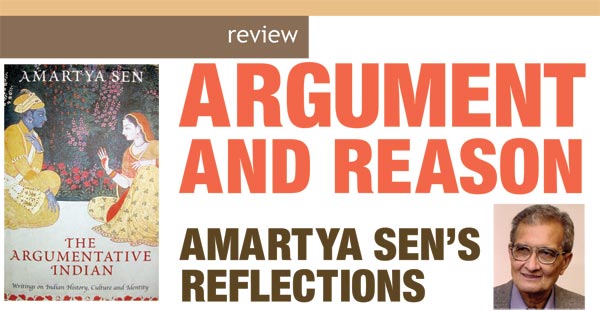 (Above) Jacket design of the Indian edition of “The Argumentative Indian” by Amartya Sen (r). (Above) Jacket design of the Indian edition of “The Argumentative Indian” by Amartya Sen (r).Amartya Sen’s breadth of scholarship and humanist worldview are too well known to belabor repetition; what adds extra sheen to “The Argumentative Indian: Writings on Indian History, Culture and Identity,” his thoughtful, wonderfully readable anthology of essays, is the recurring flashes of his charming, self-deprecating wit. Prolixity is not alien to us in India. We were able to talk at some length. Krishna Menon’s record of the longest speech ever delivered at the United Nations (nine hours non-stop), established half a century ago (when Menon was leading the Indian delegation), has not been equaled by anyone from anywhere. Other peaks of loquaciousness have been scaled by other Indians. We do like to speak. In this thoughtful, deeply passionate yet reasoned book, what is the gist of Sen’s message? If there is an overarching message in his extraordinarily varied intellectual peregrinations, it is a passionate belief in plurality, whether in the individual, a nation or in the global comity of nations. His disdain for Johns Hopkins political scientist Samuel Huntington’s notorious “clash of civilizations” thesis is as deep as his dislike of the sectarian national consciousness of Hindutva supporters of the Sangh Parivar. The identities of human beings, and human societies, he is at pains to argue, are too multi-layered to lend themselves to such simplistic classification. Huntington divided the world into various civilizations, earning from Sen the epithet an “intellectual simplifier.” The exoticist approach concentrates on the wondrous aspects of India, where the focus is on what is different. The magisterial approach is related to the exercise of imperial power, looking at India from a ruler’ viewpoint. The curatorial approach is the most catholic of the three, and includes noting, classifying and exhibiting diverse aspects of India. Alberuni’s 11th century Arabic treatise Tarikh Al Hind (History of India) is a good example of the curatorial approach. Alberuni, an Iranian of Central Asian origin, came to India with Mahmud of Ghazni. He mastered Sanskrit, studied Indian texts on mathematics, natural sciences, literature, philosophy and religion and met and conversed with many Indian scholars. Among the Europeans, the redoubtable William Jones of the East India Company brought a similar approach to his study of India. He established the Royal Asiatic Society of Bengal which translated a number of Indian classics like the Gita, Manusmriti and Kalidasa’s Sakuntala. Sen contrasts this curious, respectful approach with the later magisterial approach, exemplified by James Mill, who published a classic book on India in 1817. Mills chastised early British administrators (like William Jones) for having taken “Hindus to be a people of high civilization, while they have in reality made but a few of the earliest steps in the progress to civilization.” The exoticist approach of the West towards India was more positive, but it was based less on the reality of India than whatever the European imagination conjured, and so this approach carried with it an almost manic-depressive cycle of joy, pleasure, admiration and then bitter disillusion. India’s Nobel laureate poet and philosopher Rabindranath Tagore was a victim of this process, Sen said. Though quite different, the exoticist and magisterial approach tended to reinforce a Western impression of India that ignored its rationalist aspect and emphasized its mysticism and exoticism. Sen doesn’t buy the oft-repeated notion in the West that the European enlightenment and subsequent rationalist values was a unique, Western phenomenon. “The West was West long before it was modern,” Samuel Huntington has said. Sen begs to differ. The notion of civilizational divides never fails to invite his razor-sharp critique. The problem, he says, is that the presence of today’s individual liberties in the West are extrapolated into antiquity with very little evidence. True, some classical Western writings support certain liberties. Aristotle supported freedom and tolerance (for free men, not women or slaves). But there are non-Western supporters of freedom as well. Emperor Ashoka in India covered the country with inscriptions on stone tablets all over the country in the third century BCE which not only talked about good behavior and wise governance but also included a demand of basic freedoms for all. And unlike Aristotle, he did not exclude women and slaves. Sen questions the very geographical notion of a Western civilization. The ancient Greeks, he pointedly notes, were far more interested in communicating with evolved civilizations like the Indian or Chinese civilization than the neighboring Visigoths or Huns. Huntington’s remark that the “sense of individualism and a tradition of individual rights and liberties” to be found in the West to be “unique among civilized societies” draws this response: There has been support as well as denial of such rights in the history of both Europe and India, and it is hard to see that the Western experience in support of these rights is peculiarly “unique among civilized societies.” For example, when Akbar was issuing his legal order that “no man should be interfered with on account of religion, and anyone is to be allowed to go over to a religion that pleases him,” and was busy arranging dialogues between Hindus, Muslims, Christians, Jains, Parsees, Jews and even atheists, Giordano Bruno was being burnt at the stake in Rome for heresy, in the public space of Campo del Fiori. The Indian argumentative tradition, Sen says, goes back centuries and marks a significant sociopolitical milestone for civic rights. These rights mostly rested with privileged men, but they frequently crossed over gender and class barriers. In fact, Sen says it was spokespersons for disadvantaged groups that challenged religious orthodoxy. Counterarguments against class are recorded in the epics. Much later, medieval poets in the 15th century included exponents influenced by the Hindu bhakti and Muslim Sufi movements. Many poets came from socio-economically humble backgrounds — Kabir was a weaver, Dadu a cotton carder, Ravi Das a shoemaker. Women were part of the movement too, including Meerabai. The historical roots of democracy in India are well worth considering, if only because the connection with public argument is often missed, through the temptation to attribute the Indian commitment to democracy simply t the impact of British influence (despite the fact that such an influence should have worked similarly for a hundred other countries that emerged from an empire on which the sun used not to set). The point at issue, however, is not specific to India only; in general, the tradition of public reasoning is closely related to the roots of democracy across the globe. But since India has been especially fortunate in having a long tradition of public arguments, with toleration of intellectual heterodoxy, the general connection has been particularly effective in India. In a separate essay, Sen writes a fascinating account of the encounter of China and India in antiquity and dwells at length on how intellectually and culturally both countries benefited. Being the quintessential Bengali bhadralok, there are separate essays on Tagore and Satyajit Ray. A number of thoughtful essays dwell on the socioeconomic ramification of gender and class inequality. Unsurprisingly the book has been by-and-large ecstatically received by critics. In a long, appreciative review in The Times of London, William Dalrymple compares Sen’s celebration of Islam’s complex contribution to Indian culture with the other Indian Nobelist, V.S. Naipaul whose jaundiced view of the Islamic incursion into South Asia has made him an apologist for Hindu nationalism. “This is an original and provocative book, which will surprise and challenge many middle-class Indians, especially those on the right,” Dalrymple writes. “But whether you stand in Sen’s camp, or that of Naipaul, you will find this erudite and sophisticated collection of essays engaging and thought-provoking. The product of a great mind at the peak of its power, it is one of the most stimulating books about India to be written for years.”
However, Gordon Johnson, general editor of The New Cambridge History of India, is less impressed. “Sen’s own political agenda is clear for all to see and is wholly admirable,” he wrote in the Times Higher Education Supplement. “He would like a world that is more egalitarian, where the state is the benign protector of individual rights, balanced by a concern for fairness and equality between ethnic, cultural and social groups, and between the genders and social classes. . . Given the virtue of Sen’s position, to which nearly all of us would subscribe, it is hard to have to say that ‘The Argumentative Indian’ proves on close reading to be a flawed book. This is because Sen does not go beyond stating self-evident truths. . . There is a thinness and superficiality about the whole that displeases.” Johnson wrote that the essays could use some revision. “Reading the pieces consecutively, one is struck by the repetitions, by the recycling of very limited illustrative material and by the fact that the crucial arguments are not developed from their original brief formulations. “More seriously, Sen’s history is weak. . . “My greatest disappointment with this book is that its use of history is as unscrupulous and trivializing as that of those Sen wishes to bring down.” ETHNIC NEIGHBORS: Who Will We Remember? Vietnamese America turns 30 years old - By Ky-Phong Tran Vietnamese American writer Ky-Phong Tran’s award-winning crie de coeur will doubtless strike a chord with many South Asians: His ruminations refer to the Vietnamese American community, but his worries about the marginalization of the less privileged and the penchant for sweeping failure or sorrow under the rug are equally relevant for the South Asian immigrant community.  Vietnamese American writer Ky-Phong Tran with the 2005 NCM Award for Best Editorial. April 30, 2005 marked the 30th anniversary of the end of the Vietnam War. As expected, the media coverage on America’s most controversial war has been extensive. The Orange County Register and the San Jose Mercury News, which cover regions with a high population of Vietnamese Americans, had special sections to commemorate the Fall of Saigon and Black April, as called by some in the community. In my reading, I have found tales of escape from refugee families, coverage by ex-GI’s and former war reporters, stories of return trips to Vietnam, and most of all, stories examining the successes of the Vietnamese American community: its diverse population of educated professionals, a world champion martial artist, CEO’s, elected officials, and the rise of Little Saigons. As writer in an open society, I do not advocate censorship and would never ask for these stories to be subtracted. But, what should be added? A balanced perspective to both the occasion and the Vietnamese American community. So, as the 30th anniversary pulls near, I ask: What will we do for the occasion? Will we seek to honor ourselves only? To pat ourselves on the back and move on? My answer is this: We should create a new path for the memorial. Redefine it. Own it. Make it ours. And in that new memorial, we not only celebrate our glories, but we remember our struggles--past and present. We look at ourselves honestly, and in totality. For me, this anniversary is not just a Feel Good Day. It is also a time to remember, reflect, and acknowledge the struggle in our communities today. Yes, we have doctors and lawyers and engineers and astronauts and a professional football player. But we also have a large segment of our community living in poverty. We have those with limited access to affordable housing and adequate health care and proper schools. There are closeted queers afraid of their own parents. Those struggling with language access and in indecent working conditions. Domestic violence and depression are not discussed. What of those struggles? Those on the margins? Will we sweep them under the rug for the occasion? There is a part of our own culture that hides our troubles and sorrows in order to not burden others. Dung co lam phien. How long can we bury our problems and hope they will just go away? Politically, I am concerned that the intimidating, at-times McCarthy-like, anti-communist portion of the Vietnamese community is leading us astray, turning off potential leaders, and occupying too much space for discourse. I am concerned when local and state Vietnamese American officials run solely on nationalist, anti-communist platforms. What are their stances on education, local business, senior and youth programs, health care, transportation, land use? What will they do for us today and in the future? I am concerned that so many of us were so easily led to support the invasion of Iraq. That we could so readily dismiss other people across the planet as if we knew nothing of war. That the bunker buster bomb and the Patriot Act came from our ranks, like we had no previous experience with shrapnel and the curtailing of human rights. Within ourselves, our tinh than, I worry about us often. I see the domestic violence. The social isolation of our seniors. The faraway eyes and empty silences that hide so much sadness. Frankly, I am tired of hearing how completely happy and re-adjusted we are. It’s not true. We all know we smile when we are happy and sad, so smiles are no clue. I know my mom misses her family in Vietnam so much that she cries herself to sleep. That my neighbors and cousin fear homelessness and annual budget cuts to Federally subsidized Section 8 housing. I see the lost youth and violence of gang life. I know that I am not over growing up without grandparents and aunts and uncles and cousins. I can feel the loneliness, the confusion of who we are and who we aren’t. The more we hide it in ourselves, in our private space, or in our public space--our art, literature, media, policy--the more I feel the post-traumatic stress disorder, the high rates of mental illness eating at us, gnawing on our spirit. I’m sad about that. It’s okay to be sad about it. And it’s okay to say it or write it. Paint it and sing it. Share it and talk about it. There is no shame in it. Our sadness is our humanity singing. Last, I ask: How will we measure our progress? By the first of us or the last of us? In our rich history, we as a people have demonstrated an intense unity in the face of invasion and colonization. We have also divided ourselves brutally, literally in half at times. What tradition will we cultivate here in the US?
I am not a cheerleader. I am, however, a writer. One voice, one pen among billions. A community artist and a community builder. A fighter. A rememberer. A seer. A doer. And on this important anniversary in the history of the Vietnamese Diaspora, I cannot rah-rah all the way through and pretend our problems don’t exist. I love my community with passion. When I look critically at the Vietnamese American community and the way it is presented, it is so that we can better ourselves. So that we can honor ourselves and face our challenges. Teach ourselves. Heal ourselves. So we can know ourselves. All of us. The well-to-do and the marginalized. The astronaut and the fish butcher. To see our smiles and our scars. GLOBALIZATION: An Indian Adventure: The Foreign Influx - By Siddharth Srivastava Following higher and mid-levels employees, workers from abroad are seeking lower-end jobs in India, such as answering phones at call centers, for a pittance of what they earn in their home countries, writes Siddharth Srivastava.  They have been labeled as “adventure workers” who have been joining the Indian work force from the U.S. and Europe. It has been sometime since India’s outsourcing and information technology firms have been hiring foreigners at higher and middle levels for their expertise. However, workers from abroad are seeking lower-end jobs as well, such as answering phones at call centers, for a pittance of what they earn in their home countries. They have been labeled as “adventure workers” who have been joining the Indian work force from the U.S. and Europe. It has been sometime since India’s outsourcing and information technology firms have been hiring foreigners at higher and middle levels for their expertise. However, workers from abroad are seeking lower-end jobs as well, such as answering phones at call centers, for a pittance of what they earn in their home countries.Most who have been quoted by various media say that the idea behind taking up such jobs is to “chill out,” “take a break,” travel in the sub-continent while earning at the same time. But there are also more serious dynamics at play wherein a shortfall of language-proficient manpower is being plugged by personnel who might find themselves out of jobs in more advanced nations, due to cheaper options elsewhere. These foreign workers address the most common complaint by customers abroad that native English (or French, German, Spanish or Dutch) spoken by Indians has a very different flavor/accent that makes it difficult to understand. Then there are the requirements of cultural and geographical knowledge to be able to address specific queries. Although there are no exact estimates of the number of foreigners answering phone calls in India, the National Association of Software & Services Companies, the industry trade association has estimated that there are over 30,000 expats working in Indian IT and offshoring companies, which is thrice the number two years back. The number of foreign nationals working in India is estimated to be over 50,000, with over 12,000 registered at IT hub Bangalore. Evalueserve, a Delhi-based company that provides consulting and research services to corporate clients worldwide, has estimated that the offshoring firms in India will need over 160,000 workers with refined foreign-language skills by 2010. However, the Indian education system will only throw up 40,000 or so graduates with the required proficiency. Evalueserve predicts that foreigners will make up the difference. Among the firms that have hired foreigners for language proficiency include Evalueserve (40 foreigners among a total workforce of 900, with plans to add another 150 foreigners this year), Technovate (40 out of 70 workers in a travel-related process are Europeans, with plans to add another dozen) while GTL Ltd, based in Pune, has hired a London-based employment agency with elaborate plans. These foreign workers are being seen as emblems of a reverse movement of human resource, as opposed to the more usual Indian brain drain to foreign shores. Typically, the salaries of foreign executives in India are much lower than their earnings abroad and at par with Indian employees, but most firms ensure that their stay here is comfortable by ensuring health insurance, free lodging, special leave structure that allows travel back home as well as providing an environment that is professional. “It’s a win-win situation,” said Sreeram Iyer, chief executive of Scope International, a Chennai-based human resources and software development outsourcing operation of Standard Chartered Bank. “The workers don’t only come for adventure. Many have trouble getting jobs back home,” he said, in an interview with The Economic Times. In a recent report Business Week has talked about the emergence of service providers that assist India’s outsourcers to hire from overseas. They include Tim Bond, a 32-year-old consultant, who set up Launch Offshore, a London recruitment firm, last October that caters to Indian call centers. Tim has found jobs for 100 workers, and expects to place 200 more this year. Headhunters India, a leading tech employment company, has been quoted as saying that it gets about 300 unsolicited foreign résumés every month, and has found jobs for about 100 expats in the past two years. At Team Lease Ltd. India’s largest temp agency, résumés pour in from Africa, Japan, Poland, and Latin America. Over time people been profiled by the media represent a diverse cross-section of the West: Norwegian Even Eng, Swiss Myriam Vock (call center Technovate), Japanese Miki Chiba, American Joshua Bornstein (Infosys), Polish Magdalena Gazewska (Siri Technologies), Brits Paul King and David Eddison (ITC Infotech), Swiss Patrick Schapper (travel consultant), Scotsman Kenny Rooney (GTL, Pune). Rooney has been quoted as saying: “India provided me a growth opportunity that wasn’t there back home.” Surveys by Nasscom and Evalueserve in the past have also indicated that the passage of jobs between India and the U.S. and the U.K. is not a “one-way street.” Recently, an industry report by consulting firm McKinsey and NASSCOM has forecast that India’s business services and IT exports are expected to surge more than 25 percent a year to $60 billion by 2010. But there are going to be severe hurdles in the form of manpower shortages, rising salaries and infrastructure needs that may make Indian firms look at international locations to conduct operations as well as hire foreigners. Indian IT companies have set up offices in the U.S. and also China, but they have been largely restricted to marketing, generating new clients as well as establishing a countrywide network that have created very few jobs and that, too, mostly for Indians. In the last couple of years, however, there have been several steps by several IT firms such as Infosys, Wipro and Satyam that have grown rapidly in scale to hire Western employees to deal with local populations abroad and the need to penetrate markets further. Last month, Tata Consultancy Services, one of India’s biggest IT firms, detailed plans to more than double its U.S. staff next year in an expansion that looks to cut into a key market for U.S. giants International Business Machines Corp and Accenture. TCS is boosting its U.S. payroll to 1,500 employees from 600 as it focuses on providing more advanced IT consulting services in the United States. According to a company statement there are plans to hire 13,500 professionals this fiscal year out of which 5,000 will be hired abroad. In 2004, Infosys Technologies invested $20 million to create nearly 500 consulting jobs in the U.S. Observers say that overseas professionals feel comfortable working in Indian tech firms, as over the years these firms have imbibed global practices that are inherent in their operations now. As Indian companies continue to expand operations worldwide, they have adapted their management practices and strategies to compete in the global marketplace. Until recently, most Indian software companies employed Indians in key positions in global positions around the world. An onsite posting or assignment was a plum perk that the companies offered budding MBAs and other consultants wishing to move towards marketing or sales. Indian companies have now begun to realize the significance of having local hands in local markets and have started recruiting sales and marketing people in local markets to represent them. This has not only created a familiarity among foreign workers about Indians and India, but also acted as a push to look for placements when the going is tough abroad. - Siddharth Srivastava is India correspondent for Siliconeer. He lives in New Delhi. |TOP| MUSIC: The Many Tunes of South Asia: Stanford’s Music Fest - A Siliconeer report The second annual Pan-Asian Music Festival at Stanford brings the music of South Asia to Stanford University in all its wondrous diversity in a rich variety of concerts, lecture, demonstrations, and films. A Siliconeer report. 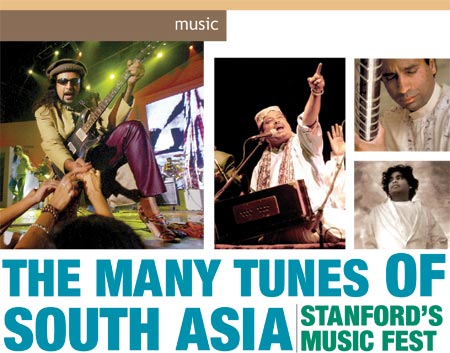 Clockwise From left: Sufi pop singer Salman Ahmad, Farid Ayaz Qawwal, sitarist Kartik Seshadri and Bollywood composer A.R. Rahman. Clockwise From left: Sufi pop singer Salman Ahmad, Farid Ayaz Qawwal, sitarist Kartik Seshadri and Bollywood composer A.R. Rahman.The second annual Pan-Asian Music Festival Feb. 11-18 brings a collection of singers as eclectic and diverse as South Asia itself, and leavens it with lectures by scholars, offering South Asia aficionados (and also the culturally curious) a rare, varied glimpse into the rich musical traditions of South Asia. The festival is presented by the department of music and the Asian Religions & Cultures Initiative with Prof. Jindong Cai as artistic director.
Cai sees music as the ideal medium to foster the positive aspects of cultural globalization. The festival seeks to promote an appreciation of music in contemporary Asia through the presentation of concerts, lectures and symposia, and examples of cross-fertilization between music and other creative arts. To highlight the uniqueness of the myriad cultures of Asia, festival organizers decided to feature one region each year—thus the focus on South Asia in 2006. The week begins with a symposium on Sufi music and the place of music in Islam (Feb 11-12) and a concert by one of Pakistan’s greatest qawwali ensembles, Farid Ayaz Qawwal and Brothers. The ecstatic devotional music of Sufi Muslims, qawwali integrates love poetry, devotional imagery, musical rhythms and melodies, gesture and movement, to spur moments of mystical rapture and insight. Salman Ahmad will perform “Sufi Rock” with his U.S.-based band Junooni on Feb. 13. He will sing lyrics of traditional Sufi poets as well as more recent Sufi poetry, in a rock idiom. On Feb. 14 the festival hosts a tribute to A.R. Rahman, India’s most renowned composer of film and pop music. A child prodigy, Rahman has composed music for over 100 films in several Indian and international languages and has been honored with a Padmashree by the Indian government, all before 40. Time critic Richard Corliss has said: “His songs were recognizably Indian but paraded a world of musical influences, from raga to reggae, from Broadway to Ennio Morricone, with each tune heightening the film’s drama. It was an astonishing debut.” The tribute to Rahman includes a retrospective of his film achievements and an on-stage interview and Q&A. Master sitarist Kartik Seshadri, the foremost disciple of Pandit Ravi Shankar, performs on Feb. 17 with acclaimed tabla player Swapan Chaudhuri. Sanjay Subrahmanyam regales connoisseurs of Carnatic classical vocal music with a rare concert of morning ragas on Feb. 18, followed by a reception with South Indian food. The grand finale is a performance by the Stanford Symphony Orchestra under conductor Jindong Cai, playing a major symphonic work, Songs of the Five Rivers. It is composed by Naresh Sohal whose many works have been performed by renowned orchestras like the New York Philharmonic Orchestra under Zubin Mehta and the BBC Symphony Orchestra under Sir Andrew Davis. Performing with the orchestra will be coloratura soprano Nikki Einfeld. A.R. Rahman will be present. The program includes Debussy’s La Mer. HEALTH: When Bones Are at Risk: Managing Osteoporosis - By Anjali Tate, M.D.  Osteoporosis, a disease leading to thinning of bone structure, affects 20 million U.S. women, but it does not need to be inevitable, it is preventable and treatable, writes Anjali Tate, MD. Osteoporosis, a disease leading to thinning of bone structure, affects 20 million U.S. women, but it does not need to be inevitable, it is preventable and treatable, writes Anjali Tate, MD. Osteoporosis, a disease process characterized by low bone mass, resulting from deterioration of bone architecture. It leads to bone fragility and an increased risk of fracture. It affects over 20 million women in America. Osteoporosis, a disease process characterized by low bone mass, resulting from deterioration of bone architecture. It leads to bone fragility and an increased risk of fracture. It affects over 20 million women in America. Women are most susceptible to developing osteoporosis after menopause, when estrogen levels decline. Bone is a living organ that continually regenerates itself through a process referred to as bone remodeling. Embedded in our bones are two important types of bone cells called osteoclasts and osteoblasts. These cells perform the critical function of bone remodeling, in which old or damaged bone is taken away and new, healthy bone is created in its place. Throughout childhood and into our twenties, bone formation exceeds bone breakdown, so that we are building stronger and healthier bones. By age thirty, most of us have achieved our peak bone mass. At about the age of thirty, for reasons that are not completely well understood, but is estrogen dependent in women, this process starts to reverse; bone breakdown begins to slightly outweigh bone formation. As men and women age, the rate of bone loss begins to accelerate. In postmenopausal women, this decline in bone mass can be up to 2 to 3 percent yearly.
Modifiable factors are:
Diagnosing bone loss The National Osteoporosis Foundation recommends bone density testing for:
Treatment and Prevention Weight-bearing exercises such as walking, jogging, dancing, hiking, stair and climbing work against gravity by transmitting weight throughout your bones. Your bones respond to this force by growing stronger. Bike riding and swimming, are good exercises but are not weight-bearing. Weight-bearing exercises should be performed at least three to five times per week. Resistance exercises place muscle tension on the bones. This also strengthens the muscles and stimulates the bones to grow stronger. Exercising with weights or resistance bands are examples of this type of exercise. Resistance exercises should be performed two to three times a week. If you have osteoporosis, make sure to review your training program in advance with your physician.
Do I have osteoporosis? What is a bone scan and will it hurt? How can I prevent/treat osteoporosis? How much calcium should I take? What medications are used to treat osteoporosis? How can I find out more about osteoporosis?
- Anjali Tate, MD, is a gynecologist with the |TOP| TRAVEL: Crown Jewel of Yosemite: Ahwahnee Hotel - By Al Auger Luxury is a given at Yosemite’s Ahwahnee Hotel, but it’s the little things that are the secret of its charm, writes Al Auger.  The gorgeous outdoors of Yosemite (left) provide the perfect foil for the majestic Ahwahnee Hotel (right). As we passed through the entrance to Yosemite National Park our eyes were aglow with the dream of our romantic getaway at the imposing and seductive Ahwahnee Hotel. This beautifully rendered hostelry, finished in 1927 and a National Historical Landmark, was recently refurbished at a cost of $1.5 million. We found ourselves ensconced in a warm and intimate room with a lovely view of Yosemite Falls cascading 2,425 feet, making it the tallest waterfall in North America.
Luxury is a given at the Ahwahnee, but it’s the “little” things that you notice. Ice already in the bucket, two large closets with generous storage and big drawers. An array of soaps, shampoos, lotions and other amenities such as soft, fluffy robes, hair drier, iron, etc., all to make your stay as pleasant as possible. Each night we would return to our room and find the bed turned down and a chocolate delight on each pillow. As we meandered the stunning interior, our first impression was one of immensity and stolid strength. The large rooms with their warm woods and ceiling high windows bringing the beauty of Yosemite inside quickly turned awe into a sense of time stopping and of intimacy. The Ahwahnee sits far and away from the onslaught of the usual tourist throngs. The best item you can bring is a bicycle to be able to see all the sights yet maintain that sense of quiet and respect for the expansive portrait of nature that surrounds you. At the Ahwahnee, the pleasure of food seems to be a way of life. At breakfast, all thoughts of will power were dispelled with the lightest waffle with walnuts and warm, real maple syrup we had ever eaten. The next day it was blueberry pancakes, once again topped with warm, real maple syrup. For lunch, we both returned to our roots and split a flame-broiled Ahwahnee Burger. Dinner was another adventure in haute cuisine made even more dramatic served in the warm atmosphere of the candle-lit Great Dining Hall. Management still suggests ties and coats for dinner, but this long-held rule is no longer enforced. But the room itself demands at least a sense of style and good taste in dress. My companion had a simple dinner of Caesar salad and delicious crab cakes, while I opted for the Chilean sea bass and a salad of greens with a sassy raspberry vinaigrette. What is more romantic than a wonderful dinner in a room filled with flickering candlelight, total indulgence from the serving staff and a pianist playing soft, romantic ballads in the background?
In the fall, colors are changing in anticipation of winter; the air is crisp and invigorating. This is the time of year to visit the “backside” of Yosemite, Tuolumne Meadows, and the more bucolic of Yosemite’s many splendors. Whichever of these seasons you choose to visit Yosemite, there is an intensity and spark in the air not experienced during the warm, torpid days of summer. And, most importantly, there is space to enjoy it that much more, as the large crowds have all returned home. The staff seems more relaxed and approachable; there is a sense the world is back in rhythm with itself.
- Al Auger is a freelance writer. He lives in Redding, Calif. |TOP| FESTIVAL: A Feast of Movies: Cinequest Film Fest - A Siliconeer report The Cinequest Film Festival in San Jose, Calif. will screen a number of South Asian films. A Siliconeer report.  The 16th annual Cinequest Film Festival brings 185 movies to downtown San Jose March 1-12, starting with Thank You for Smoking. There are 80 features and 105 short films, as well as a full slate of seminars and parties. The festival will be concentrated at three downtown venues — Camera 12 Cinemas, San Jose Repertory Theatre and California Theatre The 16th annual Cinequest Film Festival brings 185 movies to downtown San Jose March 1-12, starting with Thank You for Smoking. There are 80 features and 105 short films, as well as a full slate of seminars and parties. The festival will be concentrated at three downtown venues — Camera 12 Cinemas, San Jose Repertory Theatre and California TheatreIn addition, there will be off-screen offerings, including podcasts and free video downloads of DVD-quality films to watch on home TVs, computers, cell phones and other handheld devices. A separate Focus on India section includes the closing night film, Deepa Mehta’s Water, a story of Hindu widows set during the struggle for Indian independence. There are other Indian and U.S. made films in the Bollywood style, including the romance It’s a Mismatch. The South Asian fare includes: Water, the final film in Deepa Mehta’s trilogy that included Fire (1996) and Earth/1947 (1998). In 1938 Varanasi, a precocious, feisty eight-year old, Chuyia (Sarala), is married and then widowed. Required by Hindu laws at that time to leave mainstream society, she is consigned to a dilapidated home for widows, where her hair is shorn and she is made to wear white as she adapts to a new life to be spent in deprivation and renunciation. Starring Kulbhushan Kharbanda, Waheeda Rehman, Raghubir Yadav and Seema Biswas Music by Mychael Danna and A.R. Rahman. Mar. 12 at 6:30 p.m., followed by a gala party. The Gold Bracelet (world premiere), by Los Angeles actor-director Kavi Raz, takes place in the weeks before Sept. 11, 2001, as a Sikh family prepares for a wedding. As dad Arjun Singh (Raz) prepares give his beloved gold bracelet to his daughter’s fiancé, terrorists attack the World Trade Center. Sentiments turn ugly against South Asians, and the family’s life takes a sudden harrowing turn. Mar. 11 at 8:30 p.m. and Mar. 12 at 12:30 p.m. Milk & Opium by Joel Palombo, an artist and art teacher originally from Detroit who has been living in New Delhi for the better part of a decade. The film depicts the life of itinerant musicians and their clash with modern India. Mar. 8 at 7:15 p.m. and Mar. 9 at 7:30 p.m. It’s a Mismatch (world premiere), by Michigan native Ajmal Zaheer Ahmad, is a nonresident Indian suburban romantic comedy with Anupam Kher and Boman Irani as the Punjabi and Gujarati fathers of a lovestruck young couple. Other stars include Nandana Sen, Anubhav Anand who doubles as producer/screenwriter.. Mar. 4 at 9 p.m., Mar. 5 at 12 p.m. More information is available at the festival Web site at www.cinequest.org. ETHNIC NEIGHBORS: Keeping the Faith: Three Minority Heroes - A Siliconeer report The 7th annual NCM awards honored three outstanding representatives of ethnic minorities for their courage and commitment to their values. Siliconeer joins the New California Media in saluting them.  The three exceptional communicators honored by NCM: (From l) Hardy Brown of “Black Voice News,” Chaplain James Yee, author, and Rick Rodriguez, executive editor of the “Sacramento Bee” and president of the American Society of Newspaper Editors. Just before changing its name to New America Media, the San Francisco-based group put on its seventh annual awards ceremony, celebrating the best journalism in ethnic media statewide Jan. 26 in San Jose, Calif. “The award winners kept mentioning ‘New America Media,’“ says executive director Sandy Close, “as if the name magnified all of us in the room by putting us on the national stage.” The ceremony celebrates ethnic media of all stripes. Television, print, radio and Internet news organizations send in entries on a multitude of topics, including health care, investigative reporting, youth voices and international affairs. Many of the reports revolve around immigrants’ tales of making it, or not, in their new country. The presentation and organization behind it, says Rep. Mike Honda, Democratic congressman from the South Bay, recognizes people who most Americans know little about. “People like Ang Lee,” he says, director of the gay cowboy love story film Brokeback Mountain, “have not gotten enough coverage.” The role of journalists, Honda says, as “rabble rousers,” is important to raise questions on topics Americans seldom consider. He points to former Army Chaplain Capt. James Yee, a speaker at the event, as one example. Capt. Yee served the Muslim detainees in Guantanamo Bay as a chaplain. He was arrested on espionage charges and spent 76 days in solitary confinement before being cleared of all charges. Bernard Lloyd, an advertising representative at black newspaper the Los Angeles Sentinel, says he read Yee’s story a major newspaper and thought, “This guy is going to spend the rest of his life in jail.” He read another, he says, and thought, “This guy is definitely going to spend the rest of his life in jail.” Only after picking up the Japanese-American paper Rafu Shimpo, Lloyd says, did he read an account of the story less “cut and dry.” This year NCM honored three people for being exceptional communicators: Hardy Brown, Rick Rodriguez and James Yee. “I was dedicated to turning the newspaper into an advocate for justice in the eyes of the community and provide them with some place to go in times of need,” says Brown, the son of a sharecropper who became the first black meter reader for California Electric Company before joining Kaiser Permanente. In the early ’80s the Black Voice News covered the story of the Black History Queen not allowed to ride on the San Bernardino float in the Rose Bowl Parade. They broke the story of a California State University San Bernardino president whose memo questioned the capacity of black students to compete at the university. In 1998 the Black Voice News aggressively reported the story of a black teen-age girl who was shot 27 times in the back by Riverside police officers, publishing the coroner’s report that galvanized the community and led to four officers being fired. The city started to use cameras to record police activity. Brown received death threats during the reporting of the story. In 2005 the Black Voice News has been devoted much energy to reporting the aftermath of hurricane Katrina. Whether it’s teaching Sunday school or being the San Bernardino branch president of NAACP, Brown remains embedded in his community. Now he is looking to institute an internship program for students because he feels they can provide stronger coverage of the community. Then in Sept. 2003, after being officially cited twice for his outstanding performance, he was accused of spying and aiding Al Qaeda suspects. He ended up spending 76 days in jails with only the Koran to read, placed in leg irons even when he met with his lawyer, his name and reputation smeared by highly publicized charges. But he stood firm in the face of adversity. After months of government investigation, all charges were dropped and he resumed full duties. It was only then that Chaplain Yee obtained an honorable discharge on Jan. 7 2005, ironically after yet another Army Commendation medal for “Exceptionally Meritorious Service.” The commander who jailed Yee was later transferred to Iraq and was entangled in the Abu Ghraib prisoner abuse controversy. Now Chaplain Yee has talked about that painful experience in his book “For God and Country: Faith and Patriotism Under Fire” which was published last year and about which the Washington Post wrote that it was, “required reading for all U.S. officials waging war on Islamist terrorists.” Early on, his bilingual abilities helped him cross borders, stringing for the Washington Post while covering the farm workers movement in California’s Central Valley. After going to college at Stanford where he got a B.A. in communications and traveling in Mexico, he covered state politics in Sacramento. As a Latino reporter, Rodriguez brought new issues to the table. “My interests – farm workers’ views, issues relevant to people of color,” he said, “were not really done that much at the time.” The Sacramento press corps, he says, still needs integration. After rising through the ranks in the state capitol, Rodriguez, who joined the Bee in 1982 as a political writer now sits as its executive editor and is also president of the ASNE, the first Latino to hold that position. He is not finished, though. His latest crossover work involves collaborations between mainstream and ethnic newspapers. These “win-win” efforts let mainstream outlets reach the ethnic communities within their communities, he says. Meanwhile, ethnic media gain the readership and investigative strengths of mainstream papers. AIR TRAVEL: Maharaja in Bay Area: Air-India Opens Office - A Siliconeer report Air-India continues to woo U.S.-based NRIs with its newly-launched office in San Francisco. A Siliconeer report. 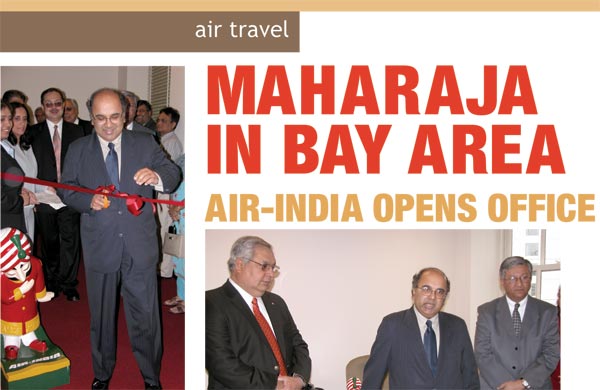 Left: Consul General B.S. Prakash inaugurates Air-India’s San Francisco office. Right: Air-India Sales Manager Ferdoas Nagarvala (l) and West Coast Manager Lalit Kapur (r) with Consul General B.S. Prakash. (Siliconeer photos) Air-India opened its San Francisco office Jan. 13 with San Francisco Consul General for India B.S. Prakash in attendance. Although Air-India presently doesn’t fly from the San Francisco Bay Area, that could change within the year or next year, Air-India officials said, though they were unwilling to commit themselves to any specific time period. Consul General Prakash said the timing couldn’t be better. “It is an exciting time for India, a time of confidence, of greater engagement with the world and it is an exciting time for U.S.-India ties,” he said. “We have had eight percent growth over the last decade, there is a feeling of confidence, of optimism, we have $150 billion of foreign exchange, we are aggressively engaging with the world, dismantling barriers.” There had been changes in the aviation sector as well, he said. “Just a few months ago we announced an open sky policy, and we announced a melodramatic breakthrough, particularly with the U.S., in the aviation sector. India is one of the leading buyers of commercial aircraft, whether it is Boeing or Airbus.” India’s burgeoning middle class was fueling the growth, he said. “The growing middle class can travel by air, which is 300 million people,” he said. “If you look at the domestic sector, you see staggering growth (in air travel). India is on an ascendant curve of which all of us feel very proud.” Kapur said presently Air-India has 28 flights weekly from four U.S. Airports. The brand new fleet of aircraft that the airline is purchasing will add a further fillip, both in terms of flights and service, he said. “It’ll make a sea change once the new fleet is there,” he said. With 68 brand new aircraft to be added over the next few years, the level of service will also improve, he said. “With the opening of the office here we are sure we will be able to service you much better and this should be a step towards having flights directly into San Francisco,” he said. “In the near future we do expect that.” Air-India is the only airline which has the same plane without any change all the way to India, he said. “Any other airline on the Pacific route or the Atlantic route, they have one or two stopovers.”
CONCERT Pak Pop Concert: Faakhir in Sacramentore - By Ras Siddiqui Two singers from Pakistan — pop sensation Faakhir and Bangladesh-born Shakila — charmed fans at a fundraiser in Sacramento, writes Ras Siddiqui. 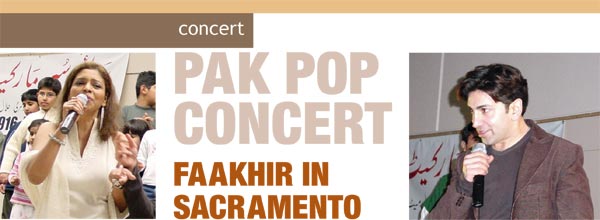 Shakila (l) is a Bangladesh-born singer who lives in Pakistan and is touring with Faakhir for this earthquake relief effort. Pakistani pop star Faakhir (r) charmed a Sacramento audience with his well-mannered personae and a genuine expression of concern for human beings that need help. It really was a special evening Jan. 22 because Faakhir Mehmood, the “Mahi Ve” man, headlined the entertainment here in Sacramento along with Shakila and locals Dream Sounds, Sir Punj, Imran of the Pehchan Group plus Zaki Syed. Over 500 people gathered at the local La Sierra Community Center in Carmichael to raise money for the victims of the October 2005 earthquake in Pakistan. Faakhir is a young man of many accomplishments. Besides being a singer and musician, he is also an electrical engineer (In Pakistan many young singers and musical group members also sometimes happen to be doctors or engineers). He started out as the main force in the Pakistani group Awaz in the early ’90s and has since gone solo with two main CD’s (or albums, if you will) the first of which was “Atish” and the latest one is “Mantra” (2005) out of which his “Mahi Ve” salsa style of music is getting rave reviews and selling like hot cakes in both India and Pakistan. We also discovered here in Sacramento Faakhir’s extremely very well-mannered persona and a genuine expression of concern for human beings that need help. Faakhir started off by saying that he was here in America where his mother was getting medical treatment when the earthquake hit Pakistan in October 2005. He said that he was now doing free shows and wanted to give back “to the country that has given me everything.” Pakistan and Pakistanis is why I am here,” he said. He added that he really liked the idea of mobile hospitals for the affected area after a visit that he made to Pakistan and that he would like to raise funds to build five mobile hospitals for the philanthropic organization Helping Hands. A mobile hospital, he explained, consists of three vehicles, one ambulance and two trucks. “Gana Bajana to apni jagah hai. Chalo is bahane mein Sacramento ke logon se mulaqaat ho gayee.” Faakhir said. (Music is my forte. Thanks to that I got to meet folks in Sacramento.) He said he appreciated what others could do (however little) to help and Pakistanis need to do this rebuilding themselves. “Aakhir mein Allah khair karega,” he said. (God will bless you later.) After saying “Gana to ek bahana hai,” (Music is just an excuse) Faakhir proceeded to sing the melodious “Jiya Na Jaye” from his latest CD, “Mantra,” and then a song from “Aatish.” He then gave the stage to Shakila to entertain the audience. Shakila is a Bangladesh-born singer who lives in Pakistan and is touring with Faakhir for this earthquake relief effort. She started off with a really catchy number. Shakila’s rendition of the late Nazia Hasan’s “Aao Na” and Farida Khanum’s “Jhumpka Chandni ka” were well received but the more classical “Humay tum Say Piyar Itna” was possibly her best. I spoke with Shakila and found out that her high school in Dhaka (St. Francis) was next door to mine (St. Joseph’s). Maybe on her next visit we will ask her to sing a Bengali number for us. The biggest desi musical talent to come out of Sacramento thus far is SirPunj (formerly known as TJ Kool). Sirpunj performed three songs at this gathering. His CD “Kehra Pind Tera” is being released this year. We hope to hear a great deal more from him soon. Faakhir’s heartfelt appeal got everyone seriously into fundraising. People of all ages, especially women (his good looks don’t hurt) and many children came up to the stage to donate. The top price paid for an auctioned Faakhir CD was $200. Around $15,000 was raised in a short interval, quite remarkable since this is very late in the earthquake fundraising season for this area and most of our community is now quite low on donation cash at the moment. On the entertainment side Faakhir did not disappoint and actually got some Sacramento women fans to dance (which is quite unique for this conservative community). He sang the very popular “Mahi Ve,” “Mast Qalandar” and even an Indian song upon request (he was helped by Shakila and three ladies from the audience in this one). His “Toba Hai” to all the beautiful women out there was also very well received along with “Jugni.”
Brothers Anwar Ali and Abrar Ali from local group Dream Sounds from nearby Woodland gave a solid demonstration of their skills with songs from their recently released CD. This group sang songs in English, Punjabi and Urdu. Zaki Sayed, an emerging rap singer from this area, performed “Humara Pakistan,” which was a big hit amongst the youngsters in the crowd. Imran of the Pehchan Entertainment Group sang songs from their upcoming CD, of which “Mujh Ko Hi Mujh Se Chura Le Gayi” was well received. Pehchaan is developing into quite a local desi musical effort. Sami Siddiqui made the strongest Earthquake fundraising appeal and the program ended with more music and on a very high note. Congratulations are in order to all the entertainers and attendees for making this a memorable evening. The Sacramento Pakistani-American Community has shown once again that it cares about the people back in Pakistan. COMMUNITY: News in Brief  South Asian Community Bank Opens in New Jersey | Dance Fundraiser | Abhinaya to Perform in SF | Preventing Online Fraud | Youth Utsav Fest | Brar Elected President of Chicago VMA | Chopra Appointed to N.Y. Education Lobbying Panel | Bhakta Raises $110,000 | Film Fest in New York | South Asian Community Bank Opens in New Jersey | Dance Fundraiser | Abhinaya to Perform in SF | Preventing Online Fraud | Youth Utsav Fest | Brar Elected President of Chicago VMA | Chopra Appointed to N.Y. Education Lobbying Panel | Bhakta Raises $110,000 | Film Fest in New York |West Bridge Strategic Partnership | Vonics Digital nternet Telephone For South Asia | South Asian Community Bank Opens in New Jersey 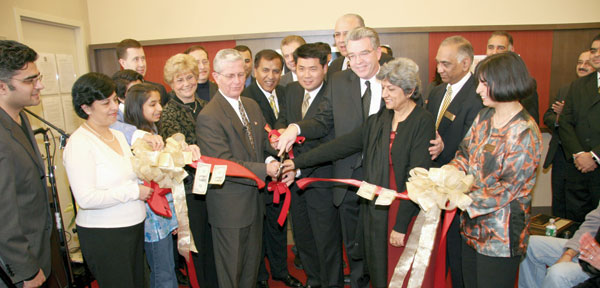 (L-r): Woodbridge, N.J., Mayor Frank Pelzman, bank co-chairman Anil Bansal, Edison, N.J., Mayor Jun Choi, bank CEO Kevin Lenihan and New York Consul General of India Neelam Deo at the opening of the first branch of Indus American Bank. Indus American Bank, a South Asian community bank, was formally launched in Iselin, N.J., Jan. 15, and the weekend launch in itself resulted in new bank deposits of $1 million, according to a press release from the bank. Kevin Lenihan, CEO of Indus American Bank, said “The presence of hundreds of dignitaries and people at the inaugural function — despite adverse weather conditions — and dozens of people standing in queue to open the account itself indicate that the long felt need of the South Asian community for its own bank.” Woodbridge, N.J., Mayor Frank Pelzman formally opened the bank for the public in a ceremonial ribbon cutting ceremony at its first branch in Oak Tree Road, Iselin — the heart of the South Asian community in Central New Jersey. Consul General of India in New York Neelam Deo applauded the step taken by the Indian American community in integrating themselves in the community. Deepak Khanna, who conceptualized the bank about a year ago, said: “This is our community bank. The community has come a long way. The last link that was left between the community and the financial part of the world is now established.” In addition to the services and facilities of other U.S. banks, Indus American Bank offers multi-lingual facilities. For senior citizens, the bank has introduced a courier service for those who cannot easily come to the branch. About a year ago, over 125 shareholders came together to invest the start-up capital of over $12 million through private placement. Indus American is a New Jersey chartered commercial bank. The bank provides personal and business financial services to individuals and small businesses located around its office in Iselin, New Jersey. The banks co-chairmen are Anil Bansal, CEO of First National Corporation, a real estate management company based in Wayne, New Jersey, and Dr. Sharad Wagle, the chief of psychiatry at Holy Name Hospital, Teaneck, New Jersey. The banks directors are Meenakshi Khanna, Valerie Krieger, Ramesh Shah, and Zilay Wahidy. The Dance Exposé will showcase performances by talented students from prominent Indian dance schools in the Bay Area. Ticket prices are $15 and $20. All proceeds from the event will go to support FFE. “FFE’s mission is to bring about a transformation in the lives of brilliant and underprivileged students in India through a scholarship program,” the release added. To qualify for scholarships, applicants should rank among the top 15 percent of their class. Often, they are the first in their families to pursue higher education. They come from families with daily incomes of $4 or less. The students’ parents are drivers, housemaids, rickshaw drivers, farm labor belong to other lower occupational groups. Since its inception in 1994 and until end of 2005, the foundation has provided over 18,000 scholarships for an amount of $3.65 million to students from all over India. Forty percent of the scholarships have been awarded to female students. More than 2,000 students have completed their higher education with the help of the foundation’s scholarships. Many are employed with Infosys, WIPRO, TCS, HCL, Reliance and others. Several medical students are serving as doctors in rural areas while others are engaged as teachers, nurses or in other professions. More information about FFE is available on the Web at www.ffe.org The performance will be held at the Cowell Theater at Fort Mason Center in San Francisco Feb. 18 and will feature a special presentation by Abhinaya founder and artistic director Mythili Kumar, recently called “one of the pioneers of teaching South Indian classical dance” by the San Jose Mercury News. Abhinaya Dance Company has presented some of India’s social issues such as domestic violence in “Jagriti: Awakening,” and has paid homage to India’s great leader Mohandas Karamchand Gandhi in “Gandhi-the Mahatma.” Excerpts from these productions will be featured along with traditional pieces. “Abhinaya’s last full length performance in San Francisco was in 1999 and we are looking forward to reconnecting with the North Bay,” said Mythili Kumar. Among the performers featured in “Bharatanatyam” will be Rasika Kumar and Malavika Kumar, daughters and disciples of Mythili Kumar. Additionally, dance company members Preeti Vissa, Vaibhavi Umesh and Anjana Dasu will perform. According to a report by the Federal Trade Commission, close to 44,000 Californians fell prey to identity fraud just in the past year. The same report revealed that San Jose had the fifth highest level of victims in California. “We are acutely aware of the large number of incidences of online fraud and identity theft and the inadequacy of password protection for online transactions,” said Michael Luckin, senior vice-president for delivery systems of the San Jose-based credit union. “That’s why we chose to implement the program instead of waiting to learn from other institutions.” Technology Credit Union, with more than $1 billion in assets, is a member-owned, full-service financial provider that offers services to technology and business professionals in California and their families, focusing primarily on serving individuals who work, live, go to school, or regularly worship in Santa Clara, Alameda, San Mateo, Santa Cruz, San Francisco and Contra Costa counties. More information is available on the Web at www.techcu.com. “These are America-born kids, attending U.S. schools and also keeping the 5,000-year-old tradition alive in the U.S. You could say they are truly bringing and contributing good wholesome family values to the fabric of American culture.” said organizer Sam Rao. The Youth Utsav Fest event will showcase the dozens of dance schools in the Bay area emphasizing regional folk dances of India, known for their colorful costumes and energy. Bollywood film dances are also very popular. “In fact, many of the youth, grounded in traditional dance, also like to perform the popular movie dances- so it’s good for kids to understand and enjoy while learning the culture and heritage of India.” said Srividya Eashwar, a dance teacher with Xpressions Dance Academy in Cupertino, Calif. Prizes will be awarded in different age categories of sub-junior (below 8 yrs), junior (8 to 13 yrs) and senior (Above 13 yrs). The categories are further divided into classical dances/ folk dances and filmi dance styles. “Volunteers of all ages are welcome to join our high school volunteer team led by Dipti Munshi of Cupertino High and adults and parents pitch in with stage and sound management,” said Shankar P.K., a volunteer. Interested readers can email Sam Rao at sam@samrao.com for more information. The festival’s Web site address is www.youthutsavfest.com The Chicago Veterinary Medical Association is an association of nearly 1,400 veterinarians and 4,000 support staff who assist more than one million Chicago area pets and their families. The membership of the CVMA is dedicated to the health and well-being of animals through its nurturing of the human animal bond. The CVMA will strive to fulfill the diversified needs of its members by providing nationally recognized continuing education, cultivating membership involvement, and offering innovative member services and exemplary public awareness Brar has served the association as an executive board member, secretary and president elect. All officers were installed at a black tie installation dinner Jan. 28. This is the largest regional association with about 1400 members. The association will celebrate its 110th anniversary in 2006. The owner of Dorchester Animal Hospital for the last 25 years, Brar opened another pet clinic, Palos Pet Clinic, in Palos Hills last year. He is member of the American Veterinary Medical Association, and the Illinois Veterinary Medical Association. Brar was granted a meritorious service award by University of Illinois College of Veterinary Medicine Alumni Association in 2002. He earned a masters degree in veterinary medicine from the University of Minnesota in 1979. Brar lives in Palos Hills with his wife Mary, daughter Amrita and son Anant. UNYCE is heavily involved in all educational policies, decisions and reform of educational legislation. Currently, UNYCE is trying to get the School Choice Legislation bill passed in the State of New York which will be called the Educational Tax Incentives Act. This bill has already been signed by forty eight legislators. New York Gov. George Pataki has this year provided an incentive of five hundred tax free dollars to parents in school districts that do not come up to the expectations of the State of New York. UNYCE is seeking for greater scope on educational tax incentives. It is seeking up to $25,000 of tax credit during any taxable year. Mulhearn said he has been sensitive to the need for representation on the board by someone from the Asian community. Dr. Chopra had previously supported the Hispanic community on English Plus Campaign and thwarted attempts by some congressmen to stop school funding for bilingual education. As a founder of Asian American Coalition USA which represents eleven Asian communities in the U.S., he helped to set up the Jackson Heights Merchants Association in 1990. In 2005 under his leadership, eleven Asian countries including Afghanistan, Bangladesh, China, India, Indonesia, Korea, Malaysia, Pakistan, Phillippine, Taiwan and Thailand performed on for the first time on the same stage and helped Asians to share their culture with main stream America to help lead the issues related to Asian identity. “We are off to a great first month. I am encouraged and very thankful for the financial support generated within only a few weeks of my announcement - from people eager to bring change and reform to Congress,” he said. Bhakta reported contributions of over $110,000.00 for the reporting period, with over $100,000 cash-on-hand. Raj is a managing partner of Vanquish Holdings, a real estate firm. He also appeared on the second season of NBC’s The Apprentice in 2004. The Opening Night also included a special screening of Bharatbala Ganapathy’s Hari Om. The SAIFF 2005 program of over 55 short, documentary, and feature films from the South Asian subcontinent ran Dec. 8 - Dec. 11 at the Clearview Theater on 62nd and Broadway, and the Rubin Museum of Art. The five-day film festival continues SAIFF’s mission to present the largest South Asian film event in the US, showcasing the best in recent South Asian cinema from India, Pakistan, Nepal, Bangladesh and Sri Lanka. Selections included: Being Cyrus, a dark comedy about a Parsi family featuring Bollywood megastar Saif Ali Khan in his English-language debut, and The Blue Umbrella, director Vishal Bhardwaj’s hotly anticipated follow-up to his 2003 masterwork, Maqbool. Both films were the subjects of a New York Times feature extolling the rise of New Wave Bollywood, which departs from song-and-dance conventions to present a fresh look at Indian society. Other featured selections include: Kya Kool Hai Hum, My Bollywood Bride, starring Sex and the City star Jason Lewis and Bollywood actress Kashmirah Shah; Sancharram (The Journey), Liga Pullapully’s controversial depiction of lesbian love in an idyllic Kerala village; Bachelor, the hit romantic comedy from Bangladesh; and Kal, Ruchi Narain’s revelatory look at Indian youth. SAIFF presented a special program for children Dec. 11, featuring the family films Duratta from Bangladesh about a runaway tyke, and Hanuman, the animated box-office hit from India. The Rubin Museum of Art hosted The Emerging Artists Showcase, featuring shorts and documentaries from South Asia. Films shown included Harsh Beauty, a documentary that follows three eunuchs for several years, Child Marriage, about the practice of arranging children before their birth, and A School of Their Own, a documentary by Debra Kaufman about a school in Nepal threatened by a bloody 7-year civil war. The SUN Group, a leading investment and industrial group, with a primary geographic focus in India and the countries of the former Soviet Union, is the sole sponsor and strategic partner of WestBridge Capital Partners and has played a leading role in helping establish the firm. WestBridge, the largest and most active venture capital fund in India, will continue to focus on high growth companies that target both domestic and export markets across a variety of sectors including outsourced services, information technology, healthcare and internet. Having built the leading VC franchise in India over the past five years, WestBridge Capital Partners currently manages a portfolio of 16 companies across India domestic services, IT and outsourcing. Many of these companies are perceived as leaders in their sectors. WestBridge Capital Partners is a Mauritius based, leading Indian venture capital fund with approximately $350 million under management. The fund focuses primarily on high growth India domestic services, IT and outsourced services businesses that are leaders in their market segments. WestBridge’s investors include leading university endowments and foundations. The SUN Group is a strategic partner of WestBridge. WestBridge Capital Partners has offices in Silicon Valley and Bangalore. More information is available on the company Web site at: www.wbcp.com “While other companies in the broadband telephone market are focusing on the general U.S. population, Vonics Digital is taking the lead in serving the international calling needs of the growing South Asian population,” said Babar Hamirani, CEO of Vonics Digital. “For a low fixed cost, any South Asian family can now make unlimited phone calls to their loved ones in any South Asian country, or to the U.S. if they are calling from South Asia.” Vonics uses VoIP or Voice over Internet Protocol, to enable phone calls over the Internet. Using a touch tone phone, a high-speed internet connection with cable or DSL, and a free telephone adaptor from Vonics, one can make unlimited phone calls anywhere in the U.S. and Canada for a low monthly fee. “If you send a Vonics telephone adaptor to your family in South Asia and they have a high speed internet connection at home, then you and your family can talk to each other anytime as much as you want.” said Hamirani. “We expect South Asia to become the largest growth market for us in terms of the international call volumes between US-Asia-US.” More information is available at the company Web site at www.vonics.com. INFOTECH INDIA: ROUNDUP  GPS System for Bangalore Police | GPS System for Bangalore Police |Bangalore Ready to Turn into WiFi Zone | IT Park in Madurai | Wipro Gets $300 Million Contract from GM | GM Contract for Satyam | Tennessee Outsources | D-Link Global Hub | SEZ in Gujarat | Wireless Application Testing Center | Partnership with National Geographic | Eyeing the Indian Aviation Market GPS System for Bangalore Police The city police will soon acquire the Dial 100 and GPS systems at an estimated cost of Rs. 11.6 million to attend to complaints efficiently. City Police Commissioner Ajai Kumar Singh told reporters that anyone requiring police assistance should dial 100 for crime, law and order matters or 103 for traffic complaints. Police operators will record the complaint details and forward it to a computer, which would generate a docket number for each complaint. The computer will also flash scroll messages on important matters pertaining to crime, law and order and traffic, he added. The GPS system will enable the control room to monitor the position and movement of Hoysala patrol vehicles on a digitized map of the city and direct the police parties to scenes of crime or to attend to any other situation promptly, he said. Commenting on the “Unwire Bangalore project,” state IT secretary M.K. Shankaralinge Gowda said that the joint effort of the government of Karnataka, Intel, and Internet Service Providers would provide a city-wide infrastructure for seamless integrated wireless digital environment. “The wireless policy that facilitates the WiFi initiative in Bangalore will soon set us on par with cities like San Jose, Philadelphia, Tokyo and Taipei. The first phase of the project, which is going live soon, aims to create an integrated wireless digital community covering a radius of 50 km,” he said. He said Wireless Bangalore would enable citizens to enjoy broadband in their homes, offices, as well as schools and public places whether it was for personal, business or public usage. “It took some time for the government and many industry leaders to believe that WiMax was the way to go, more so because hardware was available at an affordable price. However, we have all realized that faster technology adoption is critical for economic growth,” he said, commenting on decision-making impediments. Gowda informed that currently Bangalore has over 200 hot-spots. “We’ll leverage on the existing optic fiber cable network that lies around the city to run this project, thereby making WiFi /WiMax the last mile access,” he said. Releasing a stamp of freedom fighter N.M.R. Subbaraman, popularly known as Madurai Gandhi, in Madurai, he recalled his promise to the Tamil Nadu Chamber of Commerce and Industry president S. Rethinavelu to set up an IT park if 25-acres of land was offered. Rethinavelu had offered land somewhere near the Madurai Kamaraj University. However, Maran felt that the land should not be far away from the city. “Even if it is five acres, it should be very near to the city or in the city’s main area,” he said. As part of an immediate arrangement, the IT park could be started if at least 100,000 sq feet was offered in the city. “I can start the work next month itself,” Maran said. He also referred to the offer made by KLN Engineering College to provide 50 acres of land for the IT sector. He said Microsoft owner Bill Gates had agreed to consider DMK president M. Karunanidhi’s request to set up units in Tamil Nadu cities including Tiruchi, Coimbatore and Madurai. Companies like Nokia were also setting up units in the state. General Motors Feb. 2 said it had awarded about $7.5 billion worth of business from the $15 billion it expects to spend over the next five years on IT to a clutch of technology companies including Wipro. The others are Electronic Data Systems, International Business Machines Corp., Hewlett-Packard Co., Cap Gemini and the Compuware Covisint unit of Compuware Corp. Sudip Banerjee, Wipro’s president of enterprise solutions, told a news conference in Bangalore that Wipro would be involved in the development and maintenence of middleware — software that helps a variety of applications work together as if they were a single system. The additional revenue will start flowing in from the second quarter of the next financial year, which ends in March 2007, he said. He did not indicate how the revenue flow would be spread over the period of the contract. Wipro, which already works with GM on some projects, will double the number of people working for GM to 1,000 from the second quarter, he said. Wipro was the only Indian company to be awarded any work in the latest GM contract. Last year, Tata Consultancy Services Ltd. and Infosys Technologies Ltd. were among five firms in the $2.2 billion IT outsourcing deal awarded by ABN AMRO. The deal could fetch the company about $150 million over the next five years, Subu D. Subramanian, director and senior vice-president, manufacturing and automotive business unit, told reporters from Detroit via a video conference. The final announcement from General Motors was expected in a couple of weeks and by the time the modalities would be finalized, he said. The company has been partnering with HP and CapGemini for providing various applications. The order from the state’s human service department involves providing online access to programs such as Food Stamps, Medicaid and Temporary Assistance for Needy Families, Scandent said in a statement to the Bombay Stock Exchange, where its shares are traded. The contract also involves buttressing the department’s back-office functions. Contracts over $10 million are usually considered large by Indian outsourcing firms. Tennessee’s outsourcing order “is evidence of a forward-thinking organization committed to providing superior services to its citizens,” said Rob Marchant, president of Scandent’s Albion business division that will carry out the tasks. Scandent, headquartered in Bangalore, employs 1,200 people and offers services for banks, insurance companies, governments and manufacturing units. It reported revenues of $19 million and net profit of $1.9 million in the quarter ended December. Seventy percent of these revenues came from the United States. The company will continue manufacturing at D-Link India’s Goa facility. D-Link Corp holds 36 per cent stake in D-Link India. “We have manufacturing facilities in three locations around the world — Taiwan, China and the U.S. — apart from India. At present, the Indian facility manufactures cabling products, switches, modems and IP-phones, among others,” said An-ping Chen, global director and CFO, D-Link Corp. Chen, who was in India for the company’s board meeting, said the manufacturing operations of D-Link are conducted through its Taiwanese subsidiary Alpha, which was spun off as a separate unit earlier. India has a “commendable” research and development talent, apart from a highly educated and English-speaking workforce. However, the supply chain in the country especially when it comes to sourcing of raw material is a major concern. Logistics, which is also an area of concern, has to be developed for selling finished goods around the world. Talking about the operations, TCS CEO S. Ramadorai said that initially TCS will focus more on government projects and utility sector clients as well as on ERP projects. “It depends on the approval of SEZ. Once that is done we will set more focus on overseas projects,” said Ramadorai, who was here to attend the foundation stone laying ceremony of a TCS campus along with Gujarat Chief Minister Narendra Modi. The Gandhinagar facility of TCS has been built at an estimated Rs. 3.5 billion. During the event, Ramadorai announced that TCS will set up its Gandhinagar facility within 18 months. “We will develop the centre in three phases. The first phase of global software development centre is expected to house 2,000 seats in 20 acres of the total 35 acres of the acquired land within 18 months,” he said. The second phase will be initiated if further required which can be extended to the total seating capacity of 5,000, he further said. He said there is a shortfall of approximately 5,000 employees in the sector. “Educational institutes are producing large number of engineers every year but they prove unsuitable owing to lack of industrial experience. The time period taken for transforming youths into experienced lots is a bit long and this gap is creating a shortfall,” explained Ramadorai while adding that TCS recruits 15,000 to 16,000 personnel every year. This initiative comes close on the heels of the company’s reasonable success in executing wireless software testing projects for two U.S. companies over the last one year. “This centre would provide end-to-end testing services for companies which are into developing wireless products,” said Indium CEO N. Raghunandan. The centre will offer testing services for the software run on these wireless products. “We will probably be the first company to set up an independent software testing centre for network/ wireless applications,” he said, adding that this initiative of the company would facilitate outsourcing of wireless application testing services to India. Indium has earmarked $500,000 to spend on infrastructure and equipment for the center. The ministry has also produced a “Science Safari” logo which will be carried on all publicity and promotional programs of this project and featured on all communication and publicity material emanating from the ministry, Science and Technology Minister Kapil Sibal told reporters. “India is making great strides in S and T. Through this year-long campaign, we will be educating Indians, especially children, on a journey of scientific discovery that will help them foster the spirit of scientific inquiry,” he said. The partnership, which involves an expenditure of Rs. 20 million by the ministry, will entail both on-air and off-air initiatives about the great work done by national research and development institutes and laboratories across India, he said. Stating that the initiative was “unique,” he said it would lead to production of a 45 minute-one hour, “world class” film on Indian science which would be screened on the National Geographic Channel in English and Hindi about 14-15 times in the eight months beginning May. Avexus is a provider of asset management and Maintenance, Repair and Overhaul solutions and services with a 130-strong offshore development centre at Nagpur. Infospectrum COO Nitin Nistane said Infospectrum will leverage the significant MRO market over the next three years. “Avexus and Infospectrum have business domain expertise in the aviation and aerospace marketplace. Our combined services and solutions allow us to provide value to the Indian market enterprises that manage complex aviation and aerospace assets,” said George Zdravecky, Avexus vice president of technology and engineering. “India is one of the fastest growing aviation and aerospace markets, particularly with regards to asset operations and MRO. Infospectrum is the right partner with the right resources and experience for Avexus’ entry into the Indian marketplace, the growth opportunity for Avexus is phenomenal,” he added.
AUTO REVIEW
Safe Bet for Parents: 2006 Subaru B9 Tribeca - By Sally Miller Wyatt For parents who are transporting plenty of precious cargo, the mid-sized Subaru SUV is truly reassuring, writes Sally Miller Wyatt.  If you’re a parent, you’re probably the kind of automotive consumer who places the greatest emphasis on safety features and a larger number of safety belts. Well, there is a new car for you to consider when out shopping for the family vehicle. If you’re a parent, you’re probably the kind of automotive consumer who places the greatest emphasis on safety features and a larger number of safety belts. Well, there is a new car for you to consider when out shopping for the family vehicle.The Subaru B9 Tribeca is all new for 2006 and already earning kudos from safety experts. It recently claimed a five-star safety rating from the National Highway Traffic Safety Administration for its performance during their crash tests. Subaru built many safety features into the Tribeca, which accounts for its high rating in crash tests. It is fully equipped with many standard passive and active safety features, such as front passenger occupant-sensing air bags, side impact seat-mounted air bags, and roof-mounted side curtain air bags. A tire-pressure monitoring system is on board, as well as an anti-lock braking system with electronic brake-force distribution. A unibody construction helps protect the integrity of the passenger cabin in three directions, which is further enhanced by side impact door beams. All seats are equipped with three-point seat belts, and active head restraints provide greater whiplash protection. It is also the first Subaru to offer available seating for up to seven passengers. If you weren’t already aware of the buzz around the Tribeca, the fact that they can squeeze seating for seven in here may surprise you. From the outside, it has the appearance of a mid-sized SUV. But, believe me, that third row of seats is here. These two extra seat belts offer some much-needed versatility for many families. When not needed, the seats fold flat, opening up the cargo area. They can also fold in a 50/50 split, which makes it easier to load odd-shaped cargo while also accommodating a sixth passenger. The thigh portion of the seats is good-sized, but foot room is cramped and would not be comfortable for an adult. In my parental experience, however, it’s usually the kid’s friends who need a ride, and their need for expanded foot room is less urgent. Speaking of handling prowess, the Tribeca does handle the road very well. First impressions behind the wheel are of a rock-solid vehicle with a firm grip on the road. This is no accident. Subaru designed the Tribeca to be of “right-sized proportions” and reasonable weight, and coupled that with Subaru’s symmetrical all-wheel drive to provide crisp, agile maneuverability.
Not only does the Tribeca handle well, but its 3.0-liter engine is swiftly responsive. Visibility is good in all directions. Overall, we found the Tribeca to be a comfortable SUV that leaves the driver with a sense of security and a firm command of the road. For parents who are transporting plenty of precious cargo, this can be a truly reassuring thing. - Sally Miller Wyatt is a freelance writer who writes family-oriented auto reviews for newspapers, magazines and the Web. |TOP| BOLLYWOOD: Guftugu  Britney in Hindu Temple Britney in Hindu Temple‘Kaun Banega Crorepati II Shelved Bye, Bye Oscars London Magazine ‘Unveils’ Kushboo ‘Chingari’ Role Best Performance: Sushmita Boycott Manisha | Self-destructive ‘Buniyaad’ to be Back Britney in Hindu Temple  Guess who’s come to the Malibu Hindu temple, and got her forehead smeared with sindoor? Not your usual desi bahu seeking the blessings of Lakshmi, but American pop star Britney Spears, who appears to have joined a long list of Western stars seeking solace in Hindu mysticism. Guess who’s come to the Malibu Hindu temple, and got her forehead smeared with sindoor? Not your usual desi bahu seeking the blessings of Lakshmi, but American pop star Britney Spears, who appears to have joined a long list of Western stars seeking solace in Hindu mysticism.Her forehead smeared with vermillion, considered holy in Hindu tradition, Spears and her four-month-old son Sean Preston were spotted at a Hindu temple in Malibu, sitting through elaborate rituals. Raised as a Baptist, Spears has studied Kabbalah, a form of Jewish mysticism, and is now visiting Hindu astrologers for a study into the past and future. Spears was welcomed at the Malibu Temple by its president Nadadur Varadhan who explained to the pop star the tenets of Hinduism as also the significance of the various rituals. “She showed a lot of interest in the religion and was quite fascinated by the prasadam (part of food offered to the god),” Varadhan said, adding that the pop queen promised to return to the Malibu temple and made a commitment to conduct more elaborate worship in the near future. Really. Go figure. Well Star TV’s sweet dreams have been dashed by a bellyache—or diverculitis of the intestine, of you want the actual medical term—and the subsequent operation and his illness has precluded continuing the show. Which is a pity, because this show was going to be DirecTV’s big launch vehicle in the U.S. for Star TV, and it needed it. Dish TV has a head start in terms of bringing in Indian channels. But Amitabh became ill, and so the remaining 23 episodes of Star TV’s game show have been shelved and the program has been called off as of now after Amitabh told the channel that he would take a longer time than expected to resume the shoots. Since the channel has run out of episodes from its banks, and with no signs of Amitabh returning to the sets, Star TV has finally called it a day for KBC-Dwitiya. “No fresh episode of KBC II will be shot... Bachchan, who is in the process of recovering from his illness, has informed us that he will take longer to recover than earlier expected,” Star India COO Sameer Nair said. The final blueprint with regard to this decision is being worked out and will be declared in the next 3-4 days. The option of roping in Amitabh’s actor son Abhishek Bachchan, was also thought upon but could not be worked out, due to non-availability of dates with Abhishek, a Star TV official said. Produced by Bollywood superstar Shah Rukh Khan, Paheli is based on Rajasthani author Vijaydan Detha’s story of a woman who falls in love with a ghost and the tricky moral issues that the villagers face when her husband returns after many years. Directed by Amol Palekar, the movie stars Shah Rukh himself and Rani Mukherjee. No Indian film has managed to get an Oscar so far. Reacting to the news, Shah Rukh Khan said: “When I took the film to the U.S., people said it was a nice film but would not win an Oscar as it was a very entertaining film — a perception that is far removed from the people’s perception of the film here, who believed that it was not an entertaining film.” She discovered that Maxim, the silly British men’s magazine for those with impaired reading skills (lots of pics, minimal text) has printed a revealing photo of hers in its inaugural Indian edition. To add insult to injury, the photo isn’t even real. Apparently the wonders of Photoshop have enabled Maxim to come up with a photo of a voluptuous woman in a black bikini and stick Kushboo’s head on it. Kushboo is livid. Although the London-based magazine Maxim, apologized, it had committed an “unpardonable” act and their offer of apology was not “acceptable” to her, she said. “Indeed the punishment that is finally meted out to them should be a deterrent against anyone who tries to treat women as a commodity and exploit them as they please. I will not opt for any kind of out-of-court settlement,” she said. Now to be fair to Maxim, the mocked-up picture that appeared in the magazine’s recently launched Indian edition on a page called “Women you will never see in Maxim - 100% fake,” made it clear it was a goofy joke. In the full-page picture showing Kushboo “posing” in black underwear, it is clear only her head is shown in the shot. At last that might change, if she is to be believed. Recently she has been telling anybody who would listen that the role of a sex worker portrayed by her in the film Chingari was her best performance so far. “I have rubbed loads of koyla (coal) and kajal, mixed with oil, on my face and body to look like a natural village girl who is a sex worker. It was not at all easy but with my director Kalpana Lajmi’s encouragement, I managed,” she told reporters. Sen said she was drained physically and emotionally during the shooting of the film, as she had never portrayed such a complex and true-to-life character before. “The role of a rural woman and that, too, of a sex worker was unlike the image I have. I was excited about the role and I did not want to miss the bus,” she added. Denying that Chingari is a statement against prostitution, Sen said: “It is a story from the point of view of a sex worker. I realize what a hard life it must be and I feel all the more for women who are in the same position. The turning point in Basanti’s life comes when she falls in love and gains the respect of a man.” Sen’s co-stars in the film included Ila Arun, Anuj Sawhney and Mithun Chakraborty. The film has been written by acclaimed music director Bhupen Hazarika. Angry activists from eight student organizations affiliated to the pro-democracy parties burnt her photographs in Damauli of Tanhu district and Pokhara of Kaski district and shouted slogans against the actress. Manisha is the daughter of Nepal’s Science and Technology Minister Prakash Koirala. The activists were upset with her for backing a mayoral candidate in her hometown Biratnagar and for giving an interview on Nepal Television and The Rising Nepal daily newspaper in support of the monarchy and the king-announced municipal polls. Activists urged the public to boycott Manisha’s films and called upon cinemas across the country not to screen them, Nepal Students Union secretary Indra Karki said. “We have also warned many other artists not to support monarchy and that they will also have to face the same consequences. The cinema halls screening her films will be responsible for the consequences,” he said. While star-struck youngsters lined up the road to catch a glimpse of Manisha and asked her to sign autographs, members of the Nepal Students Union shouted slogans against the actress and showed black flags. The actress was, however, unfazed. “I am not scared of anybody protesting against me. I have come here all the way from Mumbai to get Aryal elected,” she told the gathering. Insiders are pointing figures at his poor judgment and habit of trying to help out incompetent relatives. Last year, he returned to Bollywood with a vapid family drama. The film was directed by his brother Kirti Ahuja, who has a track record for making dud films. A decade ago, his Radha Ka Sangam bit the dust before you could say “flop.” But Chi Chi can’t keep away from his family. His new film, Jahan Jaiyega Humein Paiyega, is directed by his nephew Dumpy. And get this—the kid is only 19. Is it any surprise that the film remains unsold in most territories. As far distributors go, Govinda’s career is over. But some of his associate disagree. “Not so fast,” says Govinda’s leading lady Sakshi in Jahan Jaiyega Humein Paiyega. “I think he has a long way to go. He is amazingly good. And he has lost loads of weight and is looking as good as before.” Director David Dhawan also feels his film Partner can bring about a miraculous makeover in his career. “You mark my word. Govinda has a long, long way to go. My film Partner with him and Salman (Khan) will bring Govinda back in a big way.” For Chi Chi’s sake, we sure hope to God he is right. The channel will air director Ramesh Sippy’s Buniyaad in a prime time slot, more than 20 years after it was first telecast on Doordarshan in 1985. “The idea is not just to evoke nostalgia among the viewers, but also to provide quality to the viewers. The kind of serials on air now are less progressive than a Buniyaad in terms of their storyline and even their portrayal of women,” said Purnendu Bose, COO of Sahara Television. Buniyaad, one of India’s first soap operas, based on the partition of India and its aftermath, had actors like Alok Nath, Kanwaljeet, Kulbhushan Kharbanda and Kruttika Desai, all of whom are now accomplished television and film artists. Elaborating on the channel’s plans for the future, Bose said, “We are looking at consciously staying away from known faces in television, so that our serials do not carry any baggage with them. We will continue to work towards this in 2006 as well.” “As far as Buniyaad is concerned, we have touched up certain portions of the serial to improve picture quality and also added a title song by Sonu Nigam,” Bose added. HINDI CINEMA: Fresh, Thoughtful Angle: Rang De Basanti  Rang De Basanti Rang De Basanti Produced by: Ronnie Screwvala and Rakeysh Omprakash Mehra Directed and co-written by: Rakeysh Omprakash Mehra Music: A.R. Rahman Starring: Aamir Khan, Kunal Kapoor, Sharman Joshi, Soha Ali Khan Pataudi, Atul Kulkarni, Kirron Kher, Waheeda Rehman, Om Puri, Anupam Kher, Mohan Agashe and Steven McKintosh; Sp.App: R. Madhavan and introducing Siddharth and Alice Patten You have to marvel at Aamir Khan: What a guy! There have been Bollywood super stars before him, and there will surely be stars to follow him, but he has a gravitas and charisma that’s almost unique, and we aren’t necessarily talking about his acting abilities alone. It’s just his overall personality that almost has a regal aura about it (somewhat tarnished after the breakup of his marriage, admittedly). He works in one film at a time, has a squeaky clean image as far as conduct and public deportment goes, and is remarkably level-headed in an industry notorious for hot-headed behavior where the drama off-screen can beat the drama on-screen hands down. So when Lagaan did well, everybody praised director Ashutosh Gowarikar, but many said it had Aamir’s hand written all over it. Of course, Aamir was the producer of the film, but even in Dil Chahta Hai, Farhan Akhtar’s refreshingly different celebration of youth, there were murmurs that Aamir’s hand had played a role in a lot more than acting. Then came Mangal Pandey, and its sorry record in the box office drew an avalanche of criticism for Aamir. What now? Rang De Basanti stars Aamir, but it is directed by Rakeysh Omprakash Mehra, and he is certainly no pushover. So we will disregard the buzz that the film has Aamir written all over it — the story is fresh and unusual, production values reflect meticulous care, and the acting is uniformly good — and give credit/blame where it is (officially) due. Which brings us to Mehra. Before going into the film itself, he gets a round of applause for choosing a story angle that is fresh, thoughtful and eschews the Bollywood masala formula. The story contrasts the patriotism and lofty ideals of yesteryear with the anomie of today’s youth, disillusioned as they are by endemic corruption. When London-based filmmaker Sue (Alice Patten), stumbles upon the diaries of her grandfather, she discovers that he served in the British Indian Police Service during the independence movement. She finds that although they were on opposite sides, her grandfather was full of admiration for the revolutionaries he incarcerated. The commitment of patriots like Chandrashekhar Azad, Rajguru, Ram Prasad Bismil, Ashfaqullah and others, their calm in the face of imminent death, impressed the British colonial jailor. Sue decides to shoot a film on Indian revolutionaries and comes to India and casts five college-going friends in the various roles. But she is in for a shock. DJ (Aamir Khan), Karan (Siddharth), Aslam (Kunal Kapoor), Sukhi (Sharman Joshi) and Sonia (Soha Ali Khan) are contemporary youths, jaded in outlook. Patriotism is passé. Consumerists and hedonists, they initially refuse to be part of the film. Later, though, as they learn more about the sacrifice and courage of the revolutionaries, they begin to come around.
To Mehra’s credit, what could easily have degenerated into a preachy, boring lecture on patriotism and Gandhian values is handled with a fine sense of nuance and a masterly light touch. The film revels in the light-hearted, irreverent banter of the slick city kids, throwing in a dollop of humor here and there, and the change in their hearts happens almost insidiously. That also makes the change utterly believable. The technical values are extraordinarily good, and acting performances of the young buddies are also uniformly good, with Kunal Kapoor’s Aslam and Siddharth’s Karan deserving particular mention. And what of Aamir? Well, the fact that he can be compelling as a character decades younger speaks volumes of his acting prowess — but he is too old for the role. The film’s ending has an element of melodrama that is in surprising contrast with the earlier part which is so finely nuanced — and rarely can you say that about a Hindi film. This is not exactly a masterpiece — the chasm between the film festival circuit and Bollywood remains as wide as ever — but the film has class, style and attitude — all rare in your run-of-the-mill potboiler. TAMIL CINEMA: Ajith’s Comeback Vehicle: Paramasivan Director - P. Vasu Cast - Ajith Kumar, Laila, Prakashraj, Jairam, Avinash, Navin, Vivek, Bhavani Shanker  He’s a convict on death row, having killed some cops who had brought destruction to his family. With uncontrolled hostility against the whole world, and cops in particular, Subramania Siva naturally doesn’t take kindly to senior cop Nandakumar’s suggestion to help them ferret out and eliminate some anti-social elements and traitors. Siva is finally persuaded to cooperate, his death faked, and he given a new identity as Paramasivan. The hunt begins and while the convict and the cop flush out the traitors one by one, a CBI officer is hot on his trail, not quite convinced by the reported death of Siva. For Ajith, the film is a suitable comeback vehicle, his sleek, lean mean look and long mane suiting the role. Vasu has projected him suitably, and the actor has improved on his dialogue delivery, and played his role well. It’s in the routine song-dance numbers that he looks a bit out of sorts. The director has maintained an interesting, racy pace, the situations are slightly different for Tamil audiences, and the fights are well choreographed. Of course, some poetic license is taken, with some graphics helping out in the stunt scenes, like the one where the hero on a hot chase on his mobike zooms in and out of traffic, firing at his enemies! Is Laila’s character naive or plain silly? Be that as it may, it’s high time she took a break from doing such roles. Prakashraj enacts Nandakumar with panache, while Jairam as the CBI officer has little to do. Vidyasagar’s music is disappointing, and there is nothing much in the choreography of the dance numbers either. Ajith is back in the reckoning and the actor’s fans won’t be disappointed with the film. RECIPE: Savory Bengali Snack: Jhal Muri - By Seema Gupta Seema Gupta shows you how to make this delicious snack loved by Bengalis.  Ingredients
Method Take a large bowl. Add everything except puffed rice, mustard oil and sev and a tsp of cilantro. Add puffed rice, oil and and 1/2 cup of sev and mix thoroughly. Garnish with sev and chopped cilantro. Serve promptly, or puffed rice will lose its crispness. Serves four. - Seema Gupta is a homemaker.
|TOP|
HOROSCOPE: February By Pandit Parashar ARIES (March 21 to April 20): It will be an expensive month. You will buy several items for the house. Money will also keep flowing in from various sources. You will sign some important papers and enter into a lucrative contract with a large organization. Spouse will be successful in losing extra pounds with the change in diet. TAURUS (April 21 to May 20): If you do not rush, and take decisions after weighing all the pros and cons, you are bound to hit the gold mine. Value of your assets and stocks will appreciate. You will be assigned an important task. Handle all tools and machinery with extra care. You will be making plans to go on a trip with family. Money will come but disappear fast. GEMINI (May 21 to June 20): You will have to solve many problems this month. Money-wise situation will stay tight for some more time. You will enjoy quality time with family and friends. People will keep throwing business ideas at you. Spouse will be tempted to make big purchases but you will restrict yourself and buy only what is necessary for the time being. CANCER (June 21 to July 22): Double check the figures and be careful in all financial matters. Stay away from stocks for the next few weeks. You will spend on your home and add new gadgets. Hard work and patience will finally pay off. Strong competitors will move out of area. You will be guided by an experienced person. LEO (July 23 to August 22): Do not take things lightly, you could end up paying dearly. Avoid making costly mistakes, try to settle rather than getting involved in a lengthy battle. You will be inclined towards making life more comfortable. There will be some fortunate changes at work. Your image will improve in social circle as you gain popularity among friends and associates. VIRGO (August 23 to September 22): You will run into unexpected problems. Earlier investments will start showing profits. You will spend money on children and will take a short trip with family to a neighboring town. You will get things done without really having to twist the facts. An overseas business trip is in the air. LIBRA (September 23 to October 22): Change of diet and relaxing techniques can improve health. You will spend more time away from home and may have to work late hours. Extra efforts will bring in large financial gains. Negotiations will continue to go well and you will be invited for further discussion with top management. SCORPIO (October 23 to November 22): You will have enough reasons to celebrate as important and positive news is coming your way. Your confidence level will be high. You will recover from earlier ailments. Business trip will be good and results will be immediate. You will perform a good deed and feel good about it. You have some easy money coming in February. SAGITTARIUS (November 23 to December 22): Several important meetings will take place this month. You will also resolve a major issue with a government agency. Some one will make a futile attempt to hurt you. An old friend will call to invite for a big party. You may dispose-off some asset to increase your cash flow. CAPRICORN (December 22 to January 19): Be careful with money and avoid stocks this month. You will write a big check to a government agency. Negotiations will go well and the desired change in career will take place soon. A property deal can bring extra cash in your pockets. You will meet an interesting person at a party. AQUARIUS (January 20 to February 18): You will make intelligent and good decisions in life. Some of you will get involved in a big venture in association with some experienced and established people. Avoid unnecessary argument at home or with a friend. You will have several opportunities to make some easy money. PISCES (February 19 to March 20): Problems will be difficult to solve without outside help. Financial pressure will reduce considerably. You may get into a slight argument with a sibling. You may hurt your arm. You could receive some valuable gifts from your in-laws. You may plan a small party and may invite few colleagues from work. Bay Area-based astrologer Pandit Parashar can |TOP| |
|
|
|
|
Advertise in Siliconeer | Home | Subscribe PRINT Issue | About Us (FAQs) | Contact | Locations | Staff Login | Site Map
© Copyright 2000-2013 Siliconeer • All Rights Reserved • For Comments and Questions: info (AT) siliconeer.com |
|






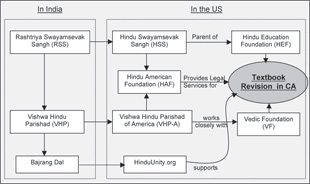
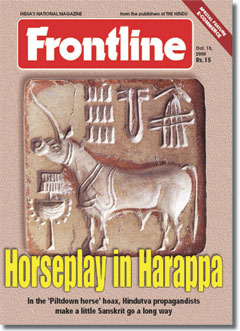 Groups such as Friends of South Asia and Coalition Against Communalism are dismayed by the acceptance of these “edits” by the Curriculum Commission and are petitioning the State Board to reject them. In addition to the factual inaccuracies of the VF-HEF edits, they are also petitioning the State Board to reject the changes approved by the Curriculum Commission on procedural and legal grounds. First, the Curriculum Commission is an advisory body to the State Board, and had been instructed by the board to accept only changes that reflected “factual accuracy,” but chose to ignore the mandate. Second, the Curriculum Commission violated the legally binding California Education Code requirement that sectarian viewpoints not be a part of the curriculum taught in schools. On Jan. 12, the Board announced the appointment of a sub-committee to specifically investigate whether the Curriculum Commission followed its directives in making the recommendations.
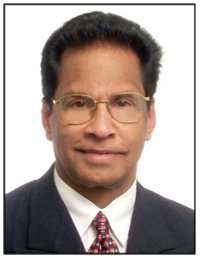 HOW TO BEAT THE HEART DISEASE EPIDEMIC AMONG SOUTH ASIANS: A PREVENTION AND MANAGEMENT GUIDE FOR ASIAN INDIANS AND THEIR DOCTORS. By Enas Enas, M.D., and Dr. Sudesh Kannan. Published by Advanced Heart Lipid Clinic. Downers Grove, Ill.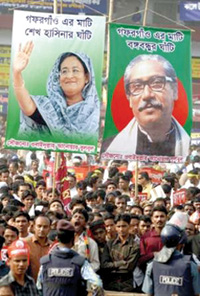
 Three South Asians are among 40 teens named finalists in the prestigious Intel Science Talent Search. Competing for more than $530,000 in scholarships and prizes, these students hail from 19 states.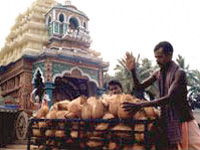
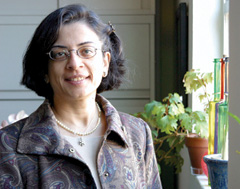 Sabeeha Merchant (l), UCLA professor of biochemistry, will be honored with a major award from the National Academy of Sciences in Washington, D.C. April 23, during the academy’s annual meeting. She will receive the Gilbert Morgan Smith Medal, which is awarded only once every three years, for her exceptional scientific research, which is providing insights into the complex machinery of the cell.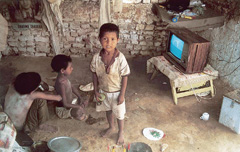
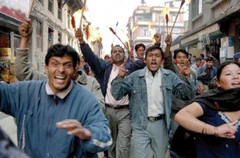
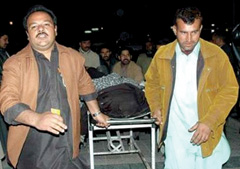

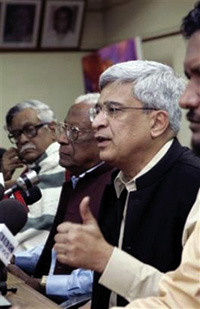
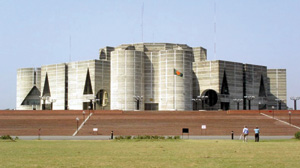
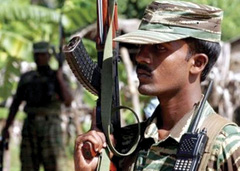
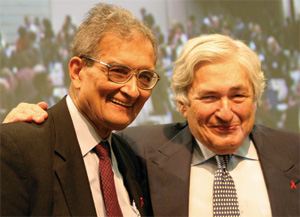
 Non-modifiable factors are:
 Current options for the treatment and prevention of osteoporosis include estrogen therapy, bisphosphonates risedronate (Actonel) and alendronate (Fosamax), raloxifene (Evista), a selective estrogen receptor modulator and calcitonin (Miacalcin). The treatment of choice should be tailored to each individual and reviewed with your physician.
 Calcium should be taken after meals in divided doses of no more than 500mg. Calcium should be taken with vitamin D 400-800 IU. (See box)
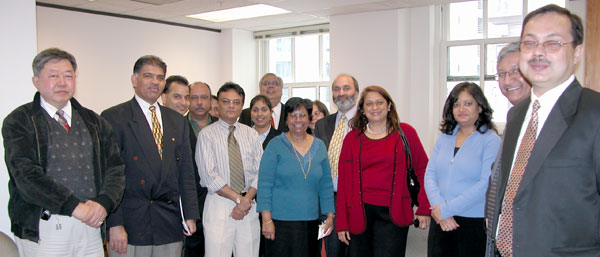
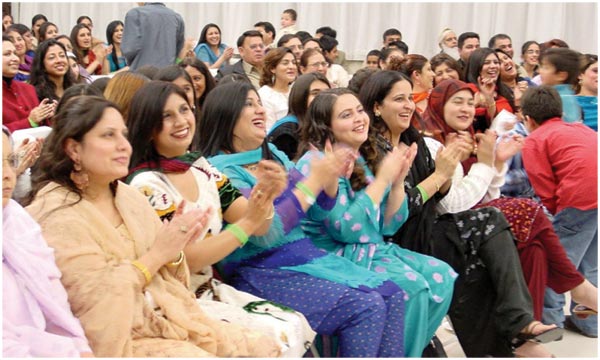
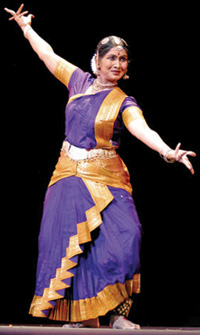 The Abhinaya Dance Company of San Jose (
 The Chicago Veterinary Medical Association has elected Dr. Jagjit (Jack) Brar president for the year 2006, according to a press release from Jagjit Brar. He is the first Indian to serve in this capacity. Brar has been member of the association since 1980.
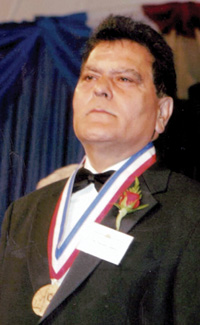 Dr. Parveen Chopra is the first Asian to be appointed to the Board of Advisors of the United New Yorkers for Choice in Education). UNYCE president Timothy P. Mulhern, said in a letter that Dr. Parveen Chopra was appointed because of his “high profile within the Indian and broader Asian communities.”
  Pennsylvania Congressional candidate Raj Peter Bhakta has said he has raised more than $110,000 only weeks after the creation of his exploratory committee in the 13th District.
 Indian software services provider Wipro Ltd. said its share of the information technology outsourcing contract announced by General Motors Corp. was estimated at $300 million over five years.
  Indian IT giant Satyam Computers Services Limited has bagged an outsourcing contract from U.S.-based General Motors, a senior company official said.
 Indian outsourcing company Scandent Solutions said it got a $34 million contract from the Tennessee state government to provide online services for welfare programs.
 The $1.2 billion Taiwan-based networking products major D-Link Corporation is planning to make India one of its manufacturing hubs, from where it intends to market its products across the globe.
  Tata Consultancy Services is awaiting Delhi’s permission on setting up a Special Economic Zone for developing Garima Park at Infocity, Gandhinagar, in a bid to spread its activities to overseas markets.
  Chennai-based Indium Software (India) Ltd, outsourced software testing services provider, is in the process of setting up a centre of excellence for network/wireless application testing services.
  India’s Science and Technology Ministry has entered into a partnership with the National Geographic Channel to launch a year-long campaign “Science Safari” promoting and showcasing Indian science.
 Infospectrum, a system integrator and software services provider, has announced its pact with Avexus, a California-based firm, as part of its entry into India’s rapidly growing aviation market.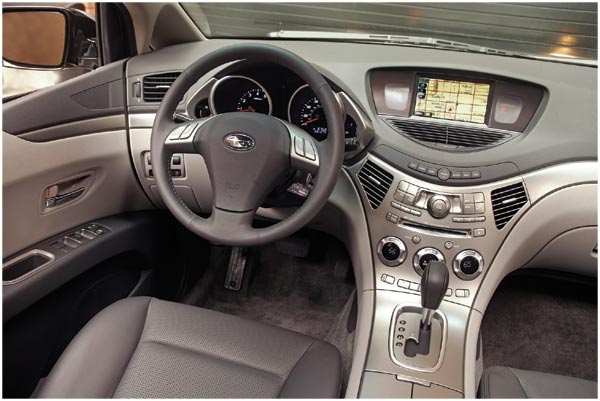
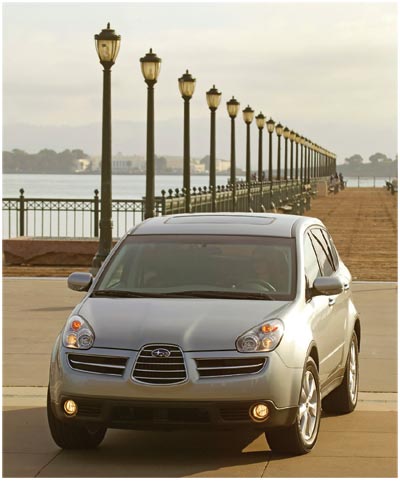 The Subaru B9 Tribeca made its debut at last year’s North American Auto Show. Subaru expects the model to appeal to Legacy or Outback owners or others who find they need more room and the features of an SUV, but don’t want to deal with the size or handling of a typical SUV.
 The B9 Tribeca is nicely styled, too, with a distinctive grille and headlamp design leading to strong first visual impressions. The 18-inch wheels and wider fenders give it a bold stance. The Tribeca’s interior is, plainly put, sharp-looking. The dashboard is curved and dominated by a navigational screen, and appointed with an aluminum-looking trim that moves the eye down toward a larger, very functional center console. Big dials and ergonomically designed switches are user-friendly.
  You could weep for Star TV. Here it was, all set to rake in the moolah by dangling Big B on the game show Kaun Banega Crorepati II, the sequel to the smash hit game show that catapulted Amitabh Bachchan (seen here in 'Paheli') back into superstardom after a precarious hiatus.
 Not very many people were surprised when India failed to get any place in the nominations for the 78th Academy Awards which were announced Jan. 31. Like most years, Paheli, India’s official entry in the Foreign Language category was a pointless exercise, and even diehard fans weren’t holding their breath. Morning Raga, directed by Mahesh Dattani, which had been entered independently, also failed to make the cut.
 Poor Kushboo. She hardly had a chance to rest a bit after the brouhaha over her remarks on premarital sex had outraged sanctimonious hypocrites coming out of the woodwork.
 Beauty queen-turned Bollywood starlet Sushmita Sen hasn’t exactly had an easy time. Her box office pickings have never been anything to write about, and she has tended to make news more about her off-screen activities than her on-screen performances.
 She may be a (former) super star in Bollywood, but nobody is waiting with bouquets for Manisha Koirala in her home country Nepal. Student activists there have called for the boycott of her films after she campaigned for a mayoral candidate for the Feb. 8 municipal polls which opposition activists dismiss as stage managed by the king.
  What’s up with Chi Chi? If there is a prize for the most self-destructive star in Bollywood it would surely go to Govinda. His career in politics hasn’t been so hot either, but that’s a different matter.
 This reputation can be a double-edged sword. Rumor has it that any film in which Aamir Khan is involved eventually ends up being dictated by Aamir, so meticulous is he in his planning. Bollywood is a fickle place. When a film does well, Aamir’s reputation becomes God-like; when a film falters, the vultures begin to circle and swoop.
  The film-within-a-film format allows Mehra to compare yesteryear’s idealism with today’s cynicism, and as Sue continues to film, the idealism of India’s revolutionary heroes seems to rub off on the youthful protagonists in Sue’s film. They take up a real cause and face danger and violence with courage and commitment, underscoring the point that the well of patriotism and idealism isn’t entirely dry yet.