 !-- Start Alexa Certify Javascript -->
|
|||||||||||||||||||||||||||
|
|||||||||||||||||||||||||||
|
|
|||||||||||||||||||||||||||
|
|||||||||||||||||||||||||||
|
|
|
|
|
|

JANUARY 2006 |
|
|||||||||||||||||||||||||||||||||||
|
EDITORIAL:
THE DARK SIDE OF OUTSOURCING As outsourcing to India continues to shake up the Western world, is there a dark, ugly side to it? Our cover story this month looks at the plight of an Indian American high tech employee who has filed a lawsuit in Texas alleging racial bias. Her case is a grim reminder that there is a deep undercurrent of resentment and the flight of jobs here which can take an unsavory when it targets hapless Indian Americans for no better reason than their national origin. The sad fact of the matter is at times of economic insecurity, immigrant minorities all too easily become the scapegoat of pent-up frustrations. A seven-member Congressional trip to India lead by Indiana Republican Dan Burton underscores how dramatically perceptions have changed in the U.S. vis a vis India. In excerpts published this month from comments delegates made at the end of their trip, the overwhelming and unanimous goodwill expressed towards India is a pleasant surprise. One is almost inclined to pinch oneself to see if this is happening: Burton, a fierce critic of India for many years, comes across as positively avuncular. The U.S., it seems, now has a love affair with India, a far cry from the decades when Indo-U.S. relations were difficult during the years of the Cold War and the Non-Aligned Movement. We step outside the cozy and insular world of South Asians this month, something we plan to do occasionally to engage our readers in issues that we feel are of transcendent importance. We reprint excerpts from the trenchant Nobel Prize acceptance speech by British playwright Harold Pinter. Possible the greatest living playwright of his country, if not the English language, Pinter has been hailed by the Nobel committee as an artist who “uncovers the precipice under everyday prattle and forces entry into oppression’s closed room.” The 75-year-old Pinter cannot walk after an illness unrelated to the esophageal cancer so his speech was pretaped and broadcast. Howls of outrage have greeted his admittedly blistering critique of U.S. policy; among others British transplant Niall Ferguson, an unabashed apologist for a new U.S. imperium, lashed out in a bitter riposte. Even if some may disagree with his views on U.S. policy—despite the fact his critique was formidably well-informed—his speech is a significant historical document for several reasons. His critique of the refusal of the U.S. to acknowledge its own acts of oppression contains an acute general observation about how the powerful avoid any accountability of their crimes—“It never happened. Nothing ever happened. Even while it was happening it wasn’t happening. It didn’t matter. It was of no interest.” Pinter’s makes the sobering point that the “quite clinical manipulation of power worldwide while masquerading as a force for universal good . . . a brilliant, even witty, highly successful act of hypnosis,” is the ultimate tool for tyrants, large and small. His speech is also a stellar example of a writer’s passionate commitment to his/ her conscience. An artist, his speech makes clear, is not merely a craftsman; without a moral compass, the artist is irrelevant. COVER STORY: ‘Dirty Indian’: Racial Slurs and Outsourcing - By Siddharth Srivastava In a race bias lawsuit, U.S.-born senior IT analyst Neelima Tirumalasetti has accused co-workers at Texas-based firm Carework of abusing her. She says she received death threats, and the firm tried to justify the racial slurs, and suffered a final breakdown after she was assigned to a co-worker who allegedly said she would “kill the bi***” This is all the bitter fruit of huge outsourcing of jobs that has made Western employees insecure, writes Siddarth Srivastava. Neelima’s case is not only important to ensure the welfare of people of Indian origin, who are among the wealthiest ethnic group in the U.S. It is of interest to Indian outsourcing firms who have to interact with American/European clients and customers on a regular basis. One of the main reasons, apart from the long and odd hours of work, for the high attrition rates in Indian call centers has been the abusive and racist outpourings by foreign customers, angry over jobs being outsourced to low-cost countries, with India leading the way. Indeed, it is not easy to handle queries that could range from weather, rail reservation, maps, credit card statements, sitting in a far-off land. According to some experts, the stress caused by abusive callers results in the annual erosion of up to 60 to 70 percent of the over half a million Indians working in Indian call centers. Neelima’s lawsuit says that after her company Caremark announced in December 2003 that it would be outsourcing work to IBM India, she became a target of harassment. “Caremark’s investors deserve to know how it conducts itself behind closed doors,” she said in an interview to The Times of India. “This lawsuit is about dignity and assuring that employees are treated equally regardless of their origin, race, or ethnic background.” Earlier this year in a move to cut costs, IBM Corp added over 14,000 jobs in India after slashing 13,000 jobs in Europe and the U.S. Last year IBM had bought over Dash eServices, the third largest outsourcing firm in India with 6,000 employees, at a value estimated to be over $170 million. IBM has in recent years implemented cost-cuts in the face of dwindling financial results and leveraging in a new global economy. According to the allegations by Neelima, her co-workers repeatedly called her “brown-skinned bitch,” “dirty Indian,” and other abuses, accused her of taking their jobs, jeered her accent, and excluded her from important projects. Neelima, who is a U.S. citizen, reported the harassment to her seniors but matters took a turn for the worse as Caremark removed her from higher responsibilities, denied her pay and accused her of lying about her case, including physical symptoms that led to hospitalization. Finally, Caremark reportedly conceded her case, but said that it was “understandable given Caremark’s employees’ concerns about outsourcing to India.” According to the lawsuit, once Caremark requested Neelima to confidentially disclose the names of co-workers responsible for the abuse, she received death threats. The lawsuit says that Neelima suffered a final emotional breakdown after Caremark wanted her to report to a co-worker and a junior who she had accused of being one of her chief harassers who had said that she would “kill the bitch who complained.” Caremark fired Neelima after she took her case to the federal Equal Employment Opportunity Commission. Indeed, Neelima’s case is a reflection of the pent-up anger that has risen in the West due to job losses. Earlier this year India-born PepsiCo president Indra Nooyi, one of Fortune’s most powerful businesswoman, faced a fair bit of this ire when she said America was the “middle finger” of the world in her speech to Columbia Business School’s graduating students. Americans took to deriding Nooyi with vociferous comments on the Internet, though Nooyi explained that her meaning was entirely different from the obvious interpretation. Indians are also miffed at the parody last year by a radio station that made a call to an Indian call center. The conversation that followed was laced with hate, sexism and racism. American radio jockeys Star and Buc Wild, in an ill-conceived attempt to be make people laugh, broadcast an abusive call that was placed to an Indian call centre worker. The “call” was aired in their morning show on Philadelphia’s Power 99 FM radio wherein the caller places an order for beads, inquires whether the call has been outsourced to India and then abuses her. While the producers thought the script was funny, it provoked angry responses from Indians all over the world. There was a view earlier this year that some of the fury was a result of the high decibel anti-outsourcing campaign by presidential candidate John Kerry in the run-up to the elections last year. However, repeated incidents, including the latest alleged by Neelima, highlight the fact that there is a sustained hostility against the flight of jobs that has little to do with electoral politics. Few doubt that outsourcing is here to stay, given the backing of business and industry worldwide. What is less known is the fact that outsourced jobs are a minuscule fraction of the total jobs in the U.S. Estimates suggest that only 200,000 to 400,000 jobs have moved from the U.S. since the outsourcing trend began in the 1990s, which is a fraction of 138 million jobs in the U.S. The Information Technology Association of America says only around two percent of the 10 million computer-related jobs have been sent abroad. However, the jobs will move out at a higher pace. According to consultancy firm Forrester Research, 3.4 million U.S. service-sector jobs are expected to move overseas by 2015. Observers say that one ninth of the world’s service jobs can be done from anywhere. India has repeatedly urged Western nations to make a commitment not to enact legislation that prohibit offshoring of call centers and software development. According to a study by Global Outsourcing, “The anger in the West over job losses and fear about offshoring has made (racist calls) a growing problem. Some people call up with deliberately difficult questions. Most just say things like, ‘You are from India. You don’t know anything. I don’t want to speak to you.” There are reports that Web sites have sprung up that teach Americans the choicest Hindi abuses. Till matters settle down Indian call centers have been trying to protect their employees by training them in accented English and trying other gambits including taking on Western names. This has not been very successful as it’s not hard to tell if a call center worker is Indian; many have employed foreigners to train as well as take calls; others have installed technology that blanks out abusive callers from known numbers. Indians are the hapless target of ire that is actually directed elsewhere. The animus towards Indians, whether they are in the U.S. or in India masks a rage of countless employees who feel threatened by current economic trends. They seethe with frustrated rage as businesses are all too keen to shift jobs abroad to save a buck and their lawmakers are too beholden to make an issue of it, and so they hit out at the easiest target—the brown-skinned employee. Neelima’s experience is not the first such instance, and sadly, it could well be a long time before such occurrences become a matter of the past. - Siddharth Srivastava is India correspondent for Siliconeer. |TOP|
INDO-U.S. TIES: FROM U.S. WITH LOVE: CONGRESSIONAL TRIP TO INDIA A Congressional delegation’s recent trip to India is remarkable for the unanimous expression of goodwill by delegates at the end of their trip. Siliconeer presents excerpts of their comments. 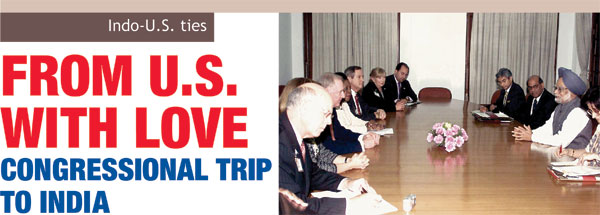 A U.S. Congressional delegation led by Mr. Dan Burton meeting with the Prime Minister Manmohan Singh in New Delhi, Nov. 28. (PIB photo) Excerpts of comments made at a press conference held at the U.S. embassy in New Delhi by a seven-member Congressional delegation at the end of a three-day visit to India.
We’ve talked about the nuclear issue and we think that there is an understanding, not only between President Bush and Prime Minister Singh, but between parliamentarians here and in the United States that there should be a clear delineation between civil use of nuclear material and military use. And with that understanding being worked out, I am confident that at least from my perspective we’ll be able to pass that in the Congress of the United States. We’ve also talked about Kashmir. President (Pervez) Musharraf and Prime Minister Singh are talking. They are men of good will, I believe. And we are very hopeful that they will be able to work out some solution to that very thorny issue. We look at India as a friend and a partner. And we’re looking forward to a very long and good relationship that should have started a long time ago, but better late than never.
Many of us are members of the Indian caucus in the United States Congress and the newly-founded Pakistan caucus. So we bring to the table the idea of collaboration and peace. The members here represent a very strategic congressional delegation — members of the armed services committee, members of homeland security, financial services, judiciary. We cover thorny issues that make up Indo-U.S. relations from the perspective that this is a significant time in history for India and the United States to cement their partnership. As India moves into the 21st century, the United States can play a very strategic role in its developing areas: education; energy security, (where) we have research expertise and joint ventures with Indian companies on energy is crucial, and then infrastructure, (where) the generating of jobs on the American side and the Indian side can both be enhanced by (better) infrastructure. We have enormous obstacles. Poverty is a devastating ill for both our societies and countries. We hope that India will join with us in fighting poverty here in India, and in that also HIV AIDS. We are offering through our NGOs and USAID close to $230 million in the HIV AIDS fight here in India and we hope that you will see that as a strong partnership.
We are very grateful for the contributions of Indian Americans — 2.2 million people. I love to point out as a former co-chair that the India caucus is the largest caucus on Capitol Hill. It is a reflection in terms of membership — nearly 200 members — larger than any other country, that indeed we appreciate working with India in the global war on terrorism, and then also in terms of economic cooperation I’m confident that we can work together.
We as ambassadors now can go back to our caucus in the United States and tell them that what we have seen and found here certainly satisfied many of the questions that we had in our minds before we got here.
I know that you all will provide knowledge workers and I think that we are going to provide capital which will help generate jobs down deep into the society here which will be a great benefit to you all. I appreciate that you all have been engaged in the war on terror before we were. I think you have expertise on this field that we can learn from and we must crush the terrorists or they will destroy the lives of all humanity and all humans.
We’ve discussed some incredibly strategic issues with many of your leaders here, but as a former investment banker and as an entrepreneur I believe that the most important thing that our two countries can do is to develop business ties even deeper than we have now. I know that my Indo-American community in California is very anxious to do more than just import export between the two countries. When we are doing well in trade we will be able to generate the dollars we need to build infrastructure, to build our health systems, and to educate so that we can lift people out of poverty. And when we do that I think we go a long way in taking away the reasons for why some people do terrorism.
The issue of terrorism is one that we can never ever allow ourselves to avoid confronting head-on. It does not discriminate. It takes lives without giving thought to the devastation created. We truly must end it or it will be our end. And we look forward to working with you with these issues of terrorism. I’m a lawyer by trade, I was a judge for many years, and I’ve had the opportunity to visit your courts. I was impressed and I look forward to working with some of the lawyers I have connected with so that I may continue to learn more about your system. And finally, I would say to you we know that you, too, suffered with the earthquake and our prayers and our sympathies are with the families who have suffered in this natural disaster. NEWS DIARY: December Roundup  Vaccines for Quake Victims | Heads Teachers Prefer Gandhi to Churchill | Gunman Kills IIT Professor | Beetle Rally in Dhaka | Bush to Visit Pakistan | NOLOK BABU: From Street Singer to Music Idol | Tsunami Victims Remembered | BJP Names New President | SRI LANKA: Fears of Descending Back into Civil War | Lamborghini Eyes India | Churchill Favored Letting Gandhi Die | India Expects 7% Growth Vaccines for Quake Victims | Heads Teachers Prefer Gandhi to Churchill | Gunman Kills IIT Professor | Beetle Rally in Dhaka | Bush to Visit Pakistan | NOLOK BABU: From Street Singer to Music Idol | Tsunami Victims Remembered | BJP Names New President | SRI LANKA: Fears of Descending Back into Civil War | Lamborghini Eyes India | Churchill Favored Letting Gandhi Die | India Expects 7% GrowthVaccines for Quake Victims Illinois Gov. Rod Blagojevich has donated 250,000 doses of flu vaccine to Pakistan to aid recent earthquake victims in South Asia. The Chicago Tribune reported the donation, valued at $2.5 million, was sent in response to a request from Pakistani Prime Minister Shaukat Aziz. Blagojevich had procured the vaccine from Europe last year when Illinois faced a possible shortage but was blocked from bringing it into the country by federal regulators. The vaccine is being made available in Kashmir, the epicenter of an October earthquake with a magnitude of 7.6 that killed more than 87,000 people and left millions homeless, the newspaper said. “We are in a unique position to help thousands of Pakistanis who are struggling to recover from a terrible tragedy,” Blagojevich said in a written statement. “The vaccine we scoured Europe to find in 2004 will be put to use to protect people who were left homeless, weak and vulnerable after the devastating earthquake and now are in dire need of protection from influenza this winter.”
A survey of head teachers, carried out by their professional training college, says heads most admire the leadership style of the Indian leader, reports BBC News the online new service of the British Broadcasting Corporation.. The survey of newly-appointed head teachers asked them which management styles were most effective. Most preferred the style of Mahatma Gandhi, who led a campaign of non-violent civil disobedience in India against British colonial rule. Only about one in 10 heads approved of the “coercive leadership” model of Winston Churchill. Head teachers supported a shared style of leadership which was democratic and involved other members of staff. In contrast, the Churchillian model was about “focusing attention on one central figure.” “Coaching and democratic styles enable head teachers to work with others to bring about improvements to schools that are sustainable over the long term,” says Alison Kelly of the Nottingham-based NCSL, which is the national centre for professional training for senior school staff.
Three other people were also wounded as the gunman sprayed automatic gunfire at the Indian Institute of Science before escaping in a car. Those wounded were said to be scientists and laboratory technicians attending the conference. Police said the assailants approached in an Ambassador car. One of them got out and fired randomly outside an auditorium door. The car then sped off. Law enforcement agencies are calling it an terrorist attack. Officers said they had found an assault rifle, empty cartridges and a grenade at the scene. Security supervisor A.N. Sukumaran, who witnessed the shooting, told AFP: “It was like crackers exploding. Suddenly I saw one man falling. He said ‘I have been shot. Call an ambulance.’” One of those injured, Prof Vijay Chandru, is the founder of the Indian-developed palm-computer, the Simputer. The incident happened hours after gangster Abu Salem was brought to Bangalore for lie detector tests over his alleged involvement in bombings in Mumbai in 1993 that killed 250 people. German car Volkswagen came to Bangladesh in the mid-1960s. At that time it was a car of the emerging professional middle-class society, including university teachers, engineers, doctors, businessmen and military officers. At present some 200 Beetles ply the roads in the country. In the ’60s and ’70s it dominated the streets of Dhaka, Chittagong, Sylhet, Rajshahi, Rangpur, Comilla and other districts town. “The visit dates are being worked out and we expect the visit to take place around the third week of January,” Foreign Ministry spokeswoman Tasnim Aslam told a weekly briefing. She gave no further details. The 81-year U.S. statesman was appointed last month by U.N. Secretary General Kofi Annan as special envoy for the October 8 disaster, which killed about 73,000 people in Pakistan and 1,300 in India. The United Nations has launched an aid appeal for $550 million, while Pakistan has received aid pledges of more than six billion dollars, of which two billion dollars is in the form of grants. Bush joined forces with another former U.S. president, Bill Clinton, to raise funds after Hurricane Katrina flooded and destroyed large parts of the southern U.S. city of New Orleans, In a show fashioned after American Idol and the Indian Idol contest, 20-year-old Nolok Babu was crowned Close Up 1 at a colorful ceremony in a five-star hotel. Nolok began singing in public after his father walked out of the family when he was nine. He grew up singing in trains to support his ailing mother. The poor street singer from Jamalpur district won after seven months of intense competition in the TV show organized by Tomakei Khunjchhe Bangladesh (Bangladesh looks for you) with hundreds of contestants taking part. He won after tens of thousands of people voted him in through SMS over the last few days. Nolok got 39 points out of 50 from the jury and 785,391 SMS votes by viewers in Bangladesh’s most watched program till date. The concluding ceremony was telecast live on private NTV channel, which also aired the other rounds that drew millions of viewers. The final round of the competition was judged by vocalist Kumar Bishwajit, Samina Chowdhury and music director Ahmed Imtiaz Bulbul. The competition, which began in June, elicited 40,000 entrants; they were auditioned and 110 of them were selected for the next round. Nolok received one million taka in cash, a Nissan Sunny car and a plasma television set. The first runner-up was Mizan Mahmud Razib and second runner-up was Beauty. Two more contestants — Samapti Ray, who was visually impaired and made it to the second round, and Champa Banik, who was pregnant when the show started — were recognized.
In Tamil Nadu, which was the worst hit, there were somber scenes as gatherings along the state’s coast remembered the dead. At Nagapattinam, district collector J. Radhakrishnan opened a memorial park with over 6,000 saplings — or at least one for each of the people who had died there. Children orphaned by the tsunami placed wreaths at a memorial pillar — which depicted a wave holding up a globe and a clock found by the navy that had stopped at 9.17 a.m., showing the exact time the killer waves struck the region. Though the number of deaths in India was lower than those in Indonesia (130,000) and Sri Lanka (31,000), the tsunami caused widespread devastation in the country’s southern states and island territories.
Singh, 54, succeeds the septuagenarian L.K, Advani, one of the party’s founders who quit after a row with hardliners. Singh leadership comes at a troubled time for the party. The party went through a public internal debate after outgoing leader Advani’s remark that Pakistan founder Mohammad Ali Jinnah was “secular” triggered outrage from hard-line supporters. Feisty leader Uma Bharti walked out of the party after the party refused to consider her views in choosing the Madhya Pradesh chief minister. Half a dozen of the right-wing Hindu nationalist party’s MPs were recently thrown out of Parliament for allegedly accepting cash for questions. And last week BJP general secretary Sanjay Joshi resigned after becoming embroiled in a sex scandal. Rajnath Singh, a former chief minister of Uttar Pradesh, has promised to “consolidate the party and make it strong.” Though a powerful rural politician with strong organizational skills and popular with the party rank and file, Singh lacks a national profile and may find it difficult to run a party with a young generation of leaders competing for primacy. Advani remains opposition leader in parliament
The incident in island nations’ northeastern region is the latest flare-up of violence that has raised fears the island nation could descend back into the civil war that began in 1983. The rebels want a separate homeland for the 3.2 million ethnic Tamil minority, away from domination of the Sinhalese majority. Military spokesman Brig. Prasad Samarasinghe said the five died in a botched attack on an army patrol in the port city of Trincomale, about 135 miles northeast of the capital Colombo. He blamed Tamil civilians who had been trained by rebels “to attack military targets.” The rebels gave a different account, saying on their Web site that the five were spending the evening near the seaside when a motorized rickshaw drove past and lobbed a grenade. Quoting witnesses, the rebels said the rickshaw drove toward a Sri Lankan army camp after the attack. Forty-five soldiers have died since December in a surge of violence that the government blames on the rebels, who have denied the charge. At least seven suspected rebels have been killed. The two-decade war between the Liberation Tigers of Tamil Eelam and the Sri Lankan military ended with a 2002 truce after 65,000 deaths, 1.6 million people displaced and large parts of northern and eastern Sri Lanka under Tiger rule. The escalating violence has prompted the Norwegian official who brokered the 2002 cease-fire, Erik Solheim, to urge the government and rebels to resume peace talks immediately. Six rounds of peace talks were held until 2004 when they broke down over rebel demands for autonomy. “The plan is to bring the Lamborghini Gallardo within the first quarter of next year,” Lamborghini distributor Exclusive Motors’s Rahul Grover said. The price will range between an eye-popping Rs. 10 million to Rs. 15 million. Gallardo is the latest in the series of high-end cars to hit Indian roads after the likes of Maybach, Rolls Royce Phantom and Bentley Arnage. Grover said the target was to sell about two to three units of Gallardo in the next year. Automobili Lamborghini Holding SPA, a part of Volkswagen’s Audi Group, had rolled out 3,000th Gallardo earlier this month. It remains to be seen though how Gallardo, which competes with the likes of Ferrari’s F30 and Porsche’s 911 Turbo, fare in India. Lamborghini had stated said it was more concerned with the infrastructure in India than the purchasing capability of its potential customers.
The British WWII prime minister thought India’s spiritual leader should be treated like anyone else if he stopped eating while being held by the British. He said he would prefer to keep Gandhi locked up and let him do “as he likes.” However, his ministers advised him against it. Gandhi was detained in 1942 after he condemned India’s involvement in the war. However he didn’t go on a hunger strike. Many British officials in India were ready to play hardball. The Viceroy of then British-run India, Lord Linlithgow, said he was “strongly in favor of letting Gandhi starve to death.” But senior government figures, such as former foreign secretary Lord Halifax argued: “Whatever the disadvantages of letting him out, his detention would be much worse.” Eventually in January 1943, ministers decided that although they could not give into a hunger strike publicly — they would be willing to release Gandhi on compassionate grounds. “He is such a semi-religious figure that his death in our hands would be a great blow and embarrassment to us,” said Sir Stafford Cripps, then Minister for Aircraft Production. Gandhi was eventually released in 1944 because of fears his failing health meant he could die in British custody. He was assassinated on Jan. 30, 1948, aged 78, after Indian independence. The economy grew 8 percent in the quarter that ended Sept. 30, after expanding 6.9 percent in the full year to last March. The government expects economic growth of as much as 7.5 percent in the 12 months ending this March. “The only way to make growth more inclusive is to sustain a rate of growth in excess of 7 percent over the next few years and I am confident the year 2006 will continue the trend,” Chidambaram said in a statement. “This will involve stepping up investment, particularly in infrastructure, agriculture and the social sectors,” he said. Social services include health care and education. Prime Minister Manmohan Singh’s government wants more overseas investment to help achieve annual economic growth in excess of 7 percent in the next 10 years. Singh aims to cut the budget deficit and improve the lives of Indians, one in three of whom earn less than $1 a day, according to the World Bank. Agriculture, which accounts for 22 percent of India’s economic output, holds the key to growth, Chidambaram said. India’s $665 billion economy needs farm output to expand 4 percent annually for the overall economy to grow at twice that pace, Prime Minister Singh said in October. Two-thirds of India’s population reside in villages, depending on agriculture for their livelihood. DISSENT: Art, Truth and Politics: Harold Pinter’s Nobel Lecture Harold Pinter’s acceptance speech for the Nobel Prize for literature is a remarkably incisive critique of what he considers to be the distortion of reality by the manipulation of the powerful. Siliconeer presents excerpts.  (Excerpted from British playwright Harold Pinter’s Nobel Lecture. The lecture was pre-recorded, and shown on video Dec. 7, 2005, in Börssalen at the Swedish Academy in Stockholm. Links for the entire lecture on video and full text is available at the following link: http://nobelprize.org/literature/ (Excerpted from British playwright Harold Pinter’s Nobel Lecture. The lecture was pre-recorded, and shown on video Dec. 7, 2005, in Börssalen at the Swedish Academy in Stockholm. Links for the entire lecture on video and full text is available at the following link: http://nobelprize.org/literature/laureates/2005/pinter-lecture.html) In 1958 I wrote the following: “There are no hard distinctions between what is real and what is unreal, nor between what is true and what is false. A thing is not necessarily either true or false; it can be both true and false.” I believe that these assertions still make sense and do still apply to the exploration of reality through art. So as a writer I stand by them but as a citizen I cannot. As a citizen I must ask: What is true? What is false? Truth in drama is forever elusive. You never quite find it but the search for it is compulsive. The search is clearly what drives the endeavour. The search is your task. More often than not you stumble upon the truth in the dark, colliding with it or just glimpsing an image or a shape which seems to correspond to the truth, often without realising that you have done so. But the real truth is that there never is any such thing as one truth to be found in dramatic art. There are many. These truths challenge each other, recoil from each other, reflect each other, ignore each other, tease each other, are blind to each other. Sometimes you feel you have the truth of a moment in your hand, then it slips through your fingers and is lost. So language in art remains a highly ambiguous transaction, a quicksand, a trampoline, a frozen pool which might give way under you, the author, at any time. But as I have said, the search for the truth can never stop. It cannot be adjourned, it cannot be postponed. It has to be faced, right there, on the spot. The truth is something entirely different. The truth is to do with how the United States understands its role in the world and how it chooses to embody it. Everyone knows what happened in the Soviet Union and throughout Eastern Europe during the post-war period: the systematic brutality, the widespread atrocities, the ruthless suppression of independent thought. All this has been fully documented and verified. But my contention here is that the US crimes in the same period have only been superficially recorded, let alone documented, let alone acknowledged, let alone recognised as crimes at all. I believe this must be addressed and that the truth has considerable bearing on where the world stands now. Although constrained, to a certain extent, by the existence of the Soviet Union, the United States’ actions throughout the world made it clear that it had concluded it had carte blanche to do what it liked. The tragedy of Nicaragua was a highly significant case. I choose to offer it here as a potent example of America’s view of its role in the world, both then and now. I was present at a meeting at the US embassy in London in the late 1980s. The United States Congress was about to decide whether to give more money to the Contras in their campaign against the state of Nicaragua. I was a member of a delegation speaking on behalf of Nicaragua but the most important member of this delegation was a Father John Metcalf. The leader of the US body was Raymond Seitz (then number two to the ambassador, later ambassador himself). Father Metcalf said: ‘Sir, I am in charge of a parish in the north of Nicaragua. My parishioners built a school, a health centre, a cultural centre. We have lived in peace. A few months ago a Contra force attacked the parish. They destroyed everything: the school, the health centre, the cultural centre. They raped nurses and teachers, slaughtered doctors, in the most brutal manner. They behaved like savages. Please demand that the US government withdraw its support from this shocking terrorist activity.’ Raymond Seitz had a very good reputation as a rational, responsible and highly sophisticated man. He was greatly respected in diplomatic circles. He listened, paused and then spoke with some gravity. ‘Father,’ he said, ‘let me tell you something. In war, innocent people always suffer.’ There was a frozen silence. We stared at him. He did not flinch. Innocent people, indeed, always suffer. Finally somebody said: ‘But in this case “innocent people” were the victims of a gruesome atrocity subsidised by your government, one among many. If Congress allows the Contras more money further atrocities of this kind will take place. Is this not the case? Is your government not therefore guilty of supporting acts of murder and destruction upon the citizens of a sovereign state?’ Seitz was imperturbable. ‘I don’t agree that the facts as presented support your assertions,’ he said. As we were leaving the Embassy a US aide told me that he enjoyed my plays. I did not reply. I should remind you that at the time President Reagan made the following statement: ‘The Contras are the moral equivalent of our Founding Fathers.’ The United States supported the brutal Somoza dictatorship in Nicaragua for over 40 years. The Nicaraguan people, led by the Sandinistas, overthrew this regime in 1979, a breathtaking popular revolution. The United States denounced these achievements as Marxist/Leninist subversion. In the view of the US government, a dangerous example was being set. If Nicaragua was allowed to establish basic norms of social and economic justice, if it was allowed to raise the standards of health care and education and achieve social unity and national self respect, neighbouring countries would ask the same questions and do the same things. There was of course at the time fierce resistance to the status quo in El Salvador. Six of the most distinguished Jesuits in the world were viciously murdered at the Central American University in San Salvador in 1989 by a battalion of the Alcatl regiment trained at Fort Benning, Georgia, USA. That extremely brave man Archbishop Romero was assassinated while saying mass. It is estimated that 75,000 people died. Why were they killed? They were killed because they believed a better life was possible and should be achieved. That belief immediately qualified them as communists. They died because they dared to question the status quo, the endless plateau of poverty, disease, degradation and oppression, which had been their birthright. The United States finally brought down the Sandinista government. It took some years and considerable resistance but relentless economic persecution and 30,000 dead finally undermined the spirit of the Nicaraguan people. They were exhausted and poverty stricken once again. The casinos moved back into the country. Free health and free education were over. Big business returned with a vengeance. ‘Democracy’ had prevailed. But this ‘policy’ was by no means restricted to Central America. It was conducted throughout the world. It was never-ending. And it is as if it never happened. The United States supported and in many cases engendered every right wing military dictatorship in the world after the end of the Second World War. I refer to Indonesia, Greece, Uruguay, Brazil, Paraguay, Haiti, Turkey, the Philippines, Guatemala, El Salvador, and, of course, Chile. The horror the United States inflicted upon Chile in 1973 can never be purged and can never be forgiven. Hundreds of thousands of deaths took place throughout these countries. Did they take place? And are they in all cases attributable to US foreign policy? The answer is yes they did take place and they are attributable to American foreign policy. But you wouldn’t know it. It never happened. Nothing ever happened. Even while it was happening it wasn’t happening. It didn’t matter. It was of no interest. The crimes of the United States have been systematic, constant, vicious, remorseless, but very few people have actually talked about them. You have to hand it to America. It has exercised a quite clinical manipulation of power worldwide while masquerading as a force for universal good. It’s a brilliant, even witty, highly successful act of hypnosis. It’s a scintillating stratagem. Language is actually employed to keep thought at bay. The words ‘the American people’ provide a truly voluptuous cushion of reassurance. You don’t need to think. Just lie back on the cushion. The cushion may be suffocating your intelligence and your critical faculties but it’s very comfortable. This does not apply of course to the 40 million people living below the poverty line and the 2 million men and women imprisoned in the vast gulag of prisons, which extends across the US. The United States no longer bothers about low intensity conflict. It no longer sees any point in being reticent or even devious. It puts its cards on the table without fear or favour. It quite simply doesn’t give a damn about the United Nations, international law or critical dissent, which it regards as impotent and irrelevant. It also has its own bleating little lamb tagging behind it on a lead, the pathetic and supine Great Britain. What has happened to our moral sensibility? Did we ever have any? What do these words mean? Do they refer to a term very rarely employed these days – conscience? A conscience to do not only with our own acts but to do with our shared responsibility in the acts of others? Is all this dead? Look at Guantanamo Bay. Hundreds of people detained without charge for over three years, with no legal representation or due process, technically detained forever. This totally illegitimate structure is maintained in defiance of the Geneva Convention. It is not only tolerated but hardly thought about by what’s called the ‘international community’. This criminal outrage is being committed by a country, which declares itself to be ‘the leader of the free world’. Do we think about the inhabitants of Guantanamo Bay? What does the media say about them? They pop up occasionally – a small item on page six. They have been consigned to a no man’s land from which indeed they may never return. At present many are on hunger strike, being force-fed, including British residents. No niceties in these force-feeding procedures. No sedative or anaesthetic. Just a tube stuck up your nose and into your throat. You vomit blood. This is torture. What has the British Foreign Secretary said about this? Nothing. What has the British Prime Minister said about this? Nothing. Why not? Because the United States has said: to criticise our conduct in Guantanamo Bay constitutes an unfriendly act. You’re either with us or against us. So Blair shuts up. We have brought torture, cluster bombs, depleted uranium, innumerable acts of random murder, misery, degradation and death to the Iraqi people and call it ‘bringing freedom and democracy to the Middle East’. The United States now occupies 702 military installations throughout the world in 132 countries, with the honourable exception of Sweden, of course. We don’t quite know how they got there but they are there all right. The United States possesses 8,000 active and operational nuclear warheads. Two thousand are on hair trigger alert, ready to be launched with 15 minutes warning. It is developing new systems of nuclear force, known as bunker busters. The British, ever cooperative, are intending to replace their own nuclear missile, Trident. Who, I wonder, are they aiming at? Osama bin Laden? You? Me? Joe Dokes? China? Paris? Who knows? What we do know is that this infantile insanity – the possession and threatened use of nuclear weapons – is at the heart of present American political philosophy. We must remind ourselves that the United States is on a permanent military footing and shows no sign of relaxing it. I know that President Bush has many extremely competent speech writers but I would like to volunteer for the job myself. I propose the following short address which he can make on television to the nation. I see him grave, hair carefully combed, serious, winning, sincere, often beguiling, sometimes employing a wry smile, curiously attractive, a man’s man. ‘God is good. God is great. God is good. My God is good. Bin Laden’s God is bad. His is a bad God. Saddam’s God was bad, except he didn’t have one. He was a barbarian. We are not barbarians. We don’t chop people’s heads off. We believe in freedom. So does God. I am not a barbarian. I am the democratically elected leader of a freedom-loving democracy. We are a compassionate society. We give compassionate electrocution and compassionate lethal injection. We are a great nation. I am not a dictator. He is. I am not a barbarian. He is. And he is. They all are. I possess moral authority. You see this fist? This is my moral authority. And don’t you forget it.’ When we look into a mirror we think the image that confronts us is accurate. But move a millimetre and the image changes. We are actually looking at a never-ending range of reflections. But sometimes a writer has to smash the mirror – for it is on the other side of that mirror that the truth stares at us. I believe that despite the enormous odds which exist, unflinching, unswerving, fierce intellectual determination, as citizens, to define the real truth of our lives and our societies is a crucial obligation which devolves upon us all. It is in fact mandatory. If such a determination is not embodied in our political vision we have no hope of restoring what is so nearly lost to us – the dignity of man. © The Nobel Foundation 2005. |TOP| PHOTO ESSAY: THE YEAR IN IMAGES: 2005 ROUNDUP 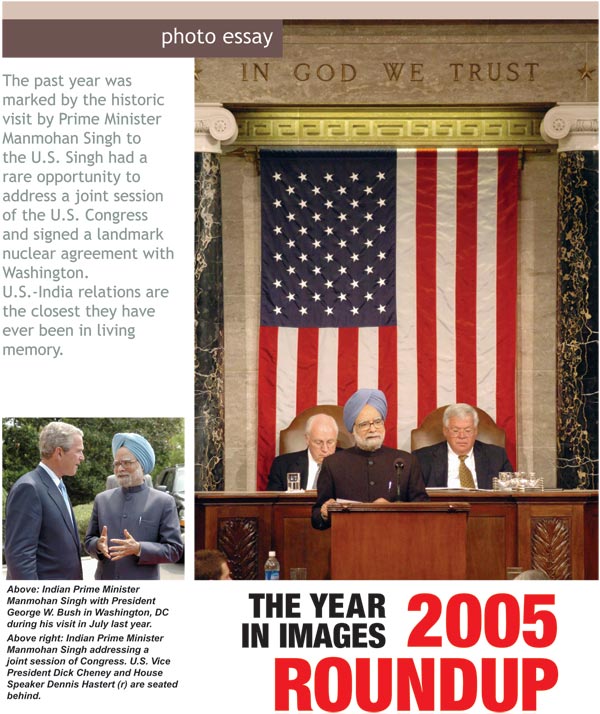 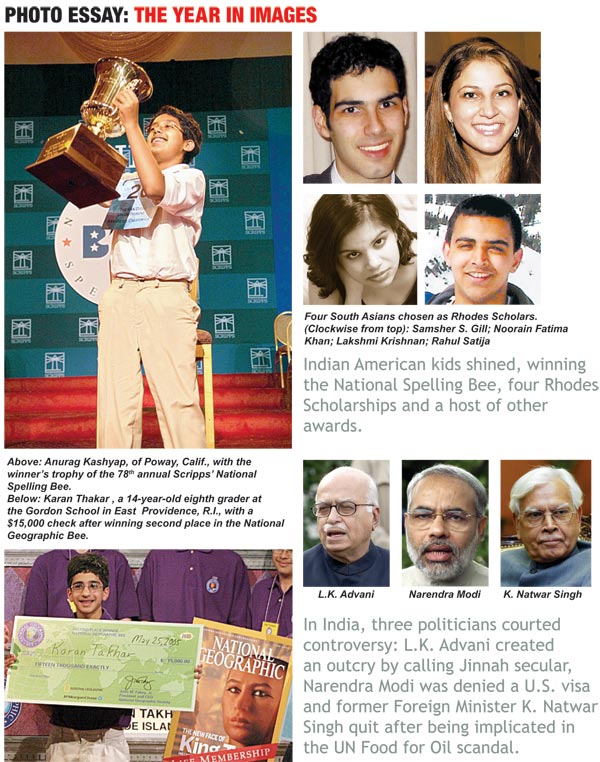  |TOP| DIASPORA: GOPIO Awards: Heroes of the Diaspora - A Siliconeer report The Global Organization of People of Indian Origin will honor five expatriate Indians for their distinguished community service from all over the world. Honorees are from countries as far away as the United Kingdom, U.A.E., U.S. and the Fiji Islands. A Siliconeer report.  The Global Organization of People of Indian Origin has announced in a press release that it has scheduled its Conference 2006 in Hyderabad Jan. 5 and Jan. 6 in conjunction with Pravasi Bharatiya Divas 2006. The theme of the conference is “Global Indian Diaspora: Today and Tomorrow” The conference will be formally inaugurated Jan. 5 at the Manohar Radisson Hotel, followed by a reception and dinner. The conference will include an Awards Luncheon Jan. 6 where Andhra Pradesh Gov. Sushil Kumar Shinde will present GOPIO’s Pravasi Bharatiya Community Service Awards. The awards “have been established to honor those NRIs and PIOs who have provided significant community and public service to the Indian diaspora around the globe and/or to India,” the release added. The awardees for this year are Sudha Acharya, U.S.; Ganesh Chand, Fiji; Pavan Kumar Darisi, U.S.; Diljit S. Rana, Northern Ireland; and B.R. Shetty, U.A.E. “We at GOPIO believe that the NRIs/PIOs have contributed significantly to the countries of their adoption as well as to India, and have added a special glitter to the resurgence of India,” said Inder Singh, president of GOPIO. “GOPIO believes that the destiny of the Indian diaspora, in many ways, is intertwined inextricably with India,” the release adds. “The NRIs/PIOs certainly, individually and collectively, have made numerous achievements in their adopted lands but they are bound to India by the umbilical cord of history, culture, heritage, and tradition.” GOPIO chairman Dr. Thomas Abraham said, “By honoring those who have worked selflessly for Indian Diaspora causes and India, we are providing exposure of such role models to the next generation.” “This will motivate more NRIs and PIOs to volunteer their time for community causes,” Dr. Abraham added. Brief profiles of the awardees follow. Sudha Acharya, U.S. Acharya represents the All India Women’s Conference at the U.N., worked on the Planning Committee for the NGO Forum for the Fourth World Conference on Women at Beijing in 1995, and later chaired the NGO Committee on the Status of Women for two terms 1995-1999. She was a vice-president of the Conference of NGOs in Consultative Relationship with the UN and served as CONGO’s Focal Point for the Review of the implementation of the Beijing Declaration and Platform for Action or “Beijing plus Five” in 2000. In 2000 Acharya was elected as the first president and currently as the executive director of the South Asian Council for Social Services, a not-for-profit organization whose mission is to plan, provide, support and advocate for a continuum of programs addressing the social service needs of underserved South Asian and other immigrant communities in New York City. SACSS worked closely with the families of direct victims of 9-11. SACSS provides English as a Second Language classes, parenting workshops, job preparedness, training and placement that are much needed services amongst the new immigrant South Asian community. A former project manager with Verizon in New York City, Acharya has been recognized with several awards including the Gandhi Community Award and Union Square Award. Dr. Ganesh Chand, Fiji Dr. Chand became a leading campaigner for democracy in Fiji after the 1987 military coup and led numerous pro-democracy protests. In 1999, he was elected to the Fiji Parliament and became the minister for national planning, local government, housing and environment. He was re-elected to the Fiji Parliament in 2001. In 2005, Dr. Chand established the University of Fiji to cater to the needs of underprivileged students. Dr. Chand is a prolific author. He is the publisher and editor of Fijian Studies: A Journal of Contemporary Fiji. He is also the founder of http://www.fijigirmit.org, a Web site dedicated to Indian indentured workers in Fiji. Darisi has also established the Darisi Seva Samastha, a charitable trust for the underprivileged. In 2003, he was elected president for the World Arya Vysya Mahasabha. It is through these two organizations that Darisi has provided several years of dedicated public service. His compassion to help people and his philanthropic acts to support various community projects has made Darisi a role model in Andhra Pradesh. Darisi has spent over Rs. 60 million on community development works like building link roads and bridges, bus shelters, marriage and community halls, donations for ambulance vans, boring wells and for pumps for 30 harijan colonies, and free medical camps in a number of less privileged areas in Andhra Pradesh. There are several road junctions named after him. Darisi has also donated money for construction and renovation of temple buildings in many places. For his humanitarian works, Darisi has been recognized and honored by many organizations and agencies. Rana has been involved with the overseas Indian community for a long time. He promotes business links between India and Northern Ireland and has been elected president of the Northern Ireland Chamber of Commerce. He led a trade mission of 13 companies to India to explore business opportunities for Northern Ireland companies. Dr. Rana has been awarded an MBE by the British government for his contribution to the economic regeneration of the city of Belfast through the development of hotels, restaurants, fashion shops and modern office accommodation. Rana has set up a charitable trust of Rs.50 million for a school and a college named Taxila, in his native village Sanghol, near Chandigarh . The new college is to provide world-class education and offer degree courses in collaborative linkage with the Ulster University in Northern Ireland. The university conferred an honorary doctorate on Rana who led a delegation of academics from the university to India to explore educational partnerships and help develop university links between India and Northern Ireland. Dr. Shetty is the founder and chairman of New Medical Centre since 1973. With six facilities in Abu Dhabi, Dubai and Sharjah, the hospital chain treats one million patients a year. Dr. Shetty is also a successful businessman involved in currency exchange and financial services, manufacturing, trading and hospitality. He is a recipient of many national and international awards, and distinctions for significant contribution to the pharmaceuticals industry. Recently Dr. Shetty has been conferred the highest honor of the Government of Abu Dhabi, the Order of Abu Dhabi Award. He is the only Indian recipient of this award which has been given for “demonstrating his determination to help others despite all odds, regularly donating time, thoughts and talents for the betterment of people, leaving an indelible mark on the community.” The first session will be devoted to the mobilization of the global NRI/PIO communities and resources for political, social and economic goals including developmental, philanthropic and educational activities of the NRI/PIO communities as well as India. Speakers include former NRI Commissioner and former external affairs secretary J.C. Sharma (New Delhi), Prof. Rajendra Prasad of New Zealand, University of Guyana pro-vice chancellor Prof. Prem Misir, Prof. Mohan Gautam of The Netherlands, Fiji Member of Parliament Dr. Ganesh Chand and Dr. Arjun Daluvoy of Los Angeles. The session will be chaired by GOPIO chairman Dr. Thomas Abraham and co-chaired by Prof. Chandrashekhar Bhat, director of the Indian Diaspora Institute at the University of Hyderabad. The second day of conference will start with an opening session with two speakers, Prof. Parmatma Saran of New York and Prof. Madhav Nalapat of India. This session will be chaired by GOPIO secretary general Ashook Ramsaran. Interested readers can get more information on GOPIO is available at its official Web site: www.gopio.net. It will be followed by another session titled, “Indian Diaspora: Opportunities in Business, Technology and Investments.” The speakers are: Dr. B.R. Shetty, CEO and Managing Director of New Medical Center Hospital, Abu Dhabi; Koosum Kalyan, business development manager/Africa exploration and production, Shell International Petroleum Company Ltd.; Yesu Persaud, executive vice president of GOPIO International and chairman of Demerara Distillers, Guyana; Dr. Sudhir Parekh, president, Federation of Indian Associations, New York; Prof. Krishna R. Dronamraju, Houston, Texas and V. Narayanan, chairman Allfone Systems and president, ICM Computer Consultants, Chennai, India. This session will be chaired by GOPIO-Belgium president Sunil Prasad and co-chaired by marketing professor Prof. Gan Bhukta of Visakhapatnam. Since its inception in 1989, GOPIO has been organizing conferences and conventions in different parts of the world to mobilize the global NRI/PIO community. In 2004-5 alone, GOPIO organized five international conferences, in January 2004 in New Delhi, in March 2004 on Human Rights in New York, in October 2004 in Brussels, in January 2005 in Mumbai and in November 2005 in Brussels again. “Besides providing a globally recognized platform for dialogue and discussion to the worldwide Indian diaspora, GOPIO conferences and conventions continue to help bring the Indian diaspora closer to India and strengthen the inherent bonds between India and the scattered diaspora,” the press release adds. “The conference in Hyderabad Jan. 5 and 6, is another of its continuing efforts to mobilize the global Indian community and facilitate their networking.” TECHNOLOGY: Destination India: The New High-end, High-Tech Mecca? - by Siddharth Srivastava Recent trips by the CEOs of the world’s top chipmakers Intel and AMD is changing India’s reputation as a low-cost high-tech manufacturing destination, writes Siddharth Srivastava. 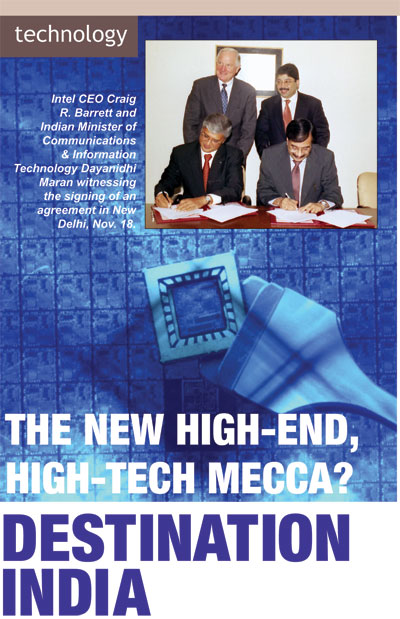 India’s reputation as an IT powerhouse has always been undermined by its reputation as a low-cost high-tech manufacturing destination. That’s beginning to change with the recent trip of the CEOs of the top computer chip makers of the world, Craig Barrett of Intel and Hector Ruiz of AMD. Their aim: To usher in a computer revolution in the country in line with the exponential growth of mobile phone users. U.S. chipmaker AMD has signed up to play a major role in the country’s first chip fabrication factory (or fab) worth $3 billion, backed by a consortium of Indian-origin businessmen. Following up on AMD’s decision, competitor and world’s largest chip-maker Intel Corporation has announced a multi-year investment plan for India, totaling over $1 billion, including $800 million over the next five years for business expansion. India’s reputation as an IT powerhouse has always been undermined by its reputation as a low-cost high-tech manufacturing destination. That’s beginning to change with the recent trip of the CEOs of the top computer chip makers of the world, Craig Barrett of Intel and Hector Ruiz of AMD. Their aim: To usher in a computer revolution in the country in line with the exponential growth of mobile phone users. U.S. chipmaker AMD has signed up to play a major role in the country’s first chip fabrication factory (or fab) worth $3 billion, backed by a consortium of Indian-origin businessmen. Following up on AMD’s decision, competitor and world’s largest chip-maker Intel Corporation has announced a multi-year investment plan for India, totaling over $1 billion, including $800 million over the next five years for business expansion.The AMD and Intel plans are aimed to take advantage of the high-tech revolution in India that has seen mobile phone user base jump to over 70 million in a short period of five years. Low cost combined with good service and networks have contributed to this large jump. State-of-the-art cell phones are now available in the country at $20 and consumers cut across social and economic barriers. In a move to tap the Indian market U.K. mobile telecommunications company Vodafone recently bought a stake in India’s largest wireless operator Bharti Tele-Ventures Ltd. In October, communications equipment maker Cisco said it planned to invest $1.1 billion over the next three years and triple its staff numbers in India. The expectation is that a similar penetration can be achieved with personal computers as well, once prices come down. Unlike mobile users, there are less than 3.5 million PC users in the country. Computers are still considered quite expensive and the market has not responded despite prices having tumbled to less than $250 and broadband connections costing three times lower than last year. By investing in India, Intel and AMD hope to address the price factor that will determine the market. Lowering the cost of computer chips while improving their efficiency is at the heart of the ongoing AMD versus Intel race. “We will bring out a low-cost PC — not a gadget or semi-PC that some are interested in, but a fully-functional computer meant for Indian conditions priced in the range of a few hundred dollars,” said Barrett. The demand for chips in India is expected to be at $3 billion a year starting 2006, from around $800 million just a couple of years ago. This is still just a fraction of the global total chip industry of $220 billion. Although India has developed a large software and outsourcing industry, semiconductors (the technology used in chips) remain a fairly small business. Few chips are designed in India compared to the U.S., China or Taiwan. So far, no major fab facilities exist in the country, though investors have toyed with the idea. AMD chairman and CEO Hector Ruiz said: “We will remember this day as a historic moment in India. The idea behind the tie-up is to bring down chip costs so that everyone can afford a PC,” he said. AMD will provide SEMIndia with manufacturing and technology licenses for the new chip making and assembly test mark and pack facility. The plant’s location has not been finalized, though several destinations in south and east India are being considered. AMD’s coming demonstrates that India is crucial to its 50x15 plan, under which it wants 50 percent of the world’s population to possess a PC, Internet connection by 2015. “India’s growing market for phones, computers and broadband, has no doubt raised the interest of all global manufacturers to be here,” said Communications and Information Technology Minister Dayanidhi Maran after signing the deal. Intel, however, has not announced plans to set up a chip manufacturing plant in India. It seems that the tech giant is sticking to its two Asian chip-making units in China, and staying focused on the predominantly “services, software, design and engineering” orientation of India. The investment roadmap includes a huge chunk ($800 million) for expanding the company’s business operations in India, Barrett announced. The investment would focus on expanding the research and development center in Bangalore, in addition to marketing, education and community programs. The roadmap also has a provision for setting up a $250 million venture capital fund in India. Intel Capital has in the past invested in NIIT India, Rediff.com and Indiainfoline.com, and now plans to find mobile telecommunications, broadband software and hardware design companies to fund. However, the company remained non-committal on its plans for a chip manufacturing plant in India, saying it was involved in “pragmatic” discussions with the government and at this point in time it was not appropriate to say anything. “Computers do not result in learning by themselves, good teachers do. By the time Intel completes 15 years here, we will have trained 1 million teachers in India and that is a crucial effort,” said Barrett. “We are still in discussion with the government on the possibility of setting up a manufacturing plant in India. At this point of time we are not ready to announce anything,” Barrett said. “India may grow increasingly powerful in manufacturing, just as China will grow in services and product development, but for now we do not plan to manufacture in India,” he said. Maran had some months ago announced that Intel would be setting up a $400 million assembly test-manufacturing unit in India, but it seems that the plans have been put on hold now. “The investment demonstrates the company’s long-term commitments and builds on the foundation we created during the last ten years,” Barrett said. “We will grow our local operations, boost venture capital investment and work closely with the government, industry and educators to increase the impact of the country’s information and communication technology,” he added. Indeed, it does seem the PC users in India have plenty to look forward to. Following the visits of the chiefs of AMD and Intel, Bill Gates, chairman of Microsoft, came to India. This is Gates’ fourth visit in two years during which he has announced that Microsoft Corp plans to invest $1.7 billion in India over four years and employ another 3,000 people to deepen its presence as a fast-growing software player. This is apart from the humanitarian causes that Gates and his wife have taken up in India. About half of the money would be spent on its existing research and development center, its global software delivery unit and expanding to 33 more cities by opening retail outlets. “We have about 4,000 people (in India), we would be growing that by 3,000 over the next several years,” Gates said at a news conference. Microsoft relies heavily on India’s booming $20 billion software services industry to source quality skills at costs far below average Western salaries. - Siddharth Srivastava is India correspondent for Siliconeer. He lives in New Delhi. |TOP| HEALTH: A Healthy Heart: Tips on Lifestyle - By Dan Huynh, M.D.  Recognizing the symptoms of a heart attack and knowing what to do can save you or your loved ones, but even better, there are things you can do to keep your heart healthy, writes Dan Huynh, M.D. Recognizing the symptoms of a heart attack and knowing what to do can save you or your loved ones, but even better, there are things you can do to keep your heart healthy, writes Dan Huynh, M.D. More than one million Americans have heart attacks each year. Despite advances in medicine, cardiovascular disease remains the number one cause of death in the U.S. Recognizing the symptoms of a heart attack and knowing what to do can save you or your loved ones. First, find out what a heart attack is. More than one million Americans have heart attacks each year. Despite advances in medicine, cardiovascular disease remains the number one cause of death in the U.S. Recognizing the symptoms of a heart attack and knowing what to do can save you or your loved ones. First, find out what a heart attack is.A heart attack (also called myocardial infarction or MI) occurs when one or more of the coronary arteries are blocked, and, deprived of blood, the heart’s muscle cells begin to die within minutes. Arteries become blocked when plaque builds up on arterial walls. These plaques can rupture and form blood clots that become large enough to completely block the flow of blood in that artery. A person suffering from a heart attack may experience severe chest pain, discomfort, pressure, squeezing, or heaviness. A heart attack requires immediate treatment to restore blood flow. Timing is critical and recognizing the symptoms of a heart attack and taking appropriate action can save your life. What happens in a heart attack. Patients experiencing a heart attack will experience some or all of these typical symptoms:
If you experience symptoms of a heart attack, immediately seek medical attention by calling 911. If you have aspirin at home, quickly chew one tablet. Aspirin is an antiplatelet and will help reduce the chance of the blood clot enlarging within the diseased coronary artery. A person should receive treatment for a heart attack within one to two hours of the first onset of symptoms. Delay in treatment will increase damage to your heart and increase your risk of death. Quick treatment is essential to lessen the amount of damage to your heart and decrease your changes of future heart problems. The best time to treat a heart attack is before it happens. Heart disease develops over decades. Plaque is made up of excess cholesterol, calcium, and other substances in your blood that, over time, build up on the inside walls of your coronary and other arteries. Smoking, high blood pressure, and high cholesterol contribute to heart disease. Heart disease doesn’t discriminate and affects women and men equally. Exercise and a healthy diet reduce your risk of heart disease. Factors like diabetes, hypertension, high cholesterol, smoking, obesity and family history increase your chance of developing heart disease. You can stop smoking, lower your blood cholesterol, control your diabetes and high blood pressure, lose weight, and control stress. Keep your heart healthy and thrive. TRAVEL: This Side of Paradise: Squaw Valley - By Al Auger In the winter, a panorama of blue skies, sunshine and glistening snow sweeping across the valley and up to the very peaks of the ski area greet a visitor that makes California’s Squaw Valley the nearest thing to paradise, writes Al Auger.  The lobby of the Squaw Valley resort. The success of the 1960 Winter Games at Squaw Valley turned the once mom-and-pop ski area into the darling of the snow world. But, when you have reached the top there is only one way left to go: down. In time the “Paradise” that had been envisioned was becoming a victim of neglect and corporate ennui. Fortunately, not even Alex Cushing could do much damage to the towering six peaks surrounding his sagging resort. Cushing, a Harvard-trained Wall Street lawyer, was snared by the dream of building a ski area during a ski trip to nearby Sugar Bowl in 1946 and turned his avocation into a vocation. In 1990 Squaw Valley was given new life with the opening of the $135 million, world-class Resort at Squaw Creek at the entrance to the valley. Following that came the Squaw Creek-developed Robert Trent Jones, Jr. 18-hole championship golf course. Squaw Valley, with a neighborly nudge from Squaw Creek, was on the cusp of becoming a world-class year-’round destination resort.
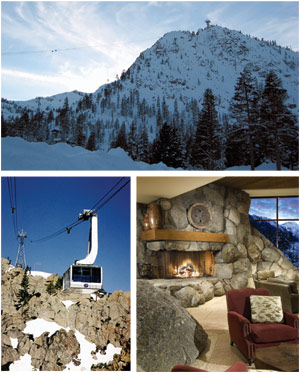 Clockwise from top: Stunning outdoors; luxurious resort interiors; and breathtaking gondola rides are part of the Squaw Valley experience. The Village is complete and the promise years ago and the frustrated vision of many has become a reality and is itself a jewel in the crown of Lake Tahoe as a all-year resort. Our arrival in the Tahoe basin was greeted by a marvelous winter landscape of bountiful snow. Through the soaring ceiling-high windows of the Resort at Squaw Creek lounge we could view a panorama of blue skies, sunshine and glistening snow sweeping across the valley and up to the very peaks of the ski area. From the moment you hand over your car keys to the valet, you understand why the Resort has perennially been recognized as one of the finest hotels in the United States by Conde Nast Traveler magazine and has carried the prestigious AAA 4-diamond property brand for 15 years. On your first day of skiing, returning to the Resort at Squaw Creek is like a visual and emotional balm to your tired muscles. Sitting back of the main reception building, the lodge tower is like an immense monolith of black rock that seems to “emerge” out of the mountain behind it. To reach the guest room tower you pass a series of rushing waterfalls cavorting over giant granite boulders above the sparkling blue outdoor pool, down a quiet walkway with metal and wood sculptures flanking shops that rival Fifth Avenue in New York. The next day we shuttle-bussed to the Village and rode the dramatic high camp cable car to Lake Tahoe basin’s most startling ski setting. Poised at the complex of chairlifts is the High Camp Bath & Tennis Club containing such exotic winter/summer devices as tennis courts, the Olympic ice pavilion, Olympic museum and swimming lagoon and spa. The swimming pool is, by itself, a climactic experience having been literally blasted out of solid rock.
The choices were wide -ranging and seductive. How about one of the four outdoor whirlpool/hot tubs? Or how does a whirlpool and dry sauna sound? Maybe expend some energy in the completely outfitted exercise center? A swim in the heated pool, possibly. Some turns on the ice skating rink? Or a relaxing time in front of our suite’s fireplace with a splash of a bracing calvados. Simple solution: a dry sauna, a fireplace and a calvados — then dinner. Our choices proved to be the consummate end of a perfect day. As the red ball settled behind the snow covered mountain peaks we headed for the spacious lounge to enjoy some soft piano and the “perfect martini” before heading for a once-in-a-lifetime blowout dinner at the resort’s expansive Glissandi restaurant. This is the resort’s star performer featuring beautifully presented food that looks as good as it tastes. Five days of powder-filled, Lindsay-blue skies skiing conditions, world-class dining and lodging. We drove home pampered, flushed with some great skiing memories and looking forward to the sunshine of Squaw Valley and the indulgence of the Resort at Squaw Creek. - Al Auger is a freelance writer. He lives in Redding, Calif. |TOP| CULTURE: Celebrating Heritage: Akshardham in Delhi - A Siliconeer report President A.P.J. Abdul Kalam and Prime Minister Manmohan Singh opened the 100-acre Swaminarayan Akshardham complex in New Delhi recently. A Siliconeer report.  BAPS chief Pramukh Swami handing a memento to Prime Minister Manmohan Singh (in blue turban). President A.P.J. Abdul Kalam (with laptop) can be seen seated on left. Indian President Dr. A.P.J. Abdul Kalam and Prime Minister Manmohan Singh formally opened Swaminarayan Akshardham, a 100-acre complex of art and culture located on the banks of river Yamuna in New Delhi, according to a BAPS press release. BAPS leader Pramukh Swami Maharaj, opposition leader L.K. Advani, Lt. Governor of Delhi B.L. Joshi were also present at the gathering of about 20,000.
The prime minister said that Akshardham would prove to be a leading monument of New Delhi. He added that the focal point of Indian culture is oneness in diversity. It does not teach separation. That is why Gandhiji strived to remove untouchability. President said, “Swaminarayan Akshardham has ancient heritage and modern technology under one roof. It is both for experience and enlightenment. It has the best of modern media, the power of knowledge and lively images. “The completion of Swaminarayan Akshardham in five years convinces me that India can become a developed country by 2020 with the help of many ignited minds.” Octogenarian BAPS leader Pramukh Swami Maharaj stressed the need of temples for retreat for both the young and the old alike: “Akshardham is not raised out of any rivalry and that the spirit behind is to inspire people for betterment of lives and serve the mankind.” Experiential exhibitions. There are three exhibitions halls. Sahajanand Darshan hall takes visitors through the experience of universal human values like, faith, tolerance, honesty, compassion, non-violence depicted through a series of light-and-sound shows with audio-animatronic figures. Neelkanth Darshan is a large-screen IMAX film. It is the first-ever period film about India’s culture and spirituality, revealed through the journey of an 11-year-old child-yogi, Neelkanth. It was filmed in 108 locations in India, with a cast of 45,000 people. Sanskruti Vihar is a 12-minute boat ride showcasing the highlights of Indian culture and values, Vedic civilization, Takshashila and India’s contributions to science and society. More details available on the Web at www.akshardham.com FESTIVAL: Bollywood in California: Palm Springs Film Fest - A Siliconeer report Eight films of South Asian interest, including Bollywood films like Parineeta and Paheli, will be screened at the Palm Springs Film Festival. A Siliconeer report.  A slew of desi films that range from Bollywood hits to offbeat Indian films, with a few quirky films on the diaspora experience thrown in, spices up the upcoming Palm Springs International Film Festival. A slew of desi films that range from Bollywood hits to offbeat Indian films, with a few quirky films on the diaspora experience thrown in, spices up the upcoming Palm Springs International Film Festival. The desi fare includes: Paheli is India’s submission to the Oscars. The 140 min. Hindi film, starring Shah Rukh Khan and Rani Mukherjee is based on a Rajasthani folk tale where a ghost falls in love with a beautiful girl and takes the place of an indifferent husband. Directed by Amol Palekar. Parineeta. The 130 min. Hindi film, starring Saif Ali Khan, Vidya Balan and Sanjay Dutt is based on a classic novel by Saratchandra Chattopadhyay. The film is set in the Kolkata of the 1960s with its vintage cars and sophisticated cafés. Parzania. The 130 min. Hindi/English film stars Naseeruddin Shah, Sarika and Colin Nemec. Based on a true story, Parzania follows a Parsi father in search of his 10-year-old son lost in the cross-fire of the Gujarat Hindu-Muslim riots. Nisshabd. The 93 min. Bengali film starring Kaushik Chakraborty and Trinaneelina Banerjee is co-funded by Fonds Sud Cinema from France for its innovative idea about a man’s obsession with silence. The Rising – Ballad of Mangal Pandey. The 161 min. Hindi film starring Aamir Khan, Rani Mukherjee, Ameesha Patel and Toby Stephens is a sweeping historical epic based on the life of the Indian soldier behind the Sepoy Mutiny. Dansh. The 106 min. Hindi film starring Kay Kay Menon, Sonali Kulkarni and Aditya Srivastava is a fast paced, gripping thriller set in Mizoram at the signing of the Peace Treaty of 1986. My Bollywood Bride, The 90 min. English/Hindi film starring Kashmira Shah, Jason Lewis, Gulshan Grover and Neha Dubey is a local love story based on the real-life relationship of Kashmira Shah and Brad Listermann, who is from the Palm Springs area. Chicken Tikka Masala. The 97 min. English film starring Saeed Jaffrey, Jamila Massey, and Zohra Sehgal is a romantic comedy on East meets West. The 17th Annual Palm Springs International Film Festival scheduled from January 5-16, 2006, will include 232 films from 70 countries. The Festival also presents a majority of the films submitted for consideration in the Best Foreign Language category for the Academy Awards, as well as a large number of American independent and international features and documentaries. More information is available at the Film Festival official Web site: www.psfilmfest.org. TELEVISION: 24X7 Indian News: NDTV - A Siliconeer report Satellite television service channel DIRECTV has launched India’s most popular English-Language news channel Dr. Prannoy Roy’s NDTV 24X7. A Siliconeer report.  South Asian news buffs now have access to NDTV 24X7, which features up-to-the-minute news on regional and national developments in Indian politics. The channel has been available beginning Nov. 28 as part of the satellite television service DIRECTV’s HindiDirect programming package, at no additional cost, according to an DIRECTV press release. In addition, NDTV 24X7 can also be purchased on an a-la-carte basis for $14.99 per month with the purchase of any DIRECTV base programming package. Dr. Prannoy Roy, chairman, NDTV, said, “We’re very pleased to partner with DIRECTV to make India’s most trusted English news channel available to the large Indian American community. NDTV 24x7 will also be an important source of information to American viewers looking for comprehensive, well-rounded and unbiased news from the Indian sub-continent. We’re very excited about this partnership and are confident that we will add immense value to each other.” NDTV 24X7’s programming offers a unique mix of news and current affairs. Viewers interested in the latest news may tune into The 9 O’clock News, which provides complete coverage from around India – and the world – on the people, stories and events of the day and The Evening News, which offers live coverage from major metropolitan areas, with emphasis on one city’s top story NDTV 24X7 also delivers a gripping view into India’s political realm. Featured in its lineup is the highly rated program, The Big Fight, which provides a forum for the most prominent opinion makers to face-off on pressing issues. Another popular program, We the People, enables the studio audience to question panelists on a single topic that has become a controversial debate in the country. In entertainment, NDTV 24X7 offers programming such as, Night Out, which highlights India’s passion for Bollywood in its revealing looks into the lives of film stars and other well-known personalities among the rich and famous. In addition, Sports 24X7 dives into the biggest sports stories of the day, with the top sportspersons and commentators discussing international and domestic sports events, as well as athletes in the news. Readers who wish to subscribe to NDTV 24X7 on DIRECTV can call 800-378-3309 for more information.
BUSINESS A Jeweler’s Craft: Bhindi’s Newark Store - A Siliconeer report The Bhindi family prides itself on being jewelers for over 20 generations. They recently opened a lavish, redesigned store in Newark, Calif. A Siliconeer report.  The 5,000 sq.ft. redesigned showroom in Newark, Calif. presents jewelry in flowing, curved glass panels to create a sense of continuous display. Of the many successful Indian American businesses that dot the United States, Bhindi Jewellers has chosen to go on a path relatively less well-trodden: Instead of low prices, high turnover and bulk sales, they say they prefer to pursue their passion for perfection and quality. The gambit has paid off handsomely, their name is a byword for dependability and quality in the Indian American jewelry business. Take their newly redesigned store in Newark, Calif. As you walk down the spacious 5,000 sq. ft. haven lit by mellow, diffuse lighting, it becomes clear that no expense has been spared, and no detail has escaped meticulous attention.
The idea is not to dazzle the visitor with a particularly glitzy piece of jewelry, but provide a sense of a continuous, endless flowing array of jewelry, with “understated elegance,” Bhindi said “We created what we call the Bhindi ambiance,” Dhanesh Bhindi told Siliconeer. He had flown over from Los Angeles, where he runs their corporate headquarters in Artesia, Calif., with brother Vinod, “When you come in, you feel that you are surrounded by jewelry. None of our showcases are more than 20 inches straight, everything is like our jewelry has a flow to it. Even our furniture has artistic value to it, because it’s the presentation, the packaging that counts.” This commitment to excellence extends well into their core business, the manufacturing of jewelry, said Vinod Rai, who manages the Newark store. And that’s what their customers want, he added. “They want something quality, something prestigious,” he said. “They want the type of jewelry not everyone may be able to cater to. In terms of design we have something exclusive. We have jewelry for the lower end and the higher. There is no limit.” Their commitment to quality has won mainstream American recognition, he added. Not only do they have a Rolex dealership, which Bhindi calls “the ultimate crown in the industry,” but he said Bhindi Jewellers had an even more coveted distinction – it was probably the only South Asian jeweler that was a member of the American Gemological Society, which uses strict criteria to choose a handful of jewelers for membership. This is what the Bhindis have done for generations. “I am a 26th generation jeweler,” Rai said. “My parents, my grandparents, my great-great-great grandparents, all were jewelers. Jewelry is all we know. “Our jewelry is all in-house. We do our own designing, our own manufacturing. We do not outsource, it’s all done locally. We have a design team, we have a production team. It’s all done in the U.S. Our headquarters in Los Angeles, we have branches in Northern California and Atlanta, Georgia. With God’s blessing, we definitely would love to do more.” The Bhindi family established their roots in the art of jewelry many generations ago in Gujarat, India, according to their Web site. In the early seventies the family decided to expand their business ventures into North America and opened their first showroom in Los Angeles. In 1989, due to the rapid growing business the Bhindi family decided to construct a shopping center, which is the corporate headquarters giving birth to the House of Bhindi. “Mr. Bhindi decided he wanted to create a very unique jewelry showroom that would project an image of our rich Indian culture and heritage,” the Web site says about the family patriarch’s plans to build a showroom in Artesia, Calif. “The artistically designed showroom, conceived as a showcase of their finest jewelry, is spread on two levels that cover an area of well over six thousand square feet. Contained within this facility is the largest 22K gold retail showroom, a very exclusive diamond jewelry showroom, a jewelry production room and the corporate office.” In design and ambiance, the Newark store approximates the Artesia store. Bhindi said that the new store was partly in response to their huge following in the Bay Area who didn’t want to go all the way to Los Angeles to shop for jewelry. “All I can say is between L.A. and Newark, California, it’s worth the drive, depending on which is the closest to people,” he said. “It’s a day’s experience, and I want people who will bring their guests from out of town just to come visit us not only to see the jewelry but just to experience what I call the Bhindi experience which has made us what we are today.” Bhindi is now targeting the younger generation of Indian Americans who have grown up in the U.S. Bhindi said this was a generation which had grown up in affluent homes and were used to expensive, high quality goods, so it was all the more important that Bhindi continue its long-standing adherence to quality and perfection. “If we show any slack, they will go to Tiffany’s,” he quipped. COMMUNITY: News in Brief  AIDS Initiatives | Degree Program in Bharatanatyam Launched | Math World Contest | FIA Plans Pravasi Divas Pre-convention | Asian Panel at Nielsen | Georgia Bank Changes Name | IVACC Yearend Bash AIDS Initiatives | Degree Program in Bharatanatyam Launched | Math World Contest | FIA Plans Pravasi Divas Pre-convention | Asian Panel at Nielsen | Georgia Bank Changes Name | IVACC Yearend BashAIDS Initiatives The American India Foundation launched four initiatives on World AIDS Day Dec. 1: (1) the India Public Health – HIV/AIDS MediCorps, (2) an AIDS in India panel discussion, (3) a Web-based public information outreach effort, and (4) preparation for an AIDS Summit in Washington, DC in early 2006, according to an AIF press release. All four initiatives aim to raise awareness amongst the Indian-American community and the community-at-large on the growing epidemic of HIV/AIDS in India. “Indian Americans must provide high-level visibility, leadership and resources to accelerate the prevention and mitigate against the stigma and discrimination of HIV/AIDS in India,” said AIF co-chair Rajat Gupta. “Broad-based alliances and strong partnerships will make HIV/AIDS a surmountable problem; AIF hopes that all Indians everywhere will contribute to this endeavor.” India has the second largest HIV-positive population in the world with a conservative estimate of 5.1 million Indians infected with HIV; some place the number as high as 10 million infected persons. According to the Delhi-based National AIDS Control Organization, the predominant mode of transmission is heterosexual contact, totaling 85.7 percent of HIV-positive cases in India. “The face of AIDS in India is changing,” adds AIF HIV/AIDS program director Rema Nanda, “putting those who are female, poor and young at very high risk of getting infected. “Growing infection rates among women and children is of paramount concern to us,” she adds. “One of the biggest and most shocking risk factors for Indian women infected with HIV is marriage; many women receive the virus through their husbands due to the latter’s risky behavior. In addition, high infection rates among women lead to a concomitant increase in the number of pediatric HIV-positive cases from mother-to-child transmission.” The program, the result of a collaboration of various institutions and renowned artists, has been developed by the Escondido-based academy’s advisory committee which includes Shri Krupa’s Vishal Ramani (r) and Madurai Muralidharan, in conjunction with the Alagappa University in India. Based on a structured and progressive learning format, the syllabus gives students the option to enroll in four various programs ranging from a 1-year certificate degree to a 4-year bachelor’s degree. The program enhances the learning process by utilizing interactive instructional aids that provide a strong theoretical base along with detailed description of postures and techniques. At a launching ceremony at the India Cultural Center in Milpitas, Calif., over 100 students and their families were present. The event was presided by Tamil film star Padmani Ramachandran who popularized bharatanatyam in Indian cinema. For information about the degree program in bharatanatyam, readers can visit www.bharathanatyamonline.com. It is a unique opportunity for elementary and junior high students to have an academic and cultural exchange with children around the world. To qualify, the student must take the tryout test consisting of 20 word problems done in 45 min. without calculator. About 10 percent students will be selected to go through an eight-week training. Another test will be administered to select the final four to eight students for the final training till June. Tryout dates: Feb. 6-7 from 7:00-8:15 p.m. at the Argonaut School Cafeteria at 13200 Shadow Mountain Dr, Saratoga, CA 95070. Contestants can register at www.lgsrecreation.org. For more information, readers can visit www.mathedge.org
The decision to hold a pre-event convention in New York starting next year reached after a meeting of FIA delegates with a visiting Indian delegation led by G. Gurucharan, joint secretary in the Ministry of Overseas Indian Affairs, which organizes the Pravasi Bharatiya Divas. The fourth edition of the event is scheduled to be held at Hyderabad in January, as a precursor of which the government of India will join hands with FIA to set up an annual convention starting in 2006, Gurucharan said, adding that the ministry would also send an official delegation to the FIA’s India Day Parade. “Our ministry has been set up to help NRIs and we will consider sending a delegation to represent India’s cultural heritage,” Gurucharan said at a meeting with over 200 community leaders for over 90 minutes at Albert palace in New Jersey. “We are much honored to organize a mini pre-convention event jointly with the Ministry of Overseas Indian Affairs to increase the involvement of Indians in America and participate in India’s development,” said FIA president Dr Sudhir Parikh. Parikh said that FIA would take a 40-member delegation to Hyderabad, which will provide a platform for the Indian government to give away the first dual citizenship card. “Asian Pacific Americans are one of the fastest growing segments of the U.S. population,” said Jack Oken, general manager of local services at Nielsen Media Research. “As viewing audiences evolve, Nielsen continues to strive to be at the forefront of that change by being as culturally sensitive and relevant to our viewing households as possible. The support of this Council will greatly enhance Nielsen’s ability to more accurately measure the television viewing behavior of Asian Pacific Americans throughout the U.S.” According to the most recent Nielsen estimates, Asian Americans represent approximately 3.8 percent of all U.S. television households. In large metropolitan areas, such as Los Angeles and San Francisco, Asian TV households represent much larger segments of the population — 11.4 percent in Los Angeles, and 19.6 percent in San Francisco, for example. Other U.S. metropolitan areas including Atlanta, Chicago, Houston, Las Vegas, New York, and Seattle also have large and growing Asian communities.
“It was a difficult decision, but a Tennessee-based bank is expanding into Georgia and has the legal right to use the name ‘Horizon’ in our state,” explained Mukesh “Mike” Patel, board chairman of Horizon Bank and one of the bank’s founders. “We don’t want our customers to confuse us in any way with this out-of-state group.” Other than the name, nothing is changing at the new Haven Trust Bank. “We remain locally-owned and managed, our existing staff is in place at our two current locations, and our day-to-day operations are being conducted exactly the same way,” added Patel. “This name change is by choice, not by merger or restructuring — it will be completely seamless and virtually invisible to our customers.” The bank plans to expand during 2006 to a third location. The bank’s two existing locations are in Decatur, an Atlanta suburb. The bank is one of only six community banks in the U.S. that’s owned by Indian Americans. Bank chairman Patel also serves as president of Diplomat Hotel Corporation, owner/operator of 18 hotel properties in the southeastern United States, including 10 in the Atlanta metro area. Horizon Bank opened in January of 2000 to serve Atlanta’s small business entrepreneurs, especially among the area’s fast-growing Asian American community. Today, it has assets approaching $250 million and a broad customer base that extends beyond Indian Americans to include Koreans, Chinese, and Vietnamese, as well as the area’s general business community.
Performers volunteered from all over northern California to entertain the audience. Famous Punjabi singer Nirmal Nimi also performed at the event. Sudershan Lamba kicked off the event with a welcome note and emcees Punam Malhotra and Iqbal Badwalz took over to present an entertaining evening. The evening began with a Chinese dance, The Precious Jewel, directed by Rosalind Wong followed by a Chinese cultural dance performed by Candace Wong.
Nimi Badwalz and her group performed a dandiya dance. Joyeeta Sodhi’s dance drew a lot of cheer and her husband, Balbir Sodhi, and daughter Simran, danced on “khaee ke paan banaras wala,” from Deewar. J.P. Singh and Miguel Navarrette of the Sacramento City School Board, presented awards to all the event sponsors. C.C. Yin, the head of Asian Pacific Islander American Public Affairs Association and a very successful businessman was the chief guest. Talat Sattar thanked all the participants for making this a memorable evening. “Programs like these are not easy to arrange and several of you worked hard to bring us such a beautiful show,” he added. INFOTECH INDIA: ROUNDUP  Pharma Looking for Partners | Bill Gates Announces Plans to Invest $1.7 Billion in India | Wipro Buys Princeton Firm | Intel Chief Promises $1 Billion Investment in Five Years | Outsourcing to Grow Tenfold | Red Hat Invests $20 Million | India’s Persistent Gets $18.8M | Test Bed for Technologies Pharma Looking for Partners | Bill Gates Announces Plans to Invest $1.7 Billion in India | Wipro Buys Princeton Firm | Intel Chief Promises $1 Billion Investment in Five Years | Outsourcing to Grow Tenfold | Red Hat Invests $20 Million | India’s Persistent Gets $18.8M | Test Bed for TechnologiesPharma Looking for Partners  Israeli pharmaceutical giant Teva Pharmaceutical is looking for Indian partners in clinical research and biotechnology as it opened a research and development center in Noida near New Delhi. Israeli pharmaceutical giant Teva Pharmaceutical is looking for Indian partners in clinical research and biotechnology as it opened a research and development center in Noida near New Delhi.“India is an important part in our development program, and we are looking at collaborations with Indian companies in clinical programs and biotechnology,” said Aharon Yaari, chief executive of Teva’s active pharmaceutical ingredient division. Teva has initially invested $4 million in the R&D center. It is Teva’s third-largest R&D center, the other two being in Israel and Hungary. Traditionally Teva has been involved in developing innovative drugs for treating central nervous system disorders but is now exploring new therapeutic areas. Teva India country manager Lazer Bezdin said the alliance or partnerships with Indian companies “will be in new areas apart from our traditional stronghold of CNS drugs.” The Petach Tikva, Israel-based company plans to more than double its R&D strength in India to about 120 in three years, he added. This is the largest sum any software company has committed at one time to India so far. Gates said Microsoft will set up a venture fund to invest in startups, and will employ another 3,000 people in its Indian offices. Microsoft currently employs about 4,000 people in India. Approximately 50 percent of the $1.7 billion will be spent on India’s existing research and development center in Bangalore, its global software delivery unit in Hyderabad, and retail outlets to 33 more cities. Other heavyweight technology companies have also been investing heavily in India recently. Intel Chairman Craig Barrett promised to invest $1.1 billion in India (See separate box). In October, Cisco CEO John Chambers set aside over $1 billion for India. Investments by software companies in India ranged in the millions of dollars until last year, suggesting these companies are keen not only to get more work done in India, but also target what they consider a huge market. Spending on technology products and services in India is on the rise, both in the corporate and consumer sectors. A report released by Gartner said Indian spending on software, hardware, telecommunications, and services would jump 23 percent to $24.2 billion in 2006. The Indian economy is growing at a rate of 7 to 8 percent. At the recent India Economic Forum in Delhi, Indian Prime Minister Manmohan Singh said the government would try to raise that figure to 10 percent. Microsoft has also released a special version of its Windows XP Starter Edition for India in a couple of Indian languages and now plans to make it available in English to meet growing demand. This version, however, comes bundled with hardware and cannot be bought off the shelf. The Princeton, New Jersey-based mPower has an offshore arm in Chennai. Included in the deal is a 100 percent stake in MPACT Technology Services, a joint venture between MasterCard and mPower. mPower focuses on the niche electronics payment area. It has total annualized revenues of about $18 million. The purchase brings to Wipro a 300-person team and deep domain expertise in the payment space, which should help the Bangalore, India-based company expand its offerings in the financial industry. Wipro will now provide MasterCard and other clients in the payment space a range of services that could include application development and maintenance, infrastructure services, package implementation, back-office systems, and testing. This is Wipro’s second acquisition in the financial services space. In 2003, it bought NerveWire, a Newton, Massachusetts-based financial consultancy, for $18.7 million. Intel will spend $800 million on expanding its business operations. The company has earmarked $250 million for setting up a venture capital fund — Intel Capital India Technology — to invest in start-ups. The fund will focus on Indian hardware and software companies, aiming at developing technology for local use. It will also invest selectively in technology-oriented service companies that targeted overseas markets, the world’s largest chip maker said in a statement. “In addition to marketing, education and community programs, Intel’s $1 billion-plus investment road map includes plans to invest $800 million over the next five years to expand its research and development centre in Bangalore,” Barrett said at a press conference in Bangalore. The Bangalore centre will also be used for increasing PC penetration in India, Barrett said. Barrett, however, ruled out setting up a manufacturing facility in India in the immediate future. He said, “We are still in negotiations with the central government for establishing a fabrication facility, but are not likely to set one up in the near future.” He also said there was no possibility of any transfer of technology to set up a fabrication facility. “If a manufacturing plant ever happens, it will be wholly owned by Intel. Intel is not interested in a third-party fabrication facility like advanced micro devices,” he added. Federal Indian Communications and Information Technology Minister Dayanidhi Maran said Intel’s investment would strengthen the country’s information technology sector. Finance Minister P. Chidambaram said the India-specific venture capital fund would help entrepreneurs who were engaged in frontline R&D. With Intel’s backing, this would be a win-win situation for both, he added. While Indian companies will continue to maintain their 46 percent share of the global business processing outsourcing market and 65 percent share of the IT outsourcing market through 2010, the combined market is estimated to grow from the current level of $30 billion to $300 billion by 2010. These two sectors of the Indian economy will earn $60 billion in exports by March 2010, an increase from 3 percent of gross domestic product to about 7 percent, according to a report by the Indian software trade association Nasscom and global consulting firm McKinsey. The 2005 report, the third by the two organizations in the last six years, projects that the BPO industry will grow from $11.6 billion today to $150 billion by 2010, while IT outsourcing will increase from $18.4 billion to $150 billion over the next five years. The projected growth of the Indian IT and BPO industry will directly employ approximately 2.3 million people, provide indirect employment to another 6.5 million workers, and pay for a massive infrastructure build-out by 2010, according to McKinsey partner Noshir Kaka. “India has proven itself as a strategic market for Red Hat and Linux,” said Red Hat chairman Matthew Szulik. “Red Hat will work to grow this market and nurture India’s education of open source and Linux.” Red Hat India was set up as a joint venture between Red Hat and India’s Clover Technologies in December 2000. The company has accelerated the spread of Linux and open-source technology to India throughout the government, enterprise, and education sectors. The Indian government now runs many of its software systems on Linux and open-source technologies. Enterprises like the Central Bank of India and Eveready Industries also run Red Hat Linux. Wipro and HCL Infosystems act as system integrators for Red Hat India. Persistent Systems, one of a new breed of software outsourcing companies in India, said it raised $18.8 million in venture funding that is expected to help the company expand and attract more clients. Norwest Venture Partners provided $13.8 million and Gabriel Venture Partners invested $5 million. Persistent was the first Asian company in 1990 to receive an investment from the Intel 64 Fund, a quarter-billion-dollar equity investment initiative of Intel Corp. Founded in 1990, Persistent develops software products for its customers, which include many startups and some Fortune 500 companies. The firm has recently added maintenance and services to its product offerings. Promod Haque, managing partner of NVP, and Navin Chaddha, general partner of Gabriel Venture Partners, have joined Persistent’s board of directors. Haque said the opportunity for companies such as Persistent was huge because U.S. startups want to get their products to market as fast and as cost-effectively as possible. NVP’s own portfolio companies use Persistent’s services. One of them, Veraz Networks, has 100 people at Persistent working exclusively for the company. The 15-year-old company has more than 2,000 employees. It’s profitable and has been growing at a 70 percent cumulative average growth rate over the last three years, the company said. Royal Philips Electronics said India could become a “test bed” for developing technologies to help the developing world, adding that Europe’s largest electronics company is committed to helping bring down the cost of cell phones. Philips CEO Gerard Kleisterlee told reporters in Bangalore his company was becoming a truly flexible global organization able to meet consumer demand both in mature and emerging markets. Sustainable initiatives in the last few years were proving that India “has the potential to become a test bed for developing solutions that address the unmet needs of the 4 billion people at the base of the global economic pyramid,” said Kleisterlee. He reiterated Philips’ commitment to developing ultra low-cost chipsets for mobile phones. The company’s Nexperia cellular system will mass-produce chips that sell for less than $5 by the end of the year. The company is on track to push cell phone costs below $20 by early next year, said Kleisterlee.
AUTO REVIEW
Minivan for the Growing Family: 2006 Nissan Quest SE - By Sally Miller Wyatt When the kids hit adolescence and start growing faster than weeds in the garden, the Nissan Quest definitely bears closer inspection, writes Sally Miller Wyatt.  Without a doubt, minivans are a family’s best friend. All those seatbelts, all that storage, those dual sliding doors — it just makes transporting the tribe so much more convenient. Certainly there are many on the market from which to choose, but when shopping for a minivan, do you consider how well it will “grow” with your family? Without a doubt, minivans are a family’s best friend. All those seatbelts, all that storage, those dual sliding doors — it just makes transporting the tribe so much more convenient. Certainly there are many on the market from which to choose, but when shopping for a minivan, do you consider how well it will “grow” with your family?When the kids hit adolescence and start growing faster than weeds in the garden, you may wish you had a bigger minivan to accommodate those lanky legs. The Nissan Quest is one of the largest in the segment, and it definitely bears closer inspection if your family is stretching out. The added dimensions come from its long wheelbase; its arched roofline adds inches for taller heads, and a wide track helps increase hip room. In fact, there is an overall interior volume of 211.9 cubic feet here, one of the largest of any front-wheel drive minivan on the market. The Quest also has sliding doors with wide openings, which makes loading passengers — and cargo — easier. This wider door opening, combined with a “tip up” feature for the second row bench seats, helps getting into and out of the third row of seats much easier, a frequent complaint among consumers. The test car came equipped with optional second row captain’s seats, and the third row was accessed by a good-sized aisle. The third row of seats is elevated, too, which really helps third row passengers to not feel claustrophobic. It also helps with visibility, especially if you opt for the DVD entertainment system with its dual screens. This is a $1,900 option that may be a real benefit if you and the family are on the road a lot. I personally think entertainment systems steal valuable conversation time you may have with the kids on those short trips to and from school, however. Also adding to the Quest’s roomy and bright atmosphere is a roof equipped with SkyView glass, a series of four glass panels over the second and third row of seats. Shade screens can be pulled over the glass if you prefer to block the sun. Safety features are key components of the family vehicle, and the Quest has packed them on. The minivan is constructed with front and rear crumple zones and an energy-absorbing steering column, and comes with standard head curtain supplemental air bags for passengers in all three rows, active head restraints and a tire pressure monitoring system. Optional safety features include front seat side impact air bags for thorax protection. A Traction Control System is standard on the base models, and Vehicle Dynamic Control is standard on the 3.5 SE and 3.5 SL models. Also standard are four-wheel disc brakes with Anti-Lock Braking System, Brake Assist and Electronic Brake Force Distribution, all state-of-the-art braking features. On the road, you’ll find the Quest handles very well — thanks to standard power-assisted rack-and-pinion steering — and is powered by a standard 3.5-liter V6 engine. About the only complaint we could find for the Quest was a somewhat confusing climate control system located on the barrel-shaped dashboard. For large and growing families, the Nissan Quest packs a lot of conveniences into a generously sized space. - Sally Miller Wyatt is a freelance writer who writes family-oriented auto reviews for newspapers, magazines and the Web. |TOP| BOLLYWOOD: Guftugu  Garam Dharam: Fit at 70 | Aamir Khan, Kiran Rao Tie the Knot | Showing Her Talent | Big B is Back, Bollywood Heaves Sigh of Relief | Mithun’s Son Debuts | ‘Black’ in Time Magazine’s Top Ten List | Bully for Yukta | Queen of Bhojpuri | The Golden Arch | Patekar Sues Producer | Garam Dharam: Fit at 70 | Aamir Khan, Kiran Rao Tie the Knot | Showing Her Talent | Big B is Back, Bollywood Heaves Sigh of Relief | Mithun’s Son Debuts | ‘Black’ in Time Magazine’s Top Ten List | Bully for Yukta | Queen of Bhojpuri | The Golden Arch | Patekar Sues Producer | Garam Dharam: Fit at 70  Good Bollywood stars are like good wine, it keeps getting better with age. Consider Dharmendra, who has just turned 70. Good Bollywood stars are like good wine, it keeps getting better with age. Consider Dharmendra, who has just turned 70.Garam Dharam isn’t just alive and well, he’s busy doing what he does best — making masala movies. Son Bobby Deol has vociferously denied rumors that Dad suffered a minor heart attack recently n Punjab. The evergreen star is busy shooting for home production Apne, he insists. Back now to acting in A-grade films, he also told the Bombay Times, “Not being able to do films has been killing me silently. I love the camera.” And we love you, Dharam. His outlook of life is as simple and wholesome as his beloved makki di roti and sarson da saag: “At my age, it is crucial to be at peace with yourself, which I am because I deliberately stayed away from trade tricks, foul play and clawing at others. My life is an open book and I am overwhelmed at the love I got from everyone.” Aamir and Kiran exchanged vows and rings at a simple ceremony in the presence of family members and friends at 7 p.m. at suburban Bandra, his lawyer Jameela Dumani, who was present at the ceremony, said. “It was a very simple affair. Apart from Rani Mukherjee there was no one else from Bollywood. The rest of the guests were family and friends. At 7 p.m. they exchanged vows and rings and then signed in the presence of the registrar,” she told the waiting media contingent outside Aamir’s Bandra residence. Even guests who attended the marriage were tight lipped about the details. Director Mansoor Khan’s two children Zain and Pablo, however, were spotted telling their friends that they were on their way to Aamir chacha’s wedding. Mansoor is Aamir’s cousin and also directed his first film Qayamat Se Qayamat Tak that catapulted him to stardom. Security was so tight that security at the gate was changed every few hours and all those entering the building had to get their names checked off a list. The star did venture out of his house a couple of times during the day dressed casually in a tee-shirt and jeans but didn’t speak to the media. The duo met on the sets of Lagaan, where Kiran was assistant to director Ashutosh Gowariker. Aamir’s first marriage with Reena Dutt ended in divorce in 2003. It is Kiran’s first walk down the aisle. It seems that Bollywood starlet Celina Jaitley (seen here in "Jawani Diwani") is no less keen to follow those hallowed footsteps. The star has no qualms about repeatedly ending up in bikinis in all her movies. She’s proud of her body and would like to use it to maximum advantage before age catches up on her. She has said that she wants to make use of her sexy looks as long as possible and as long as her fans like what she has to offer. Well, the fans like it plenty now, and boy, has Celina been obliging. She cavorts around in a shocking pink (pun intended) bikini in her latest release Jawani Diwani. Celina will now also be seen on TV, where she will be appearing in a music video for the first time. The album is titled Zara Nazro Se Kehdo and is by Bombay Vikings. The title song — “Zara Nazron Se Kehdo” was originally sung by Hemant Kumar and penned by Shakeel Badayuni and is from the 1962 classic Bees Saal Baad starring Biswajeet and Waheeda Rahman. Which gives us a really queasy feeling. If Celina wants to show her talent for the frontbenchers, that’s strictly between her and the frontbenchers. But is she planning to strut her stuff to the golden Hemant Kumar oldie? Isn’t it enough that remix guys are butchering golden Hindi melodies? Jeez, it used to be stuff you couldn’t bear to hear — now perhaps it’s something you can’t watch, either. After being operated Nov. 30 for diverticulitis of small intestine (I don’t have a clue what the heck that is, either) he was discharged from Lilavati Hospital, and hospital sources said the 63-year-old actor was resuming normal health. Amitabh’s sudden illness had sent Bollywood and TV industry into a tizzy. When doctors said that Amitabh may not get back to his work for at least a month, the future of his popular tri-weekly show, Kaun Banega Crorepati-2, seemed to be at stake as producers did not have enough pre-recorded episodes to continue the series on TV till his return. The KBC-2 producers even announced a decision to cut their show from tri-weekly to bi-weekly to continue the program till the star’s return. Apart from nearly half a dozen films, Amitabh has also signed for numerous Ads and TV shows. All told, a whopping Rs. 2 billion in projects were riding on Big B. Now that’s real money, even in Bollywood. Just how much charisma this guy still has is something that has to be seen to be believed. Take the case of Sheikh Sharif Maula Saheb, a 22-year-old handicapped man from Latur, Maharashtra, who waited in front of Bachchan’s suburban Juhu residence. “I have been camping here since last four days,” he said. “I am thankful to God for showering blessings on Amitabhji. I am his great fan and shall not move from here till I garland him.” Even Prime Minister Manmohan Singh dashed off a letter wishing him a speedy recovery. A guest-book maintained by the Bachchan family at the hospital is almost full. Amitabh has promised that he would go through the guest-book and personally write back to his well wishers. Now that’s a classy touch. Mimoh is ready to enter the fray with his maiden film, G.V.Films’ He – The Only One. Directed by Dhanraj, he co-stars with child-artist-grown-big Hansika Motwani (Koi…Mil Gaya, Aabra Ka Daabra) Mimoh took acting lessons in Los Angeles and learnt the ropes for stunts with Chennai’s Rambo Rajkumar for stunts. His muhurat at the Hotel Sun-N-Sand was attended by his father and mom Yogeeta Bali. Bobby Deol sounded the clapper, Sanjay Dutt switched on the camera and Salman Khan directed the first shot of Mimoh firing a gun. Talk about star backing. And it’s not just Mimoh. His younger brothers Ushmey, 17, Namashi, 13, and sister Dishani, 8, will also rock the box-office when the time comes, he says. Watch out Hrithik Roshan and Amisha Patel, here comes the Bong brigade! Time magazine, no less, which has selected Black as one of the 10 best movies of 2005 from across the world. And it’s not even original. Loosely based on the 1962 U.S. film The Miracle Worker, the film has been placed at the fifth position by the magazine. Germany’s The White Diamond and Grizzy Man is at the top of the list followed by Sweden’s Saraband, America’s Squid and the Whale and the French movie Cache (Hidden). The magazine calls the film the “ultimate Bollywood love story.” (Huh?) “This is an unusual film for India: no songs, a running time under two hours, and most of the dialogues in English, yet it became a box office hit,” the magazine coos. “It could also be a test for Western audiences unused to the fever pitch of Indian melodrama; they may need a warning label: Caution: Extreme Sentiment (May be Contagious). “Everyone else can dive right into the pathos and savor the brave, passionate performances of Amitabh, who harnesses gravity and humor to his magisterial machismo in what may be his greatest role and the two Michelles (played by child actor Ayesha Kapoor and Mukherjee), who revere and adore their teacher as the one man who matters. “Black is more than a noble weepie; it is the ultimate Bollywood love story,” the magazine adds. Which leaves us a bit nonplussed, but with all that gora tareef, who is going to quibble with an odd observation or two? Previously, a bunch of mullahs had joined in the fun, taking potshots at tennis star Sania Mirza when she backed Kushboo. Backing both Kushboo and Sania, the former Miss World said at an event in Indore: “The statement of Kushboo and (Sania) Mirza should be taken in a positive manner and people must understand their reasoning on the issue of safe sex as a precaution against HIV/AIDS. “People are simply opposing the statement because it was given by the country’s two leading women. “Had it been given by any man, then there would have been no protest,” Mookhey said. “People should understand the social problem behind the issue before protesting as the celebrities have a social responsibility also towards the society.” The social problem? Are you kidding me? Who has time for anything as boring as that when there’s much more mileage to be gained by shedding crocodile tears over nonexistent traditional values? But that’s where the moolah is, and so that’s where she is. There is a 300-million strong audience across India who watch Bhojpuri movies regularly, so Saira has decided to produce a film in that language. After dancing to the tunes of various film directors of yesteryear’s Bollywood films, Saira, who has played a variety of roles ranging from a Westerner in Purab Aur Paschim to a light-hearted vivacious girl in Padosan, will be making others dance in her home production being made in Bhojpuri. Bhojpuri or not, the film, Ab To Banva Sajanva Hamra, has Bollywood masala written all over it — with a love triangle involving a boy and two girls, familial and societal resistance, gyrating dances and 10 songs. Dilip Kumar, who accompanied his wife to the sets, hoped the movie would be successful and would place Bhojpuri movies at a level where Bollywood movies are today. Umm . . . Whether that’s an entirely good thing we aren’t sure, but here’s wishing success to the svelte vixen of yesteryear.
Product placement, whereby advertisers plug their products right in the middle of the film by putting it in film scenes in exchange for shelling out cash, is not new in India. What’s new is that global multinationals are joining in. The Sangeeta Ahir production Vaah! Life Ho To Aisi! has tied up with fast food chain McDonald’s for a retail partnership. This is the first time that the American chain will be tying up with a Hindi film in India, the producer gushes. Say Ahir, “It’s an interesting partnership. The tie-up lends itself naturally to the target audience of kids of all ages and their families. We are planning to have promos of the film being played out in every McDonald’s outlet. Film merchandise like CDs, Music Cassettes, T-shirts, labels, school books and paper bags will be distributed with the film branding. Additionally a McDelivery contest will be held with the contest form branding the film too.” Patekar had acted in the 2002 film Vadh produced by Dhanwani under the banner of Megastar Vision. According to Patekar’s lawyer Nilesh Pavaskar, Dhanwani issued two checks for Rs. 2.5 million and five million each in Patekar’s favor in 2003, as the latter’s fee for acting in the film, but the checks bounced. Thereafter Nana moved the High Court for recovery of the amount, and also filed a criminal suit in the magistrate’s court in suburban Andheri against Dhanwani under Negotiable Instruments Act. The criminal case in Andheri court is yet to come up for hearing. HINDI CINEMA: Satisfying Con Artist Caper: Bluffmaster! 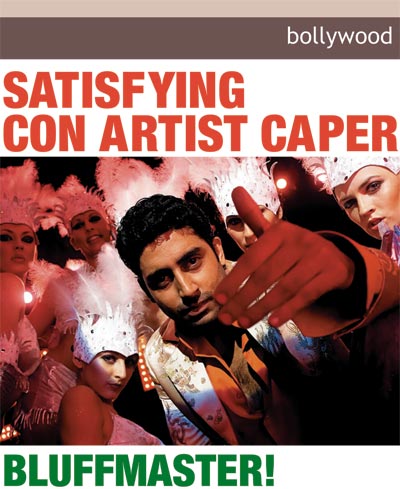 Bluffmaster! Bluffmaster! Produced by: Ramesh Sippy Directed by: Rohan Sippy Music: Various Starring: Nana Patekar, Abhishek Bachchan, Priyanka Chopra, Riteish Deshmukh, and Boman Irani Honest-to-goodness Bollywood buffs may have been frequently miffed by the acerbic critiques that appear on this review page. Artsy reviews of Bollywood films are about as appropriate as throwing a searchlight on a moonlit night. I mean, one could make the perfectly legitimate point that if intelligence, nuance, and a cerebral application of the art of cinema are what one is looking for, a Bollywood movie is hardly the right place to look for it. Pelvic gyrations, maudlin melodrama, implausible story lines of identical twins who lose and find each other, ugly villains, cheesy fight scenes, long-drawn out romance—this has always been Bollywood’s stock in trade. So what’s this reviewer’s defense? Well, even granting the unique remit of Bollywood, a strong case can be made that mass entertainment does not always have to mean poor taste or dumb plots, and it certainly doesn’t oblige producers to show an embarrassing lack of judgement, be it in the toilet humor, the overly suggestive sexual innuendoes or the plain crassness all too evident in the multitude of Bollywood potboilers that receive the severe walloping from the janta they so richly deserve. This is, after all, the same industry that produced gems like Guru Dutt’s Sahib Biwi Aur Ghulam and Raj Kapoor’s Awaara, both huge mass entertainers and yet also made with style and intelligence. Furthermore, Bollywood today has global aspirations—if it is to cross over into attracting more than its niche audiences, its films must be able to withstand a far more exacting critical standard than it is used to. Anyway, I digress. The point being made here is that while some allowances can be made for the distinctive genre that Bollywood represents, in today’s globalized competitive world, even a Bollywood masala film must excel in the basics—it has to tell a good gripping tale with decent technical values. Keeping that in mind, it has to be said the Bluffmaster is a whiff of fresh air in a depressing year for Bollywood. To be sure, it won’t win awards at the international film circuit, but it certainly manages to entertain, and it does so with skill, wit and intelligent twists in the plot that are a delightful surprise. But first, the basic story line. Roy Kapoor (Abhishek Bachchan) is a con artist whose only moments of honesty—up to a point—is in regard to Simmi (Priyanka Chopra), the woman he loves. However, as I said, this is honesty up to a point—because Roy cannot muster the courage to tell her that he is a con artist. When his past catches up with him, Simmi cannot forgive him and walks out on him. Enter Dittu (Riteish Deshmukh). Now it’s hard to find two people who are more dissimilar than Roy and Dittu: Where Roy is calm, Dittu is frantic; Roy is smooth but Dittu is messy; Roy is sharp while Dittu is stupid. The only think the two have in common is that both are in the business of conning others. However, he soon discovers that he has very little time left. His doctor (Boman Irani) tells him that he has a brain tumor and has about three months to live. So Roy decides to do the biggest con of his life — he decides to take on Chandru (Nana Patekar) an infamous, unsavory crook, and he takes on Dittu as his sidekick. It’s far from an easy task because Chandru is no pushover. As soon as he figures out what Roy is up to, he kidnaps Simmi to use for a bargaining chip, and all hell is about to break loose. The climax has a huge twist, but I am not going to give it away. In any case, this bare-bones account fails to do justice to the film’s strong points. The genre isn’t new — the comic con artist comic caper is as old as films like Victoria 203, Chori Mera Kaam and Do Aur Do Paanch. It’s still running strong—consider recent releases like Bunty Aur Babli or even Roop Ki Rani Choron Ka Raja. In a way, the film is almost a tribute to the genre, but it distinguishes itself with a tight, gripping story, excellent direction and some genuine humor. Great ensemble acting, excellent production values hint at the benign, nurturing hand of old-time veteran Ramesh Sippy of Seeta Aur Geeta fame, who knows that if you give the audience good value in terms of technical quality, the audience won’t disappoint you. Early indications are, the old man is right on the money. TAMIL CINEMA: Must-watch Landmark Film: Thavamai Thavamirundhu Director - Cheran Cast - Cheran, Rajkiran, Padmapriya, Saranya, Ilavarasu, Senthil, Meenal  Here’s a filmmaker who, from his very first film, has doggedly tread a lonely path, determined to give sensible and sensitive films, his scripts original and rooted in nativity, with a message weaved into each one, but never preachy or melodramatic. Here’s a filmmaker who, from his very first film, has doggedly tread a lonely path, determined to give sensible and sensitive films, his scripts original and rooted in nativity, with a message weaved into each one, but never preachy or melodramatic.Cheran’s films and characters are close to life, touch a chord in one, each film with its own unique concept and style. But with Thavamai Thavamirundhu, which he scripts, directs and plays the lead in, Cheran seems to have surpassed himself, making the film a landmark in Tamil cinema. There is a melancholic serenity pervading throughout Cheran’s narration. And there are many moments when the director takes us close to the brink of tears, but doesn’t let the moment overpower, but instead gently but deftly steers us on to the next scene. Again, even when the director jumps a few years ahead in his protagonist’s life, which he does quite often, nowhere is it jerky. It’s to the director’s credit that he has put his trust in his technicians who may not be top-of-the-list. But they have all delivered what was required of them. Like Sabesh-Murali (Deva’s brothers) who come into their own with this film, their musical score judicious and backing the narration. M.S. Prabhu’s camera is never intrusive, but always follows the mood of the protagonist as he takes a walk down memory lane, at times joyful and flippant (like his college capers and his indiscreet affair with Vasanthi), and at other times sad, pensive and introspective. But it’s a learning experience the whole way. Special mention must be made of the make-up (Anil Pembrekar) for Rajkiran and Saranya, the ravages of time reflected in their changing looks, with subtle change in their make up. The film has some splendid performances. In the hands of Rajkiran, easily one of the finest character actors we have, the character of Muthiah comes alive. We understand his perseverance in educating his two sons even if he had to go into heavy borrowing, the loans eating into his earnings from the printing press he runs. A fact which he mentions to his son Ramalingam much later in the narration, and tries to dissuade his son, now in an enviable position, from taking loans to buy into luxury. Debutants Senthil and Meenal as Ramamurthy and his wife show promise. Muthiah’s mental turmoil when his second son Ramalingam, too, disappears from their life after his graduation (Ramalingam’s indiscreet act making his life take a new turn) and the father’s later compromising in the case of both his sons, reveals the character’s maturity and yearning to get his sons back into the family fold. It’s an award-winning performance from Rajkiran, his every scene and expression a delight to watch, and a performance one hasn’t seen in Tamil films for a long time. Saranya’s performance is equally good. Playing Muthiah’s wife, an ordinary woman with no aspirations of her own except to have her husband and children near her; one who reacts instantly and sharply when her sons let her down, and like a typical mother is forgiving and fussing over them the next moment, Saranya is splendid and a revelation here. After films in Telugu and Malayalam (Kazhcha), Padmapriya debuts in Tamil, lending a dignity and class to the role of Vasanthi, Ramalingam’s beloved, and later his understanding wife and an ideal daughter-in-law. Cheran blends easily into his role, his performance natural and sensitive, enhanced by the fact that director Cheran knows exactly what he wants from actor Cheran. If there’s anything similar to Autograph, Cheran’s national award-winning film, it’s only that here too it’s about the protagonist’s looking back at the past in nostalgia. But while in the earlier film it was just a look back and that too at the women in his life, the other characters appearing incidental, here it is about parental bonding, duties and responsibilities, and the valuable lessons learnt on the way. As for the film’s length, it’s about 3 hours and 10 minutes. But Cheran gets you so involved in his narration that you don’t realize the passing of time. Further, the narration has such a natural flow that no scenes seem irrelevant or forced in, Lenin’s editing helping to maintain the smooth flow. Thavamai Thavamirundhu is a must-watch film, an enriching experience on celluloid. — Malini Mannath |TOP| RECIPE: Savory Snack: Spicy Idli - By Seema Gupta With a little spice and condiments, you can spice up fluffy white idli into a delicious snack, writes Seema Gupta.  Spicy idli garnished with fried crispy snack. Ingredients
Method Serve hot with coconut chutney or ketchup. - Seema Gupta is a homemaker.
|TOP|
HOROSCOPE: 2006 Yearly Forecast By Pandit Parashar ARIES (March 21 to April 20): Jupiter’s transit in seventh till the end of October will help a lot. You will do well financially during this time as Venus will continue to transit favorable places at the same time. Delays will end and you will do very well in career beginning of this year. You will be ambitious in exploring new ways to make money and will hit bull’s eye. You will roll in money in 2006. An elderly person will guide your path to financial success and help you deal with issues which started in mid 2005. You will be inviting stress if you invest in property as Saturn’s transit in fourth till the end of October is unfavorable for these matters. Saturn will bring turbulence as issues will remain unsolved and you will accept the inevitable. Donating black objects and having patience with family members will help you through this unfavorable transit of Saturn. TAURUS (April 21 to May 20): Saturn’s transit in third till the end of October and then in fourth afterwards is favorable for career. You will be lucky and survive crisis situations in career. Stay calm and avoid jumping to conclusions as Mars transit till the end of May 2006 is not favorable for health or financial matters. You will be inviting trouble, so stay on guard. Legal issues will pop up and will be resolved. You will be going on several long distance trips and will relocate around August or September. Moving into a house that faces west will be favorable. You will make money and spend it at relative pace. You will have some concerns about a child initially but that should be temporary. Your assets will grow and you will add more vehicles to your fleet. Investing in land or a building will be a good idea if you are looking for a long term gain. You may start a new partnership after October. GEMINI (May 21 to June 20): Jupiter in the fifth till the end of October will protect you from all troubles. You will experience continuous growth though you will have to wait longer to get results. Trips will be beneficial and you will expand your horizons. New friends and contacts will help you. Saturn in second till end of October will help in financial matters but do not give in to greed. Any gamble at this point is bad. Do not trust anyone with money and do not stretch limits when investing. If you believe in working hard, the world is yours. Expect some changes in career after October. You will have to twist facts if you want the work to be done. Presence of Mars on your sign in April and May will cause temporary health concerns. You will struggle financially till April and new avenues to make money will open afterwards. Knowledge gained in the first half of this year will come handy in future. Time spent on children will not go to waste and they will settle in the right direction this summer. CANCER (June 21 to July 22): Saturn’s transit over your sign will be disturbing. Progress will be slow and you will isolate yourself from useless people. You will focus on improving health and personal image. Difficulties will arise but will be solved. The presence of Jupiter in fourth and in fifth after October will provide divine protection. Do not hesitate to consult elders. You may move into a bigger home this summer. Investing in property before October will be beneficial. There is a strong chance of addition in the family when Jupiter starts its transit in fifth house after October. This is an appropriate time to enroll yourself for a short course to update your skills. You may switch jobs in April or May though it will be better to stick to the existing one. You will enter into a partnership and end up investing your entire nest egg towards the end of 2006. LEO (July 23 to August 22): People prone to litigations should be extremely cautious. Negligence could cost you a lot. You may lose enthusiasm in the beginning because of a weak Sun but will regain confidence after mid February. You will get all the help from Mars which will be transiting in right places throughout the year keeping an eye on Saturn. Jupiter in third will make you more social bringing useful people closer. People involved in partnerships will see a big change in setup and may even go solo. Career wise you will do better than last year. You may go on a distant trip in June. You will need patience and tolerance to maintain peace at home. Saturn can create an ugly situation after October. Performing Maha Mritunjaya mantra will ease off unnecessary stress. You will hit a financial jackpot. VIRGO (August 23 to September 22): It will be a better year. Business will grow and earlier investments will bring sudden profits. Jupiter’s transit in second will bring financial prosperity. You will make money through stocks. You will gain from partnership ventures. Guidance from a matured person will bring stability in life. Eligible bachelors will find a suitable match, someone who will be intelligent and come from a respected family. You will have a strong cash flow in March, April and May. You will try to help a child in getting admission to a reputed college. You will spend wisely. You may face professional difficulties in May and June. Hard work will bring results and you will make money from a property deal. You will be often traveling overseas and go to an exciting place with family in summer. LIBRA (September 23 to October 22): Saturn in tenth will enhance your fate and fortune. You will make tremendous progress in career. Promotion or change of department will take place and you will be assigned your dream project. There will be change of strategy and you will go after long term and large gains rather than quick ones. You will invest in properties and may even buy a bigger house for yourself. Legal troubles will get resolved in your favor after a trial. You will update your professional skills. Some of you may have another member added to your family in 2006. Jupiter’s transit in your sign is already doing damage slowly. You need to have a complete physical performed if not already. This transit can give health problems and increase your weight also. Cutting down on salt and red meat and eating light will keep problems under control. Your formula will help others make money and not you. You will perform many good deeds. SCORPIO (October 23 to November 22): It will be an expensive year. Your commitments towards family and children will be on the rise. You will make money but it will be hard to hold on to it. The only consolation is that it will be spent for good reason. Avoid investing in stocks. Children may move away for education. Saturn on the other hand will help you in legal matters and refine you a lot. You will deal with situations with a calm and rational mind. You will move into your own home though it may not be big. You will gain popularity and be socially active. Cutting down on carbohydrates and proper exercises will improve health. Do not give others a chance, especially to a female to come after you. You will get money out of a law suit in November. Once Jupiter moves into your sign after October your personality will change. You will acquire training to improve your professional skills. You may get an award for good work. SAGITTARIUS (November 23 to December 22): Saturn’s transit in eighth is alarming. Troubles will come suddenly. You will have health issues that may require immediate surgery. Financially you will have to be very careful. Do not fall for too-good-to-be-true schemes and do not vouch for anyone. Career path will be stressful off and on but without any real threat. You may purchase a property and make huge profit by selling your existing home towards the end of 2006. You will work on a project requiring overseas communications and may travel often for business. A member will be added in the family around July. Avoid taking risk and you will accumulate a sizeable bank balance this year. Pending legal issues will be decided in your favor in summer. You will make good friends and will benefit from someone younger than you. Donating black objects or woolen blanket and worshipping Lord Shiva will help reduce the Saturn’s intensity. CAPRICORN (December 22 to January 19): Transit of Jupiter in tenth will bring changes in career. It will be a rewarding job but will be more demanding than your capacity and force you to look for a better option. Starting mid-January you will get more work with harsh deadlines. You will gain from trading overseas and marketing products locally. Financially you will do better this year till the end of October. Spouse will be under pressure and have body ache regularly. You may take a legal course to prove your point and get money from litigation. Health will be better and you will have to face less competition in business. Ketu in ninth will rekindle your faith and involvement in religious and humanitarian work. You will be bold and ready to deal with issues as they come. Trips will be fruitful. You will travel overseas with family to join in a celebration. AQUARIUS (January 20 to February 18): You will be surrounded by tough competition but will come out a winner. Intellect and hard work will make you financially strong. Jupiter’s transit in your house of luck will help you achieve financial goals. All previous investments will bring huge profits. Value of stocks will appreciate considerably. You may join a religious group or start following a guru. You will be traveling overseas frequently. Retrograde Saturn in sixth till April will help crush competition. You will also recover quickly from any health problems during this time. You will be offered an excellent job in June but will need to move out of state. You will be spending money and enjoy life with family. You will plan well and go on a family vacation this summer. An addition in the family is a strong possibility. Watch your blood pressure and eat on time to avert any health issues. PISCES (February 19 to March 20): Jupiter in eighth and Saturn transiting fifth up to the end of October are not favorable. Uncertainty in career will continue to cause stress. Do not loose hope, keep doing your best. Financial situation will improve from February. You will make money through a property deal in April or May. You will have several chances to earn extra money in June and July. You will have to keep changing your strategy as the situation demands. Finances will take a dip in August and you may switch jobs. Once Jupiter moves in ninth and Saturn in sixth, you will find an excellent job and long term stability. You may win a lawsuit and make huge money out of it. Other pending legal matters will be resolved after October. You will pass a competitive exam with flying colors, opening new avenues to become financially strong in life. Bay Area-based astrologer Pandit Parashar can |TOP| |
|
|
|
|
Advertise in Siliconeer | Home | Subscribe PRINT Issue | About Us (FAQs) | Contact | Locations | Staff Login | Site Map
© Copyright 2000-2013 Siliconeer • All Rights Reserved • For Comments and Questions: info (AT) siliconeer.com |
|






 In an incident being closely watched by Indian industry observers as future corporate decisions may depend on the outcome, Indian-American tech worker Neelima Tirumalasetti, a senior IT analyst in quality assurance, has filed a suit in a federal court in Texas against a U.S. firm. She has alleged repeated racial harassment and discrimination as her company outsourced work to India.
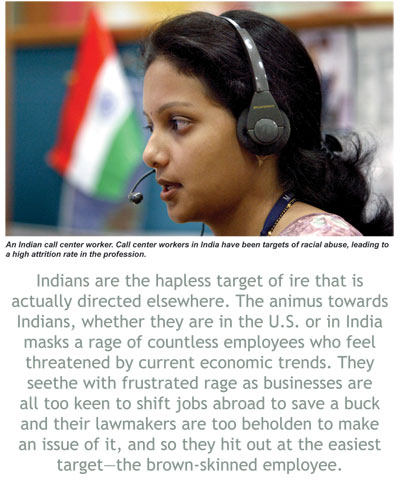 A comment in an Indian paper had said: “No matter how many years she has lived in the U.S. and how much she professes her loyalty to the country, to a bigot she is a brown foreigner. And a woman to boot. How dare she criticize the United States on American soil? If you are a recent immigrant, you don’t bite the hand that fed you. It is okay if you are white and your forbears got of the boat a century or two ago.’’
 Rep. Dan Burton, R-Ind. : We have had a very, very nice visit here in India. We have met with the parliamentary leaders, we’ve met with Prime Minister Singh, we’ve talked about numerous issues, and we’ve been so well received, we’ve all fallen in love with India and the people and leadership here.
 Rep. Sheila Jackson Lee, D-Texas : The statement that this delegation is making is a strategic statement. We are giving you a message and we take a message back to the United States.
  Rep. Joe Wilson, R-S.C.: It’s indeed a dream come true. My affection and appreciation of the people of India began with my dad. He served in World War II here. My father told me as I was growing up, how hardworking the people of India are, how entrepreneurial and capable the people of India are.
  Rep. Carolyn McCarthy, D-N.Y.: When we look at the United States and India, we have two strong democracies and there is so much in common to work together. When we see our universities, we see so many of our young people, your young people, are interacting together in the United States, it’s time that we certainly have a more productive relationship between our two nations. It’s a perfect fit.
  Rep. Steve Pearce, R-N.M.: There are good reasons for friendship beyond the strategic. And I think friendship has to be based on more than strategic alliance. I find a value similarity that is extraordinary: Strong families, strong value on education, strong value on business and entrepreneurship, those are things that fit well with the U.S. psyche and I think will propel us into unprecedented growth in our relationships that benefit us both.
  Rep. Loretta Sanchez, D-Calif.: I’ve been in the Congress over nine years now and I’ve been promising the large Indo-American community of Southern California that I would come. So it’s been a pleasure to finally make it here.
 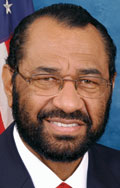 Rep. Al Green, D-Texas: You have the world’s largest democracy. We have the world’s oldest democracy. We have much in common. And we should use that common ground to reach higher ground, as it were.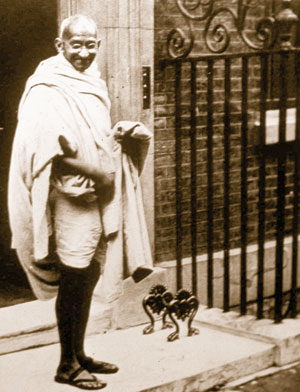
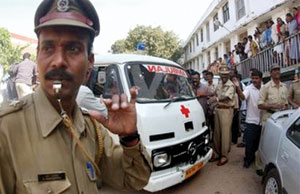
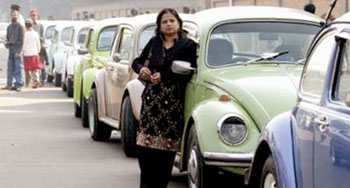 The Volkswagen Club of Bangladesh organized a Volkswagen rally Dec. 9, with hundreds of Volkswagen Beetles winding down the streets of Dhaka. The 56-km drive rally started from Manik Miah Avenue and finished at Proshika Human Resource Development Center Trust at Koitta, Manikganj.
 Former U.S. president George Bush is expected to visit Pakistan as the United Nations special envoy for the South Asian earthquake, the Pakistan foreign ministry said.
 A Bangladeshi street singer has won the country’s first talent hunt TV show winning one million taka ($15,000), the hearts of thousands of viewers who voted for him — and a whole new life.
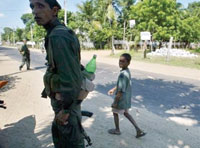
 Italian luxury sports car maker Lamborghini is all set to drive in its best selling model Gallardo to India within the first quarter of next year.
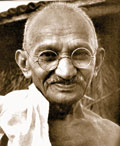
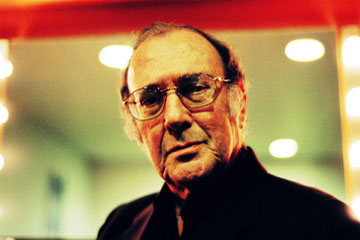 As every single person here knows, the justification for the invasion of Iraq was that Saddam Hussein possessed a highly dangerous body of weapons of mass destruction, some of which could be fired in 45 minutes, bringing about appalling devastation. We were assured that was true. It was not true. We were told that Iraq had a relationship with Al Quaeda and shared responsibility for the atrocity in New York of September 11th 2001. We were assured that this was true. It was not true. We were told that Iraq threatened the security of the world. We were assured it was true. It was not true.
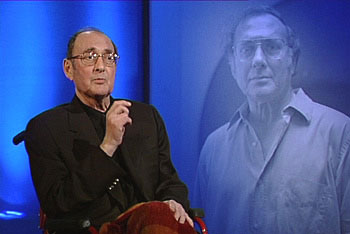 I spoke earlier about ‘a tapestry of lies’ which surrounds us. President Reagan commonly described Nicaragua as a ‘totalitarian dungeon’. This was taken generally by the media, and certainly by the British government, as accurate and fair comment. But there was in fact no record of death squads under the Sandinista government. There was no record of torture. There was no record of systematic or official military brutality. No priests were ever murdered in Nicaragua. There were in fact three priests in the government, two Jesuits and a Maryknoll missionary. The totalitarian dungeons were actually next door, in El Salvador and Guatemala. The United States had brought down the democratically elected government of Guatemala in 1954 and it is estimated that over 200,000 people had been victims of successive military dictatorships.
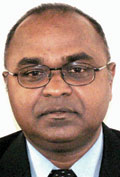
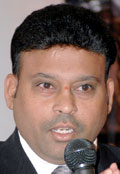
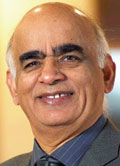
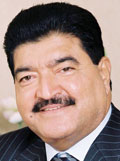 Dr. Bavaguthu Raghuram Shetty, U.A.E.

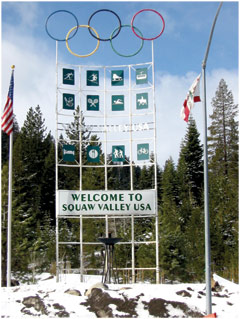
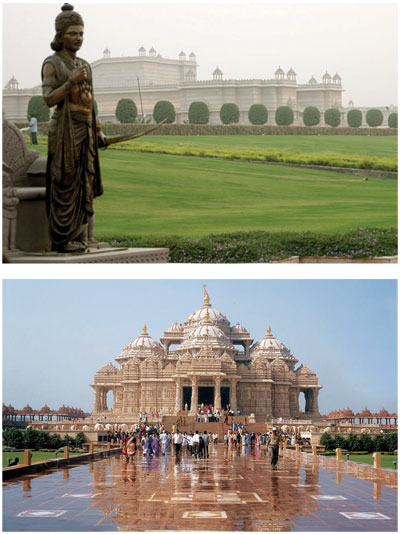
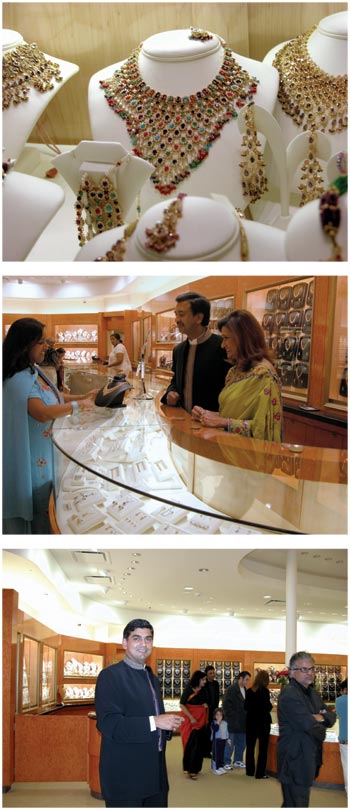
 Shri Krupa Dance Company of San Jose, Calif., in collaboration with the Alagappa Performing Arts Academy of Escondido, announced the launch of a degree program in bharatanatyam in November, 2005, according to a Sri Krupa press release.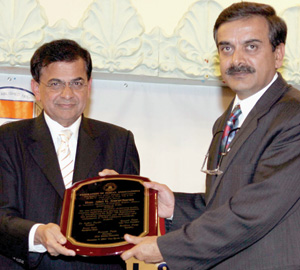



 Microsoft chairman Bill Gates has announced plans to invest $1.7 billion in India over the next four years. Microsoft will hire more people, support startups, foster innovation, aid community development, and sell more software.
 Indian software giant Wipro has announced it is buying mPower in an all-cash deal for $28 million.
  Intel Corporation Chairman Craig Barrett has announced that his company will invest over a billion dollars in India over the next five years.
 The Indian information technology and business process outsourcing industry is poised to grow ten-fold by 2010, according to a McKinsey-Nasscom report.
 Red Hat is expanding its operations in India by investing $20 million in the country over the next several years and purchasing full control of a joint venture it set up there during 2000. The Raleigh, North Carolina-based Linux provider company said the Mumbai, India-based joint venture has become strategic to its operations. The company plans to contribute more resources to India to further develop the Linux and open-source market there.
 Dutch electronics giant Philips believes India is test bed for technologies aimed at the 4 billion people at the bottom of the pyramid.
 When it comes to transporting things other than children, the Quest’s second row seats fold away, and the third row of seats fold flat, so there’s plenty of room to carry even a 4x8-foot wide sheet of plywood on the floor.
  There is a boat-load of convenience features on board the Quest. The driver’s seat can be heated and adjusted eight ways, there are a total of eight cup holders located throughout the vehicle, as well as bottle holders and map pockets on the sliding doors, and plenty of storage pockets and bins placed here and there.
  The standard sound system includes eight speakers and an AM/FM/CD player. All audio systems also include a feature called “dual media,” which allows rear passengers to use wireless or wired headphones to listen to something different than what may be played through the speakers. The vehicle can also be equipped with factory-installed satellite radio, either from XM or Sirius.
  So at last, putting end to all gossip, Aamir Khan got married. Although a later bash was on a grander scale, the actual ceremony shunned all pomp and grandeur, as the Bollywood star tied the knot for the second time with his girlfriend Kiran Rao (r) in Mumbai Dec. 28 evening.
 Like father, like son. Decades after his dad Mithun Chakroborty (l) set female hearts aflutter with films like Disco Dancer and Agneepath, son Mimoh Chakravorty (r) is getting ready to do the same.
  Filmmaker Sanjay Leela Bhansali must be feeling like he’s died and gone to heaven. It’s true that his offbeat film Black (Rani in a scene from "Black") (no songs in a Bollywood film, it doesn’t get more offbeat than that) garnered heavy praise from critics, but a phoren accolade is always sweeter.
 Here’s some applause for a gutsy lady. Right when all the obscurant creeps were coming out of the woodwork to jump on poor Kushboo, the Tamil star who had the alleged effrontery to express the perfectly reasonable view that premarital sex was a fact of life, Bollywood star Yukta Mookhey (seen here in "Pyaasa") has come out in support of the beleaguered Kushboo.
 At first it seems like the world’s most absurd fit. I mean, anybody who remembers yesteryear’s glamour queen Saira Bano would be hard pressed to place her within miles of the rustic east Bihar dialect of Bhojpuri.
 Bollywood actor Nana Patekar (seen here with Priyanka in "Bluffmaster!") appeared in Bombay High Court in a check-bouncing case filed by him against a producer. Nana had filed a civil suit in the court for recovery of Rs. 7.5 million from film producer Dilip Dhanwani in June this year.
 So complaining about the lack of taste, intelligence and logic in a Bollywood masala film is not unlike being angry with a hooker for wearing skimpy clothes — in both cases, the goal is to please the maximum number, anything else is superfluous.
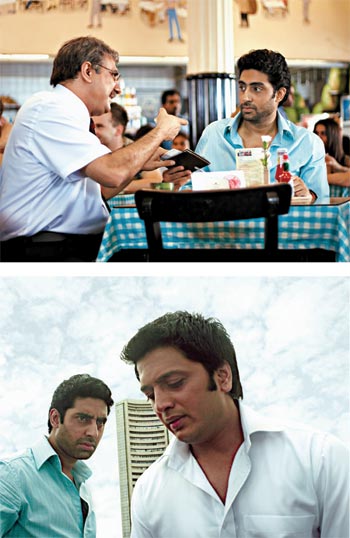 Roy is inconsolable after Simmi dumps him, so he figures a good way to snap out of it is to bring Dittu up to speed in the fine art of cheating.
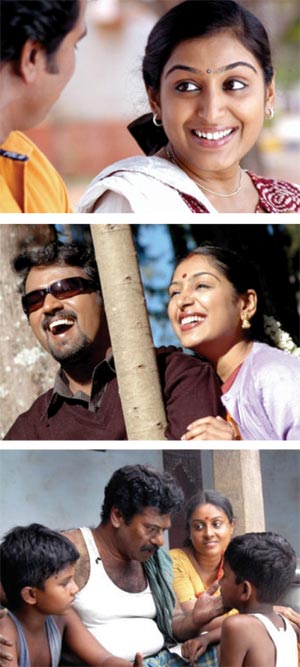 We identify with Muthiah’s sorrow and disappointment, when his newly-wed older son Ramamurthy, egged on by his wife, turns harsh on his parents and moves away from the family fold. These scenes are realistically handled with some thoughtfully penned lines, and, though a typical scenario, there is a freshness to them.